By Cassandra Balentine
Magnetic and magnetic-receptive print materials expand potential offerings for print service providers (PSPs). However, certain considerations like material thickness, flexibility, holding method, and density make a difference in the success of printing and finishing this specialty media.
Jason Friesen, sign division manager, Laguna Tools, admits these factors directly impact cut quality, tool life, and overall production efficiency of finishing hardware.
“The right tool combination improves edge quality, production efficiency, and material handling, while also extending the lifetime of consumables and minimizing downtime,” agrees Filip Van Bruaene, application specialist, Kongsberg Precision Cutting Systems.
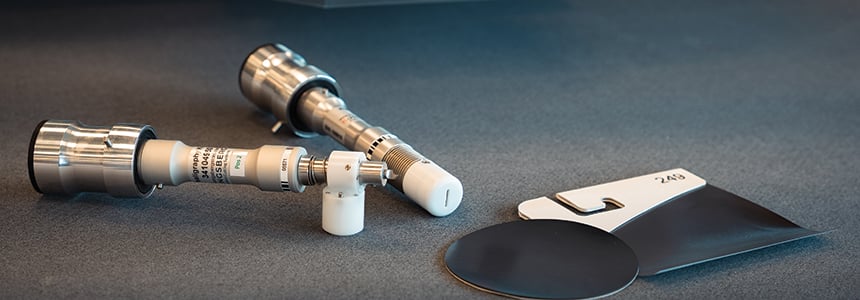
Above: For most professional magnetic signage applications, drag knife tools, such as Kongsberg’s Rigid Material Knife and Psaligraphy Knife tools, provide a clean and controlled edge quality.
The Right Tools
It is important to choose the correct cutting tool for magnetic signage. According to Daniele Gallucci, president, Elitron America, the goal is to achieve a clean cut without damaging the surface or creating excessive tool wear.
“Flexible magnetic sheeting is denser and more abrasive than conventional vinyl or paper-based media because it contains magnetic particles within a flexible polymer system. A blade or cutting system that performs well on standard pressure-sensitive vinyl may wear more quickly or fail to cut consistently when used on magnetic material,” explains Neil Hawkins, marketing manager, Magnum Magnetics Corporation.
Because magnetic materials are dense and rubber based, they require an ideal balance of cutting force, control, and blade geometry to achieve clean edges. “Without those qualities, processing materials can result in tearing, poor edge quality, and significantly reduced efficiency,” admits Van Bruaene.
Before cutting magnetic or magnetic-receptive materials, Mark de Guzman, marketing manager, Vision Engraving & Routing Systems, suggests evaluating the material composition, thickness, density, and durometer. “In addition, evaluate your feed and speed settings and the strength of the magnetic attraction because these materials can attract metal debris and stick to metal machine parts.”
Hawkins adds that a test cut is one of the most important steps. “It allows the operator to verify pressure, speed, blade depth, corner quality, and material hold down before committing printed material to production.”
Powered Cutting
Powered cutting tools help streamline the finishing process for both magnetic and magnetic-receptive signage.
Because magnetic and magnetic-receptive materials often vary in thickness and stiffness they can be difficult to cut cleanly with manual tools. “Powered systems provide controlled force, stable tool movement, and repeatable accuracy,” says Gallucci.
A CNC router equipped with a knife cutting option is often the ideal solution for larger production runs and for processing thicker or higher durometer materials, agrees Guzman.
“We recommend cutting magnetic-receptive materials with a high-precision CNC cutter. Using a CNC prevents material damage during cutting, ensures optimal edge quality, and avoids material tearing,” seconds Andrew Pagelow, sales manager, VTX Tools.
“CNC routers or machines equipped with oscillating knives or rotary tools are the best option when you want clean repeatable cuts, as well as faster production,” notes Friesen. “They also give you a lot more flexibility with different material thicknesses, complex shapes, and higher volume jobs while keeping the finished product looking professional.”
Keith Soya, business development manager, Zund America, Inc., says blade-based digital cutting tools are ideal for magnetic signage when consistency, precision, and production efficiency are required. “They deliver clean, repeatable results at high speeds for both short- and long-production runs.”
“Digital flatbed cutters equipped with oscillating, tangential, or heavy-duty drag knives process many flexible magnetic and receptive products while maintaining good control through curves and corners. Vacuum hold down is valuable because it keeps the material flat and reduces movement during cutting,” shares Hawkins.
Keith Verkem, national sales manager and senior product manager, Colex Finishing Solutions Inc., believes it is preferable to use digital flatbeds or XY cutters to achieve the highest repeatable quality with the most productivity.
Roll-fed plotters and vinyl cutters can be effective for thinner products and less demanding shapes, suggests Hawkins. “The machine must have enough cutting force to penetrate the complete construction, and its pinch rollers and feed system must be capable of moving the heavier material accurately.”
Different Strategies
Not all magnetic media is created equally, cutting requirements differ.
Each application is influenced by factors like material thickness, density, and end use. “Vehicle magnetics are typically thicker and more durable, requiring robust through cutting with clean, consistent edge quality to withstand outdoor conditions,” points out Soya.
Pagelow suggests using a more robust blade—such as a double-edge blade—for thick vehicle magnetics.
“Sharp corners should be avoided because they are more vulnerable to wind exposure and edge lifting. A clean perimeter also improves the graphic’s professional appearance,” adds Hawkins.
Meanwhile, indoor applications utilizing magnetic-receptive materials often demand higher precision and registration accuracy, supported by advanced vision systems, comments Gallucci.
Indoor magnetic-receptive graphics are usually thinner and lighter. “As these materials are often used for retail displays, wall graphics, and short-term promotional applications, visual finish and precision are especially important here,” adds Van Bruaene.
Indoor magnetic-receptive materials tend to be more forgiving, but Friesen says accuracy and clean edges are still required for fit and finish. “On a CNC, a drag knife is usually used for thinner material and simpler shapes, and an oscillating knife when you need more control or you’re working with thicker or more detailed cuts.”
Cutting Through
It is essential to utilize the right processes and tools when cutting magnetic and magnetic-receptive materials to ensure optimal performance.
Sep2026, Digital Output