by Melissa Donovan
Installation can make or break a graphic. Even when printed using the best inks, on the highest quality media, one mistake during application makes the entire print moot. This is true for any job, whether it be floor graphics, wallcoverings, a vehicle wrap, or window graphics. There are similarities when it comes to best practices for applying materials across all genres, however each presents its own particular nuances.
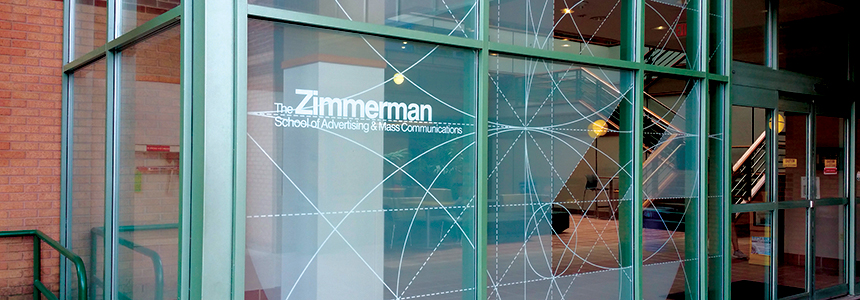
Above: Solar Graphics has installed thousands of residential and commercial film window projects.
For window graphics, the surface offers challenges. Clear glass or glass-like windows require proper preparation prior to applying graphics, cleaning with incorrect solutions can lead to graphics failure. Also, depending on the type of window material used—perforated or unperforated, ink choice, and adhesive type installation practices vary.
Driven by the need for easier installation methods, advancements in media have recently focused on air egress adhesive materials with built-in channels that allow air bubbles to escape during installation. Additionally, improvements in air release liners are simplifying positioning and repositioning.
Both of these are notable, especially as professionals are not necessarily the ones applying window graphics, but instead store employees or some other novice unfamiliar with the graphics industry.
General Tips and Tricks
Basic guidelines for installing media onto windows involve cleanliness, preparation, and the right tools.
“Proper cleaning of the window is absolutely essential for a successful installation—it’s one of the most critical steps in the entire process,” attests Karen Peppel, associate product marketing manager, GBC/SEAL.
In terms of cleanliness, Amanda Smith, marketing communications manager, Mactac, recommends proper cleaning because it plays a crucial role in maintaining the longevity of the installation.
“A clean surface ensures maximum adhesion and prevents issues such as peeling or bubbling later. Dust, dirt, grease, or any residue can create barriers between the adhesive and the glass. This can compromise the bond, leading to an ineffective installation. A clean window helps ensure that the result is clear, vibrant, and visually appealing,” continues Smith.
Continental Grafix USA, Inc. recommends an ammonia-free cleaning solution, followed by a final rinse with water only, and dry with a lint-free cloth. “If isopropyl alcohol is used to break down grease or grime, a thorough rinse with water afterward is essential to ensure the surface is completely free of contaminates that could compromise adhesion,” suggests Michelle Kempf, VP, sales and marketing, Continental Grafix USA, Inc.
Preparation is key. “Planning before application is essential—measure, align, and lightly tack graphics before committing to full adhesion,” notes Dennis Leblanc, senior product and business development manager, Drytac.
Planning involves visiting the site beforehand to get a feel for what is needed. “Clear communication is a critical first step—understanding the client’s expectations for longevity, visibility, and aesthetics will help guide the installation approach. Advanced planning of the installation via a site visit or detailed reference images helps anticipate challenges and mitigates surprises during the installation process,” advises Kempf.
Having the right tools on hand is helpful. “A squeegee can help to smoothly apply the graphic and push out air bubbles. Start from the center and work your way outwards to ensure a strong, even adhesion without imperfections,” recommends Smith.
“Patience pays off when applying the material steadily and working air outward rather than rushing,” adds Leblanc.
Temperature and Climate
Temperature and climate play a major role in window graphic installation success.
“A moderate indoor temperature is best—not too cold and not excessively hot. Extreme heat can cause the film to dry too quickly before you’ve had time to squeegee properly, while very cold conditions can make the material stiff and harder to handle,” cautions Jim Halloran, VP, sales and marketing, Lintec of America, Inc.
Dave Hawkes, media product manager, Roland DGA Corporation, believes the “sweet spot” for window graphics is between 50 and 85 degrees Fahrenheit. “The media applies better when the temperature of the media is in sync with the temperature of the substrate. If there is a great temperature difference, it can result in tunneling, which can leave a large wrinkle in your graphic.”
Moderate humidity is acceptable, but excessive moisture or condensation on the glass needs to be avoided, continues Halloran. With good airflow, when a wet apply solution is used, the wet solution dries out evenly after squeegeeing.
The sun and heat are a challenge. “Installing on windows in direct sunlight can be quite problematic. With your slip solution evaporating almost instantly, you may need to lift and reapply two to three times. We try to avoid those scenarios when possible. Start your install on West facing windows in the morning and move East as the sun gets up over the building,” suggests Mike Butler, owner, Solar Graphics.
Finally, Kempf says edge curling is influenced by temperature conditions, so proper trimming of the window media during installation is key. “Proper trimming of ⅛ to ¼ inches away from window edges or gaskets is critical to avoid the potential of edge curling as the window naturally expands and contracts with temperature changes.”
Getting More Specific
It’s true that universal recommendations exist in terms of window graphic application. However, diving deeper, nuances between media, adhesive, and ink dictate installation technique.
Base Film
The base film is an influence.
PVC or PP substrates “can be softer and more pliable, which may make alignment trickier and increase the chance of stretching. They also may not lay as flat, requiring more careful squeegee work,” suggests Halloran.
Polyester or PET films are dimensionally stable, but less conformable, which makes installation more challenging, says Leblanc.
“Especially with hard coated PET window film, installation is typically easier and faster. The hard coat resists scratching during handling, allowing for smoother squeegeeing and quicker installs. It’s also more dimensionally stable than softer films, so it won’t stretch or distort as easily,” explains Halloran.
Polyester materials require a wet apply method. When installing with a wet apply method, choosing the correct wet solution is key. “Polyester window films only require soap and water—nothing fancy or harsh. A few drops of baby shampoo or mild dish soap in a spray bottle of water is ideal. This helps the film slide into place during installation. Spraying the glass generously with the solution before applying the film allows the film to float on the surface, making it easy to position correctly before squeegeeing. Keeping the surface wet gives you working time, and the squeegee removes excess fluid and air bubbles, ensuring the film adheres smoothly and evenly. Proper squeegee technique prevents wrinkles, creases, and trapped air,” recommends Halloran.
Whether the material is perforated or not is of importance. “Perforated window film is more delicate, requires edge sealing, and visibility for install location is important. Non-perforated window film is more forgiving, can be applied wet or dry, and is easier to remove bubbles,” admits Peppel.
Butler says perforated vinyls can be installed either wet or dry. “The wet method allows for realignment and prevents stretching. There is the drawback of drying time, but it is minimal due to perforations.”
“Yes, non-perforated can be installed with wet application fluid, so you don’t always have to laminate. Perforated films are recommended to laminate because you are typically working with half the amount of film—because of the holes—and without a laminate you risk overstretching the film/graphic when installing. Laminating perforated film gives you more rigidity for the application and helps protect the film from getting dirt and debris in the holes of the perforation,” explains Mike Aldrich, product manager, digital print solutions, General Formulations.
Hawkes seconds that “as you would expect, perforated media has less surface adhesion because the media has holes in it. They may be small holes, but they are holes just the same. Some perforated medias can have half the adhesive area as a typical vinyl graphic. As a result, it is extremely important to pay attention to surface preparation to get the best performance from the adhesive surface.”
Other Considerations
Which adhesives are used depend on the intended duration of the application. “Short-term promotional graphics require different adhesives than long-term signage,” explains Leblanc.
Ink type plays a role. “Solvent, latex, or UV inks affect surface tension and curing, which can influence adhesion,” notes Leblanc.
“Heavy ink coverage can stiffen the material, making it less flexible. Some inks also make the surface more delicate, requiring lighter squeegee pressure,” adds Halloran.
Advanced Materials
Media manufacturers continue to advance materials with a focus on easing the installation process.
“Advancements are mostly in adhesives. A removable adhesive made for short-term point of purchase application offers easy removal for the next ad for new specials. Air egress options help eliminate bubbles that can get trapped behind the film for ease of application,” admits Aldrich.
One such technology is dot pattern adhesives, which make bubble-free application possible without special tools, says Leblanc.
“Air egress and micro-dot adhesive materials now feature built-in channels. These innovations enable air bubbles to escape easily during application, resulting in a smoother finish that requires less extensive squeegeeing,” explains Smith.
Air release liners also experience improvements that lead to simplifying positioning and repositioning during installation, says Leblanc.
“The advancement in textured liners, which creates channels in the adhesive for air egress and dot adhesive technology have made window installations for novices and store personnel more achievable with successful results,” agrees Kempf.
Also of note, Leblanc believes lighter weight films entering the market improve handling during installation. This is ideal for less experienced installers.
Understanding It
Window graphics are popular options to promote sales and events or simply to decorate an office. No matter where they are placed, specific installation challenges are inherent. Each material as well as environment presents possibilities to succeed or fail. Understanding the nuances prior to install is paramount to success.
Learn more about installing window graphics by viewing a recent webinar on the topic.
Nov2025, Digital Output Magazine