By Melissa Donovan
Commercial vehicle wraps are effective forms of mobile advertising. As design trends evolve, brands move away from cluttered, information-heavy graphics in favor of simple branding that provides immediate recognition. Advances in printable wrap materials aid in making this application a valuable long-term investment. From home service companies and food trucks to national fleets, commercial vehicle wraps increase brand visibility for a range of industries while protecting the vehicle.
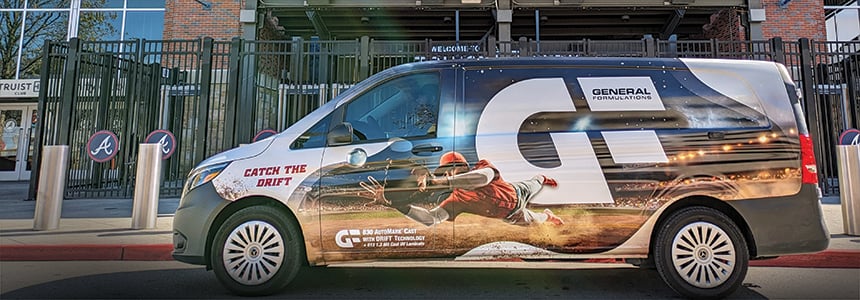
Above: GF 830 AutoMark Cast with DRIFT Technology from General Formulations is a full-body cast wrap solution and the material of choice for full wraps and complex vehicle surfaces.
Clean Designs, Vast Media Choices
The evolution of a wrap design has transitioned from including every little detail to keeping it simple and straightforward. It is a thoughtful move when considering the few moments a passerby may have to absorb the information included on the vehicle.
Less is more. “Current trends in commercial vehicle wraps focus on branding the entire vehicle to build awareness and recognition. This is a shift from the past, when vehicles were often treated like mobile flyers or business cards. Modern branded designs prioritize quick recognition, using a less-is-more approach, with specific brand colors, mascots, and friendly logos. There is no longer a need to list every service or contact method on the vehicle, thanks to the accessibility of Google, websites, and AI search,” explains David Korvah, marketing manager, Avery Dennison Graphics Solutions.
“Although each design and wrap is unique, many business owners choose simpler logos with clear type to make their most pertinent information—company name and phone number—stand out. Some companies also elect to incorporate quick response (QR) codes so prospective clients can visit their website instantly,” agrees Robert Childress, national sales manager, sign and graphics, FELLERS.
Less clutter, more impact, that’s what Jay Kroll, director of product education, General Formulations, says is the trend. “Bold typography, clean geometry, and targeted campaigns that communicate a brand message in the few seconds a passing driver has to absorb it. Text-heavy wraps are giving way to graphic-forward layouts that work at highway speeds, and QR codes are showing up more frequently as brands look for ways to bridge physical visibility with digital engagement.”
“Trends in color evolve and drive customer preferences for their commercial vehicle wrap designs. Other design trends come from clothing, cosmetics, and automotive designers,” shares Craig Sykora, senior director global application engineering, 3M Company.
A wrap shop’s main priorities in a film haven’t changed, according to Kroll. “Shops want materials that print beautifully, protect the substrate, and don’t fight the installer. What has evolved is the expectation for all three to coexist without compromise. Thinner laminates, better air egress technology, and improved adhesive formulations are meeting that bar in ways that weren’t possible a few years ago.”
Thriving Visibility
Home service companies, retail/food, and much more are poised to take advantage of commercial vehicle wraps. Businesses of all sizes and backgrounds benefit from visibility and brand recognition.
Sykora argues that almost every industry is poised to gain from commercial vehicle wraps. “Delivery services, small business owners, entertainment, retail, and food service can leverage commercial vehicle wraps to represent their brands and communicate to everyone on the road the value their brands provide.”
“The wrap creates the most economical and multi-use form of advertising. The biggest benefit to a vehicle wrap is that it acts as a mobile billboard providing thousands of impressions each day it is on the road. The more vehicles a business has on the road, the more their impressions on prospective clients multiply,” adds Childress.
Lately, Korvah says he has seen an increase in home service businesses utilizing commercial vehicle wraps. Companies like this—those providing maintenance, repair, improvement, or cleaning services directly to residential properties—often manage large fleets. “When a business seeks to gain visibility and brand recognition among potential customers, a commercial vehicle wrap is an ideal solution.”
Price Range
The variety of wraps falling under commercial vehicles is vast, from a small decal to a fully wrapped truck, making pricing a challenge.
Based on research from Blake Madsen, trainer/owner, Brand Command Wraps, Korvah says the cost of a commercial vehicle wrap varies depending on vehicle type. However, typical pricing from a reputable shop will cost between $4,000 to $6,000.
It’s a wide range, admits Sykora. Professional installs range in price depending on if the job is for a small logo on a door or a full vehicle or a large truck and trailer. The total cost depends on the complexity of the installation.
Cut vinyl decals for a single door panel might be a few hundred dollars, explains Kroll. Whereas a full wrap on a large Sprinter van with premium cast material, a matched laminate, and professional install can run from $6,000 to $8,000 or more, depending on design complexity and regional labor rates.
“Vehicle size, coverage percentage, design intricacy, and material selection all factor in. The better question for a customer isn’t just what it costs, but what it costs per impression over the life of the graphic,” stresses Kroll.
Time Lapse
Commercial wraps remain installed for several years. Weather, UV rays, temperature; as well as when it is the end of an advertising campaign negate this.
“Commercial vehicle wraps last anywhere from three to seven years. For example, a commercial wrap in AZ could last anywhere from one to three years, while a wrap in OH could be five to seven years,” says Korvah.
A reasonable working average is four years. “Even though many wrap films are rated for longer durability, removability becomes more challenging as adhesive dwell time increases and the film weathers,” says Kroll.
Smart wrap shops build removal into the customer relationship proactively, points out Kroll. They offer complimentary removal at year three, a partial credit at year four, and full removal charges at year five and beyond.
With that in mind, using the right type of media is critical. Korvah recommends asking a number of questions to the shop and installer to determine the best film for the vehicle/project’s need.
Mobile Advertising
Commercial vehicle wraps are one of the most effective advertising methods. Today’s wrap designs are clean and simple. Almost every industry can benefit.
Sep2026, Digital Output