Heating Up the Market

Heating Up the Market

By Melissa Donovan

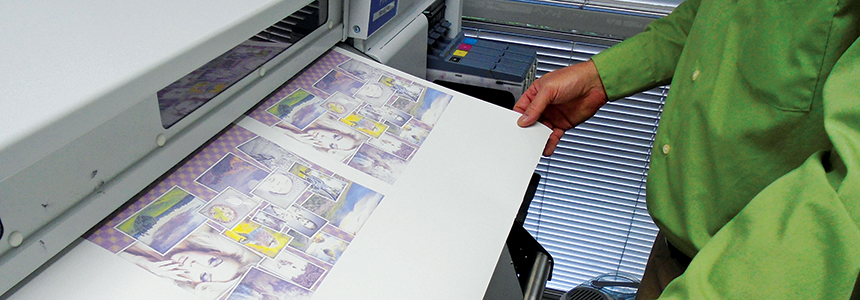
Textile printing equipment falls into three categories—direct to print via inkjet technologies like latex or UV, dye-sublimation (dye-sub) transfer, and dye-sub direct. While it may be more cost effective for a print service provider (PSP) to print directly to a textile using an existing printer like latex or UV, sublimation remains the predominant method of choice.

Graphics created via sublimation offer vivid prints and a high-quality feel. The act of sublimation requires heat. When inks are warmed, they turn into a gaseous state, and permeate the substrate. When direct dye-sub occurs, ink is sublimated directly onto the fabric. With transfer dye-sub, a graphic is printed onto transfer paper and then sublimated to the fabric through an external heat source.

Advancements on inkjet sublimation printers include build quality and width considerations, media handling, and ink. Demand is high as more PSPs become aware of the technology and what its adoption can do for their businesses. As the industry matures, these enhancements are a logical progression.

Build Quality and Width Considerations
New machines are introduced with higher productivity ratings to effectively handle larger runs, especially for those companies in the industrial fabric space.

For example, the Rhotex 322 from Durst Image Technology US is designed for heavy industrial use, with print speeds up to 1,506 square feet per hour (sf/h). EFI’s Reggiani portfolio of printers are also designed for high-speed, industrial printing. Inkjet Technology, Inc. recently announced its TX-3200DS printer, with a width of 3.2 meters and printing speeds of up to 1,300 sf/h in production quality mode. Mimaki USA, Inc. introduced in Spring 2016 the 3.2-meter TS500P-3200, developed for extra-wide textile applications in production transfer runs. It can print at speeds of 1,937 sf/h in four-color mode.

Wider width sublimation printers, some reaching five meters, create seamless prints and output at a higher capacity. Ryan Burton, digital printing specialist, Media One Digital Imaging Solutions, LLC, says wider machines eliminate the need to splice media together. This equates to less labor and minimizes the time it takes to complete graphics.

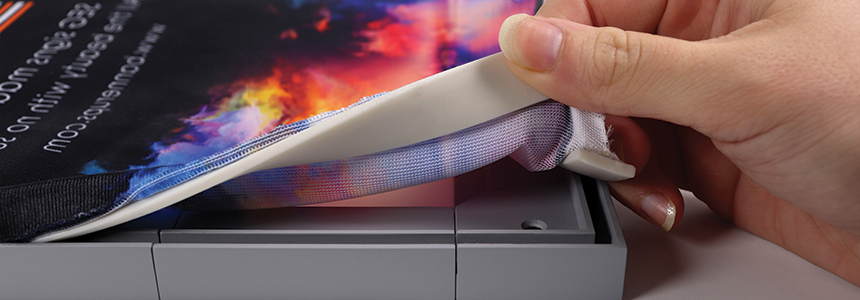
All applications benefit from the wider width. For soft signage, which also includes trade show exhibits, Keith Faulkner, president, Splash of Color, explains how demand for wider widths has increased. He specifically points to the introduction of silicone edge graphics displays, which require extra fabric to fit into the frame.

“Most exhibit and display builders require the ability to produce eight- to ten-foot panels without seaming for use as backdrops. In order to accomplish this, exhibit builders will select printers capable of handling fabric widths of 102 to 126 inches, providing sufficient fabric for eight- to ten-foot panels with finishing in mind,” he continues.

Interior décor also benefits from wider width devices. Similar to soft signage, these markets look for the opportunity to print efficiently, and this means with as little seams as possible. Ricardo Augusto Lie, partner managing director, Ampla Digital, cites wider devices as better accommodating applications in the bed and bath segment and curtains.

“The wider width print capability is also attractive to those serving the custom interior décor market as they can produce large, coordinated panels for window coverings and bed linens,” agrees Ryosuke Nakayama, manager, textile and apparel business development and marketing, Mimaki.

Media Handling
Fabric and transfer paper are tricky when it comes to controlling how they are run through the printer and then in some cases a heat press. Automated feeders and tension control tools all help stabilize the media at each end of the process.

“Stabilizing media is especially important in fabric sublimation printing. You are working with material that can wrinkle easily and with the cost of either fabric or transfer paper, customers need to ensure there is as little waste as possible,” recommends Mike Wozny, senior product manager, EFI.

According to Randy Anderson, product marketing manager, Mutoh America, Inc., the latest trend in sublimation is thinner paper, which requires finessing the media handling system a bit. To combat this, Mutoh created the ability on its printers to disable rollers in contact with the media to allow paper expansion outwards towards the sides rather than up, which causes cockling.

Robert Rychel, textile sales manager, Durst, stresses the importance of constant and consistent sensory measurement of the state of the media—weight, roll diameter, width, thickness, and actual tension. “The calculation of these measurements and then constant controlling of the right parameters allow the transporting of even difficult and dimensionally unstable media in a reliable and consistent way,” he suggests.

Weight is a challenge, especially as wider width printers are introduced. “As printers get bigger and faster, the rolls of media must also get longer and heavier, therefore needing more heavy duty methods to take up and feed,” shares Matte Gusse, VP sales and marketing, Advanced Color Solutions.

“Typically, the components in the machine need to be larger and sturdier to handle the stresses incurred from the width of the media. This includes the rollers transporting the paper, and the motors associated with unwind and rewind transport,” agrees Mark Sawchak, owner, Expand Systems, LLC.

For example, the Auto Media Feeder on the Mimaki TS500P-3200 applies calibrated tension to the media, maintaining stable and precise media feed and take up on rolls up to 286 lbs. “This also reduces telescoping of the media during take up and eliminates the potential for buckling or creasing during the calendar transfer process, thereby accommodating long run, full roll transfer,” shares Nakayama.

“Heavy-duty take-up systems that keep the paper wound tightly and evenly during roll-to-roll print are important because it allows users to move a printed roll of paper directly to a calendared heat press without having to make any manual adjustments. A tightly and evenly wound roll helps produce optimum results,” says Lily Hunter, product manager, textiles and consumables, Roland DGA Corporation.

Maintaining a constant tension across the entire print run is important. “More sophisticated systems use rubber-coated rollers to help grip the fabric and weighted dancing rollers to maintain constant tension regardless of how stretchy and dimensionally unstable the fabric might be,” shares Faulkner.

At Hollanders Printing Systems, according to Jaco Kramer, sales and marketing, Hollanders, its printers use two rubber rollers that keep the material in the print area with a specific amount of tension. The level of tension differs per material.

Fabric type effects the media feeding system. Juan Kim, CEO, Valloy Incorporation, says direct sublimation printers are generally equipped with a rubber roller feeding system, which works best for woven and non-stretchable fabrics. A silicone coated belt type is used for thin or stretchable textiles, but sometimes daily maintenance to recoat the belt is a challenge. Kim says some printers are now equipped with a belt consisting of hydrophobic plastic meshes with a vacuum as an alternative.

Ink Sets Evolve
Sublimation ink is also advancing. New ink sets provide higher quality with lower costs.

“New ink sets provide the highest quality prints and most value. These offer deeper, richer colors, greater gamut, more efficient yield, and higher resolution than previous formulations,” explains Jimmy Lamb, education manager, Sawgrass Inc.

For example, companies like Mimaki, Roland, and Sawgrass are introducing fluorescent inks, opening up more opportunities for digital print, as bright colors such as these are highly desirable in the sports apparel market.

Other new ink sets feature high density blacks. “These produce extremely rich blacks, improved color contrast, and use less ink in the process. High density inks have typically been prone to sedimentation, where if left in the printer for a period of time the ink solids will clump together and could potentially cause the printhead to fail,” shares Timothy Check, product manager – professional imaging, Epson.

Epson’s new UltraChrome DS with High Density Black encapsulates the ink solids, preventing them from clumping together and preventing any costly downtime if the printer’s ink channels clog.

“Economizing on ink usage is important. High coverage is fairly common in textile applications so it makes sense to save as much money as possible with ink costs. A patented ink circulation system on a printer can recover 95 percent of all nozzle outages without wasting a single drop of ink,” recommends Wozny.

Learn more about dye-sub ink in the August issue of Digital Output.

Demand from Many Markets
Demand for digitally printed textiles is increasing in different markets and it all comes back to the need for quick, quality prints that are unique and can help a company stand out from the crowd.

“The textile industry now perceives digital printing as an affordable option that will bring them flexibility and new ways of thinking in the manufacturing process of printed textiles that wasn’t available long ago,” says Augusto Lie.

Sawchak agrees. “The general primary drivers for the market demand of digital textile printing include the need for shorter runs, fast order response, more design options, and sustainability. These drivers are consistent across all of the markets, but the primary driver may vary per market.”

For signage, Rychel says usage is driven by the fact that fabric is “greener” and can help with sustainability targets. Also, being foldable and light allows for ease in shipping. “When you add the fact that fabrics also provide a better overall appearance, it is really no surprise that we are experiencing increased demand,” he continues.

“Apparel manufacturers are looking for solutions to turn designs into sellable goods in a minimal amount of time, while balancing inventory. With fashion products, some designs move slowly, while others have significant spikes in demand. With digital dye-sub, manufacturers are able to adapt and shift production to meet demand,” shares Check.

Hunter points to consumer demand as driving the use of sublimation in apparel. With performance wear mainly composed of polyester, dye-sub is ideal for uniforms, workout wear, and athleisure items.

“Changes in polyester fabric have made polyester the fabric of choice for sports and yoga by improving the look and feel of these fabrics, which spills over into fashion, plus the flood of products and specialty items that can be dye-sublimated make most applications limited only by the imagination of the designers,” adds Anderson.

Lamb believes that thanks to more knowledge of sublimation than ever before, appeal is more recognizable. “Customers see the quality of sublimated prints on all kinds of substrates and are increasingly buying these products. And where there is demand, you’ll find manufacturers designing products to meet those needs.”

The Logical Progression
Changes in build quality, printer width, media handling, and ink seem to be right on target when it comes to the evolution of sublimation printing technology and its place in the graphic arts.

“These changes are a logical progression in this industry. People are now able to produce applications that they weren’t able to do in the past with solvent and inkjet machines. They are able to have a higher margin when printing on different types of fabrics,” says Burton.

While he believes the advancements are on track for the industry as a whole, some believe the two separate segments—signage and apparel/décor—are at different points in their trajectories.

Check suggests that in the promotional goods and soft signage textile industries, growth is occurring in a logical progression because the companies involved are leveraging their experience with other sign products and applying it to dye-sub.

Conversely, “in the apparel industry, there are many purely analog producers today. These more traditional manufacturers recognize the need to transition to digital dye-sub, but the path to do so is unclear. I believe that we will see significant advancements in the apparel industry as the path to digital becomes clearer in the next several years,” he continues.

“I think sublimation is like electricity. Do you think Thomas Edison could see the logical progression? I don’t think so. I think we are really near the beginning. The markets that will benefit will likely be endless. Can you imagine ordering all custom furniture with exact patterns and colors? And having them delivered in two weeks or less? That’s the power of digital decorating,” concludes David Gross, president, Condé Systems, Inc.

Digital Sublimation
Enhancements in build quality, printer width, media handling, and ink all join together to achieve a common goal of advancing where and how sublimation print is used. Besides traditional markets like soft signage, trade show exhibitions, and backdrops, digitally sublimated print is now being seen in apparel and décor. Demand comes from the ever-present need to achieve cost-effective, quality print, and more markets are understanding digital’s integral role.

Click here to view the Textile Printers Target Chart – an all-inclusive information resource!

Jul2016, Digital Output

Turn Up the Finish on Sublimation and Heat Transfer

Turn Up the Finish

By Cassandra Balentine

The use of a heat press is necessary for dye-sublimation (dye-sub) printing and heat transfer. Heat from the press executes the sublimation process, which is the act of converting ink to a gaseous state and infusing the textile fibers. In the case of heat transfer, sufficient heat is applied to bond graphics to a variety of materials.

Depending on the specific application, the operator’s expertise, and a shop’s volume and budgetary needs, a print service provider (PSP) offering dye-sub has a variety of choices. A range of heat press options are available, including smaller flatbed solutions, like popular clamshell and swing away, or rotary equipment.

Flatbed heat presses are limited to single piece work, while rotary presses enable roll-to-roll transfers. Aaron Knight, VP, Geo Knight & Co, Inc., describes flatbed heat presses as flat, rigid, single-area pressing machines while rotary—or calenders—are continuous, roll-fed solutions.

Henri Coeme, global sales manager, graphics imaging, HIX Corporation, breaks down flatbed presses further, explaining that clamshell presses are mostly sold in traditional transfer and direct-to-garment applications, whereas swinger or swing away presses are mostly sold to customers working with textile and non-textile sublimations.

Rotary heat presses typically involve a higher upfront cost, however, as Dan Kane, marketing manager, graphics, Royal Sovereign International, Inc., explains, the average user gains the ability to scale up production based on needs. These presses are ideal for sports and activewear apparel production.

Cost and Productivity
Cost and functionality are primary considerations for any equipment investment. This holds true for heat presses. Additionally, the type of applications created, past and present volumes, and environment help to narrow down whether a digital textile printer is looking at a clamshell, swing, or rotary solution.

When it comes to cost, Kane admits that it is difficult to say what the average print provider should expect to pay for a heat press. The size, width, and heating technology are all factors that affect the total cost of ownership.

Generally, depending on the level of automation and production expectations, heat presses range from around $1,000 to upwards of $150,000. Flatbed options run on the lower end and rotary presses on the higher end.

Manual clamshell solutions are priced lower, and semi-automatic models retail for over $1,000. Larger sized clamshell solutions can run much higher.

Swing away solutions are priced around $2,000 on the lower end for manual and higher for automated.

Kane points out that when it comes to clamshell or swing away presses, volume may be sacrificed for price. “Small 6×8-inch solutions can be purchased for under $1,500, while 44×64-inch presses can run up to $50,000.”

Coeme adds that oversized twin-platen presses can go for almost $5,000 while large format options list for about $25,000. “Swing away models are generally a little more expensive than comparable clamshell models because of their need for a more robust cantilever construction. Of course, automatic models are more costly than their manual counterparts,” he says.

Rotary/calender presses offer the highest productivity and a much larger price tag.

Kane shares that an entry-level, quality calender/rotary heat press could cost anywhere from $25,000 to $40,000 depending on heat technology, width, and drum diameter, while higher end calender/rotary presses with widths up to ten feet and drum diameters of over 30 inches could run upwards of $140,000 to $160,000.

Matt Gusse, VP, sales and marketing, Advanced Color Solutions, explains that rotary heat presses are generally manufactured at 40 to 132 inches in width and the machine’s speed is usually measured by the diameter of the drum. “The larger the drum the faster the machine can continually heat and output product,” he continues. For perspective on speed, with a ten-inch drum size, users can expect about two to three feet per minute, and five to seven feet for a 24-inch drum.

“PSPs need to take the time to analyze the total cost of operating a press including operator labor, power, and space within the facility. Customers entering the dye-sub market often start out with a single flat press and as demand for production builds, add a second flat press, which requires an additional operator, power, and floor space,” says Michael Pender, president, Supply55, Inc. He says they should consider a rotary press, which offers a higher production capacity with a single device.

Feature Sets
Budget, applications, and volume requirements are all factors that can bring a clear winner to the forefront when it comes to deciding on a flatbed option like clamshell or swing away, or a rotary heat press.

Flat Platen Presses
Clamshell heat presses include two platens that open and shut similar to a clamshell.

Zuzana Cloete, business development, Practix Manufacturing LLC, explains clamshell presses work exactly as they sound, the top opens up at an angle to expose the bottom platen. When the operator is ready, the top platen—or clam—comes down and the bottom platen will rise to meet the heater.

Clamshell solutions are ideal for environments with limited space. “The movement is up and down instead of side to side so the machine does not require a lot of area to operate,” suggests Cris Saunders, director of sales and marketing, Insta Graphic Systems.

Coeme says clamshell solutions provide the ability to open and close in a single motion—as opposed to swing away models that have two distinct movements, vertical and lateral.

Sue Wilcosky, marketing manager, Transfer Express, Inc., a Groupe Stahl Company, recommends PSPs consider portability. “A clam-style press is ideal for those planning to decorate on site at events,” she explains, adding that the size and weight of a clam-style press makes it great for traveling.

Jeff Hopkins, SVP, sales and marketing, Advanced Innovative Technologies, LLC, points out that while clamshell heat presses are easier to manufacture than other types of platen heat presses, he recommends vertical retraction platen heat presses for dye-sub due to pressure issues. “Clamshell presses are difficult to maintain even pressure over the course of the life of the press and especially in the case of varying thicknesses of substrates,” he offers.

Similar to a clamshell press, swing away models include two platens. However, with swing aways, the top platen always faces down. This provides unobstructed access to the entire platen and also keeps heat away from the user’s face and hands, explains Saunders.

While swing away presses enable operators to keep their hands away from the heat, they are a little more technical to operate compared to clamshell models. “The swing away presses are ideal for experienced operators and considered work horses,” advises Wilcosky.

Applications well suited for swing away solutions including sublimation, flock, rhinestone, and non-textile work.

Hopkins suggests that platen heat presses feature a simple design with few moving parts, leading to easy maintenance, installation, and servicing, as well as the ability to conform to rigid substrates.

In addition to the clamshell and swing away presses, tray or draw and shuttle-style platen solutions are also available.

Rotary
Aside from a higher investment cost, rotary presses come with more moving parts and maintenance.

Cloete says rotary presses are either air or oil heated, and each come with advantages and disadvantages. She suggests that oil heated systems are more expensive but provide consistent heat, while air machines offer faster heat up and cool down times.

Hopkins believes a primary benefit of roll-to-roll rotary presses is that heat is continuous and allows for maximum production. “Rolls of continuous fabric can be produced with no limitation on length.”

Marcus Tam, marketing manager, Eastsign International Ltd., points out that a clamshell or swing away heat press requires one worker that can make about two shirts in one hour, while rotary heat presses can double that productivity.

“The calender or rotary press offers the most versatile options by allowing the user to perform roll-to-roll transfers virtually up to any length, single piece-to-piece work—again not limited by length—or piece-to-roll production,” says Kane, noting that it is ideal for sports and activewear applications.

In addition to roll-to-roll models, rotary heat presses are also available for the production of cut parts printing used for apparel and individual part printing and transferring, adds Hopkins.

Automation
Productivity is costly. Automated solutions enable more volume but also come with a higher price tag.

Saunders recommends that users anticipating high production volumes invest in an automatic heat press. “When manual heat presses are used for high-volume production, it seems that output tends to drop over the course of the day. Manual equipment requires a significant amount of physical labor to run the machines.”

Gusse agrees, noting that automated machines are designed with productivity in mind and lead to less user fatigue and lower error rate.

Automation also leads to predictability. “Automatic heat presses are far more consistent for setting pressure and relieve the operator of long bench pressing workouts due to the push-button automatic closing/opening nature of the operation,” says Knight. He adds that manual presses are more popular but require effort with opening and closing, and operators need to get a feel for setting the pressure.

However, automation does come with its own set of challenges. For example, these devices typically weigh more and cost more to ship. They may also require a compressor and consume more electricity overall.

Advancements
Heat presses are affected by the recent trend of more digital textile printing applications. To serve this segment, new feature sets are added and existing ones are evolved.

Saunders believes that the push to digital textile printing has definitely affected the heat press industry in regard to machinery options, features, and usage. “With direct-to-garment machinery, you are using heat presses for pre- and post-curing of garments after the digital print. With the sublimation boom, you are seeing larger heat presses used for applications of digital papers to various substrates.”

Digital textiles require a variety of new features, including higher and more consistent heat applied with even pressure across the platens, clamshells with pre- and post-curing options, larger footprints, automatic release, and hovering and interchangeable platens for printing various substrates, offers Saunders.

“We’ve seen an increase in print providers moving from flat heat presses to calender heat presses to improve workflow and production capacity. Additionally, the direct-to-fabric market has grown to include natural fiber printing, which requires a calender press for fixation,” offers Pender.

Knight believes the rise of digital textile printing has led to more accurate digital controls, pressure indicators and helpers, and storable presets.

Turning Up the Heat
While a seemingly simple piece of equipment, heat presses are essential for sublimation and heat transfer. To ensure consistency, it is important to invest in quality solutions that are right for your particular environment.

Jul2016, Digital Output

Getting to the Point

Getting to the Point

By Digital Output Staff

Digitally printed textiles are found in a number of different environments, from stage backdrops to customized apparel.

Two processes are used to digitally print onto textiles—direct and transfer. In one, ink is laid directly onto the fabric. The other process involves the fabric accepting a transfer of a graphic. This graphic is printed on transfer paper, and then the transfer paper is laid on top of the fabric, run through a heat press, sublimated, and the graphic is bonded to the fabric.

While transfer printing is a preferred choice for print service providers (PSPs) because of the wider color gamut, durability, and washability, direct printing also offers benefits. Print providers who do not have heat press capabilities in house or want to save money and time by eliminating transfer paper gravitate toward direct printing onto fabric since this means less steps in production and even a cost savings in some aspects.

Specifics play into which type of fabric is ideal for direct print, whether dye-sublimation (dye-sub) or inkjet. Ink and textile type are two factors. Media manufacturers recognizing the demand for materials in this segment focus on offering products featuring durability and visual appeal, while simultaneously considering the fabric’s end use.

Less Steps, Cost Effective
PSPs interested in adding fabric printing to the mix, but aren’t looking to commit a lot of capital find direct to print an ideal option because the process involves so little steps. The cost of entering into this segment is lower than in the past as well.

Eric Tischer, president, Verseidag US, argues that while those PSPs who offer transfer printing don’t intend to switch to direct print, direct printing offers both production and application advantages. “With regards to production, a transfer paper isn’t needed with direct, which is a cost savings. With regards to products and print quality, there are applications such as backlit and flag printing, where direct print offers better product saturation due to the production process,” he continues.

Part of the growth is because direct printing of textiles is becoming more cost effective. “Due to the entrance of industrial machines the gap between rotary screen and direct textile printing has narrowed to the point that direct is now an economical option. In the past, the speed of printing and cost of inks were both a deterrent to direct printing. Now the print speed and ink cost have made direct digital an ideal alternative for textile production,” explains Ann Sawchak, owner, Expand Systems, LLC.

“With the cost of direct to print machinery becoming more competitive, and the increasing variety of coated fabrics available, direct to print becomes an ever-growing, viable option,” agrees Jeff Sanders, digital fabric sales manager, Pacific Coast Fabrics.

Joseph M. Rooney, North American sales manager, Heytex, believes that while direct print is growing, it stills falls behind where it should be and this can be remedied by increasing PSPs’ education on, “how they can use the same 3.2- or five-meter UV, latex, or solvent printer and achieve brilliant results. This education process is the most important part of direct print versus traditional dye-sub.”

The Right Ink
Printing directly to textiles can happen either with dye-sub or traditional inkjet inks. In both scenarios, a coating is typically included on the fabric prior to printing to optimize print quality and provide a softer hand.

Dye-sub ink sets used in the direct process include direct disperse, acid, reactive, and pigments with and without binders, according to Expand Systems. A pre-treatment or coating is generally required for all of these options.

Laura Wilson, West coast print media specialist, Dazian, LLC, says coatings for dye-sub direct have come a long way, which helps explain why direct to print fabrics are gaining in popularity. “In the past, the treatments were heavier and tended to affect the look and feel of the fabric and they were not as soft and drapey as typical dye-sub fabrics.”

With traditional inkjet technologies, like aqueous, solvent, eco-solvent, UV, or latex, Gautier Peers, territory sales manager, Dickson Coatings USA, explains that certain fabrics require an inkjet lacquer or coating to guarantee the right penetration of solvent and eco-solvent inks, as well as optimum fixation of UV and latex inks.

“Aqueous, eco-solvent, solvent, and UV inks require an inkjet receptive coating in order for the inks to adhere to the surface of the fabric and not soak into the fabric, which mutes the colors. While this coating offers bright, vibrant colors, it typically reduces the soft hand of the fabric, making it more rigid and less flexible,” adds Jessica Blevins, product specialist, S-One Holdings Corporation.

Despite direct print not requiring a heat press to transfer the graphic from paper to fabric like in transfer printing, some ink sets do require a post-treatment after printing to ensure the ink is embedded into the fabric. Fixation of the inks to the material generally occurs with heat or steam.

For fabrics printed with acid, reactive, or direct disperse dye, in the direct dye-sub process, a steam post-treatment is required. Direct disperse dye, and pigments with or without binders, can also be post-treated with dry heat, based on Expand Systems’ research.

According to Lily Hunter, product manager, textiles and consumables, Roland DGA Corporation, if UV inks are used, no extra fixation is needed. “UV inks are cured by the printer’s lamps and the topcoat on the media, in combination with the heat generated during the printing process, this allows the ink to ‘bite’ into the media.”

In addition, solvent and latex inks do not require any fixation either, points out Mark Shaneyfelt, director – sales and marketing, print media, Aurora Specialty Textiles Group, Inc.

Coatings Expand Range
Most vendors agree that woven substrates are ideal for direct printing, but coating advancements have led to more fabrics to be printed to directly.

As Tischer advises, the most ideal fabrics for direct print are those with an ink receptive top coating. Without it, he says inks are forced to wick out and image clarity and quality can be reduced.

“A fabric that is not coated properly is subject to issues that can include ink migration, hot spots, and overall discoloration when exposed to the elements,” agrees Sanders.

Coatings aside, Michael Katz, president, Jacquard InkJet Fabric Systems, believes any fabric construction can be printed on. “Construction has little influence except the image will look different on each fabric. For example, the image will be noticeably different on an open weave fabric compared to a tight, dense weave.”

“Any woven or knit substrate, including blends; and technical fabrics are ideal for direct printing,” according to Dr. Jerry Pinto, president/CEO, Advanced Chemical Solutions, LLC.

Hunter says textiles that are stiffer and have dimensional stability are generally better for direct to print than stretchy materials.

“Polyester is best constructed for the direct to print process because it features a tight weave and smooth surface,” explain Tamara Pitman, product manager, and Kristina Devine, senior marketing and pricing specialist, Coveris Advanced Coatings.

Angela Mohni, director of product marketing, SEAL, part of ACCO Brands, says that since direct to print fabric is generally created by a weaving process, it can yield minor defects in a roll of material. She cautions that while this is to be expected occasionally, PSPs shouldn’t assume there is something wrong with the fabric.

It is a combination of the correct ink and material that dictates the best possible fabric for the job. Sharon Roland, advertising and PR manager, Fisher Textiles, admits there is not a one-size-fits-all fabric solution for the direct to print process. “The type of fabric best suited is totally dependent on the ink system as well as the final application.”

For dye-sub, Expand Systems recommends acid dye be used with nylon, silk, and wool. Reactive dye should be used with cotton, rayon, and silk. Disperse dye is ideal for polyester. Pigments with and without binders are used for most fabrics, including blends.

Alternatively, Blevins says latex inks offer the most versatility, working with cotton, canvas, polyester, cotton/polyester blends, textile wallcoverings, silk, and nylon.

Characteristics in Demand
Print providers and their customers demand brilliant color, a soft hand, durability, and options from direct to print fabric providers. While many of these features are common across all applications, some properties hold more importance than others depending on end use.

“Vibrant color that is repeatable is a demand. Users want the color of their fabric to be just as vibrant as if they were printing to paper or vinyl,” explains Mohni.

Softness and drapeability are also important, she continues. “Customers choose textiles due to their soft hand and ability to evoke a different type of reaction from the final consumer of the graphic. Textiles also give a higher end feel and are very effective in marketing high-end products such as cosmetics, fragrances, and electronics.”

“It is important that the material is durable so that it can be folded and no creases show when unfolded,” point out Pitman and Devine.

Wilson believes a common request among PSPs is a wider variety of material options. “Luckily, there are fantastic direct to print fabrics available with bright white points and excellent feel that image very well.”

Arguably, demand depends on the final end use of the fabric. Roland admits that while longevity, durability, flame retardancy, wrinkle resistant properties, and soft hand are almost always a consideration, the importance of one over the other varies from job to job.

For example, Sawchak says the fashion apparel market is especially sensitive to color matching and color gamut, whereas lightfastness is an important attribute for outdoor furnishings, signage, and flags.

“Depending on the specific market segment, a number of needed characteristics will always come into play,” agrees Tischer. “For instance in the silicone edge graphics market—which is growing rapidly for retail, exhibition, and décor—vibrant, soft, and wrinkle-free fabrics are the norm.”

Blevins cites cleanability as being in high demand in the décor market, specifically addressing indoor upholstery, window, and furniture solutions. “While many direct to print fabrics offer more longevity outdoors in comparison to traditional dye-sub, the fabrics cannot be washed and cleaned like dye-sub prints. Direct print fabrics are not suitable for apparel or upholstery fabric that requires more than just a spot cleaning,” she adds.

Awareness of Challenges
Despite advancements in coatings, ink technologies, and fabric construction, there are still challenges that PSPs should be aware of when it comes to printing directly to textiles. For the newly inundated, there is a bit of risk involved. It is important to correctly pair media and ink and understand the fixation process.

“When printing directly to fabric, test for ink and fabric compatibility. Also, if fixation is required, be aware that there will be a longer learning curve, as you’ll need to get familiar with the equipment involved and the process in general,” recommends Hunter.

“It is crucial that each and every fabric is carefully profiled and that temperature settings are exact for heat fixation. If fabrics are all treated the same, issues relating to oversaturation can result in color migration or color not developing fully or evenly. Heavier fabrics require different heat fixation settings than a lighter fabric,” suggests Sanders.

“There are some issues with ink migration if the fixation process is not done correctly. This is the source of either ink bleeding or actual dirty marks that can be seen above in backlit applications such as light boxes,” shares Blaise Humphries, business unit manager, Decoprint, SENFA.

Besides compatibility and fixation, PSPs should know that media handling is a bit different. “Direct print is not the same as traditional dye-sub and therefore requires slightly more attention to detail when it comes to shipping, handling, and installing the material. With direct print, the material can be easier to scratch, wrinkle, or crease,” explains Rooney.

As with any project, fabric or not, consider the final end use. “There are challenges in choosing the right fabric for the end application. It is vital to know all of the requirements of the finished application, such as flame retardancy standards, durability, and wrinkle resistance, before taking on the job,” advises Roland.

A Direct Approach
Textiles designed for direct to print processes—whether dye-sub or inkjet—must meet a number of expectations. Coatings and ink sets work together to expand the variety of textiles used for direct print.

As digitally printed textiles’ popularity grows, so too does direct to print. Print providers and their customers demand products that cater to their every application need, from traditional soft signage to performance apparel and home furnishings.

Jul2016, Digital Output

Signage of Magnitude

Signage of Magnitude

By Courtney Saba

Magnets provide a profitable income source in print shops. The high demand for this signage is due to the ease of use—specifically during install—and the ability to simplistically change out graphics. A new development within magnetic signage is presenting graphics in wider widths beyond 24 inches, an offering that is quickly being adopted by many manufacturers. However, media 24 inches in width is still popular.

This article looks at two options of magnetic signage—magnetic and magnetic-receptive media—and how width effects their usage. Traditional magnetic media is printed to directly. It can be magnetized before or after printing. Magnetic-receptive media is an overall magnetic display system, where a magnetic base is installed and magnetic-receptive graphics are printed and layered on top. Both are used in an increasing number of environments.

Wider Widths
A common trend in the utilization of today’s magnetic signage is the introduction of wider width offerings. The width eliminates seams in large jobs and also makes smaller jobs more cost efficient. Media as wide as 48 and even 60 inches is now available.

Wider width media helps present graphics in new and appealing styles, eliminating seams in the final display product. “The wider width allows for a larger presence in the market. Customers are looking for alternative media options as compared to traditional banners,” believes Kylie Schleicher, marketing manager, Ultraflex Systems, Inc.

Specifically for wallcoverings and other very large format displays, Jim Cirigliano, marketing manager, Magnum Magnetics Corporation, agrees that some shops prefer to print to wider sheets in order to reduce the number of seams between panels. For others, the appeal of wider magnetic media is the improved yield on smaller cut pieces.

“Wider magnetic sheeting enables the wide format printer to maximize the material’s use by eliminating waste when laying out small format graphic print jobs,” says Darrell Adams, VP North America, Newlife Magnetics LLC. CAD cutting eliminates the need for old fashion cutting dies and makes quick and cost-effective print production layouts on wide magnetic sheeting possible. Production of small format print jobs on wider media is faster and more cost effective, he continues.

Adams suggests that advancements in printer technology, including new ink systems, printing widths up to 120 inches, CAD cutting systems, and online links to print profiles, open up a range of new uses beyond wider magnetic substrates for signage and graphics into décor and architecture.

Demand for wider width material comes from retail, restaurants, hotels, trade shows—basically anywhere the convenience of rapid change out of display advertising or designs is desirable, adds Jim Miller, technical sales, Adams Magnetic Products.

The Small Argument
Just because wider width options are becoming prevalent, doesn’t mean 24-inch material is irrelevant. There’s still a robust market for narrow media. It’s often the application or end use of the magnet that drives the decision on which width is ideal. In addition, wider width media does have its challenges.

“The market for 24-inch widths still far exceeds the market for wider format magnetic sheets at this time. Amid the evolution of magnetic-receptive materials in thinner, lighter, wider, and easier to print configurations, the 24-inch magnet widths are still highly utilized for the base product,” explains Miller.

According to Schleicher, weight plays a factor in the width of the magnetic media. Print providers are looking for low-cost, high-quality, effective ways to meet the demands of their customer. Smaller widths are often used because the wider material weighs more and is harder to handle.

The downside is the roll weight. In thicker gauges, magnetic media is heavy and becomes difficult to manage. “Also, because these pieces are magnetized, they could stick to some roll-to-roll equipment while being printed. It’s also thicker than most printable media, which can cause printhead height clearance issues,” notes Clay Reierson, project manager, Xcel Products, Inc.

In some cases, it isn’t easy to manufacture large format magnetic sheets. “Many magnet companies lack either the capital or will to invest in new technologies and are satisfied with their share of the classic market requirement for small format magnet widths of 30 inches wide or smaller,” suggests Adams.

At Magnum Magnetics, for example, superwide media was originally a challenge to accommodate at multiple levels of the manufacturing process, according to Cirigliano. But the company adapted based on customer demand for an American-made, wide-width product.

Magnetic-Receptive Versus Magnetic
Two types of magnetic media options are available. Each excels in certain applications. According to Michael Gertz, marketing manager, Master Magnetics, Inc., magnetic sheeting is ideal for magnetic vehicle signs, calendars, sports schedules, and business cards. Working together in a system, magnetic-receptive sheeting and magnetic media are ideal for retail point of purchase displays, menu boards, and bank interest rate signs to full wall mural graphics—all with easy installation and changeability, he continues.

Width availability overwhelming affects magnetic-receptive media, as opposed to magnetic. “The cost of calendar rolls versus demand of product is a key factor. When magnetic-receptive technology pushed the envelope of in-store wide format, lifestyle graphics magnet companies saw an opportunity to try to capture market share. This allowed them to invest in the expense of wider technology,” explains Joe Deetz, CEO, Visual Magnetics LP.

Width limitations are evident in the manufacturing and installation of the product, says Schleicher, as magnetic-receptive media can be wider than magnetic media due to the lighter weight of the product.

Miller explains that magnetic-receptive media is typically .010 to .013 inches thick, making it lighter and easier to ship, handle, install, and store.

These thicknesses are typical at even wider widths of 54, 60, and 74 inches wide, according to Reierson. “Having a variety of widths is important for both products, one size does not fit all. That said, magnetic media will be more negatively affected because of the slightly higher cost associated with the wider widths, mainly due to the weight and shipping costs,” he continues.

Adams adds that in many cases magnetic sheets—especially those used as the magnet base in a magnetic-receptive system—don’t need to be much wider than 30 inches. “The magnetic-receptive media will hide all the seams within the magnet base. In this case, magnetic sheeting widths of 30 inches or less are preferred because install is easier if the widths are smaller.”

Wider Widths for You
Adams Magnetic Products’ MAGbond Magnet Media System consists of three components—the magnetic-receptive sheet, magnet base, and MAGbond magnetic paint. Magnetic-receptive sheets are available in 50, 54, and 60 inches in either white paper, PET, or canvas lamination.

Magnum Magnetics offers DigiMaxx, a superwide printable magnetic material. It allows printing directly to magnets up to 40 and 48 inches wide. Made in the U.S., the media is a 20- or 30-mil thickness and available in both matte and gloss finishes.

MagX America, Inc. sells magnetic-receptive products in 50-, 54-, and 60-inch widths. Roll weight is 58, 60, and 64 lbs, respectively. The material is a 10-mil matte white polyester laminate. The company also offers printable magnetic sheeting under its Xtrawide product line, in widths of 24, 30, 40, and 48 inches.

Master Magnetics’ magnetic graphic system is comprised of its PrintMagnetVinyl magnetic sheeting and FlexIRON magnetic-receptive sheeting. FlexIRON is available up to 48 inches in width and standard roll lengths of ten, 25, or 50 feet.

Newlife Magnetics’ printable magnetic sheeting is now available up to 50 inches wide. It features a vinyl print surface with either a matte or gloss finish. The company also offers its Maco magnetic system, made up of high-quality steel sheeting Ino-Steel and a magnetic base referred to as Wall-Mag. Width ranges from 24 to 60 inches and standard thickness is 10 to 13 mil.

Ultraflex recently announced its magnetic-receptive line of media, Signetics. Signetics Select is available in roll widths of 54, 60, and 74 inches. Signetics Duo is printable on two sides and available in widths of 54 and 60 inches. Signetics LTX is for use with latex ink and available in widths of 54 and 60 inches.

Visual Magnetics offers its VM-Graphic System, which uses a magnetic-receptive Micro-Iron based primer called ActiveWall, a flexible magnet backer called InvisiLock, and a magnetic-receptive line of print media referred to as MagnaMedia. MagnaMedia ranges in width from 42 to 60 inches, depending on the finish used.

Xcel Products’ XMR v2.0 magnetic-receptive media is available in 54-, 60-, and 74-inch widths. This newest iteration of the company’s product incorporates enhancements like a brighter white, enhanced stiffness, and improved durability. It also offers XMR DS, a double-sided magnetic receptive, available in a 60 inch width.

Magnetic Signage
Width is a hot topic that enables seamless, larger signs and smaller runs that can be effortlessly ganged up to print quicker. It doesn’t come without its challenges, however, as handling and manufacturing are issues. In both cases—magnetic and magnetic-receptive media—demand is due to ease of use, cost savings, and the capability to effortlessly change out graphics.

Jul2016, Digital Output

Turning Textiles

Turning Textiles

By Cassandra Balentine

Textiles offer a suitable medium for a range of applications across many industries, from fashion and entertainment to sign and display. Maya Roth, founder, CADFab Digital, understands the growth and demand of custom fabric printing and through her business provides everything from sample prints to industrial runs consisting of thousands of yards.

Driven by fashion and technology, Roth began her career studying fashion design and computer graphics. She realized early on that digital textile printing was her medium of choice and launched her own business. In 1999, CADFab Digital was founded. Based in Los Angeles, CA, the company operates out of a 20,000 square foot facility with 20 employees.

In the beginning, the business primarily offered textile design services. While printing was a smaller portion, the company utilized digital from the onset. Meanwhile, Roth closely watched the technology evolve, attending a variety of trade events, including the Specialty Graphic Imaging Association Expo and ITMA, waiting until digital was ready to effectively compete with conventional print to invest.

She says this happened in 2012, when prices dropped for both consumables and the finished product. Simultaneously, printhead technology evolved to enable faster speeds and excellent output quality. It was then that Roth felt the latest digital textile printing machines were able to offer faster speeds and production quality at affordable prices and decided to make a significant investment in industrial digital textile printing technologies.

Since then, CADFab Digital has shifted to more production than design. Roth estimates that the company’s business ratio is about 95 percent print and five percent design. And the equipment continues to advance. When digital textile production was first brought in house, output was about an inch a minute. Now, it produces 100 yards an hour on average.

Application Range
The success of CADFab Digital is due to its commitment to customer care and its ability to offer a variety of textile applications. With expertise in many digital textile printing methods, the shop prints on almost every fabric in house with confidence, including cotton, polyester, rayon, silk, and linen.

It does this by offering sublimation/heat transfer printing, direct printing, and wet printing methods. The shop’s digital print studio features more than 20 different wide format printers that create both sample and production runs, ranging from Mimaki USA, Inc. to MS Printing Solutions.

Sublimation is selected for polyester-based goods, providing output that is permanent and washable.

CADFab Digital’s direct printed products are wet printed both with reactive or acid dyes. Depending on the substrates selected, the garments are then steamed, washed, and cured to ensure the inks are set. The final product is suited for washing and hanging indoors and outdoors. A non-washable process is done on natural fabrics for quick presentations or photoshoots—these are more disposable short-term applications.

“We offer high-speed industrial textile printing for both direct and sublimation needs. We can print to almost every substrate and all processes are water-based, which also makes it a fairly ‘green’ operation,” says Roth.

This range of service and technique attracts a wide customer base, including high-end fashion, interior décor, entertainment, textile design, and soft signage.

Trendy Prints
CADFab Digital’s ability to create short-run custom prints allows smaller businesses and startups to get moving with little investment.

The company works with several U.S. and international fashion designers to help bring their collections to life, including Brogamats, a company that provides fashionable yoga mat bags, featuring designs with masculine appeal.

Selling direct to customers and wholesale, Brogamats relies on CADFab Digital for the textiles used to create the bags. After finding CADFab Digital online, it’s been a client for approximately three years. Roth says Brogamats generally orders prints at about 1,000 yards at a time.

The shop has used both wet printing and sublimation for this client, and the process selected is determined by budget and fabric. Based on the client’s price point, designs are produced on either a polyester or cotton canvas using CADFab Digital’s industrial high-speed digital printers.

In terms of finishing, the company will sublimate, steam, and wash, but only delivers fabric, not the completed good. Brogamats creates a final product from the printed textiles.

Consumer Focused
In addition to business-to-business relationships, Roth sees opportunity in consumer to business. A new endeavor for CADFab Digital is its direct-to-consumer custom fabric print offering, a Web-based portal that provides a user-friendly and affordable option for users to upload a pattern or artwork and have it digitally printed and shipped to them. Customers can also utilize the company’s in-house library of available prints.

Users upload images or select a design, choose a fabric, and add it to a cart where they can then select their desired size. Minimum orders are as low as two printed yards and pricing starts at under $20 per yard.

The site enables the shop to reach an international pool of clients that can order small runs of custom prints to create anything they desire.

An Eye for Change
CADFab Digital prides itself on its commitment to customers. To remain successful, it is always on the lookout for new trends in both fashion and technology. From managing critical color for high-end fashion clients, to offering a 24/7 easy access portal for the novice designer, the company attracts a wide customer base.

Jul2016, Digital Output