Avery Dennison Unveils PrismaPro

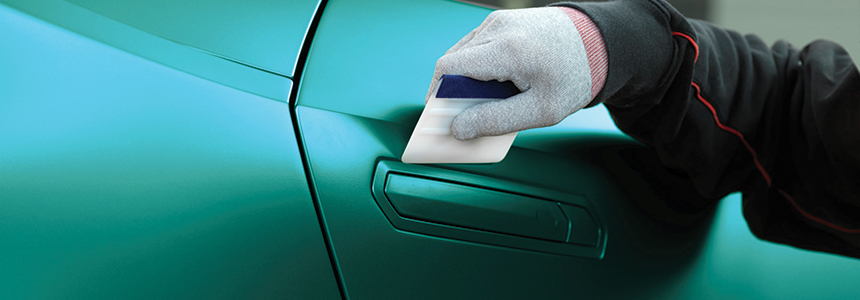
06.16.2026 Avery Dennison Graphics Solutions today announced the official launch of PrismaPro Color Paint Protection Film. Engineered to deliver a dual-performance advantage…

For the Love of Walls

For the Love of Walls

By Melissa Donovan

Digitally printed wallcoverings can be used anywhere there is a wall—indoors or outdoors. Depending on the material—fabric, vinyl, paper, or film—there is an option available for any situation. End users, print service providers (PSPs), and manufacturers recognize their appeal.

Beyond the intended environment, adhesion and installation technique are important elements to consider when determining the best type of wallcovering material for a job.

Adhesive choices range from pressure-sensitive peel-and-stick-like options to traditional wallpaper paste. A more experienced installer may be required for either depending on their knowledge of the material, how to handle multiple panels of media, or whether the wall presents any difficulties.

Find It Here
Digitally printed wallcoverings are found in commercial and residential settings. Whether fabric, vinyl, paper, or film is used depends on the end user’s budget, desired aesthetic, and durability requirements.

“The application and durability of the specific substrate are leading factors in deciding an appropriate wallcovering solution for the individual environment in question,” explains Darren Speizer, VP of sales and marketing, Drytac.

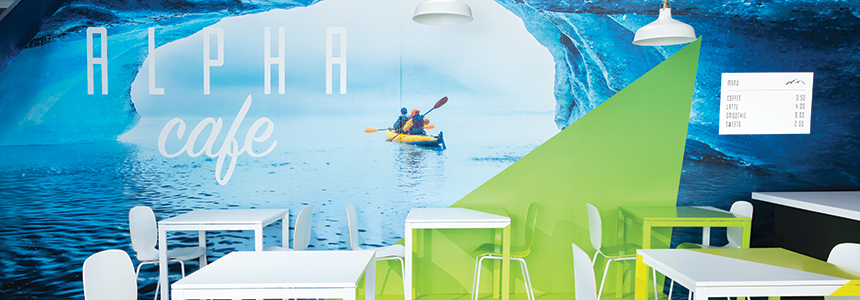
Fabric is commonly found in indoor-based applications, says David Williams, marketing manager, North America, Innova Art Ltd. Customers of the company have created fabric-based wallcoverings used in bank offices, coffee shops, restaurants, and photo studios.

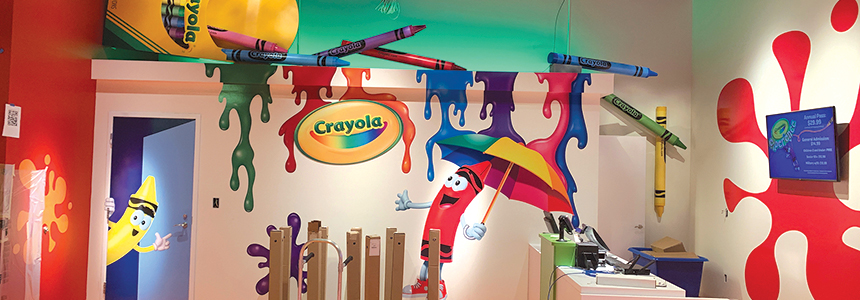
“If the end user desires an ‘upscale look’ then a fabric or paper wallcovering may be more appropriate than a vinyl or film product. However, if the job calls for covering the walls of a playroom or a pediatrician’s office, a high-gloss vinyl or film could be a better choice,” adds Lily Hunter, product manager, textiles and consumables, Roland DGA Corporation.

According to Joey Heiob, technical specialist, Avery Dennison Graphics Solutions, vinyl wallcoverings are used in hotels, commercial space, retail areas, and exhibitions.

“Vinyl is typically found in commercial applications, such as hospitality, restaurants, or retail due to their Type II characteristics, such as durability, flame, stain, and scratch resistance,” explains Jessica Blevins, product specialist, S-One Holdings Corporation.

Sticking to Matter
There a number of different adhesive choices when it comes to applying wallcovering material. Wallpaper paste and repositionable adhesive are the two most common options. Substrate type—fabric, vinyl, paper, or film—play a role in which adhesive is used, in addition to a number of other considerations.

According to Blevins, adhesive choice is focused on whether the installation is commercial or residential, the required longevity and durability, removability characteristics, environmental concerns, and the method of installation preferred by the end user.

“The intended substrate is really what dictates the adhesive choice, but the length of use and weatherability also play an overwhelmingly important factor,” agrees Jason Yard, marketing manager, Mactac Distributor Products.

Fabric-based wallcoverings are typically paired with a repositionable, removable adhesive. Microsphere adhesive technology is recommended, says Rachna Patel, marketing coordinator, Presto Tape, because it can greatly reduce the cost of installation by creating a product very easy to install and remove if necessary.

“These adhesives provide the best control over the desired adhesion and protect against traditional removable adhesives that may increase their bond strength over time and become harder to remove,” seconds Clay Reierson, project manager, Xcel Products, Inc.

Pressure-sensitive vinyl also uses microsphere adhesive in addition to removable and repositionable, removable, or permanent adhesives. Variations of adhesive for this type of vinyl product have evolved considerably as the chemistry has changed in paint commonly found on walls.

“This is in order to provide customers with low volatile organic compound (VOC) paints. These paints are good from a sustainability perspective, but poorly affect the adhesive properties of many products. Vinyl films that once worked with previous paints may now fall off after a single day,” cautions Elizabeth A. Ziegler, AMD technical service specialist, 3M Architectural Finishes – Commercial Solutions Division.

Robert Rundle viscom market manager, Ritrama, Inc., finds that permanent adhesives are becoming more prevalent due to low- to no-VOC paints.

Vinyl with a scrim or non-woven backing commonly uses traditional wallcovering paste. For vinyl wallcoverings requiring a paste for application, Marc J. Moss, director – digital, Korographics, suggests a clay-based adhesive or clear adhesives that are corn or wheat based.

Paper-based wallcoverings also utilize traditional wallcovering paste. Paper and vinyl requiring wallpaper paste requires “a premium quality, heavy duty, clear adhesive. Use of a mildew inhibitor in the adhesive is recommended and the adhesive should not be diluted,” recommends Heather McCusker, wide format specialist sales representative, Agfa Graphics.

Blevins points out that paper can also feature a pre-pasted, water-activated adhesive in some instances.

Wallcoverings predominately made with film are rare, according to Ted Isbell, graphic product specialist, Piedmont Plastics, and adhesive systems vary depending on the film and the location of the application.

Time to Apply
Install experience levels vary for any application and wallcoverings are no exception. Adhesive, material, intended surface, and additional labor costs all need to be considered before deciding whether the job is for a beginner or expert.

“While many people believe that a standard self-adhesive vinyl is a simple, cost-effective option, these products are more difficult to install than products designed specifically for wall applications. While a wallcovering product may be slightly more expensive out of the box, it can deliver a quicker, easier installation and is more cost effective from an overall labor perspective,” recommends Speizer.

When it comes to installation, certain combinations of adhesive and material should be handled by more experienced installers. “Some of the pre-pasted products—the ones that are self-adhering/pressure sensitive, including some vinyl and films, require very little expertise and are easy enough for a beginner to install. On the other end of the spectrum, heavy duty vinyl and fabric wallcoverings may require special wall preparation, adhesives, and technologies,” says Marty Davis, director, wide format and graphics, Mac Papers.

Special wall preparation includes cleaning all the surface areas before application. “Cleaning solutions vary but we have found that a simple pure water and ten percent alcohol solution works best,” suggests Tyler Reich, director of product development, Qué Media, Inc.

The scope of the project effects install as well. If it consists of large panels or multiple panels, certain skills are required. “Multiple panels on a large wall would probably be best for a skilled installer. Small walls, single panel, or graphic promotional signage could be done by a less skilled person,” shares Angel Georgiou, senior marketing specialist, imaging supplies, Canon Solutions America (CSA).

“The required experience level is actually related more to the size of the graphic than the type of wallcovering material used. Generally speaking, smaller graphics are easier to install than larger wall-to-wall graphics, especially if you have to align the larger graphics at the seams,” agrees Hunter.

“Seams are important to consider. Butt seams versus overlap seams achieve different performance characteristics, and require an understanding of which to use and when,” says Dennis Brunnett, product manager, advertising, product branding business team, FLEXcon.

There are other tips and tricks to take into consideration, which determine whether an experienced or beginner installer is necessary. As a general rule, thicker materials are easier to install, as they hide wall imperfections and smooth materials should only be used on smooth surfaces. “Usually, every wall has imperfections and when a smooth product is applied, those imperfections will be magnified,” cautions Isbell.

Rough walls with brick, stucco, or concrete are challenging. “The installer needs to be familiar with proper heating and foam roller techniques. Special detail needs to be paid to heating the film thoroughly and getting it to conform to the brick wall,” explains Yard.

Besides the time paid out to an installer, additional labor costs can arise during wallcovering application. “These can be associated with post-printing processes, such as laminating and top coating to meet Type II criteria, or pre-installation conditions, such as treating mold or mildew or patching damaged walls,” shares Blevins.

Vendor Products
The following is a selection of digitally printed wallcoverings categorized by fabric, vinyl, paper, and film.

Fabric
Agfa offers Duratex Wall Fabric, a 7-mil low-tack adhesive back product for temporary wall graphics where a rich fabric appearance is desired.

Dickson Coatings USA’s Jet Tex is an acrylic-coated polyester fabric available in widths of up to 122 inches. It doesn’t shrink, installation does not require overlapping, and it features a linen-like texture to make it look like natural material. It requires traditional wallpaper paste to apply.

FLEXcon offers WALLdeco 6770 and 6778, both polycoated fabrics with a removable pressure-sensitive adhesive and a silicone release liner. 6770 is cleanly removable for up to 180 days and 6778 features a two year indoor life durability guarantee.

GPA distributes General Formulations’ Series 234 GraphiTex, Series 252 WallTux, and Series 250 WallFrog. All are coated polyester fabrics with repositionable, removable adhesive.

Innova’s YouTac is a 100 percent polyester textile fabric with repositionable adhesive. Two versions are available—YouTac Textile ES for eco-solvent, latex, and UV and YouTac Textile AQ for aqueous inkjet. It is available in rolls up to 60 inches wide.

Photo Tex Group Inc.’s Photo Tex, Photo Tex Opaque, and Photo Tex EX are all 100 percent polyester fabrics with a special adhesive that enables a simple peel-and-stick process allowing the media to be repeatedly repositioned. Photo Tex features a Class A fire rating and is also non-toxic.

Piedmont Plastics offers Piedmont Sign Grade WallTex fabric-based wallcovering media as an option for interested buyers.

Presto Tape has three products in its fabric line of wallcoverings, PrestoTex, WallFab, and CanvasTac. They are available in unique finishes and include a removable and repositionable microsphere adhesive. All three products are PVC-, phthalate-, and lead-free.

Qué Media recently launched Eztaque, a fabric-based wallcovering. The semi-rigid fabric was in development for a few years but is ready for market and features removable adhesive.

Roland promotes its WallFlair Removable Fabric with pressure-sensitive removable, repositionable white adhesive.

S-One represents LexJet Corporation and its Print-N-Stick Fabric is a bright white, adhesive-backed fabric wallcovering material that is easy to print, install, reposition, and remove. LexJet Solvent Print-N-Stick Fabric is similar but compatible with solvent ink and features a 94 percent opacity and satin sheen.

Xcel’s X-Wall Fabric is a woven polyester with a microsphere wall adhesive. The slightly textured weave finish provides a high-end look and feel. It installs easily and resists edge lift.

Vinyl
3M Controltac Graphic Film with Comply v3 Adhesive IJ180Cv3 is ideal for long-term decorative and branded graphics on smooth walls. It offers slideability, positionability, and a pressure-activated adhesive. Other vinyl products from 3M include 3M Scotchcal Graphic Film for Textured Surfaces IJ8624, 3M Controltac Print Film 40C, and 3M Scotchcal High Tack Graphic Film IJ39-20.

Agfa’s Duratex Wall Vinyl is 6-mil and equipped with a removable adhesive for ease of install and removal.

Arlon Graphics, LLC offers DPF 6700 for showing the texture of the wall through the graphic and DPF 8000 for short-term hard-to-stick surfaces such as brick or cinderblocks. Both use a high-tack, permanent adhesive.

Avery Dennison’s MPI 2600 vinyl wall film portfolio includes three new digital textured wall films in addition to MPI 2611, a non-textured, matte finish film. The new textured wall films include Pure Canvas, Crushed Stone, and Natural Stucco—available in either permanent or removable adhesive.

Continental Grafix USA, Inc. offers panoRama Walk&Wall, a textured vinyl with fabric backing and high-tack, repositionable adhesive. The solvent acrylic adhesive works well on painted drywall, concrete, and tile.

CSA’s WCVCA Wall Covering Vinyl Embossed Canvas with ultra-removable adhesive is ideal for a canvas textured look with easy install. Another vinyl product is WCCL, Wall Covering Vinyl Classic, a 6-mil traditional vinyl wallcovering that requires an installer. VL6R is a 6.5-mil white matte vinyl with removable adhesive.

DreamScape categorizes its wallcovering products as vinyl. It offers vinyl face with either nonwoven or woven fabric backings requiring wallpaper paste. It also offers the self-adhesive WallWrap series with a peel-and-stick backing.

Drytac offers ReTac Wall, an easy-to-use 6-mil vinyl product, its sister product is ReTac Textures, also 6-mil and vinyl, but offered in embossed textures like sand, linen, and canvas. Both include removable adhesive technology.

FLEXcon WALLdeco 6730 is a 6-mil white vinyl best suited for indoor wall applications. Per the company, it is cleanly removable for up to 180 days. The removable pressure-sensitive adhesive uses a silicone release liner.

GPA distributes General Formulations’ Series 226 WallMark and Series 229 WallMark Canvas. Both are vinyl-based, semi-rigid products designed for ease of application with a microsphere beaded adhesive. The canvas version features an embossed canvas face.

Korographics sells vinyl wallcoverings requiring wallpaper paste adhesive used in commercial environments.

Most of Mactac’s wallcovering offerings fall under pressure-sensitive vinyl. Its most popular include IMAGin Roodle, a 6-mil matte white removable vinyl; IMAGin wallNOODLE, a 6-mil matte white ultra-removable vinyl; Rebel RB528H, 4-mil matte white high-tack vinyl; IMAGin DecoFresco, an 8-mil organically textured white removable; IMAGin DecoMural, a 15-mil canvas-like, textured white semi-permanent vinyl; and wallCHALKER, an 8-mil black textured removable vinyl.

Ritrama offers a variety of vinyl wallcoverings ranging from its 6-mil Wall Action and Ultimate Wall Action self-adhesive vinyl series to its 2-mil Ultimate Rough Wall Cast Vinyl.

Roland WallFlair Removable Vinyl features pressure-sensitive clear ultra-removable adhesive. It is a 6-mil matte calendared vinyl.

S-One’s LexJet WallPro by York is an embossed vinyl wallcovering for traditional paste application. It is available in 14 different textures and custom embossing options. It is Type II, Class A, with low VOCs and suitable for residential, commercial, retail, and corporate environments.

Xcel offers X-Wall and X-Wall Premium from its vinyl portfolio. X-Wall is a 6-mil PVC with microsphere adhesive. X-Wall Premium is an 8-mil PVC with microsphere adhesive.

Paper
Coveris Advanced Coatings’ Magic line of products includes Mural Pro/DMiBOP, an 11.3-mil latex-based, nylon reinforced, wet strength paper. The product keeps it shape and requires wallpaper paste to install. In addition, the company offers Magic SLEEK—a 6.7-mil pre-pasted wallcovering reinforced with polymer for strength and durability. The product features a water-activated adhesive.

Innova Wallpaper Smooth Paste-Up is a paper-based wallcovering with a scratch-resistant ink receptive coating. Standard PVA-based wallpaper paste is recommended. Install is similar to adhering traditional wallpaper. It is available in rolls up to 60 inches wide.

Mac Papers distributes Monadnock Paper Mills, Inc.’s wallpaper and wallcovering backing products, which are polymer-reinforced papers and non-woven wallcovering backings.

Monadnock’s Envi Wallgraphics are paper-based with a water-activated adhesive. They contain ten percent post-consumer waste fiber and are PVC free.

S-One offers two paper-based wallcovering products through Brand Management Group. HP PVC-free Wall Paper is a pre-pasted, water-activated, paper-based wallcovering. It is FSC-certified, ten percent post-consumer waste, Greenguard Gold certified, and REACH compliant. HP PVC-free Durable Smooth Wall Paper is a paper-based wallcovering with scrim backing for traditional paste applications. It is suitable for residential, commercial, retail, corporate, school, hospitals, and sensitive environments.

Film
3M Envision Print Wrap Films LX480Cv3 and SV480Cv3 are non-PVC films for long-term decorative and branded graphics on either smooth or textured surfaces. Both feature a slideable, positionable, pressure-activated adhesive. They are rated for up to 11 years expected performance life.

GPA distributes AlumiGraphics Smooth from FloorSignage. It features a coated aluminum face. Designed for outdoor wall graphics, it offers ease of application with conformity to rough or uneven surfaces.

Flourish or Fail
It is important to recognize just how vast the selection of wallcovering media is. There are a number of combinations when it comes to material and adhesive to ensure success wherever placed. Understanding fabric, vinyl, paper, and film; the combination of permanent or temporary paste or pressure-sensitive adhesive; and where each flourishes or fails is essential to delivering a quality product. In addition, comprehending your limits as an installer can help avoid costly rework. Wallcoverings are a worthwhile business, and knowing your facts makes it even more rewarding.

Jun2016, Digital Output

Featuring Flatbeds

Featuring Flatbeds

By Cassandra Balentine

Wide format flatbed printers enable many advantages such as direct-to-substrate printing on rigid media. Manufacturers of these devices consistently advance features to further their appeal.

A variety of enhancements in ink and hardware aim to improve print quality, productivity, and versatility on flatbeds. “Manufacturers are adapting their flatbed presses to deliver better overall interaction with the types of jobs their customers currently print and the jobs they intend to print in the future,” states Thomas Giglio, strategic accounts manager, HP Inc. “These incremental improvements can collectively increase customers’ productivity.”

The market has witnessed many changes as flatbed equipment evolves. “Items that used to be cumbersome or costly options are well thought out and standard features. These have paved the way for a better performing and more production-oriented machine and mean more profitability for print service providers (PSPs),” says Jim Peterson, founding partner/co-COO, Vanguard Digital Printing Systems.

PSPs of all concentrations drive demand for continued productivity and quality improvements, producing a range of applications from promotional graphics viewed at a distance to fine art and luxury subjects requiring up-close-and-personal detail. Popular enhancements include advanced ink sets and printheads as well as curing technology, registration, media handling improvements, and waste management tools.

Advanced Inks
PSPs benefit from a range of evolving options in terms of flatbed ink sets, including the addition of light inks, white ink, spot colors, and clear ink and varnish.

Randy Paar, marketing manager, display graphics, Canon Solutions America (CSA), explains one of the biggest improvements among wide format flatbed printers are ink sets that enable new or better address existing applications.

Ink advancements open the door for higher quality output and increased production speeds. Fine art and luxury applications that are meant to be viewed up close particularly benefit from light inks.

For example, the newly launched Acuity Select 20 series of printers from Fujifilm North America Corporation, Graphic Systems Division offers the ability to configure light inks for those with a fine art printing focus, according to Heather Roden, associate product marketing manager, Fujifilm.

Light inks provide a better overall tonal range and smoother transitions. “The ability to print with light inks appeals especially to higher end boutique applications, such as backlit graphics, architectural graphics, and even printing to various composite metals,” suggests Giglio.

Most importantly, this quality improvement is achieved without a reduction in productivity. “This allows for more application versatility in producing high-quality point of purchase (POP) for luxury market segments like fashion, liquor, automobiles, promotional items, awards, and recognition items,” shares Paar.

Ken VanHorn, director, marketing and business development, and Hugo Gonzalez, application specialist, Mimaki USA, Inc., say that light inks increase available quality for printers producing photographic images on rigid substrates. “The commonplace was to print on vinyl and laminate it onto a rigid substrate, but now it is becoming more popular to eliminate the lamination process and print directly onto the rigid material.”

Direct-to-substrate printing on rigid media continues to be one of the highest value segments of the graphics market. Thomas Krumm, product marketing manager, EFI, suggests that for many POP applications, there is an even greater need for premium quality. “Unlike other areas of the graphics market, there is demand for the higher end imaging possible with light inks and margin in the work to use it. Many of our customers utilize it as a competitive advantage,” he shares.

On the other hand, Terry Amerine, director of product marketing, Durst Image Technology US, LLC, comments that as print quality has improved due to smaller ink droplet size and greater precision in drop placement, the need for light colors is reduced.

Peterson agrees, “with drop size jetting capability of printheads and ink formulations becoming more refined, flatbed manufacturers can achieve amazing gradients, skin tones, and near continuous tone images. Legacy printheads that jet a larger single drop size compared to that of a more advanced printhead technology require the light inks to achieve a high-quality print.”

In addition to light inks, vendors offer colors such as orange, violet, and green. Packaging and branding applications benefit from these.

“The introduction of some spot colors like orange, green, and violet are used in color matching of corporate logos and image details requiring extreme color saturation to meet some Pantone compatibility specifications,” says Paul McGovern, director of marketing and business development, Inkjet Technology, Inc. (ITI).

Clear ink and varnish represent another milestone, giving PSPs the ability to print on dark substrates and clear acrylic media. “Black or darker color substrates can be imaged with both white and clear inks together to create enhanced image quality for advertising and media applications,” continues McGovern.

Printhead Technology
Print buyers are always looking for higher image quality and printhead manufacturers comply with consistent advancements and developments. Drivers include the need for faster speeds and better output quality, as well as durability and reliability. The cost for replacement printheads is also considered.

“Newer printhead technologies have made it possible to print smaller dots, which produce finer lines and edges,” note VanHorn and Gonzalez. These small dots enable the ability to produce very fine but reliable text and also improve image quality in photographic images and the smoothness of gradients. “This appeals to those that are printing high-quality art photography onto rigid substrates,” they add.

Krumm says that similar to the use of light inks, variable drop sizes within a particular image will increase the apparent resolution of the printed piece, allowing the device to print at higher speeds with a lower dpi and achieve a higher apparent resolution without sacrificing speed.

Amerine states that while improved print quality and precision is a focus of printhead development, another avenue includes printheads developed with greater robustness and durability. “In order to print at high speeds for multiple shifts, printheads need to be reliable.”

McGovern points to new nozzle plate designs and piezoelectric printheads with stainless steel plates as improvements for durability and reliability that protect printheads in the event of a crash on the media substrate during printing. “Most can recover without a lot of damage, where the plastic printheads manufactured by some would be destroyed. This is important as some media tends to fold, swell, or bend under some hot UV halide curing lamps causing printhead strikes.”

Giglio warns that some manufacturers struggle with improving overall print quality at the expense of raising the total cost of operation and ownership. “Some printheads in the market are over $5,000 each, which can be a real dilemma for a smaller shop that has to replace even one printhead a year,” he states.

Manufacturers understand the importance of staying abreast of the latest demands. “It’s our job to continually work with the leading printhead manufacturers to ensure our clients are able to stay ahead of the pack,” says Peterson. “The clients of PSPs in each of the many market segments are driving this demand. With smaller drop sizes, grayscale variable drop printing, and more rapid firing rates, higher quality printing is demanded across all segments.”

Curing Technology
For UV inks, a shift in curing techniques is apparent as more UV LED lamps are incorporated on flatbed solutions, enabling a wider variety of media and offering energy savings when compared to traditional UV heat lamps. LED curing also allows for flexible ink characteristics.

“One of the most notable advancements in the past few years is the transition from halide UV lamps to UV LED lamps,” comment VanHorn and Gonzalez. They explain that UV LED lamps open the door to curing variability in ink. “This enables curing at different rates for improved adhesion on different substrates and creating surface effects such as spot gloss or matte finishes.”

Further, LED lamps can be waveform specific and programmed to generate UV waves at a certain frequency. “This allows for frequency specific ink, which increases the cure efficiency and enables greater variability in ink characteristics such as flexibility,” continue VanHorn and Gonzalez. They note that while flexible ink isn’t a new concept, it has increased ink options.

Krumm says LED inkjet curing eliminates many challenges found with other processes like solvent and even traditional UV. “The energy savings—up to 82 percent with cool cure LED—is a significant change.”

Mark Schlimme, director of marketing, wide format product manager, Screen Americas, predicts that advances in LED lamps and LED-activated photo initiators will bring LED to the production-class space and break the speed barrier currently inhibiting LED technology in wide format printing.

“The true winner with LED is the customer,” adds Krumm. “UV eliminates so many variables in the makeready and printing process that the overall consistency and utilization of the printer is increased.”

Enhanced Registration
As jobs transition from analog to digital, many of the process controls found in traditional methods are expected for their digital counterparts. Registration is critical for double-sided printing as well as finishing. “Image quality in any inkjet printer is a factor of droplet control—the ability to consistently place a drop of ink in the same place, pass after pass, print after print,” says Schlimme.

Giglio explains that features like registration pins, electronic edge direction, and automatic height direction not only enable flatbed devices to increase their registration capabilities, but give PSPs a boost with other processes.

Amerine suggests that it is the need for double-sided printing that drives continued improvement in registration.
Guy Cipresso, VP sales and business development, Novus Imaging, Inc., agrees, adding that advertisers want to maximize the content of messaging they can deliver per square foot of print space.

The availability of white and varnish options enable dynamic and creative visual effects though multi-layer printing on a variety of substrates. “Registration is critical in these types of applications,” comments Matt Meany, senior application specialist, Agfa Graphics.

Because accurate registration is so important to a variety of applications created on flatbed printers, registration systems are more robust than what they once were. “Today, cumbersome screw in or manual registration guides along with the need to manually input the thickness of media into software are being replaced with more robust features like push button registration guides and automatic media thickness detection. These features ensure operators are achieving the utmost accuracy in their output,” says Peterson.

Automation is essential. “Wide format printers that use digital encoders to control movement will demonstrate significantly better and repeatable image quality than belt-driven movement,” agrees Schlimme.

Material Handling
Improvements in media handling on the latest flatbeds allow for increased productivity as well as a wider variety of compatible materials. Advancements in this area are largely driven by the overall need for speed and productivity as well as the need to minimize labor costs.

David Conrad, director of sales and marketing, Mutoh America, Inc., suggests that the ability to incorporate hybrid technology to run rigid or roll material has made it easier for print shops to bring flatbed capabilities in house. “Space-saving designs and flexibility to print boards and roll material at an affordable price point has made it easier for smaller print shops to add this technology to their product mix and affordable enough for them to remain competitive in the marketplace.”

Wide format print providers are looking for the ability to handle and print to an expanding universe of unique substrates and surfaces. “Printers need to be able to handle everything from thin films to paper to metal to glass and stone,” says Schlimme. “The ability and flexibility to handle different substrates enables a printer to pursue new applications and new markets and then, more importantly, leverage a specialization in a niche market once they find it.”

Meany agrees, adding that the printhead height from the substrate is often within tenths of a millimeter and influences the variety of substrates that can be printed to on a flatbed. “Without proper vacuum controls, deformed or warped media can contact the printheads causing irreparable damage and costly replacement,” he warns.

Jay Roberts, product manager, UV printers, Roland DGA Corporation, says the company incorporates a range of features including a pin registration system and a laser-guided media/crash sensor on its VersaUV LEJ-640FT. “In addition to protecting the printhead this feature enables the printer to more accurately sense the height of irregular, 3D surfaces.”

For larger volume operations, automated board loading is an attractive option. “We have reached the point where it is not possible to manually feed many of the top-end devices,” notes Amerine. “They are simply too fast.”

Productivity improves with advanced material handling, which means labor costs can be reduced. “The materials used on flatbeds can be as large as 5×10 feet, and are awkward to move manually on and off the bed without introducing contamination, damaging edges and corners, and images. Automation ensures accurate placement of material on the bed and safe unloading of the printed piece,” offers Cipresso.

Waste Management
The cost of consumables is an important consideration that every PSP deals with daily. Advancements that help control waste are in demand. “PSPs know that ink management directly impacts their production costs,” comments Giglio.

Meany compares the ink management functions to that of the circulatory system of a human body. “It needs to be free of air so it can flow freely and perform properly.”

Ink delivery systems enable non-stop job performance capability with bulk ink receptacles and auto switchover capability. McGovern says some bulk systems are configured using degassing modules to remove the air before it reaches the printhead, resulting in missing jet nozzles and having to purge and cycle inks to regain nozzle integrity. “Air ingesting is the single worst problem with inkjet printhead performance as a factor,” he notes.

Amerine stresses the importance of printhead and ink compatibility for effective waste management. “Ink management systems ensure that the ink is in optimal physical condition to be jetted. They also allow operators to add ink without interrupting production. The ability to maximize productivity and minimize cost are the two major driving forces for inkjet technology and all of the component systems.”

Peterson admits that ink management systems are critical for white ink. “Given the chemistry of white ink, keeping the ink in constant motion is necessary. Purchasing a flatbed printer that features an automated white ink recirculating system in conjunction with some minimal user maintenance ensures service providers are free from issues once associated with white ink printing.”

Flatbed Advancements
Small equipment upgrades can lead to major benefits for wide format flatbed users. Depending on the need—quality, volume, or versatility—the latest advancements target PSPs across the print industry.

Click here to learn more about specific flatbed printers.

Click here to view the Flatbed Printers Target Chart – an all-inclusive information resource!

Jun2016, Digital Output

A Taste of POP

A Taste of POP

By Courtney Saba

There are endless display options when it comes to digitally printed point of purchase (POP) signage. It is especially ideal for temporary promotions, creating a versatile and cost-effective solution for customers and vendors.

POP displays are particularly successful in retail and restaurant environments. Print service providers (PSPs) offering this service must be prepared to help clients stand out from the crowd. Everything from banners, lawn signs, and outdoor menus to window graphics are used in promotional advertising to boost business and profit.

Original Impressions
Established in 1982, Original Impressions is a marketing communications provider. At the outset, 12 full-time employees offered design, graphics, and print services. In 2010, it opened its sign division to meet its clients’ large format printing needs. Today a 98,000 square foot facility in Miami, FL houses 194 staff members.

50 percent of the firm’s work is considered POP. This falls under its sign services, which also includes banners, billboards, environmental, displays, and trade show booths. In addition, Original Impressions offers marketing, creative, e-business, and fulfillment services. Geographically, it reaches both national and international clientele.

To Digital
Original Impressions introduced digital printing to its hardware portfolio five years ago. “We started it to diversify our services and tap into the additional needs of our current clients. Our in-house design and manufacturing capabilities allow us to develop and manage large and complex graphics and POP displays,” shares Laina Kawass, marketing communications director, Original Impressions.

Kawass believes selecting the correct printer is an important factor to success. Two wide format devices run in the facility are from Agfa Graphics—a Jeti Titan HS and Anapurna M3200. The Jeti Titan HS is a three-meter wide, UV-curable flatbed with a flat-to-roll option. The Anapurna M3200 is a 3.2-meter roll-to-roll, UV-curable system.

When deciding between hardware from various manufacturers, the company relied on test prints to evaluate the different devices. Not only did the PSP qualify and examine each print, but so did its clients to ensure the printer chosen would meet their expectations.

According to Kawass, both Agfa printers change the way the company works with customers. “We have assisted many clients that tell their brand story beyond POP through a variety of substrates—brushed aluminum logos, acrylic timelines, and PVC geographic maps,” she says.

Pollo Tropical
The company regularly works with Pollo Tropical, an up-and-coming Caribbean cuisine restaurant chain. Each location—there are more than 20 in the U.S.—receives signage from Original Impressions. This occurs quarterly for small updates to existing stores in addition to full roll outs when a location first opens.

A variety of applications are regularly requested. Palram Americas’ Palight PVC is printed on for free-standing outdoor menus, mainly because it doesn’t scratch easily and offers a good quality print. Translucent and opaque styrene from Agfa is used for menus placed in custom illuminated light boxes, replacing commonly used backlit film.

13 oz. Agfa Duratex banner material makes up lawn signs and promotional banners. For window graphics, removable vinyl from Orafol Americas is used because it won’t leave any adhesive residue on the window. A 4mm coroplast is best for pole signs and drive thru header graphics due to its light weight.

When creating graphics for a new store launch, approximately 34,000 square feet of rigid media and 24,000 square feet of roll media is printed on. Both the Agfa Jeti Titan HS and Anapurna M3200 are used. They are essential in achieving success in quick turnarounds.

A specific challenge associated with Pollo Tropical is meeting the deadlines once the graphics are approved. “To make this happen, we work 24 hours, six days a week, and sometimes even on Sunday, all while making sure we get our regular work out the door on time,” explains Kawass.

Restaurant POP
Digital print introduces new POP trends within retail and restaurant display markets. Original Impressions offers a number of creative options to customers like Pollo Tropical—outfitting entire locations with both rigid- and roll-based signage—thanks to its Agfa Jeti Titan HS flatbed and Anapurna M3200 roll-to-roll printers.

Jun2016, Digital Output

Decals Take Shape

Decals Take Shape

By Melissa Donovan

Wall tattoos or decals are an off-shoot of wallcoverings. Sold in mainstream stores such as Home Depot, Lowes, and Walmart or online via Web storefronts, the target market is the general consumer. Thanks to advancements in vinyl and film technology, substrates used for wall tattoos or decals feature ease of application, repositioning, and removal—without damaging the existing wall.

While many wall decal kits are designed with familiar sayings or basic shapes, even more depict popular licensed characters or sports teams. Blown up to life size they can be placed in a children’s bedroom or recreational area, maybe an office, or the kitchen.

While demand is high for this type of application, print service providers (PSPs) need to educate themselves on the business aspect of offering licensed wall decals. In many cases, to print and distribute well-known characters or sports teams’ logos, royalties must be paid to get into the business.

Depending on the cost to benefit, it might make sense to stick to self-created designs or graphics in the public domain. Even then, challenges remain. The right media for the job must be considered and since wall decals are generally made up of concave and convex shapes, a versatile digital cutting device is preferred.

Owning Art
Based in St. Paul, MN, Brand Ink began in 2010 and today offers vehicle wraps, custom graphics, wall murals, banners, and props. Six employees work out of a 6,300 square foot shop.

“We have been providing wall tattoos since the beginning of our business. Wall tattoos are a natural extension for any graphics manufacturer, as the production process is the same, just with different materials,” explains Nicholas Lowry, president, Brand Ink.

The PSP works with both latex and UV inks when creating wall tattoos. For materials, it depends on the paint on the wall and how the long graphic will remain in place. 3M Commercial Solutions’ 3M Scotchcal Graphic Films with Comply Adhesive IJ35C is ideal for wall tattoos adhered to surfaces with no or low volatile organic compound paints because of how well it sticks for any given amount of time and also because it removes cleanly, according to Lowry.

For finishing, the PSP relies on a Graphtec America, Inc. FC8600 cutting plotter because of its ability to produce quality print-and-cut work based on the shop’s typical output volume. The device offers a maximum cutting speed of 58.5 inches per second and up to 600g cutting force.

Five percent of Brand Ink’s business is considered wall tattoos, and of those most are for the home and do not include licensed artwork. When it comes to working with well-known characters or sports teams, securing and managing licensing fees can be daunting.

Managing the legalities that come with each image may be more work than a PSP is ready to handle. Brand Ink realized this early on and decided to employ its own team of artists to create artwork owned by the company or alternatively hires freelancers.

Lowry recommends building a sales pipeline for wall tattoos first and making sure that process is successful before attempting any licensing deals. “Creating the sales pipeline is a small investment and the ability to scale the business when things get going is similarly easy,” he adds.

Licensing Ready
While Brand Ink does not currently deal with artwork royalties, Fathead, LLC is the opposite. Established in 2006, the company began with a handful of employees and sports licenses with the goal of “bringing inspiration to life,” according to a Fathead spokeswoman.

“During the inception of the brand, we wanted to transform large and small spaces into atmospheres spilling over with passion. Since then, we’ve grown to become an industry leader in graphics for all spaces,” she continues.

Today 75 employees work out of a 16,000 square foot headquarters in Detroit, MI. The company offers wall graphics, canvas prints, freestanding cut outs, domed button decals, smartphone charger sleeves, and outdoor floor graphics via direct to consumer—Web based, corporate solutions, retail, and wholesale channels throughout the U.S in addition to Australia, Canada, Germany, Hong Kong, India, Japan, New Zealand, Spain, and the U.K.

According to the company, from April 2015 to 2016, 95 percent of its Web-based sales were contributed to by wall decals. Brand Ink offers two different styles—peel and stick and rub-on transfers. Products include Real.Big. Wall Decals offered at life size, Fathead Jr. Wall Decals available at three feet tall, Fathead Teammate Decals at 12×17 feet, and Fathead Tradeables decals offered in 5×7 inches.

“These products eventually don the walls of buyers and consumers looking to showcase their passion, celebrate cherished moments, or incorporate striking elements of art into their space,” shares the Fathead spokeswoman.

Graphics are printed with UV inks, as Fathead deems them eco-friendly and offering a high-quality appearance. As for the substrate used, it depends on where the art is applied and customer preference. A standard vinyl media—the company’s main product—is utilized for most orders.

Many of the graphics include intricate curves, so a quality finishing device that aids in a professional-looking final appearance is a necessity. Fathead relies on its Zünd flatbed cutting system to achieve precise, rounded cuts.

To date, the company maintains over 650 license agreements with consumer brands across multiple industries and professional sports leagues. These include Disney, John Deere, Major League Baseball, Martha Stewart, Marvel, and the National Football League.

“Every license deal is unique in terms of how the royalty is structured. The one thing all licensing deals have in common is that a royalty is required, and that needs to be factored into the cost of goods sold (COGS) when a provider considers selling a licensed product,” explains the Fathead spokeswoman.

While a PSP should consider many factors before spending money on licensing fees—for example the level of billable inventory that needs to be achieved to profit—Fathead’s spokeswoman says it really comes down to one question. “Does the property add enough increased value to my product’s sales potential to justify the incremental costs related to the royalty fees affecting my COGS?” If it does, then it’s worth the cost.

Considering it All
A reliable substrate that is easily applied, repositioned, and removed and a quality finishing device that provides professional looking edges is required for any production facility dabbling or specializing in wall decals. The combination of both provide a product any consumer would want to display in their home.

For smaller shops like Brand Ink, it’s worth becoming knowledgeable on royalty fees and structures and perhaps when the time is right, jump into the arena. Companies like Fathead built their brand around licensing and found success creating partnerships with retailers while also offering their product directly to the consumer.

Wall tattoos are lucrative, but depending on whether original or licensed artwork is chosen can significantly change the direction of the business.

Jun2016, Digital Output