Welcomed Into The (Fabric) Fold

By Melissa Donovan

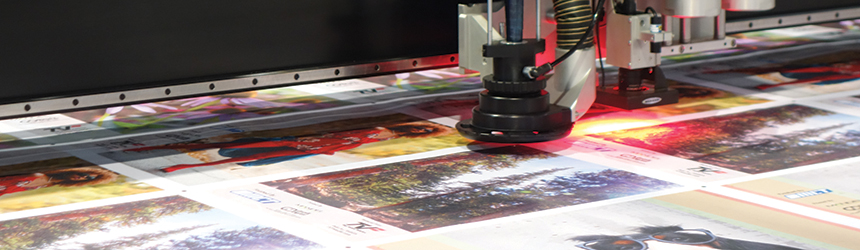
Grand format printers are used in the creation of fabric-based applications. The width in particular is advantageous because it means less seams. Digital Output considers grand format anything over 95 inches in width. Some models can run as either transfer or direct dye-sublimation (dye-sub). Further, certain printers are engineered to run both transfer and direct dye-sub, allowing the user to alternate between processes.

Above: Custom Color based out of Lenexa, KS, uses two EFI VUTEk FabriVU 340 printers to complete its textile printing.

Grand Idealism
Grand format dye-sub printers are ideal for fabric-based applications. Practical, visual, and aesthetic reasons play into this. Demand comes from a number of backgrounds, which means the final printed output is placed in a variety of environments.

Fabric is economically practical. “Traditionally, the larger something is printed, the more it costs and the heavier it becomes. Contrary to paper, vinyl, and rigid materials, as well as UV and latex technologies, dye-sub printed fabric can be washed and used repeatedly, making it more economical to go larger. Fabric can be folded down to and shipped or carried onto a plane inexpensively,” suggests Tara Lamb, president, Global Imaging.

“Trade show graphics are typically 8×10 feet or larger and grand format printers reduce the need for sewing panels. As silicone edge graphics (SEG) frames become more common, many are used as easy-to-change wall wraps,” says Randy Anderson, product manager, dye-sub and textile line of printers, Mutoh America, Inc.

Visually, dye-sub provides stunning imagery even at superwide sizes. “Grand format dye-sub is an ideal printing method for fabric because of its bright colors and photorealistic quality. With the width size of the fabrics, companies have to do less seaming or panels to achieve clean backdrops or very large fabric sign displays,” explains David Lopez, textile solutions specialist, Mimaki USA, Inc.

Fabric’s soft hand offers a high aesthetic value. According to Young Bae, product planning, marketing, DGI, “soft signage can be created with latex, UV, and water-based ink, but compared with dye-sub, there is a limitation and lack of softness in the printed materials. Some say it is more luxurious to put fabric signs up versus a PVC or vinyl. And when dye-sub is used, it gives a more natural look.”

This is because the ink adheres to the fabric in a chemical process, whereas with other ink technologies the ink sits on top of the substrate and is easily scratched off, points out Jason Bartusick, product development/strategic planning, Media One. “The elasticity of most knitted textiles creates issues with latex or UV ink due to the image distorting when stretched,” he adds.

With benefits in the form of economics, visuals, and aesthetics, digitally printed fabric is growing in demand and requested by different end users including the trade show/exhibit market, retail point of purchase (POP) market, and special event markets. “We’ve seen much growth in the trade show market over the past few years and the retail market has grown rapidly as well due to the fact that graphic installation is much easier and doesn’t require installation teams to properly change an SEG print,” admits Mike Syverson, textile manager – North America, Durst Image Technology US LLC.

“Businesses in the exhibition and trade show space now largely request dye-sub printed soft signage because it’s reusable and easy to store and ship to different locations. And, there is more demand for it in high-end retail POP environments because it creates that high-end look retailers need,” agrees Mike Wozny, senior product manager, EFI.

Other places fabric is used, according to Lamb, include wallcoverings in museums, at events, for television sets, in airports, and structural spaces. “These spaces were traditionally dedicated to paper, vinyl, and rigid pieces. Fabric is portable, reusable, durable, lightweight, and environmentally friendly and has a much more high-end appearance,” she adds.

Two Modes in One
Grand format dye-sub printers are available with the functionality to run as transfer or direct dye-sub on one device. This capability is ideal for print providers working with multiple buyers of digitally printable fabric.

Flexibility is essential, shares Syverson. “Some applications require a system that prints direct while others are best suited for transfer printing. Systems with offline sublimation in addition to the ability to print direct and transfer give the highest degree of flexibility.”

He provides examples like long print runs on fabric that may make sense to print direct and sublimate offline versus printing on transfer paper. If frequent material changes occur or a specific application requires a fabric that is not pre-treated for direct print—many interior décor fabrics—transfer printing makes more sense, according to Syverson.

“The ability to do both on the same printer with the same ink sets also ensures consistent and accurate color regardless of how it is produced,” adds Wozny.

“If a shop wants to offer the fullest range of applications—then a printer that runs both direct and transfer is the best choice. For anyone offering dye-sub they have to be able do backlit and flag material really well—as those are two of the most common applications in soft signage. These are typically done best with direct dye-sub. On the flip side, when printing with transfer, a much wider range of applications becomes available,” explains Lamb.

Bae agrees it is good to have transfer dye-sub as an option because of “troubled” fabrics with features like stretch, thinness, or transparency. Using a transfer process helps minimize any chance of error.

Conversely, Bartusick suggests that the direct printing method works for the clear majority of applications for the average to industrial dye-sub print house. “It allows for cost savings by eliminating paper and tissue. This is also generally a faster method, with less labor involved.”

“A print service provider (PSP) that offers both functionalities has the option to reach out to an array of clients at different price points. Transfer dye-sub is preferred due the fact that any polyester-based fabric can be used without any additional steps before printing. PSPs printing direct to fabric have to pretreat, but this method eliminates the cost of transfer paper, causing the price of the printed fabric to be less expensive,” shares Lopez.

Making a Decision
If a piece of grand format printer hardware offers the capability to print direct or transfer, one of the first things to ask is whether the process can be switched over on the fly depending on the job at hand.

If a printer is designed for both direct and transfer printing upfront, the changeover should be pretty straightforward, says Syverson. “The system is designed for convenience. Many times, it requires only adding a tray to catch overspray ink that passes through the knit/weave of a fabric and RIPping the file with the appropriate setup,” he recommends.

Allowing for alternating processes on the fly is easier when there is no ink changeover involved. The difference in transfer versus direct is usually removing or adding a piece of equipment. At DGI, to create its “hybrid” soft signage printer—the FH-3204—the device includes a vacuum platen instead of a flatbed or belt for the transfer dye-sub process. Bae explains that the vacuum platen is easier to remove. Once it’s gone, a special fabric pad is placed there to enable printing direct. At 120 inches in width, the FH-3204 prints up to 1,615 square feet per hour (sf/h).

The Durst Rhotex 325 is equipped with a single ink set, water-based dispersion inks paired with Durst WTS printhead technology. The 3.2-meter or 126-inch device is referred to as a dual purpose printing system and allows the user to alternate between paper transfer and direct printing on polyester-based materials. It reaches speeds of up to 4,195 sf/h.

Another example of single ink set usage is the 126-inch PrinterEvolution D3200—available from Global Imaging—which offers direct, transfer, inline, and offline sublimation at production print speeds of up to 1,620 sf/h. Equipped with water-based dye-sub ink, the device can alternate between direct and transfer by integrating a Transfer Print Kit into the system.

EFI also offers a dye-sub device that involves no ink changeover, its EFI VUTEk FabriVU 340i. It includes inline sublimation for direct to fabric printing, which can be turned off if an offline sublimation unit is added. The 3.4-meter printer reaches production speeds of up to 2,691 sf/h.

Some companies are advocates for separating transfer and direct dye-sub processes completely. Bartusick points out that while in the past it was thought transfer was required for printing to any stretch textile, today that isn’t the case.

Media One distributes d.gen dye-sub printers, specifically the Teleios Grande G5—available in 130 inches in width. The grand format direct sublimation device prints directly to stretch materials thanks to a unique textile feeding system.

Mimaki offers printers that do one type of sublimation printing or the other. The TS500P-3200 is a transfer model and the TX500P-3200DS is the direct to fabric option. At 129.9 inches, the TS500P-3200 offers 1,937 sf/h and is engineered to print on the thinnest transfer paper. The TX500P-3200DS is 129.5 inches wide and includes a fully integrated inline color fixation unit that aids in high productivity up to 1,399 sf/h.

“We separated the two because we have perfectly formulated the ink for each process,” explains Lopez.

Mutoh’s ValueJet 2638X is a 104-inch grand format printer offering print speeds of 1,168 sf/h. Equipped with water-based sublimation ink the transfer dye-sub printer offers a staggered dual printhead design for faster production speeds.

Grandiose Fabric
Manufacturers offer printers that can print both transfer and direct dye-sub with one ink set for the widest range of substrate versatility. Others sell devices that separate the two processes. All grand format dye-sub printers are used to create graphics for a number of environments including POP and retail, special events, and museums.

Dec2018, Digital Output

Digital Printing
Grand Format Dye Sub Printers

Marvelous Mesh

By Cassandra Balentine

Building wraps are among the most visible wide format graphic applications. In addition to the attention they command, many present alternative purposes like masking unsightly construction.

“Advertising by way of building wraps is a big business and it speaks for itself all over the country, especially in larger metropolitan cities. These vivid works of art can be looked at as advertisements that transition a space on the side of a building into a marketing device, which not only grabs attention but results in generating sales,” says Fred Propp, marketing coordinator, Value Vinyls.

It is essential the right material is used to ensure a successful building wrap installation. Depending on the specific project, its projected lifespan, and environment, these graphics need to withstand extreme heat and cold, harsh winds, and longer life expectancies.

Above: Agfa’s Duratex Supreme Mesh is a 90/10 product that also has a blockout liner for double-sided printing.

Mesh Options
A variety of different mesh types are suitable for building wrap applications, including PVC, vinyl, and fabric options. 8 and 9 oz mesh vinyl with and without liner are common.

Mike Compton, product marketing manager, Top Value Fabrics, says mesh media options are made up of different weights and construction. They are suitable for a range of applications including building wraps, stadium graphics, fence wraps, barricades, large banners for building wall graphics, backdrops, murals, and event marketing.

Using the right material makes a big difference in regards to the durability and the print quality of the displayed graphics. “Using a printable mesh with anywhere from 35 to 40 percent air flow allows normal wind conditions to blow through adequately, which can mean the difference of the material holding up or becoming tattered and torn due to wind,” offers Propp.

Kylie Schleicher, product manager, Ultraflex Systems, Inc., notes that PVC mesh banner material features varying scrim patterns. “The mesh materials have different percent openings for increased air flow through. The material should also have high tear and tensile strength for outdoor durability so that the material can hold up to the various elements,” she offers, adding that different scrim patterns also allow for varying printable areas.

Gary York, wide format product line manager, Agfa Graphics, believes there are different schools of thought for large graphics printed on mesh—one is a very tear resistant product known as 90/10. The opposite would be a 30/70 product—commonly known as speaker mesh. He says it does not trap as much air as other mesh products. Speaker mesh is popular for projects with a lot of empty air space behind the graphic, such as stadium wraps.

He adds that 90/10 mesh—though it is extremely tear resistant—can catch a lot of air. Therefore, if it’s insulated in an environment where it is blown from multiple directions it can put a major strain on grommet reinforcements. Conversely, the 30/70 mesh, which performs well in a windy environment, does not handle extremely cold weather as well as 90/10. “The thicker PVC coating on the 90/10 mesh helps it resist breakdown in subzero conditions,” he shares.

Phil Hursh, CEO, NuConCept, says mesh is the preferred choice for building wrap applications where the graphic is set off from the building wall or when the graphic is applied over the building’s windows. The set-off method is used when there is a need to access the area between the banner and the building wall—for example, when a building exterior is being repaired or refurbished and the project owner wants to give an image of the future appearance, announce various forms of corporate identity, partially hide the construction activity, or use the mesh banner as a safety barrier to keep construction materials from falling onto persons or property below. “When applied over building windows, the mesh has reasonably good view through property from inside the building during daylight hours,” he shares.

However, if there is no need for air blow through or view through from inside, most building wraps use a basic front lit banner, not mesh, according to Hursh.

Schleicher says PVC mesh material is printable on various platforms such as solvent, eco-solvent, UV, and latex. She explains that printability of a specific product depends on the material and printer. Certain mesh products include a backer that prevents ink spray if the printer is not outfitted with a mesh kit or ink collector. Machines that do have this feature do not need the backer on the mesh product.

Benefits of Mesh
As previously noted, mesh is a popular product for building wraps. “It’s grown in popularity in the past few years,” comments York. “The ease of use and lower cost of installation are important factors in this growth.”

Hursh explains that mesh is lighter than most front lit banner material, so it has a weight advantage for large graphics that will be attached and suspended from the top of a building. Like banner material, it is available in widths up to five meters and can be welded to widen the width, which is limited only by the installer’s method and equipment. It also allows circulation behind when installed as a set-off, or view through from inside windows. “But, it’s not opaque, so it is not the choice if the goal is to completely hide what is behind. And, it’s typically more expensive than an 8 or 10 oz front lit banner and the graphic images won’t appear as saturated to the viewer’s eye as will graphics on a front lit banner.”

For PVC coated mesh, Compton says advantages include long-term outdoor durability for buildings under construction, especially when the mesh is subject to high winds and extreme environmental conditions. “These types of mesh also offer print service providers (PSPs) added flexibility in ink sets and printing equipment utilized to produce excellent graphics. Limitations are mostly around the weight and relative shipping cost of the printed product as well as installation sometimes requiring extra reinforcement such as welding the finished product and adding heavy duty grommets for mounting.”

On the other hand, fabric mesh products represent a good option for more temporary applications, such as building and fence wraps for marketing purposes. “Examples include golf tournaments, sporting event playoffs, concerts, trade show banners, and major theme park venues. Fabric mesh is lighter weight, saving in shipping costs and ease of installation. For these reasons, our fabric mesh products continue to see growth across many applications,” shares Compton.

In his opinion, PVC coated mesh and fabric mesh are both great options for building wrap applications, each offering specific features attractive to building wraps and banner applications including relative strength and durability. “As PVC coated mesh increases in weight, the openings for air flow decreases in size. Added weight provides features such as increased durability as well as a more printable surface, allowing PSPs to produce brilliant graphics.”

Building Trends
When it comes to billboard-style advertising, building wraps have become a popular method of showcasing a colorful graphic with a message on the side of a tall building. “This is mega marketing at its best,” exclaims Propp.

Hursh says the trends affecting the use of mesh materials are the same as those driving most of wide format print—the recognition that just about every flat surface can potentially be used as an advertising platform. That, and the understanding that wide format technology is able to cost-effectively deliver on demand graphic images in run quantity as little as one unique image.

Apply those two fundamental drivers to buildings—big, flat surfaces viewed randomly by thousands of passersby—and you have thousands of potential venues. “The fact is, it’s nothing new. Sign painters were putting calls to action and corporate identity on building walls hundreds of years ago. What has changed is the technology. And, unlike painting a nearly permanent message on a building wall, mesh and banner installations allow ease of installation, change, and removal,” explains Hursh.

“We see current trends affecting the use of mesh materials, increasing the demand of our fabric mesh products due to cost of savings in shipping and installation as well as increased durability for longer term use,” adds Compton.

York admits the industry is seeing a reduction in installation labor costs for mesh, which is helping with its growth.

Options
Several mesh solutions are marketed for building wraps.

Agfa offers four products routinely used for building wraps. Duratex Supreme Mesh is a 90/10 product that also has a blockout liner for double-sided printing. Duratex Speaker Mesh is a 30/70 product. Duratex Premium Mesh is an 80/20 product sometimes used for building applications as a happy medium, says York. “Duratex Premium Mesh is stronger than standard 8 oz 70/30 mesh and allows more air flow than the 90/10 product,” he offers. Duratex Black Back Mesh is a specialty product featuring a black back that allows for ease of viewing and is printable on both sides. “Duratex Black Back Mesh is much easier to see out of than traditional all-white mesh. It has a 70/30 airflow and at 8 oz is not typically suited for large building wraps, but it’s popular for scaffold coverings in this particular market segment.” All four products are compatible with most solvent, eco-solvent, latex, and UV-curable inkjet printers.

NuConCept sources a line of banner, mesh, and specialty print substrates for wide and grand format digital print. Products are sold under private labels through select merchants and sign wholesalers nationwide. Its product line includes standard mesh, fine mesh, and a full range of front lit banners in a variety of weights and performance features.

Hursh says the mesh products supplied by NuConCept are compatible with solvent, eco-solvent, latex, and UV-curable inks.

The company intentionally sources fully cross-compatible products with all of the commonly used ink sets.

Top Value Fabrics’ PVC coated mesh lineup includes its 8 oz Denier Mesh with and without liner, 9 oz 1000 Denier Mesh, and 11 oz 500×1000 Denier Mesh with liner—all capable of being printed with UV, solvent, eco-solvent, latex, and screenprinting inks. Its 6 oz speaker mesh is printable with UV, solvent, eco-solvent, and latex inks.

The company’s polyester mesh product line includes its 6.8 oz Geo Mesh, 3.4 oz Pes-Mesh 6953GS, and its new PVC-Free Mesh 2582GFS. These mesh products feature proprietary coatings for excellent image sharpness and quality printable with direct disperse, dye-sublimation transfer, UV, and the newest generation of latex inks.

Ultraflex offers a range of mesh products, each with a unique scrim pattern and construction characteristics. The company’s flexible mesh PVC materials work with solvent, eco-solvent, latex, and UV printers and come in a variety of styles and widths to meet specific application requirements.

Value Vinyls offers its Rio mesh fabrics designed to provide eye-catching graphics with durability for outdoor use in vigorous weather conditions and feature adequate air flow for holding up in normal turbulent winds. The products have digital printability using solvent, UV, or latex inks and vinyl mesh is available with a film liner for large format print that requires a backing.

The Rio 8 oz. Mesh Deluxe and Rio 9 oz Mesh Supreme are available with and without liner. Both Rio mesh products have superior digital printability using solvent, UV, or latex inks and the Rio 9 oz Mesh Supreme is available with a film liner for large format printers that require a backing. Rio mesh are available in 126- and 196-inch roll widths to accommodate large building surface areas.

Mesh Materials
Building wraps are impressive applications that serve more than one purpose. Mesh materials are popular because they allow for wind to blow through. Fabric and PVC are available.

Dec2018, Digital Output

Digital Printing
Mesh Materials

Creating Temporary Experiences

By Melissa Donovan

Floor graphics are found in a number of environments. Common uses include retail, grocery stores, and trade shows. Additionally, floor graphics act as a décor element in commercial and residential spaces. The application offers possibility when it comes to print service providers (PSPs) working with numerous customers.

Above: Circle Graphics created 300 floor graphics in addition to other applications for Oskar Blues Brewery with 3M film and overlaminate and an EFI grand format printer.

Wealth of Offerings
Circle Graphics, founded in 2000, is one of the largest producers of large format digital printing and a supplier of product construction for home décor. The PSP has five locations, over 800 employees, nearly 107 printers, and more than 370,000 square feet of manufacturing space.

Three divisions grew out of the company’s original location in Boulder, CO. The Out of Home (OOH) Advertising, Consumer Wall Décor, and Signature Visual Solutions (SVS) divisions combined encompass a wealth of service offerings from billboards to canvas wall décor and window graphics. The OOH and Consumer Wall Décor businesses provide continued growth for the company, with personalized wall décor accounting for over three million units in 2017.

SVS is Circle Graphics’ newest venture. The business signage division offers counter top displays to window clings, cardboard stand ups, and vinyl banners. Working with suppliers and manufacturers, the PSP provides high quality and inexpensive signage to their clients or franchisees.

Dominating the Floor
Floor graphics is a small percentage of what Circle Graphics produces, however the application is seen throughout all three of the business divisions. “There are a variety of uses and buyers of floor graphics. Typical industries and applications are transit, station dominations, retail, grocery, convenience stores, and food and beverage,” explains Judy Toran Cousin, CMIO/president, SVS division, Circle Graphics.

The application itself is found in a lot of use cases. Toran Cousin points out how traditionally a floor graphic can tell a brand story, provide wayfinding, or communicate the promotion of a product or television series/movie.

Similar to station dominations, according to Toran Cousin, there is a new trend—bathroom dominations. “From the bottom of showers at a mud race to entire bathroom interiors, advertisers and brands are looking for ways to reach consumers wherever they are standing still for two to three seconds,” she suggests.

In addition, Toran Cousin says floor graphics are now used outside of promotional capabilities. Citing examples like the graphic acting as a faux floor at a trade show or event to wayfinding in an office building, floor graphics are now part of an environment’s décor.

“As consumers expect to be immersed into the brands they use, we see a surge in using floor graphics to help create temporary experiences,” continues Toran Cousin. For example, Circle Graphics recently created a faux boardwalk with floor graphics for an event.

Depth of Field
Part of the reason Circle Graphics is able to offer floor graphics for such a large range of environments is because of its deep material lineup. The company is equipped with the capability to offer innovative substrates. Alumiflexx is a recyclable product that contours to all creases and crevices to provide the appearance of an image painted on the floor. Offering ease of install, it does not require heat to hold its shape.

Committed to bettering the environment, the Alumiflexx product is an excellent representation of the PSP’s mission. In addition to substrates, Circle Graphics also creates its own coatings. A newly developed coating—Eco-Ad—neutralizes NOx gas from vehicles. The coating can be applied to many Circle Graphics substrates, including floor graphics.

In addition to Alumiflexx, Circle Graphics also relies on 3M Commercial Solutions’ floor graphics interior and exterior products. It pairs these films with a clear, matte 3M-approved calendered overlaminate. The overlaminate is heat applied to the film and when combined, the pairing meets 3M’s requirements for skid and scuff resistance, as well indoor and outdoor durability.

Promote Crafty Cans
A recent job included 300 floor graphics for Oskar Blues Brewery. The brewer, a repeat client, is based in Longmont, CO with additional locations in Brevard, NC and Austin, TX. Founded over 20 years ago, the company’s flagship brew Dale’s Pale Ale is the number two top-selling craft can six pack in U.S. supermarkets.

The brewer reached out to Circle Graphics to promote the 15 year anniversary of Dale’s Pale Ale with floor graphics that would be placed in front of display coolers as well as outside certain stores. Before this job request, Oskar Blues Brewery had never pursued a marketing campaign of this size and scope.

Sized at 60×24 inches, all 300 floor graphics were printed on an EFI grand format printer to meet the customer’s tight turnaround time. Oskar Blues Brewery received the order and the final graphics, printed, kitted, and delivered to several locations in a span of 30 days. The job included canvas and banner signage as well.

The floor graphics were sent across the U.S. to three retail locations, one brewery, and to Oskar Blues Brewery’s headquarters for distribution to its distributors. Installs were handled by the associates in store. Some graphics were placed inside and others outside. To address the fact that the graphics could be installed inside or outside and not create too many SKUs, which would increase Oskar Blues Brewery’s costs, Circle Graphics decided to use 3M floor graphics film and overlaminate.

The Dale’s Pale Ale floor graphics were in place for a couple of months. Oskar Blues Brewery was thrilled with the result and continues to work with Circle Graphics on other marketing campaigns.

Tell a Story
Circle Graphics is equipped with the latest technologies to offer its customers floor graphics that help tell a story. Immersing the end user in an environment with graphics from head to toe is one of the most influential ways to reach a customer.

Dec2018, Digital Output

Digital Printing
Floor Graphics

A Fond Farewell

By Digital Output staff

The Specialty Graphic Imaging Association (SGIA) held the final SGIA Expo this October in Las Vegas, NV at the Las Vegas Convention Center. The organization is set to rebrand its signature event to Printing United and hold the trade show in Dallas, TX in 2019. On the heels of this change, vendors brought both new products and enhancements to existing technology to this year’s show.

Above: A Gerber MCT cutter in action.

Heavy-Hitting Hardware
Two well-known vendors long involved in the graphic arts made notable announcements illustrating their dedication to the wide format space. Konica Minolta Business Solutions U.S.A., Inc. showcased its first-ever Konica Minolta-branded wide format printer series, the AccurioWide 160 and 200. The UV printers are powered by Konica Minolta KM1024i printhead technology. Ricoh USA, Inc. announced the RICOH Pro L5130/L5160 roll-to-roll latex devices in addition to the RICOH Pro TF6250 UV flatbed.

North American printer debuts were a large part of the show. On the wide side, Agfa Graphics brought its Jeti Tauro H3300 UV LED printer to North America for the first time. Durst demonstrated the flagship P5 250 HS printer, part of its new P5 portfolio. EFI premiered its EFI Pro 32r 126-inch entry-level roll-to-roll printer in partner Nazdar SourceOne’s booth. Fujifilm North America Corporation showcased the UV roll-to-roll Acuity Ultra superwide printer. Massivit 3D taught attendees the ways 3D printing can transform wide format by printing complex shapes. Mimaki USA, Inc. discussed the North American introduction of the Tiger-1800B MkII. The Mosaica Group debuted the Panthera S4 digital dye-sublimation printer for the first time in the U.S. in Kaspar Papir’s booth. Mutoh America, Inc. previewed its ValueJet 1627MH hybrid printer with bio-based ink. swissQprint displayed the newest generation of its flatbed printer series.

Smaller format devices were also part of the conversation. AnaJet, a Ricoh company, premiered the RICOH Ri 1000, its latest direct to garment (DTG) press. Epson announced a new DTG pretreatment solution for polyester garments printed on the Epson SureColor F2000 and F2100. Kornit Digital’s Storm HD6 DTG printers also made their North American debut.

On the finishing end, a focus on easing the bottleneck found at the end of a typical workflow was addressed in multiple vendor booths. Colex displayed the newest Fotoba XLD-320HS as well Sharpcut flatbed cutter models. Esko showcased its Kongsberg C digital cutter. Gerber Technology held a press conference discussing in more detail its recent acquisition of MCT Digital and announced a new packaging and finishing application tool kit for MCT cutters. MultiCam highlighted its next-generation series of digital cutting systems, the Celero series. Summa America showcased enhancements to its F Series of flatbed finishing systems including a Burr-free knife and HT Rotary Module. Valiani demonstrated two flatbed cutting machines ideal for short-run packaging. Zünd promoted its new Board Handling System BHS150 paired with the D3 cutter.

Media, Software, and Ink
Arlon Graphics, LLC showcased IllumiNITE Wrap and SLX Cast Wrap. Brett Martin promoted its Foamalux White and Ultra PVC sheets. Crescent Cardboard displayed its DUOlith fiber-based board in Valiani’s booth. DreamScape displayed Rave and Deja Vu products, which are part of its new holographic line. Drytac held installs with both its ReTac and ViziPrint products. EnCore Products promoted its newest foamboard product, PrintPro. Jessup Manufacturing Company added Matador to its product lineup, a counter mat and floor graphic media. Kapco Graphics Products recently entered the magnet space with its K-MAG Mount. LexJet announced a new HP adhesive vinyl line. Mactac Distributor Products’ booth focused on windows, walls, and floors; showcasing its newest offering, IMAGin M-Dot. ORAFOL Americas provided attendees a look into recent film color and finish additions. Ritrama highlighted its Ri-Dot gloss white and Slide & Tack materials, both part of the company’s recent rebranding efforts. Top Value Fabrics showcased digitally printable fabrics for print media, apparel, and home furnishings. Ultraflex Systems, Inc. held a soft launch of a new floor graphic material. Vycom focused on educating the market on the possibilities with Celtec signboard.

3M Commercial Solutions demonstrated its foray into digital tools with the launch of the 3M Graphics Install Wizard and 3M Graphics Hub. Caldera displayed its production-oriented RIP solutions. Onyx Graphics, Inc. discussed its latest versions ONYX 18.5 with APPE 5. Roland DGA Corporation announced an update for its VersaWorks RIP, version 6, with new color matching functions. In the midst of a rebrand, SA International is focused on customers identifying with its new purple-themed look.

DuPont Advanced Printing unveiled its new brand campaign, “The Color of Things to Come,” which included the launch of its new website for textile inks, artistritextile.dupont.com. INX International Ink Co. discussed its Prodigy EBGA inks cured by electron beam.

Going on a Hunt
The SGIA Expo is known for its informative seminars and panels with industry leaders. New this year, it offered attendees the chance to participate in a silicone edge graphic (SEG) scavenger hunt.

Brite Frame Fabricator invited visitors to check in and receive a contest ticket, which detailed the next step in the game—scavenging for fabric at Aberdeen Fabrics, Inc., Berger Textiles, Fisher Textiles, SENFA Decoprint, and Top Value Fabrics’ booths.

Once the fabric was obtained, participants were invited to visit Matic’s booth so that their graphic could be sewn with Greenstrip Keder. To end the game, attendees returned to Brite Frame Fabricator’s booth to receive a free 8×10-inch frame to display the SEG.

New Name, New Locale
According to SGIA, more than 24,000 people attended the event. 612 vendors exhibited on the sold out show floor. Next year, SGIA promises a new show, Printing United, which it is marketing as “bigger, better, bolder.” It will include traditional SGIA exhibitors as well as commercial printers—providing one location to convey a converging printing market. The event will be held in Dallas, TX, October 23 to 25, 2018.

Dec2018, Digital Output

Digital Printing

Now Exhibiting

By Olivia Cahoon

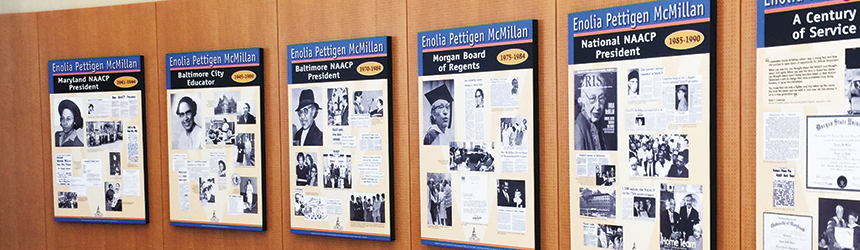
Museum graphics are in constant demand as new exhibits require advertising, entryway signage, and printed pieces for the exhibit itself. To keep up with a diverse set of requirements, print service providers (PSPs) that offer museum graphics often rely on a variety of digital presses and even seek help from professional design studios.

Above: Alpha Graphics, of Baltimore, MD< offers a variety of museum graphics, including cut vinyl, photography printing, and fine art on velvet paper or canvas.

Exhibiting Pride
Museum graphics allows PSPs to create unique pieces with high exposure. As each piece is custom printed according to the exhibit, it’s important that PSPs use a range of technologies and capabilities that match the correct ink and media to the application.

Established in April 2005, SignCenter, LLC started in the basement of a picture framing shop in Middletown, CT. With one employee, the sign shop originally supplied wholesale signs and digital graphics to retail print shops.

It since grew into a wholesale PSP with 14 employees operating in a 24,000 square foot facility in Milford, CT. The PSP offers UV, latex, solvent, and aqueous prints, dye-sublimated (dye-sub) fabrics and boards, die cutting, acrylic signs and engraved signs, and full sewing and finishing services.

In 2008, SignCenter started working with museums. “One of our signage customers does a lot of work with a local Ivy League university and were asked if they could supply graphics for a large retrospective exhibit,” explains Michael Oliveras, owner, SignCenter.

Today, five to ten percent of its overall output is for museums. As a wholesale printer, the shop creates graphics for the Barnum Museum, Florence Griswold Museum, Mystic Seaport, the Museum of the City of New York, the National Building Museum, the Venture Smith traveling exhibition, and Yale University galleries.

SignCenter employs an arsenal of digital printers for its museum graphics—updating the presses on a four year schedule to ensure optimal output. For museum work it uses an EFI VUTEk GS3250LX, Epson Stylus Pro 7400, Océ Arizona flatbed from Canon Solutions America, and an OKI Data Americas ColorPainter M-64s—depending on the application.

“Having a range of technologies and capabilities helps us match the correct ink and media to the application,” says Oliveras. “A lot of effort is spent maintaining accurate color profiles across the printer platforms to ensure that, for instance, boards and decals produced for an exhibit have consistent colors.”

Museum graphics’ materials are project dependent but include white ink on mylar wrapped medium density foamboard (MDF) boards and carbonized bamboo plywood. In fact, Oliveras notices more museums requesting higher quality and greater depth of sublimated prints on aluminum, glass, and MDF as well as silicone edge graphics. “We have created interesting effects for exhibits using mesh banner material as a theatrical scrim, and printing on historic canvas materials.”

Its software consists of an EFI Fiery, Onyx Graphics, Inc. solution, and Wasatch Computer Technology, LLC RIP depending on the output device. Museum graphic finishing is completed with a Zünd digital cutter and Summa America LLC S Class T140 digital plotter.

Museum graphics gives SignCenter the opportunity to create unique pieces with high exposure. However, Oliveras believes the real benefit is his employees’ personal satisfaction when they see high-quality work in a legitimate environment. “They don’t have the opportunity to see our corporate interiors and the day-to-day point of sale/point of purchase, and typical production work does not have as high a profile,” he admits.

The PSP experiences occasional challenges when working with museums due to demanding color and quality standards. However, SignCenter is well prepared and dedicates a production specialist—some times for a day—to work directly with the designers to print proofs and samples and make adjustments until the designs and curators are completely satisfied with the output.

Lighting can also require strategic planning. According to Oliveras, museum lighting is usually tightly controlled, and is not often the full spectrum of light used in print shops. “It is critical that samples be evaluated in the display environment to ensure proper color and contrast performance,” he suggests. To eliminate reflection, SignCenter uses 3M Commercial Solutions 3M Scotchcal Ultra Matte Overlaminate 8915.

Designed for Admission
In 1995, wife and husband Deanna Chrislip and Brian Hale created Design WorkShop, Inc. to provide complete graphic services to businesses, non-profit organizations, and municipalities. The design shop started in the owners’ home and now operates in a 4,800 square foot studio in Indian Orchard, MA.

Over the years its staff size has varied. The company currently has two full-time employees and several contract workers on call. “We also have developed good relationships with reliable suppliers and subcontractors enabling us to provide a variety of services to our customers throughout New England,” says Deanna Chrislip, owner, Design WorkShop.

When the shop first opened it used an Encad 36-inch inkjet printer and a Roland DGA Corporation ColorCAMM Pro PC-600 thermal transfer printer/cutter. “We understood then how important large format printing was to our business. What we didn’t understand was how quickly the technology would improve and how difficult it was to maintain a machine in top working order in a small shop,” explains Chrislip. “We quickly discovered that we could be more productive and provide our customers with more options and better quality if we used a service bureau.”

In 2011, Michael Oliveras of SignCenter in Milford, CT approached Design WorkShop for design services. According to Brian Hale, owner, Design WorkShop, the company was attracted immediately to SignCenter’s exceptional quality and service along with a variety of products.

The design firm now works with SignCenter on several museum applications such as printed vinyl graphics. This includes two recently completed large murals for the new Amazing World of Dr. Seuss Museum in Springfield, MA. Together both companies produced exterior printed vinyl banners, exterior signs with laminated vinyl mounted on aluminum composite material (ACM), and direct printed panels on PVC, plastic-faced foamcore, and ACM.

“Museum graphics can effectively draw the viewer into the exhibit and provide informational details to enhance the experience,” comments Chrislip. “Cut vinyl letting continues to be important for titles, quotes, and informational text.”

The Dr. Seuss Museum is the newest museum in association with the Springfield Museums. Including the Dr. Seuss Museum, the organization encompasses five exhibition centers including two art museums, a science museum, and a history museum. Design WorkShop handled its first project for the Springfield Museums in 2008. It started working with the curator for the Michael and Donald D’Amour Museum of Fine Arts to provide cut vinyl lettering for changing exhibits.

Most of Design WorkShop’s work is completed with Adobe System Incorporated’s Creative Suite, Illustrator, InDesign, and Photoshop. “We primarily use Illustrator because of its versatility and compatibility with other programs,” shares Chrislip. SA International’s FlexiSIGN Pro is used for cut vinyl projects.

Other projects for the Springfield Museums included exterior bronze lettering; wayfinding signs; ADA interior signs; banners; large format vinyl prints; dye-sub fabric hangings; lettering and graphics for a parade float, exhibit, and display materials; small informational labels for individual artwork, as well as printed brochures and rack cards.

Chrislip and Hale both have backgrounds in the arts and are strong arts advocates, so working with organizations like the Springfield Museums are ideal. “The work is always interesting and we enjoy the variety of projects and the opportunity to work with other creative people,” offers Hale. Over the past few years, arts-related projects have increased to comprise about 30 percent of overall business.

Well-Prepared Printers
Alpha Graphics, Inc. started in 1972 as a photo lettering shop and service bureau in Baltimore, MD. It originally offered typesetting, photo lettering, film for letterpress and offset plates, quick printers, faxing, passport photos, and posters.

In 2007, the shop underwent new management and added services in professional graphic design, trade show displays, fine art reproduction and giclée, and museum graphics, including cut vinyl, mounted panels, and color transfers for labels. “While we had the fortune to add these services, we keep our boutique shop feel and customer service at heart,” says Christine Walsh, president, Alpha Graphics.

Working with museums since 1972, Alpha Graphics originally supplied color transfers and produced graphics and panel prints for museums of all sizes across the country. While the method and materials changed over time, Walsh believes there is always a need for museums to partner with local shops for production.

Its museum graphics offering varies, including cut vinyl, photography printing, and fine art on velvet paper or canvas. Alpha Graphics offers both archival and non-archival canvas reproduction options with different price points.

At least 20 percent of the shop’s sales comes from museums. It has worked with a variety of organizations, including the Baltimore Museum of Art, John Hopkins Evergreen Museum, National Museum of American Jewish Military History, Stanford Museum, and the United States Holocaust Memorial Museum.

“Because we’ve worked with museums for over 40 years, we are well versed in what museums use or should use. I’ve also made it my purpose to become well educated on new and exciting materials that become available,” comments Walsh.

Alpha Graphics’ most used product for museums continues to be its proprietary Alpha Colors technology, also known as rubdown color transfers or Chromatech. Alpha Colors are color transfers that are highly detailed graphics used for museum labels, product mockups, and even items in film scenes used by Hulu and Netflix.

For digital technologies, the shop selected the Roland TrueVIS VG-640 for its Pantone and profile matching. More frequently or when large size dictates, the PSP uses the Roland press with petroleum-solvent ink, which Walsh says is very durable over time and in a variety of environments. “We are also able to add a UV-resistant lamination to pieces that will be in direct sunlight, enhancing versatility for non-traditional exhibits.”

Alpha Graphics also uses an Epson Stylus Pro 9890, which allows the company to print on archival materials for museum panels that need to be preserved or go into cases without off-gassing issues. According to Walsh, this press does a great job with photo reproductions or archival pieces that must meet the Maryland Historical Society’s guidelines. It is especially well fitted for the shop’s premium photo prints, fine art, and high-quality bond production for testing and color.

According to Walsh, selecting the proper materials and equipment for museum graphics harbors a better relationship between the museum and PSP—granting repeat opportunities. “Museum staff are usually eager to work with a printing company they trust. When you educate them on what materials would work and what materials would not, they are able to get past the ‘not sure what you mean’ and get to the ‘ah-ha’ moment,” admits Walsh.

Museum-Ready Signage
Designers and PSPs like Alpha Graphics, Design WorkShop, and SignCenter use digital printing technologies to keep museum clients satisfied. By doing so, each company harbors a healthy partnership and receives repeat job opportunities when new exhibits and the need for updates to existing exhibits arise.

Dec2018, Digital Output

Digital Printing
Museum Graphics

Stylish and Sleek Offices

By Olivia Cahoon

Architectural and professional décor companies turn to digitally printed window media for use in small- and medium-sized offices as well as corporate buildings. Depending on the material used, a digitally printed window graphic can serve as both a decorative element as well as provide privacy.

Print service providers (PSPs) should consider reaching out to architectural and décor companies to pitch window graphic services. In doing so, they expand into new fields and provide an opportunity for repeat services as companies rebrand or restyle their offices.

Above: Drytac ViziPrint Impress Clear SEL UV film is a versatile solution for self-adhesive applications on glass and other smooth, flat surfaces.

Corporate Environments
Digitally printed media offers corporate and office environments exceptional custom decorative elements as well as meets practical objectives.

According to Jim Halloran, VP sales and marketing, Lintec of America, digitally printed media is a great design element for corporate spaces. “It gives the end user ultimate control and authority of their space. It is great for both branding and privacy purposes. Companies can now print logos and incorporate elements that mean something to the company into the design. Also, it could be as permanent or temporary as the customer would like.”

“I like to call this functional art—graphics which are used for décor, while serving a functional purpose as well,” adds Lily Hunter, product manager, textiles and consumable supplies, Roland DGA Corporation.

Corporate and office environments seek innovative designs to help recruit talent and communicate company culture. Gary York, wide format product manager, Agfa Graphics, believes that in this industry, digital printing offers an efficient and less expensive method for updating office design.

“There is a design trend in office décor to strategically integrate natural elements throughout the workplace, which is accomplished by digitally printing natural scenes on media that adheres to walls, windows, and even floors,” shares York. These applications are also fairly easily installed and removed without damaging surfaces.

Digitally printed media also offers practical benefits. For example, York says digitally printing window graphics for a glass enclosed meeting room meets privacy objectives. “Graphics are easily customized with corporate logos and designs that reflect a company’s industry or communicate their culture.”

Kaz Kudo, associate marketing manager, graphic systems division, Fujifilm North America Corporation, agrees, citing environmental graphics as a great method for printed products to be used for practical functions such as dividing space, providing information, or elevating a space by providing ambience.

Additionally, companies with offices throughout the country or even nationwide can customize graphics to a particular region. For example, an office in Vail, CO might opt to display a mountain view while the Los Angeles, CA office might choose an ocean or beach scene, says York. “Digital printing offers a high level of creativity and helps communicate in an aesthetically pleasing manner.”

Jeffrey Stadelman, graphics marketing manager, Mactac Distributor Products, believes corporate/office environments seek digitally printed media to allow visitors and employees to see the company’s branding as fun imagery from the moment they enter the front doors. “It’s a unique way of creating a specific look for visitors and employees alike.”

Driving Demand
Architects, corporate offices, and individual client firms demand digitally printed window media in corporate/office settings.

Darren Speizer, VP of sales, Drytac, believes there is a combination of demand from both architects and individual client firms. “Customers and retailers are becoming more aware of customizable solutions and requesting them,” he comments.

Darrell Adams, VP, SCITOP-USA LLC, says individual client firms drive demand for office window films for a few reasons. One example, printable dry erase window film serves as a writing space for offices with excessive glass, allowing employees to adapt to the space allotted to them in creative way. “Office workers also like to personalize their individual office. Window films provide an ideal format to decorate or make window/glass areas more functional and can easily be removed with little effort and no residue remaining on the glass when removed.”

While architects play a key role in new buildings and major renovations, Phil Hursh, owner, NuConCept, believes client firms are a more important driver for window media in corporate/office settings. He says often corporate marketing designs and issues their corporate identity strategy without an architect involved.

Pitching Services
PSPs should consider connecting with architectural/décor companies to pitch window graphic services. This provides an opportunity to receive repeat jobs such as rebranding and restyling offices.

When reaching out to architectural/décor companies, PSPs should demonstrate the benefits of using all types of window media. According to Hunter, many buyers may associate window graphics with one way view media, which doesn’t seem appealing, especially for indoor or upscale décor. However, a variety of printable window media that these companies may not be aware of is available, like printable etched or frosted glass media and optically clear media.

Joey Heiob, technical service representative, Avery Dennison Graphics Solutions, encourages PSPs to reach out to architectural companies. Although architectural work can be viewed as more difficult, as it is a specified business with a work schedule that can last 12 to 24 months, he says window films are attractive offerings for these companies.

Furthermore, window graphic services can help transition PSPs to marketing advisors—especially as short-run customization is becoming increasingly popular for environmental graphics and interior decorations, points out Kudo. A PSP’s knowledge of the print process combined with its experience in using the material is valuable.

According to Greg Maze, senior brand and sales manager, Neenah, PSPs that connect with architects or interior design firms have the opportunity to get in on the ground floor and inspire creative thinking around the advantages of digitally printed media.

In addition to architectural/décor companies, PSPs should be aware of other decision makers and influencers with equal or greater control in a company’s interior design decision. Hursh says corporate marketing or office headquarters that design, value, and control corporate identity likely have more say than architectural/décor agencies. “Likewise, advertising agencies under contract to corporate marketing are drivers of corporate identity campaigns.”

Window Material Types
A variety of digitally printed window materials are available for corporate/office settings. Each product is specifically designed for window displays and serves a different purpose. Dione Metnick, product specialist, S-One Holdings Corporation, lists options including frosted adhesive vinyl, clear gloss or matte, color frosted, white, PVC-free grip/cling materials, perforated window vinyl, static cling, curtains, and fabric window shades.

In terms of printable films, clear, optically clear, and perforated films are common. Tim Boxeth, marketing manager, 3M Commercial Solutions, believes optically clear films are ideal for the best see-through experience. “These can produce some unique designs by layering inks, especially white. They even allow you to have one image on one side and another on the other side,” he explains.

For privacy purposes, perforated window vinyl is available in different perforation patterns in a matte finish to cover windows, suggests Jason Amato, print production manager, Dietzgen Corporation. “It typically allows the person on the inside of the window to see outside easily and it makes it difficult for the person on the outside of the window to see inside,” he explains. It also works well for permanent applications where privacy is a priority.

Window cling is available in gloss white or clear film without adhesive, useful for indoor temporary applications. Amato says installation is easy and the graphic is repositionable if necessary without affecting its ability to cling to glass. “Window cling is a great product for graphics that change frequently, like motivational quotes or graphics used repeatedly over the course of time.”

According to Matt Meyer, president, Plastiprint Sales Company, optically clear window cling films are ideal for front windows because the film doesn’t obstruct viewing. For privacy settings, he suggests matte/frosted clear film because it provides the proper amount of coverage while also offering enough light to pass through so the office isn’t dark.

Vinyl window media, clear or opaque, is available in a gloss or matte finish with different adhesives. Adhesive can be permanent high tack, which is useful for long-term applications, or it can be repositionable low tack for temporary applications, explains Amato. Opaque products are well suited for providing complete privacy and clear products are well suited for a stained glass effect.

“The finish can create more or less privacy and can work with different lighting,” recommends Cory Jones, associate product manager, GBC/SEAL, part of ACCO Brands. For example, a matte finish may work better for graphics in a densely lit space to reduce glare while a clear finish creates a translucent appearance with privacy without completely blocking light.

Lastly, frosted window films simulate the appearance of etched glass and are available as a printable product. “The unprinted product provides privacy and it does not affect the amount of light that enters the room,” says Amato. It’s useful for creating special effects on glass or simulating a pearlized finish, however it may alter the amount of light that enters the room.

There are also frosted scratch-resistant films that change from optically clear to frosted depending on the viewing angle, adds Halloran.

A Different Type of Sell
When dealing with architects and individual client firms, the sell differs from traditional print customers. Communicating with the architectural/professional firm and end user/customer may reach unfamiliar territory.

While PSPs must meet similar expectations for a clean, on-brand job, they’re also providing a graphic more focused on a pleasing appearance than creative, effective advertising, says Heiob. “Tying the graphics into the office space is an added challenge that means you’ll need to prove your eye for design to the architecture firm or company that is using the window graphic.”

The communication between architects and end users needs to be precise with project conditions defined from the beginning, suggests Anja Falkenberg, director marketing and sales, ASLAN, Schwarz GmbH & Co. This includes both the vision but also the budget. She offers, “the greatest idea has no value if costs are the weak point.”

According to Matt Buckley, director of business development, wide format market, GPA, for traditional print customers the sell revolves around practical concerns such as product features and benefits. By contrast, he says architectural and professional firms are more concerned about the look, feel, and texture of the materials and how it shapes the environment.

For a successful sale, PSPs should be knowledgeable of the different printable window films in order to make informed recommendations to both the architectural and professional firm. “Most corporate clients and many architectural clients are not aware of the latest advances in window films. And they usually are quick to use these materials in designing their own office window graphics,” adds Adams.

Alternatively, many times architects specify the media type for the job—reducing the PSP’s control. “The architect is already going to have what they want in mind and it is the responsibility of the PSP to provide this,” offers Nate Goodman, product manager graphics, Ritrama Inc.

Installation
The act of installing a window graphic may not differ environment to environment, but attention to detail is even more prominent.

“The mechanics of the installation may not differ significantly, but the number of considerations for installers is more extensive,” adds Jodi Sawyer, market development manager, FLEXcon. This includes viewing angles, visibility, lighting, space accessibility, permits, and environmental changes depending on region.

According to Boxeth, printed window graphics are typically larger graphic panels and can require a wet application to provide smooth, bubble-free graphics. “Sometimes you have to wait a day or two for any residual moisture to evaporate and provide the clarity you anticipate,” he explains.

Installation also poses scratching dangers as architectural images usually include optically clear portions. To avoid this, Goodman suggests using a professional installer familiar with proper wet installation techniques to provide the proper look.

“A primary feature to look for is scratch resistance,” suggests Halloran. “This allows the clear areas of the graphic to stay clear and clean from micro scratches or even larger scratches ruining the surface.”

Functional and Stylish
Corporations seek customized décor and brand promotion in their offices. To meet these needs, PSPs offer window graphics for both aesthetic and practical functions. Print providers can opt for a traditional end user relationship or extend their services to architectural/décor companies to further their reach into this field and earn repeat business.

Nov2018, Digital Output

Digital Printing
Window Media

From Blueprinting to State Fairs

By Olivia Cahoon

Direct to substrate printing on traditional and untraditional rigid media is possible thanks to wide format flatbed printers. With the ability to handle a variety of materials, these devices allow print service providers (PSPs) to create unique printed products.

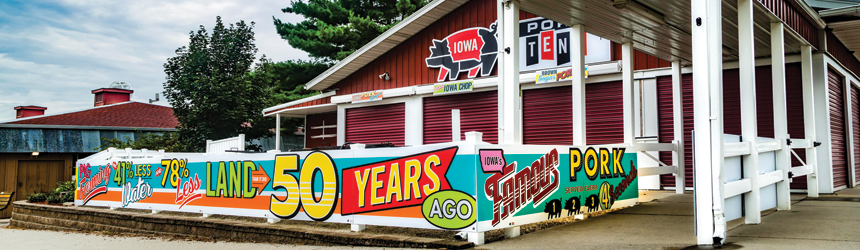
Above: Beeline and Blue worked with a swissQprint Nyala flatbed to create 569 square feet of printed material for the Pork Producers’ pork tent at the annual Iowa State Fair in Des Moines, IA.

Beeline and Blue
Established in 1958 as Des Moines Blue Print, Co., Beeline and Blue started with two owners in Des Moines, IA. It grew from a two-room blueprint operation consisting of 230 square feet of workspace to a profitable print business.

According to the company, it now operates as the largest graphics provider in IA and one of the largest in the Midwest. With 31 employees, Beeline and Blue continues to provide architecture, engineering, and construction (AEC) industries with blueprints, large and small format printing, and online digital services.

From a 17,000 square foot facility, the PSP specializes in digitizing and printing fine art, building point of sale displays, wrapping delivery vehicles, covering buildings, and providing point of purchase retail signage and environmental graphics. Through its trusted partners it also provides outdoor channel signage for rebranding companies throughout the Midwest.

Beeline and Blue serves a variety of industries including agri-business, associations, corporate communications, design professionals, event coordinators, and manufacturing. Its clientele includes national corporations such as DuPont, John Deere, Meredith Corporation, and several noted museums in many states. It offers products like banners, booklets, brochures, flyers, posters, trade show displays, vehicle decals, wallcoverings, and yard signs.

Enter Digital Technology
The PSP’s first digital device, other than cutsheet printers, was a Versatec electrostatic printer to print mylar and vellum originals to make blueprints. Next came plain paper copier/printers to produce digital blueprints. “As the AEC industry started designing on computers rather than drafting tables, we needed to print digitally,” admits Steven Strooh, VP, Beeline and Blue.

Beeline and Blue’s first digital inkjet wide format printer was an Encad. The PSP also used an analog camera to make full photographic prints from originals—like maps and magazines—and digitally print. However, Strooh says clients quickly demanded less expensive large format graphics on a variety of media from poster paper to vinyl banners.

As the company expanded its services, it added to its arsenal of digital printers. Today, Beeline and Blue uses a swissQprint Nyala; HP Inc. Latex 260 and 360 for posters; HP Latex 3500 for banners, wallcoverings, mesh, perforated window media, and canvas wraps; and the Canon U.S.A., Inc. imagePROGRAF PRO-2000, PRO-4000, and iPF9400 for paper and canvas fine art production.

Its software consists of Onyx Graphics, Inc. workflow and most recently solutions from Caldera. Digital finishing equipment found in house includes an Esko Kongsberg i-XL 60×120-inch cutting table with roll option and a VersaCoater XL liquid coating machine from Advanced Print & Finishing Technologies.

Flatbed Printing
For flatbed printing, Beeline and Blue employs the swissQprint Nyala flatbed press including roll adapter, white ink, and varnish capabilities. The device features a 10.5×5.25-foot print bed and prints up to 2,217 square feet per hour (sf/h).

According to Strooh, the Nyala is an operationally efficient flatbed printer that requires very little daily maintenance—less than ten minutes—and it’s capable of printing 100 precut 18×24-inch two-sided realtor signs in 150 minutes or 40 an hour in quality mode.

Beeline and Blue often uses its Nyala press for window graphics that require white ink and for displays on styrene, PVC, gatorfoam, foam core, acrylic, and lexan in a variety of thicknesses—from 0.2 to two inches. Other compatible applications are primarily interior and exterior décor as well as museum and retail displays.

Currently, 26 percent of the PSP’s output is printed on the Nyala flatbed press. It allows the company to improve production and throughput so much that Strooh says Beeline and Blue can expand its flatbed printing by nearly 30 percent without overtaxing production.

With a flatbed printer like the Nyala, PSPs like Beeline and Blue experience a variety of benefits including speed and efficiency when printing. Despite this, challenges can still occur regarding media adhesion, color consistency, constant maintenance, media waste due to printer malfunction and equipment costs, and lack of operational efficiency due to maintenance or failures. “Speed can also be an issue when quality printing is required—no swath banding,” adds Strooh.

To overcome these challenges, the company uses reliable equipment that requires a minimal amount of daily maintenance, no annual service contracts, quality speeds at 1,100 sf/h with no swath banding even in solid pastel colors like blue and purple, seamless print recovery resulting in no wasted substrates, and versatile software that doesn’t require reverting to the RIP to crop, flip, or add layers like white or varnish.

Big Attractions
In 2018, J Sayles Design Co.—a long-term customer of 30 years—approached Beeline and Blue regarding the Pork Producers’ pork tent at the annual Iowa State Fair in Des Moines. J Sayles Design is a visual communications firm.

The firm’s client, the Iowa Pork Producers, considered updating its old fairgrounds building for the 2018 Iowa State Fair. According to Strooh, Sayles persuaded the client to dress up the façade and fences with punchy, colorful graphics.

For the signage, Beeline and Blue selected ten millimeter (mm) coroplast, three mm aluminum composite material, and lexan faces for exterior light boxes. The graphics were printed on the swissQprint Nyala. “The ink set used by the Nyala includes a very bright yellow and produced the best representation of the designer’s colors,” admits Strooh.

Beeline and Blue finished the graphics with the VersaCoater XL five-foot wide liquid coater and a scratch- and graffiti-resistant gloss coating. Strooh says the gloss coating not only provides durable protection but further enhances the color saturation and punch off the Nyala.

Specific shapes were cut using the Esko Kongsberg i-XL. “The speed and accuracy of the digital router helped get this project out in time with no ink cracking along the cutting edge,” adds Strooh.

Because the state fair lasted ten days, the coroplast installation needed to be durable and withstand nearly 1.3 million visitors. The signs were attached to PVC fence with two-inch heavy-duty Velcro on existing PVC fence rails—allowing them to be removed and stored for next year’s show.

Challenges occurred during installation due to irregular lengths and thicknesses. To combat this, the fence post installation required a lot of measuring and efficient media use. Individual pieces were paneled to accommodate the design specifics. The fence posts and rails were properly secured with spacers due to varying thicknesses.

From art submittal to installation, the PSP completed the job in one week. The final graphics consisted of 30 pieces of ten mm coroplast, four pieces of four mm coroplast, and two pieces of lexan faces for a grand total of 569 square feet of printed material.

J Sayles Design was happy with the completed graphics. “Their client was impressed with how we achieved the result of improving from a well-worn appearance to a vibrant and attractive display,” offers Strooh. The colors in the light box’s lexan face were also bright and colorful at night when the sign was rear lit.

Practical Purposes
Beeline and Blue operates its swissQprint Nyala flatbed press for a variety of jobs like the Iowa Pork Producer’s fair building project. As technology advances, Strooh sees wide format flatbed presses improving with new trends such as multiple layer relief printing for artistic effects and practical purposes like braille, vacuum forming with UV ink, and improvements to speed and quality.

Nov2018, Digital Output

Digital Printing
The Business of Vehicle Wraps

By Melinda Tetreault

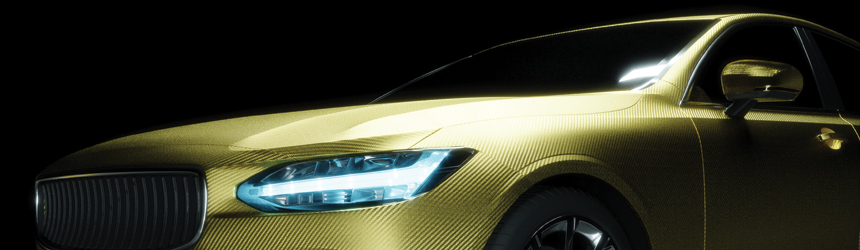
Many print service providers (PSPs) can successfully wrap a vehicle. They know the correct material for the job, how to prepare the file to print, and which tools to use for installation. What they may not know how to do well is sell the service. A well-thought marketing plan is essential to competing in a saturated market of vehicle wrap vendors.

It is important PSPs learn the ins and outs of how to successfully sell vehicle wraps, whether to existing customers or expanding to prospective clients. Media vendors help in this regard by offering classes, seminars, and workshops to teach PSPs marketing techniques. We tapped some of these vendors to share information on topics taught in their classes.

Worthwhile Investment
Vehicle wraps are divided into many sub-categories, including digitally printed graphics and color change wraps. Each segment is broken down into consumer and commercial wraps. Further distinctions involve fleet wraps versus a single vehicle job. And finally there is the vehicle itself, whether it is a four-door sedan, splinter van, or a larger vehicle like a bobcat, boat, or bus.

PSPs should consider investing time, resources, and money into learning how to successfully sell vehicle wraps because each service needs to be marketed differently. For example, Nate Place, senior application engineering technician, 3M Commercial Solutions, says that knowing how to clearly communicate the benefits of both commercial and color change wraps helps increase revenue through sales opportunities that unknowingly would have been lost.

“Understanding how to market your services, upsell, and make your space in the industry is very essential for PSPs,” agrees Patty Doychak, senior marketing communications manager, Avery Dennison Graphics Solutions.

Avery Dennison polled its wrap class attendees on what topics they hoped to learn more about. The majority were looking for instruction on how to improve the business end of their operations.

“One of the most common things I hear from print providers is that they are intimidated by selling vehicle wraps and shy away from them,” says Josh Culverhouse, graphic innovations market manager, ORAFOL Americas.

Taught Tactics
To educate PSPs on how to successfully sell vehicle wraps, media manufacturers offer classes, seminars, and workshops. Topics include where customers derive from—for example retail, commercial, or fleet; how wraps are purchased—on price, quality, or relationship; and how to achieve repeat sales.

Customers come from a number of backgrounds, and understanding each’s needs are important. Beyond retail, commercial, and fleet, Place thinks it is important to add private vehicle owner or hobbyist.

Why a product or service is purchased is strongly driven by the buyer. So whether a wrap is purchased based on price, quality, or overall relationship with a vendor is something that differs by customer.

“I would say that most first time wrap customers are more emotionally driven. Price and quality aren’t as important as they are to repeat customers. Repeat customers are educated on the process and may look for alternative pricing or providers. Quality is a big contributor to customers defecting to a competitor on future jobs,” recommends Place.
Overall, shops need to focus on quality for all of its customers, according to Doychak. “PSPs need to emphasize quality while not selling themselves short. In the end, you get what you pay for, so showing value and quality fosters better relationships than having the lowest price.”

If price is an overwhelming factor, Culverhouse recommends providing customers with different surface coverage and material grade options at multiple price points.

Recurring jobs from one client are one of the best ways to increase a PSP’s bottom line. Both the PSP and the customer benefit from working together on a continual basis, understanding their relationship and not spending time going over nuances that typically occur with a first time buyer.

Hoping to capture repeat business when it comes to vehicle wraps is a fair expectation. Customers may decide to rewrap a vehicle due to wanting a new look entirely, or it may be because of wear and tear.

“Fleet customers are less likely to make wear and tear or refresh a high priority compared to color change customers. Color change customers tend to be perfectionists and hobbyists who thrive on uniqueness and constant change. I think that conversion is higher on the color change side,” suggests Place.

Doychak agrees and says that owners of exotic and luxury vehicles often look for new and different ways to decorate their vehicles, so they change the wrap more often while others may leave a wrap in place for its full service life.

Beyond the aforementioned topics, Place says other successful sales tactics taught at classes include increasing brand awareness, personalization, and substrate preservation. “Specifically, discussions are held on mobile visibility versus stationary, temporary or long-term personalization and making it unique, and wraps providing a productive barrier from the elements.”

Avery Dennison includes information on the importance of networking to increase sales in its educational seminars. “We teach marketing through campaigns, social media, and relationship building. As a PSP, you want to be in touch with tint installers, car salesman, and other people in the overall sign and vehicle wrap industry,” explains Doychak.

Once a prospective customer is in the door, it’s important to communicate with them. “Show your customer that you care about establishing a relationship and that you want to be their expert guide through the process. Showing the customer that you care, that you’re organized, and have their best interests in mind is going to generate a lot of business,” shares Culverhouse.

Beyond the Classroom
Sometimes it is difficult to commit to time away from the office. There are other methods besides classes, seminars, and workshops for bettering selling tactics.

Attending an annual trade show is one option. “One thing I’ve learned over the years is how amazing the vehicle wrapping industry is when it comes to networking. So many individuals within this industry are an open book and want everyone to be successful. I encourage PSPs to come to events with an open mind and an appetite for networking and education,” suggests Culverhouse.

Of course, media suppliers themselves are excellent resources. Place encourages PSPs to utilize their graphic film manufacturer sales team. “These folks are on the front lines daily and have exposure to many unique jobs and are well educated in terms of helping customers understand the benefits of graphic films and wraps,” he continues.

“Take advantage of manufacturer sales representatives and technical service representatives as resources for product specifications and upsell strategies. They can provide a wealth of information that supports marketing,” agrees Doychak.

Head of the Class
Skill at designing, printing, and installing a wrap is important—but the service must be sold. Knowing how to correctly market vehicle wrapping services is the difference between a PSP connecting with the right customers and a PSP waiting for jobs to come in the door.

Working with media manufacturers inside and outside the classroom is one way to tailor marketing to your advantage—basing it on the type of clients you work with and the kinds of wrap jobs you complete.

Nov2018, Digital Output

Digital Printing
Vehicle Wrapping

Full Color Plastic

By Olivia Cahoon

Print service providers (PSPs) utilize a combination of digital print and plastics for projects like custom awards, plaques, photography, and wall art. This type of work generally includes varied messaging and personal images. To justify one offs or short runs, digital printing is an ideal solution.

Murray Wald started Wall Designs in 1948 in New York City, NY. The company offered fabricated custom acrylic furniture and three-dimensional acrylic intaglio sculptures until 1981, when Wald’s sons Brad and Eric founded BDW Designs, Inc. The Wald sons manufactured custom acrylic clocks in a 400 square foot workspace with one employee in FL. To encompass their products, they established a new division called Acrylic Idea Factory in 1991.

“It became a well-known acrylic awards manufacturer in the recognition industry,” says Luis Urtaza, director of global operations, Acrylic Idea Factory. As time went on, customers from the recognition industry demanded acrylic awards and plaques personalized in full color instead of monochrome laser engraving. With this in mind, the Wald brothers developed AcryliPrint HD—a proprietary process that allows the company to fuse full-color, digitally printed images to acrylic.

This technology allowed Acrylic Idea Factory to expand into the gift and personalization industry as well as both the signage and photography industries through its AcrylicPress.com division.

Today, Acrylic Idea Factory is based in Tucson, AZ and employs over 350 people in four facilities totaling 120,000 square feet worldwide. Its products include acrylic awards, plaques, and signage through Acrylic Idea Factory and custom personalized gifts as well as acrylic prints for both amateur and professional photographers at AcrylicPress.com.

Above: It took Acrylic Idea Factory five business days to complete four 32.835×48-inch, full-color acrylic print wall pieces for master photography Roberto Valenzuela.

Canon Leads the Way
Limited by four-color screenprinting, the company started using digital print technology in 2006 after the Wald brothers invented AcryliPrint HD. It bought its first Canon U.S.A., Inc. imagePROGRAF iPF8400 in 2010 and currently owns 20 of these printers. It selected this model for its speed and print quality. “The icing on the cake is that we don’t have to schedule a service technician to switch a printhead when it needs replacing. Canon definitely figured that one out and made it easy to maintain,” says Urtaza.

Acrylic Idea Factory’s most recent press is the Canon imagePROGRAF PRO-4000, installed in late 2017. The 44-inch printer uses a 1.28-inch wide, 12-channel integrated compact printhead and Chroma Optimizer. The company decided to purchase it after attending a Canon informational breakfast, which featured the imagePROGRAF PRO-4000. “We have developed great relationships with Canon managers and distributors and once the imagePROGRAF PRO-4000 was through its initial testing phases, the word was out that it was a great printer and that’s when we decided to pick one up,” offers Urtaza.

With the device, Acrylic Idea Factory prints all its orders for its biggest and most important clients and distributors. “The imagePROGRAF PRO-4000 satisfies that need for our AcrylicPress.com customers,” says Urtaza. This division offers a variety of customizable products including acrylic puzzles and tins, coaster sets, clocks, custom face mounted acrylic, dry erase, keychains, light switch panels, luggage tags, ornaments, photo blocks, plaques, and wall art.

100 percent of the PSP’s acrylic print products are digitally printed. Acrylic prints account for roughly 35 percent of its total output.

With its digital printers, Acrylic Idea Factory uses Canon paper and Canon LUCIA PRO inks. The ink set includes microencapsulated colorants that enable smooth gradients, an expanded color gamut, and deep color expression.

Based on its archival performance, Urtaza says Canon LUCIA PRO ink is ideal for the AcryliPrint HD process, which relies specifically on print quality. By using the Canon imagePROGRAF iPF8400 and PRO-4000 printers, quality is guaranteed, he says. “The better the printer, the better our acrylic prints.”

AcryliPrint HD involves the permanent fusion of a full-color printed digital image of any size and shape to acrylic, with 100 percent optical clarity and bubble-free quality. The process uses no liquid solvents or glues and does not produce any volatile organic compounds that can harm the environment.

Despite the advantages of digital print technology, the PSP still experiences challenges. Like with everything, Urtaza says the company has a dedicated team whose primary focus is to ensure the printers are linearized and properly calibrated for accurate color output. Other challenges occur with finding proper RIP software that can help the PSP manage production and color management.

For finishing, the PSP uses its proprietary AcryliPrint Fusion Processor, which was developed in house when the company invented the AcryliPrint HD process.

Photography Goes Digital
In 2017, master photographer Roberto Valenzuela, a Canon Explorer of Light program member, approached Acrylic Idea Factory for photography prints. Based in Beverly Hills, Valenzuela has earned over 100 international awards for his wedding and portrait photography. He also serves as a chair and judge for photographic print competitions in Europe, Mexico, South America, and international photography competitions held in the U.S. through the Wedding and Portrait Photographers International (WPPI) convention in Las Vegas, NV. At the 2017 WPPI, Valenzuela was impressed by the quality of Acrylic Idea Factory’s acrylic prints and wanted to outfit his new photography studio in Beverly Hills, CA.

Valenzuela requested the PSP produce acrylic prints using non-glare acrylic material with the proper color output represented in his photography.

The PSP trimmed 4×8 feet of non-glare, 1/4-inch acrylic sheets to 32.835×48 inches and hand-buffed polished all the edges for a total of four parts.

The images were printed with the imagePROGRAF PRO-4000 using Canon LUCIA PRO inks. Images were fused with the PSP’s high-quality, non-glare acrylic using its AcryliPrint HD process. “We selected the imagePROGRAF PRO-4000 because it assured the best quality print and color output,” says Urtaza.

After fusing, a silver-colored aluminum composite was added to the back. For mounting, the print provider added its French Cleat hanging system. With its complete set of Canon digital print technology and proprietary processes, Urtaza says the combination guaranteed Valenzuela’s satisfaction.

After receiving the client’s files, it took Acrylic Idea Factory five business days to complete four 32.835×48-inch, full-color acrylic print wall pieces.

Printing on Acrylic
As Acrylic Idea Factory moves forward as the largest manufacturer of acrylic prints and full-color personalized acrylic photo keepsakes, it intends to replace its Canon imagePROGRAF iPF8400 printers with imagePROGRAF PRO-4000 models.

Nov2018, Digital Output

Acrylic
Digital Printing

Evolving Fashion

By Cassandra Balentine

The availability of digital processes for printing to textiles opens up a range of opportunities. For the fashion world, the short-run—as low as one off—capabilities afforded by digital makes it possible for designers to create custom solutions produced on demand.

Several factors come into play for a successful digitally printed piece of apparel, including the availability of apparel textiles primed for digital print processes, the technology limitations of various textile printing processes and the ink sets, and the need for post-print finishing steps. Additionally, considerations like light fastness, wash rate, and hand are essential for selecting fabric for use in apparel.

Above: Fisher Textiles’ apparel products are ideal for athletic wear, garments, scarves, and swimwear.

Positioned for Digital
Digital textile printing is a great solution used to complement today’s evolving fashion industry.

Ali Maalizadeh, national director of apparel, Fisher Textiles, believes that digital print is providing more accessibility and opportunities in the market, avoiding paying for screen engraving and associated wait times. “Digital printing to textiles for apparel is definitely bringing speed and accessibility to the market,” he shares.

Fisher Textiles offers digital apparel fabrics specialized for dye-sublimation (dye-sub) printing. The products are ideal for athletic wear, garments, scarves, and swimwear. Several styles feature a moisture management chemical that allows perspiration to move away from the body, helps the fabric dry quickly, controls odor, and promotes comfort.

Kathryn Sanders, product marketing manager, apparel and home furnishings, Top Value Fabrics (TVF), points out that digital textile printing is particularly helpful when it comes to fast fashion. “While digital textile printing may not be able to compete with rotary screens on the extreme scales of big box fashion marketplaces—at least not yet—it can step in to do the same job for boutique brands and collections,” she offers. “Typically, when we think of fast fashion, we think of large scale production, but it is not always that way—especially with the growth of small businesses and the increased consumer commitment to shop locally. The brilliance of digital textile printing is the ability to incorporate printing on demand into a business model and produce a garment after it is ordered. It is a new type of fast fashion, but it responds to the same trend of supplying customers with instant gratification and current design trends. Fashion and printing on demand mirror each other in a powerful way.”

TVF offers several apparel lines of knit, woven, and warp knit textiles specifically developed for digital textile printing. Its polyester fabrics for dye-sub printing are optimal for active wear and athleisure collections. An extensive line of natural fiber fabrics—including organic options—are geared toward the contemporary apparel market. The natural fiber fabrics are specifically created for digital pigment printing. Additionally, TVF offers nylon fabrics for digital pigment printing and has the capability to create custom fabrics to customers’ exact specifications.

Hunter Ellis, president, Jacquard Inkjet Fabric Systems, considers digital printing on textiles to be an excellent tool for short runs, requiring minimal set up times and a relatively low investment. “Digital printers can utilize direct to garment or wide format printers to keep up with ephemeral trends and short lived waves, as well as customize both patterns and graphics to customers’ needs. There is also little reinvestment necessary when a design needs to change slightly—an entire new screen doesn’t need to be burned.”

Jacquard Inkjet Fabric Systems—the sister company to Jacquard Products—supplies textiles treated for digital printing, ink and pigment systems for digital printing, steamers, and related services.

“Whether you focus on fast fashion, short-run exclusive collections, or the growing trend of customization, digital textile printing is positioned to be the answer,” says Sanders.

On the Rise
As digital textile printing continues to grow in demand, apparel trends crop up.

Ellis points out that silk scarves are an easy way to begin digital printing textiles, so he sees a lot of requests for them. “High-quality, comfortable cotton knits and rayon also seem to be popular,” he adds.

Sanders notices two trends supported by digital textile printing—customization and short-run collections. In terms of short-run collections, fashion designers are building their brands based on exclusivity, yet they aren’t necessarily keeping their brands exclusive due to price point, but rather supply. Unlike before, running out of a style is built into the business model and consumers are fully embracing it. Creating short-run collections allows designers to build demand, but it also gives designers room to experiment with prints in ways that were either not technically possible or financially feasible. “Designers have the freedom to utilize unlimited color, experiment with photographs, and challenge scale and detail in new ways. Instead of featuring three prints each season in two colors, the options are unlimited,” offers Sanders.

She adds that the digital textile printing process also enables designers to invite consumers into the design process. “This technology supports the consumers’ desire to create custom apparel and gives them a tool box that is cost effective and easy to access. We’re seeing an influx of companies formed around this idea—many even produce unique apparel blanks that the consumer can effortlessly drop their design into.”

Maalizadeh points to environmental trends making their way to apparel. For example, Fisher Textiles offers fabrics created with recycled water bottle material for athletic and team apparel. “We see an uptick in demand for sustainable fabrics and products made in the U.S. We take great pride in the fact that Fisher Textiles products offer that.”

Types of Fabric
The availability of fabrics used for digital printing is somewhat limited to the printing process. Transfer dye-sub printing is still largely preferred, and works best with synthetic fabrics, including polyester blends.

Sanders points out that if you look at the tags of your clothes, you’ll discover rather quickly that the majority of them are blends. “However, not all printing processes are compatible with blended fabrics,” she stresses.

It is important to keep in mind that today’s polyester doesn’t resemble the scratchy, non-breathable polyester of the 1970s, according to Sanders. “In fact, polyester is one of the most advanced fibers on the market, and with the right moisture management finishes, is known to be more comfortable then cotton for active wear applications,” she shares.

While polyester blends are most popular, the demand for apparel textiles made with natural fibers is increasing. Advancements in digital printing technologies are what will make effective printing to these textiles a reality. In the meantime, Maalizadeh says the U.S. textile industry is just venturing into naturals and it is very early. “The digital printing process on naturals with reactive inks requires steaming and post finishing through a tented frame. New developments in pigment inks improve this process drastically,” he comments. “In order to print on natural fabrics, there are two ways, reactive—which is an extensive and expensive process—and pigment. Pigment quality was once far inferior to reactive in terms of colorfastness, wash tests, and hand; but this is no longer the case. Improvements in the pigment ink technology and these printers are streamlining the production process and lowering costs.”

Ellis comments that cotton knits offer high-quality results and a great hand. “Their flexibility allows for a wider range of garment applications, and they impart an intrinsic value to the garment that polyesters, nylons, and blends lack. Of course, they can be more time consuming and difficult to work with, but pigments are helping out in that realm.”

Sanders says digital pigment printing is the best option for printing blends and natural fibers, but the industry is still waiting for the technology to be perfected. Further, additional coatings may be necessary depending on the printer, and the wash fastness and crocking of the fabric should be assessed before going into production. She says if these elements are not addressed, an entire project or collection can be derailed as the last thing anyone wants to do is upset customers. “That said, experienced fashion designers know how to design around technology limitations and can even use it to their advantage, such as creating washed down contemporary or vintage looks.”

Selecting the right fabric is a critical part of the printing process. “The printing process will dictate what types of fabrics are compatible, but within that there are also many additional variables. If printing via dye-sub, polyester fabrics are ideal, but it is important to ensure that the construction of the polyester fabric is optimal for digital printing. The construction of the fabric can impact the print quality significantly. This is why it is imperative to work with fabric suppliers and be as transparent as possible in regard to the end use application. Every fabric specification—from the content to the weight—can make a difference in the final product,” stresses Sanders.

Maalizadeh says for apparel, direct dye-sub is not recommended and the availability of materials reflects this. Dye-sub transfer is preferred for apparel printing.

Sanders suggests nylon fabrics use digital pigment printing or acid for best results; cotton and other all-natural fabrics use digital pigment printing or reactive; polyester uses dye-sub; and blends use digital pigment printing.

“It is important to note that reactive and acid printing requires additional finishing equipment to stream and wash the fabric after it is printed. This reduction-clear wash down process eliminates excess dye on the fabric but compromises the repeatability of the print from batch to batch,” shares Sanders.

Ellis adds that dye-sub is best for polyesters, pigments for cotton and blends, and nylons are tricky and require either a good pigment ink system or acid dyes. “Direct dyes tend to have poor wash fastness with nylons, although they do work to a certain degree.”

Fabric Features and Future
It is critical to select fabrics compatible with the chosen printing process. From there it is best to pick a fabric that features a tight construction and low pile. These characteristics dramatically enhance the image clarity of the print. Additionally, if the chosen fabric is coated, the ink in the printing process needs to penetrate the coating. “For example, you can’t digital pigment print on a durable water repel coating because the fabric simply won’t absorb the ink,” cautions Sanders.

Consistency is key for digital textile printing. “If your fabric or printing environment changes, the fabric will need to be re-profiled. It is important to work with a fabric supplier that can ensure consistency from lot to lot—not just the fabric specifications, but the yarn and construction needed to stay the same for accurate color from project to project,” says Sanders.

Maalizadeh explains that specific to athletic wear, a good white point, minimal shrinkage, moisture wicking, and durability are important features of the fabric.

In the future, Sanders expects to see a continued trend towards exclusive short-run collections. “We’ll likely see more designers embrace color and experiment with prints and photographic elements. We’ll also see more print service providers target the apparel market and embrace the demand for customization. At the end of the day, it’s about leaning into the technology rather than setting up digital textile printing to fit the traditional mold of rotary screenprinting. If we do that, we’re limiting ourselves greatly,” she comments.

Maalizadeh says to expect more fabric, printing, and application options.

Apparel Opportunity
As the role of digital textile printing continues to advance, innovative designers in the fashion industry see the potential and start to incorporate the correct technology. This generates modern trends towards customized products and exclusive design runs. Meanwhile, technical advancements in pigment ink for textile printing extend the possibilities.

Nov2018, Digital Output

Digital Printing
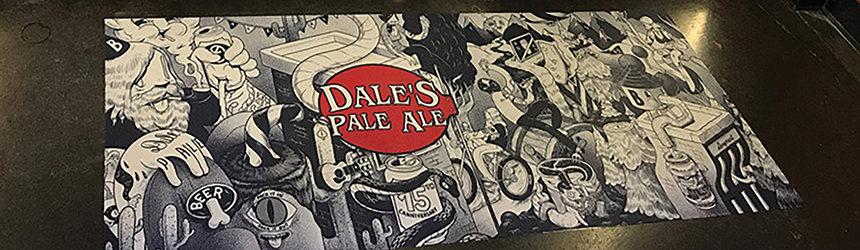
Textiles

The Winners Circle

By Melissa Donovan

It’s time for the 2018 Readers’ Choice Top 50. Each year through our lead generation system, DODirect.net, readers of Digital Output determine their top vendors. Based on interest in editorial—in print and online, as well as advertisements, the following companies are part of this year’s lineup.

Readers’ Choice Top 50
The following companies appear in alphabetical order. Flip to page XX to learn more about products and services.

3M Commercial Graphics helps customers worldwide build brands by providing large format graphics and light management solutions. The company manufactures or certifies graphic films and graphic protection, flexible substrates, as well as inks and toners used to create graphics for vehicle wraps, walls, floors, windows, and textured surfaces that are consistent, reliable, and durable.

Advanced Color Solutions offers a full line of Mutoh and Roland large format sublimation printers, Golden Laser VisonScan cutting systems, eco-solvent printing and cutting systems, flat and rotary heat presses, vinyl cutters, dye-sublimation (dye-sub) inks/papers, and on-site training.

Agfa Graphics helps produce more powerful messages by making graphic communication solutions more attractive, affordable, and profitable. Working with world class manufacturers, the company provides an innovative and broad portfolio of products and services to help users choose the right hardware, software, consumables, and services that meet a budget and goals. Agfa offers integrated solutions that can maximize purchase power and put customers in a position to profit.

Alpina Manufacturing offers LED Lightbox, Flip-up, SEG, Slide-in, or Banner Grip Frames made in any size or quantity to hold graphics or banners. Change graphics without removing frames from wall. Beautiful presentation, low cost. Indoor or outdoor use. 24/7 online quote and ordering website. No minimums; manufactured in Chicago, IL.

AnaJet is a pioneer in the direct to garment industry. The RICOH Ri 100 is the first and only compact all-in-one custom garment printing system at an entry-level price, and the RICOH Ri 3000/Ri 6000 Series boasts fast print speeds, industrial reliability, and showroom quality prints.

Arlon Graphics is in the business of creating innovative material that brings ideas to life. The company’s high-quality, pressure-sensitive materials are manufactured and marketed for endless print media and cut vinyl applications. It works on sharing industry know-how in ways that benefit sign and graphics. Arlon is headquartered in Placentia, CA, with strategically positioned business units in China and the Netherlands to better service customers worldwide.

Aurora Graphics offers the Premier Wrap Design Studio, featuring one of the world’s largest libraries of digital art for wide and grand format digital printing including popular BushWolf brand camouflage patterns.

Avery Dennison Graphics Solutions manufactures self-adhesive film for digital, screenprint, and cut vinyl technologies. Films are used in an array of market segments, from automotive restyling to corporate branding, signage, and architectural applications.

Caldera is a software company with more than 25 years of experience in developing, marketing, and supporting high-quality technological software for wide format imaging with a commitment to increasing productivity, cost efficiency, and color output. Caldera’s suite of production-orientated print and print-to-cut workflow programs offers color management, imaging, and driving solutions for large and grand format peripherals.

Canon Solutions America, Inc., a Canon U.S.A. Company, provides enterprise, production, and large format printing solutions, supported by professional service offerings. Helping customers stay ahead of print industry trends, Canon Solutions America provides companies of all sizes with cutting-edge technology offerings supported by the Canon and Océ brands.

Canon U.S.A., Inc. is a leading provider of consumer, business to business, and industrial digital imaging solutions to the U.S., as well as the Caribbean and Latin American markets. Canon U.S.A. is committed to the highest level of customer satisfaction and loyalty, providing 100 percent U.S.-based service and support for all of the products it distributes in the U.S. Canon U.S.A. is dedicated to its Kyosei philosophy of social and environmental responsibility.

Condé is a recognized leader in the digital transfer market and offers everything needed to get into the custom imprinting business including transfer systems, software, blank imprintables, transfer paper and supplies, and instructional videos.

DGI is a manufacturer of quality user- and budget-friendly cutters and wide and grand format printers 74 to 126 inches in width. Printers are available in variety of printhead and color configurations with onboard bulk ink systems and full warranties. The FABRIJET product line features textile printers and VELAJET line features eco-solvent printers.

Drytac is an international manufacturer of adhesive-coated products, including laminating films and mounting adhesives; window, wall, and floor graphic media; product development services; custom and pattern coating; high-performance tapes; industrial adhesives; and durable labels.

Durst is a manufacturer of advanced digital production technologies. In today’s active imaging industry, Durst products are designed for performance, reliability, and longevity—offering the highest print quality, productivity, flexibility, and efficiency. Durst is a family company with an 80 year history, where its values are focused on innovation, customer orientation, sustainability, and quality. Learn more about Durst product offerings and discover new business opportunities.

EFI is a global technology company leading the worldwide transformation from analog to digital imaging. It is passionate about fueling customer success with products that increase competitiveness and boost productivity. To do that, it develops technologies for the manufacturing of signage, packaging, textiles, ceramic tiles, and personalized documents, with a range of printers, inks, digital front ends, and a comprehensive business and production workflow suite.

Epson America, Inc. offers an array of image capture and image output products for the business, commercial print, graphic arts, engineering, photographic, signage, direct to garment, and fabric production markets.

Esko is a global supplier of integrated software and equipment solutions for sign and display manufacturers. Its complete design and automated workflow products and Esko Kongsberg tables help drive profitability by reducing time to market and raising productivity.

Fisher Textiles is a leading supplier of fabrics for digital printing in North America. Its reputation in providing quality textiles with unsurpassed service is reflected in over 25 years of experience and workmanship in producing fabrics for dye-sub, latex, solvent, and UV printing. The company’s three warehouse locations allow it to fill just-in-time requirements. Fisher Textiles stands behind its products and takes pride in providing the best fabrics in the industry.

FLEXcon is a global leader in coated and laminated films and adhesives used in graphics applications, manufactured goods, and new products. For over 60 years FLEXcon has provided a collaborative consultative approach to deliver unique solutions that help customers achieve better business results. The company is a trusted partner to a range of companies from printers and fabricators to engineers and designers developing products for existing and emerging markets.

The Graphic Systems Division of Fujifilm North America Corporation delivers solutions for workflow, consultative services, remote monitoring, color standardization and G7 implementation, pressroom products, CTP, proofing, digital printing, wide format, packaging, labels, and specialty printing. Fujifilm also manufactures and distributes Sericol inks and is a leader in the development of UV inks for screenprinting, narrow web, and large format digital printing. Fujifilm is committed to minimizing the environmental impact of its products and operations, proactively working to preserve the environment, and strives to educate printers about environmental best practice.

HP Inc. creates technology that makes life better for everyone, everywhere. Through its portfolio of printers, PCs, mobile devices, solutions, and services, the company engineers experiences that amaze.

InkTec develops and supplies various high-quality inks for digital printers. These are based on the inkjet technology used in everything from regular office printers to printers for actual photos in the outdoors. Additionally, InkTec develops a UV-curable inkjet printer, JETRIX, and a high-quality UV ink with cutting-edge technology in the inkjet area.

INX Digital delivers technologies that drive digital growth. Whether integrating digital technology into an existing operation or expanding and improving current digital capabilities, INX stands ready with digital ink systems, advanced technologies, and integrated services to help reach new levels of digital production excellence. It has full-service operations in the Americas, Asia, and Europe as part of Sakata INX worldwide.

Kornit Digital develops, manufactures, and markets industrial digital printing technologies for garment, apparel, and textile. Leading the digital textile printing industry through its NeoPigment process, including an integrated pretreatment solution, the company caters directly to the needs of both designers and manufacturers to address the changing needs of the entire textile printing value chain.

LexJet is a one-stop, direct source for equipment, materials, and software used to print fine art, photography, point of purchase (POP), trade show displays, and commercial graphics. Dedicated to total convenience and personal customer service, LexJet provides one day ground delivery to most of the continental U.S., online ordering, highly trained account specialists, free and unlimited product and technical support, and extensive educational resources.

Lintec of America is a manufacturer of pressure-sensitive films for visual marking, signage, and architectural window applications. It specializes in optically clear, frosted, and textured films for display, POP, and window graphics. Lintec’s VisionControlFilms consist of a family of specialty privacy films. When adhered to glass the layers of film provide a frosted effect that can appear and disappear as the viewing angle changes. These are available in varying levels of degree from either the horizontal or vertical positions.

Mactac applications include indoor outdoor signage, vehicle wraps, trade show displays, and wall environmental graphics. In fact, for more than 50 years, it has been at the forefront of product development for digital printing, mounting laminating, screenprinting, and cut vinyl needs. Rely on the company for quality and unmatched service, and trust that it has the next up-and-coming innovation that will transform a business.

Magnum Magnetics is a U.S. manufacturer of flexible magnetic sheeting, strip, and custom profiles. It offers printable magnetic sheeting for multiple printing presses including offset, flexographic, inkjet, and digital. The company takes the time to understand an application before recommending a magnetic solution.

Master Magnetics, Inc. features an extensive line of magnetic assemblies, flexible magnetic sheeting, magnetic receptive, and magnetic strip. Ideal for sign making, vehicle graphics, and POP displays, PrintMagnetVinyl and ThinFORCE printable magnetic sheeting and FlexIRON magnetic-receptive sheeting work with most large format standard inkjet printers and plotters. With over 40 years of excellence, Master Magnetics is one of the best sources in the magnetic field.

MCT Digital offers innovative flatbed cutting solutions. In 1999, its team pioneered optical registration digital die cutting to accurately cut to print graphics. VersaTech2 solutions are made in the U.S. from 1.6 to 3.2 meters wide by 3.2 meters or longer for laser, router, and blade cutting applications including roll/sheet automation. It recently introduced a new solution, the V2Pack, specifically with heavy-duty creasing and packaging capabilities and software. The company operates CutGuru.com, with more than 1,200 customers nationwide with cutting blades, router bits, and mats/conveyors.

Mimaki is a leader of wide format inkjet printers, cutting plotters, 3D modeling machines, software, hardware, and associated consumable items, such as inks, media, and cutting blades. The company engineers and manufactures a complete range of products that attain the total workflow solution for sign graphics, textile and apparel, and industrial printing professionals. Mimaki excels in offering superior quality and reliable products, based upon its aqueous, solvent, and UV-curable inkjet technology.

Mutoh America, Inc. is a leading manufacturer of wide format printers and plotting cutters. Home to the ValueJets, Mutoh’s line of inkjet printers are known for their quality, speed, and Smart Printing technologies.

Newlife Magnetics is one of the world’s largest flexible magnet and print media manufacturers specializing in wide format magnetic media. It makes printable magnet sheeting up to 60 inches wide. The company manufactures the Newlife Magnetics Display Systems consisting of Ino-Steel + Wall-Mag or Mag-Paint. Cling-King print media adheres to smooth and non-porous surfaces, without any adhesives. It is ideal for window graphics and car signs. Cling-King is available in white, transparent, and frosted in 100-foot rolls at 54 inches in width.

Novus Imaging was founded in 2008 and acquired by The M&R Companies in 2017. Manufacturing takes place in M&R’s 330,000 square foot facility in Roselle, IL. Novus is dedicated to bringing to market the industry’s most innovative and technologically advanced large format digital printing equipment at an affordable price. The company was built on a foundation of exceptional quality, outstanding productivity, unmatched customer service, and uncompromising ecological sustainability.

Leading the industry since 1989, Onyx Graphics is dedicated to helping customers increase productivity, reduce costs, and gain a competitive edge with superior print and color quality. Global channel partnerships and longstanding relationships with printer manufacturers position Onyx Graphics as a market leader in powerful and reliable large format printing workflow software.

ORAFOL Americas, a subsidiary of ORAFOL Europe GmbH, is a leading global manufacturer of premium vinyl graphic products, reflective solutions, and adhesive tape systems used in the signage, graphics, industrial, and traffic and safety applications. The company’s distribution network spans Canada, the Caribbean, Latin America, and the U.S.

Orbus Exhibit & Display Group is a privately owned group of companies that specialize in the manufacture and trade-only supply of portable modular and custom modular exhibit and display products, graphics, and solutions. Companies and brands within the group include The Exhibitors’ Handbook, The Promo Handbook, SignPro Systems, and Nimlok.

For over 15 years, Que Media, Inc. has grown to become a distinguished global coating manufacturer of aqueous, solvent/eco-solvent, and latex digital print media for display graphics, point of sale advertising, and photo reproduction. Its expertise is most influential in the wide format and color laser industries. With regards to the wide format marketplace; it currently coats substrates such as polypropylene, BOPP, PVC, backlit film, fabrics, banner material, and multi-layered PET film in addition to a full line of pressure-sensitive laminates.

Ricoh helps companies grow businesses, capture new opportunities, and offer customers more. Its commercial and industrial printing business group leverages its advanced print portfolio, proven software, and world-class professional services to empower commercial printers and sign and graphics shops to achieve these goals with industry leading value to help them broaden their revenue streams.

Roland DGA offers a range of advanced, easy to use, and reliable wide format inkjet printers and printer/cutters for sign, apparel, textile, personalization, and vehicle graphics. All Roland inkjets come bundled with powerful, user-friendly RIP software, and several models offer specialty ink options, including white, metallic, silver, fluorescent, and gloss formulations. In addition to offering quality printers, inks, media, and profiles, Roland is renowned for providing some of the highest levels of customer service and support in the industry.

SA International (SAi) provides complete, professional solutions for the sign making, digital printing, and CNC machining industries. Whether looking to create signage, woodworking, or 3D signage, SAi has the right software to support and empower a business.

Long known as the graphic arts’ dominant player in CTP and workflow, Screen is a manufacturer of production class print on demand inkjet print engines for diverse markets such as commercial print, direct mail, transactional, publishing, as well as labels and packaging. Screen inkjet solutions help customers grow revenues, reduce costs, and find new business opportunities.

Sensient Imaging Technologies develops and manufactures high-quality, innovative inkjet inks. As a global leader in color, the company has the background, expertise, and technology to help guide customers into new markets, media, and applications with high-performance ink solutions.

Signs365 is a pioneer of trade-only grand format printing.

Supply55, Inc. is a manufacturer and distributor of workflow products for the digital printing segment of the sign, screen, graphic arts, exhibit, home decor, corporate identity, and athletic apparel markets.

swissQprint is a manufacturer of high-end large format printers. The UV LED inkjet printers are 100 percent Swiss made. The real flatbed printers offer a roll-to-roll option as well as a board option for oversized board printing. A loading and unloading robot is also available.

Top Value Fabrics (TVF) is an international supplier of print media, apparel, and home furnishings textiles to the digital printing community. With over 40 years of success in textiles, TVF offers a complete line of polyester and cotton textiles engineered for digital printing. It provides solutions for dye-sub, latex, direct disperse, UV, and digital pigment printing for soft signage, apparel, and home furnishings. Known for digital textile expertise, TVF customers enjoy fabrics with outstanding performance and exceptional print characteristics.

Ultraflex Systems, Inc. is a supplier and one-stop shop for high-performing, digitally printable textiles and substrates. With over 500,000 square feet of global stock holding space, the company offers one of the world’s most comprehensive inventories across its varied product lines. For over 25 years, Ultraflex has maintained a commitment to service, quality, and product development by offering diverse product options at all price points for any media application. Ultraflex’s textiles and substrates help bring to life billboards and building wraps, outdoor and indoor banners, digital fine art and photo reproductions, soft signage, wallcoverings, trade show graphics, floor and window graphics, and light boxes.

Zünd, a manufacturer of digital flatbed cutting systems, offers multifunctional cutters/routers with a full range of tools, workflow, and material-handling automation for processing substrates up to ten feet wide. Designed for maximum versatility and modularity, G3/S3 and dual-beam D3 cutters are powered by Zünd Cut Center, a simple but comprehensive user interface and end-to-end production workflow for easy and productive digital cutting/finishing.

Honorable Mention
Beyond the top 50, we added another ten vendors to the list—simply because there are too many excellent vendors out there. These are also ordered alphabetically.

CET Color is a pioneer in wide format UV printing. Founded by a print shop owner, CET draws on firsthand experience to innovate flatbed and hybrid printers that offer both quality and efficiency at an unbeatable value. With field upgradability and custom configuration options, CET takes business to new heights. INFO# 211

EnCore Products manufactures foamboard used for digital printing, screenprinting, POP displays, exhibits, cut graphics, indoor signage, and dry mounting. The EnCore Foam Board line includes White, Colors, Black on Black, Permanent Pressure Sensitive, Repositionable Pressure Sensitive, SingleStep Heat Activated, MightyCore Rigid, PilloCore, DuraPrime, Design Boards, and PrintPro. All products are made in the U.S. and available in a variety of size and thickness combinations. INFO# 212

Headquartered in Germany, Marabu North America draws on more than 150 years of experience in developing inks and coatings. Its product line includes MaraJet digital printing inks, UltraJet UV-curable inks, ClearShield water-based coatings, the StarLam Liquid laminator, and Marashield UV-curable coatings. The company’s success is built on not just high-quality products but its ability to work with customers to offer tailor-made solutions to their printing and coating needs. INFO# 213

With over 13,000 machines built since 1989, MultiCam is a manufacturer of advanced and built-to-last CNC cutting solutions for hundreds of industries. Its product portfolio includes CNC router, laser, plasma, waterjet, and knife cutting machines. Each machine is meticulously engineered and manufactured in a 108,000 square foot headquarters in North TX. Designed to seamlessly incorporate into existing workflows, each system is easy to use and helps minimize downtime, increase throughput, and maximize productivity. MultiCam is backed by a knowledgeable and reliable technical support team, which includes 60 locations worldwide with 20 technology centers across North America. INFO# 214

Photo Tex Group Inc. is the exclusive distributor of multi-patented polyester self-adhesive removable fabric. Photo Tex can be printed on any inkjet printer and does not shrink, rip, or wrinkle in any climate and can be easily removed, reused, and re-positioned. For 14 years this product has been known for its easy installation and removal without damaging the walls. The Opaque/Block Out and High Tack versions work great on no or low volatile organic compound paints, eggshell paints, and semi-textured walls. INFO# 215

Piedmont Plastics is a national distributor of flexible and rigid graphics solutions for all major print media technologies. Proven solutions include acrylic, polycarbonate, FPVC, foam core, PSA vinyl, paper, window films, laminates, fabrics, wallpaper, PETG, Falconboard, banner, and polypropylene. With over 40 stocking branches throughout North America ready-to-ship local graphics products today, Piedmont Plastics is where solutions take shape. INFO# 216

Ritrama, Inc., an Italian multinational company, is a leader in the design and manufacture of self-adhesive materials. The company is a worldwide manufacturer of pressure-sensitive graphic films with a reputation for performance and value. The commitment of Ritrama is to provide excellent quality, innovation, and worldwide service. INFO# 217

Valloy Inc. provides the total solution in signage, labels and packaging, textiles, decorations, and industrial printing. The company has numerous worldwide installations of digital label presses and finishers for short-run production of various labels and stickers as well as special textile inks and heat press machines for dye-sub. INFO# 218

Vanguard Digital is an experienced team of professionals, developing new ideas in the digital printing industry that is dedicated to providing its customers the solutions and products to grow business. INFO# 219

Verseidag US is a manufacturer and distributor of more than 50 PVC coated, laminated vinyl, and textile substrates for solvent, latex, UV, aqueous, screenprint, transfer/direct dye-sub, and flexible sign applications. A versatile offering ranging from 36 to 196 inches wide seamless goods, it is available at a number of warehouse locations throughout North America. INFO# 220

The Top 50 in Review
Congratulations to this year’s Readers’ Choice Top 50 award winners.

Nov2018, Digital Output

Digital Printing