Spark Curiosity

By Digital Output Staff

3M Commercial Solutions Division invited members of the press to its St. Paul, MN-based campus in October for the 3M Discovering Transformation Media Day. Under the guise of seeing the company’s recently installed building wrap on one the tallest structures on campus, attendees learned about 3M’s newest products and solutions through panel discussions, interactive Q&A, facility tours, and hands-on demonstrations. The goal—spark curiosity.

Above: In August, 3M wrapped its main headquarters, which is 12 stories high, to visually depict its new Wonder marketing campaign.

Epic Building Wraps
In August, 3M wrapped its main headquarters building, which is 12 stories high, to visually depict its new Wonder marketing campaign. Two of four sides were wrapped in 3M Controltac Graphic Film, opaque for the windowless surfaces, and 3M Scotchcal Perforated Window Graphic, perforated to cover the windows—totaling nearly 500 individual pieces of film. 3M partnered with The Vomela Companies to create the wrap. The company plans to keep the wrap up for six months to a year.

New Solutions
Of interest was the announcement regarding solutions aided to help 3M’s current and prospective customers grow business. Its 3M Graphics Install Wizard application (app) is designed for graphics manufacturers and installers to connect and manage installation workflow. In addition, the 3M Graphics Hub is focused on acting as a daily go-to resource for graphics manufacturers, providing easy access to tips, industry trends, and the ability to manage their profile and connect with potential customers.

Visitors also learned about new product launches including 3M Gloss Wrap Overlaminate 8418G, which is a highly conformable wrap for compound curves. A thin overlaminate, it is ideal for vehicle and boat wraps, providing a glossy wet paint look and offering a lighter weight compared to previous 3M products.

3M Envision Matte Wrap Overlaminate 8550M is a high-performance, non-PVC matte wrap overlaminate with a sustainability edge that minimizes reflection from lighting and sunshine. It is ideal for textured surfaces, smooth walls, and vehicle wraps.

In the Trenches
Hands-on product demonstrations took place in the 3M Application Center, which is located in the newest building on campus—the Carlton Science Center, built in 2013. Visitors worked with 3M Wrap Film Series 1080 and Knifeless Tapes, learned about the 3M Graphics Install Wizard app, and even applied 3M Envision Print Wrap Film LX 480mC to a number of different rough surfaces.

Every Surface is a Canvas
Throughout the event, 3M aimed to convey the message that “every surface is a canvas.” As Tammi Johnson, business development manager, 3M Commercial Solutions Division, pointed out during the panel discussion as customization and personalization trends continue to grow this idea will be rapidly adopted. 3M plans to remain at the forefront of this movement by sparking curiosity.

Nov2018, Digital Output

Digital Printing
Films
Overlaminate

Combine & Conquer

By Melissa Donovan

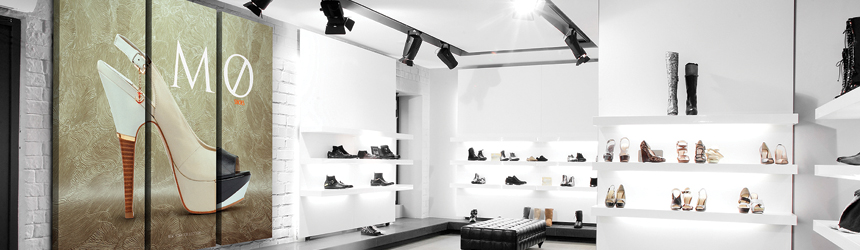
In retail, display and point of purchase (POP) signage is created using both rigid and flexible materials. Many times one marketing campaign might use a number of different substrates. The look, feel, and most importantly color palette needs to match across all mediums.

Vendors are toting the capabilities of hybrid devices—both the technology and ink—as offering a solid match across both rigid and flexible output. These features address the concern any brand owner might have when it comes to color matching across variable substrates.

Above: The HP Latex R Series enables print providers to output to both rigid and flexible materials using the same ink set, ensuring color matching across multiple substrates.

Match and Set
It is important for color to match between rigid and flexible substrates used in the same display and POP campaign. Today’s retail companies are fighting for every last view and off-putting displays can be the difference between a sale and none.

According to Jay Roberts, product manager, UV printers, Roland DGA Corporation, color management experts use the term “shared visual appearance” for graphics that must be similar or as visually close as possible. “The problem is, if the colors are not visually similar, this can distract consumers. When it comes to branding or logos, it is imperative that the colors match as closely as possible. Brands and logos are the visual identity of products, so it’s especially important for the colors to be uniform across the prints.”

“Most companies that use these displays expect the color branding to be consistent. From the standpoint of the passer-by, it is really about the visual experience and the correct mood set by colors that are the same on any printed substrate. For the customer, it’s important for the branding appear as close as possible since that reflects the customer product,” explains Mark A. Rugen, director product marketing and education, Mutoh America, Inc.

Color matching is important to a brand, and should be equally important to a print service provider (PSP), adheres Randy Paar, manager, marketing – display graphics, large format solutions, Canon Solutions America. “Many corporations have strict policies around the colors used for their brand. Whether it is fashion retailers printing banners, counter cards with specific colors to promote a new line of clothing, or companies with logos with a particular Pantone color.”

Regardless of the application or substrate, brand managers have a reasonable expectation for consistency, says Dan Johansen, marketing manager, wide format solutions, commercial and industrial printing business group, Ricoh USA, Inc. “This is becoming more important today as we branch into a virtually limitless set of options for substrates. Color consistency can be the difference between a campaign that looks clean and professional versus something piecemeal or amateurish.”

Kaz Kudo, associate product manager, graphic system division, Fujifilm North America Corporation, admits that whether matching color between rigid or flexible, or rigid to rigid, color management is useful—especially since different devices and substrates have different color characteristics. “If there is a lack of consistency or if the colors don’t appear the same shade, it could affect project or campaign outcomes,” he explains.

“Color differences work against the brand goal of consistent presentation,” shares Kevin Currier, business development manager, Novus Imaging, an M&R Company.

Beyond color, Thomas Giglio, large format latex business development, Americas sign and display, HP Inc., points out that imagery is important. “Images need to have the same tonal value and transitions across many media types—gloss/matte appearance, texture, or even those with a different base or white point. And repeatability cannot be overlooked. Some campaigns are designed to be used with existing versions, so a PSP is held to a high standard for repeatability.”

Feature Achievements
Hardware, ink, and software collaborate to achieve color matching across variable substrates all on one device.

Today’s hybrid printers have the ability to handle several types of media. “This is good because you can print using the same ink and printheads for both rigid and flexible. Add software capabilities for tweaking colors and building profiles for those various media and you can count on a more consistent color product,” explains Rugen.

Hybrid devices provide PSPs with the ability to produce a wider range of materials on the same device. This not only makes color matching easier, shares Mike Kyritsi, president, swissQprint America, but also affects the ink’s appearance on the media. “One part of the display should not be glossy while a part next to it is matte—unless intended for design purposes. Using a hybrid ensures a consistent look, color match, and feel regardless of the substrate.”

“This is a tremendous advantage over a split workflow, where customers may print to rigid substrates on a dedicated flatbed and flexible substrates on a dedicated roll-to-roll printer, often using ink sets and different RIP software. Using just one hybrid device narrows those variables down—thus inconsistencies—without sacrificing substrate flexibility,” adds Johansen.

In the past, a rigid print might be output on a UV LED flatbed and a flexible material printed with eco-solvent. “Then the color consistency is an issue, unless your software used very precise ICC profiles and you have an operator that can use the software features to accommodate the various media differences,” admits Rugen.

“Consistency is the cornerstone to good color management. The physical components like inks, printheads, and media need to perform the same today as they will in the future. Software profiling needs to be implemented in a consistent manner and resulting profiles properly applied in the workflow and routinely monitored so that any color deviation is caught before it creates issues,” shares Paar.

UV hybrid printing specifically is an asset when it comes color matching across various materials. “UV inks sit on top of a substrate, versus other inks that are absorbed into a coated substrate, so there is less color variability from substrate to substrate with UV printing as opposed to other technologies. That allows printers to work with a smaller, more manageable set of color profiles that addresses this smaller, more manageable level of variation,” explains Johansen.

Giglio cites latex as a major advantage as well. “It has made significant inroads to combat the dilemma of balancing adhesion with color gamut by utilizing one universal ink set that offers both adhesion and gamut—in a single hybrid device and across bigger or smaller latex roll printers. Latex also leverages printhead mapping capabilities to provide reliable, consistent jetting of color density.”

Hitting the Nitty-Gritty
Color management is essential for working between substrate types. Media profiles help ensure the same shade of red, for example, is hit every time a roll or sheet of material is run through a printer.

Implementing color management throughout the entire workflow is essential to success. “It starts right from the beginning, the capture stage on the computer workstation where the image is manipulated and the layout is produced, the monitor is viewed on, at the RIP, and finally the printer/ink/media combination when it’s printed. There should be further consideration that the viewing conditions also be color managed in order to make accurate judgements,” recommends Paar.

Color management starts when the design software is opened, agrees Kyritsi. Once, he dealt with a customer unhappy about how the color green was printing—muted and dull, as opposed to its expectation that the green be vibrant. Since it wasn’t printing accurately, the initial thought was the printer was off.

“Upon further investigation, the files were set up in RGB and color corrected in RGB. When asked why the files were not set up in CMYK, the reply was that it was not vibrant enough,” says Kyritsi. Since the files were color corrected for RGB, it looked great on the monitor—but not on the printer. Once set to CMYK and the file corrected for vibrancy, the final output was better than the original RGB output. In addition, it was consistent across different materials including card stock and aluminum composite.

There is no “easy button” for color management, admits Roberts—the unfortunate thing about this process is that it does require management. “The creation of the output profile is a crucial point in the process. If the printer drifts, it must be re-linearized and brought back into place. The colors must be re-aligned. Media profiles are essentially micro-states of where the color is for the printer on that media.”

“For optimum results, every substrate needs to be profiled and evaluated to ensure as close a color match across the materials as possible. Once reliable profiles are nailed down, be aware of changes to the material surface and color by keeping in contact with the substrate manufacturer,” adds Currier.

Beyond basic color management, Rugen suggests utilizing a software program with features related to color adjustment and enhancement. “The ability to adjust ink levels without building a new profile, or to define a spot color using spot color mapping may be needed to keep the color consistent across different types of media.” He recommends a commercial grade design and production software for these types of adjustments.

“Spot color technology gives users the ability to produce consistent colors across different media to preserve brand identities. Systems like EFI Fiery ensure that color definitions match original spot color definitions from Pantone and other color systems. It also includes tools for defining spot color transparencies and gradation curves,” says David Lindsay, public relations manager, EFI.

Undeniable Consistency
It essential that PSPs working on large campaigns in the display and POP space have the correct equipment. This includes hardware and software that ensures color matching between multiple substrates—flexible and rigid. Ink sets found on today’s hybrid—flatbed and roll—devices are composed of the right mix of adhesion and color gamut to further guarantee consistency.

Oct2018, Digital Output

Digital Printing
Hybrid Printers
POP

Get Framed

By Melinda Tetreault

Frame extrusion technologies, specifically silicone edge graphic (SEG) frames, are popular for their ease of use and ability to work well with digitally printed fabric. For the unfamiliar, an SEG is a flat silicone part that can be seated snugly inside a frame, commonly made of aluminum. It provides a drum-tight fit that is sophisticated and clean in appearance. In addition, the construction of an SEG makes it easy to take in and out of a frame, allowing for quick graphic change outs.

Above: Orbus offers the Vector Frame Edge SEG System.

Accelerated Usage
SEG framing systems are increasingly used with digitally printed fabric. Reasons include the flexibility to switch graphics on a regular basis without the user struggling or harming equipment, as well as lightweight materials that enable leisurely transport.

Digitally printed fabric is largely why SEG frames are used more than in the past. Clay Reierson, director of operations, Xcel Products, Inc., explains that before SEG graphics, most trade show and retail graphics were printed directly onto heavy stock paper, acrylic, PVC, or polycarbonate boards. While functional, the materials were heavy, difficult to ship, cumbersome to install on site, and prone to damage.

According Reierson, fabric graphics were always in the mix, but suffered from lower image resolution. Once dye-sublimation (dye-sub) printing technology and fabric quality began to improve, SEG frames became popular. “With current SEG frames, fabric choices, and printing technologies, the print quality is sharp, the color contrast is sensational, and printers create high-definition graphics that exceed expectations. This high image quality puts SEG frames in demand and is a key growth factor.”

Digital printing’s tight control of graphics is important, agrees Paula Goodelman, VP of sales, Testrite Visual Products. “Printed fabric is inherently part of SEG framing systems and digital printing produces the best results—print fidelity, color reproduction, and image clarity.”

Wide format digital printing in particular is part of the attraction. “Large seamless graphics are very popular and provide a clean look to any display frame because the graphics cover the framework,” shares Natalie Whited, VP of marketing, Orbus Exhibit & Display Group.

“Digitally printed fabric is accelerating the use of SEG framing systems because of how quickly it can be manufactured for use with an SEG—all the user has to do is print the design and sew it around the silicone edge pieces. That’s also part of what’s accelerating the use of SEG systems as a whole—the ease with which the whole framing system can be manufactured, shipped, and installed,” continues Devon Hoch, marketing manager, Tex Visions.

Ideal Environments
SEG framing systems are found in a variety of settings, really any environment that desires signage. Trade shows and exhibitions, retail, airports and transportation centers, sports stadiums and arenas, restaurants and other hospitality areas, museums, religious centers, schools, and amusement locations.

“SEG frames are ideal anywhere the ambient lighting environment needs the focus and emphasis that SEG and SEG LED provide,” shares Goodelman.

Take for example trade shows and exhibitions. Aside from looking clean and colorful, by their nature SEG graphics address two of the major cost centers for trade show exhibitors—labor and shipping. Hoch adds that SEG systems are found at trade shows because of the need for a “highly impactful display installed with relative ease. You can have an SEG frame with its accompanying graphic ready to go in under ten minutes. This is invaluable when you have several other pieces of your trade show display to put together.”

SEG frames are popular in retail for several reasons. Fabric graphics allow for large, seamless, glare-free images that create an inviting, upscale appearance. SEG frames are highly customizable, making it possible to fit graphics into nearly any retail space. The easy change out that SEG framing systems offer is also important to retailers because point of purchase (POP) display graphics typically change with the season or during special sales events, according to Reierson.

Transportation centers like train stations, subway systems, and airports turn to SEG frames. Richard J. Hatton, president, E.L. Hatton Sales Co., points out that SEG systems are ubiquitous in airports. “SEG signs have a beautiful high-end appearance due to the brilliant color, texture, and luster that fabric offers. They are available in front lit or backlit, which really makes the images pop. Also, soft sign faces are easy and inexpensive to ship to multiple locations since they can be folded and shipped in standard parcel packages.”

Superwide graphics are commonly found in sports stadiums and arenas at both the professional and collegiate level. These venues require interchangeable, temporary signage to advertise concerts, shows, and other events. “SEG systems are more economical for larger sized graphics and the logistical cost for graphic change out is much lower. They provide a fashionable image as a SEG fabric is all image with no bulky frame. The dye-sub graphic offers a dramatic high-definition image, in particular backlit solutions,” shares Michael Kurilec, managing director – Americas, EXPOLINC Corp.

Many restaurants use custom SEG graphics for a creative presentation of specials and featured items. Hotels and similar hospitality service providers use SEG fabric frames for these reasons as well. “SEG frames provide a compelling signage solution for lightweight graphics that are easy to install when menus or promotions change,” explains Reierson.

Marie Provost, marketing specialist, DSA Phototech, says the company receives requests for SEG framing systems in restaurant environments used with vinyl coated fabric graphics that resist staining and are easy to clean.

Creative messaging is found in museums. Many rely on SEG frames to advertise exhibits and shows. They allow for wall murals and large, standalone graphics that can advertise and promote museum attractions, especially seasonal or traveling exhibits, continues Reierson.

He also believes many religious and other nonprofit centers choose SEG frames because the graphics are lightweight and easy for a single volunteer to install. The fabric graphics are also convenient to store in small closets when not in use—the fabric rolls take up very little storage space.

Similarly, schools use SEG frames for advertising upcoming events and activities on campus, points out Reierson. SEG fabric frames offer a reasonably priced graphics solution that affords educational institutions with sharp-looking signage featuring a modern look and feel that appeals to students.

Amusement parks, fairs, and boardwalks are all locations that thrive on bright lights, vibrant colors, and catchy messaging. With customizable sizing and fabric that takes the wear and tear of high-traffic zones, SEG fabric frames are a common choice for installing eye-catching graphics designed to stop passersby in their tracks, suggests Reierson.

“Many of these spaces were traditionally dedicated to paper, vinyl, and rigid pieces. Fabric is portable, reusable, durable, lightweight, environmentally friendly, and has a much more high-end appearance. Paper, vinyl, and rigid on the flip side are easy to damage, difficult to ship, have problems with glare, and could provide a low-end aesthetic,” adds Tara Lamb, president, Global Imaging.

New Trends
Basic SEG frames allow for a cleaner and more sophisticated look when it comes to digitally printed fabric, but as popularity grows frame enhancements are prevalent. Light boxes, shapes beyond traditional squares and rectangles, and even larger sizes are some of the newer trends.

“One of the biggest trends is using SEG frames for light boxes. Traditionally, light boxes are done as a snap frame, with the print secured around the edges because the frame snaps shut around it. This produces an obvious frame edge around the light box—something a customer might not want if they’re going for a sleeker, modern look. An SEG light box is the obvious solution to this problem. The fact that the SEG print slides into the channeled bars of the frame means the light box looks ‘frameless,’ which is something more buyers are looking for, especially for larger light boxes,” explains Hoch.

As LED technology advances, Reierson says today’s SEG frames must adapt and be sure to use the newest and best lighting available. “It is crucial to stay ahead of the competition and make the graphics really pop.”

“Backlit SEG frames are the hottest trend in exhibition displays,” according to Jose Simoes, print manager, Expand International of America, Inc. “In the busy environment of a trade show floor, for example, a backlit display helps an exhibitor’s message stand out.”

Another trend involves requests for custom-angled frame shapes. “These include frames that are cut around doorways, odd angles to compliment architectural features, or corporate branding and different shapes—such as hexagons or triangles. It’s not only squares and rectangles anymore,” suggests Reierson.

Lamb agrees, and says that there is a demand for custom-bent offerings for customers looking to offer unique and custom shapes. Global Imaging is involved in the creation of this type of system.

“Modular injection-modeled polymer corners and T-extenders with side rails create infinite shapes and sizes from a few components with no special tools. Pieces snap together like a toy,” explains Hatton. The company’s newest product is a similiar configuration.

“The use of SEG frames for mega-size graphics is also increasing. We’ve made a lot of frames that exceed 100 feet in width and don’t require the graphics to be seamed. Frames using 180 degree connectors expand to virtually any length to accommodate the large-scale graphics and can be broken down into small boxes for cost-effective shipping,” adds Reierson.

While SEG frames are inherently easy to use, there is still the step of adhering the keder to the printed fabric. Traditionally this involves sewing, which may be an additional cost or step print service providers (PSPs) are hesitant to take. To address this concern, there are enhancements being made by vendors like E.L. Hatton. This includes a no-sew, peel-and-stick keder tape.

Profit Potential
PSPs offering digitally printed fabric graphics should consider bundling SEG frames into the sale. The actual install, setup, and takedown are so user friendly, it eventually makes the customer come back for more—earning repeat business.

“By offering both printed fabrics and SEG frames, print providers can offer a complete fabric visual display solution to their customers,” shares Provost.

“It is wise for print providers to start offering SEG frames for their graphics because of the sheer number of advantages SEG offers over traditional frames. Customers make customizable frames available in a number of sizes and styles, and can be single- or double-sided for their use,” explains Hoch.

For PSPs in the retail space, Lamb says offering SEG systems secures large retail and POP contracts. “Most retailers are now changing their graphics six to eight times a year. When that is multiplied by the number of locations per retailer, this adds up to potentially enormous annuity income.”

Lamb also gives the example of exhibit producers who offer custom printing of fabric adding SEG frames as a new revenue source. “This could possibly replace the free pipe and drape offerings in traditional trade show booth rentals. These producers can now leverage income by offering custom printing as well as the rental from the structure itself, while freeing the client from having to ship booth structures, which leads to drayage charges.”

“The framework and graphics are the total solution. Offering the entire solution simplifies the ordering process and make it easier for PSPs to market to their customers,” adds Whited.

Kurilec explains that one of the more challenging parts of SEG systems is achieving a drum-tight fit with the graphic. “Having a frame you have experience with readily available in the shop ensures the graphic fits correctly.”

To ensure profit on an SEG framing system, Hoch provides examples of general markups, citing they vary from 30 to 50 percent and sometimes more depending on marketing budgets for the end user. Resellers, in Hoch’s opinion, can expect to pay anywhere from $400 to $1,200 for one display.

Simoes cautions to not just consider cost. “As with most products, you can find very inexpensive units online all the way to moderately priced systems. For example, an 8×8-foot frame can retail for a few hundred dollars to a couple of thousand dollars. Look for ease of installation, packaging, mounting, hot spots if backlit, quality finishing, and material. If the system is portable this is even more important—you do get what you pay for.”

Reasonable Frames
SEG frames are popular because of their ease of use and ability to work well with digitally printed fabric. Silicone edge technology allows for quick set up. The fabric is a light weight product that decreases shipping costs. These reasons alone make SEG framing systems desirable to a variety of locations including retail, trade shows, airports, universities, and restaurants.

Oct2018, Digital Output

Digital Printing
Fabric
SEG Frames

UV for Packaging

By Cassandra Balentine

Packaging represents a major opportunity for print service providers (PSPs) looking to expand into new markets. For those with wide format UV printing capabilities, packaging applications are a consideration.

Features inherent to UV LED and UV-curable inks—including immediate dry time and enhanced adhesion characteristics with many types of media, further the availability of extended color gamut, especially white—add value to packaging applications.

PSPs with UV printing capabilities should weigh the benefits and challenges of utilizing the technology for packaging applications.

Above: The Canon Oce Arizona 6100 High Flow Vacuum Series is ideal for corrugated packaging material.

UV Advantages
As previously noted, UV-based inks provide a variety of advantages, which translate well to package printing.

“Going back to the early days of UV inkjet—before 2000—it was all about getting the ink and printhead to work together reliably so that the integrators could build some hardware around the printhead. Today’s ink must cure faster, respond to pinning, run in quicker systems, reliably print with smaller droplets, work in high frequency printheads, be compatible with new media types, and the list goes on. So inks have changed a lot in composition and they are produced to ever higher specifications and tighter tolerances,” shares Phil Jackman, global product manager, digital, Sun Chemical Corporation.

He points to a variety of advantages of UV inks including instantaneous dry time, excellent printhead open time, high productivity, reduced printhead maintenance intervals and longer life, reliable jetting, wide media compatibility, inherent adhesion performance, wide color gamut, proven ink technology, reduced energy consumption compared to drying of water-based inks, and compatibility with heat-sensitive-media—especially UV LED cured.

“One of the biggest advantages of UV inks for digital packaging is the substrate versatility, often without use of a primer,” says Mike Barry, product marketing manager, Fujifilm North America Corporation, Graphic Systems Division.

Juan Kim, CEO, Valloy Incorporation, agrees, adding that UV inks bond to various packaging substrates strongly these days, for both flexible and rigid applications. Furthermore, special color inks like white, varnish, silver, or fluorescent are available.

White ink is another advantage. “White ink opens up the possibility of printing on surfaces that range in color. PSPs working with a packaging workflow can utilize white to print on non-white surfaces, including metallic foils,” agrees Michael Maxwell, senior manager, Mimaki USA, Inc.

Deborah Hutcheson, director of marketing, Agfa Graphics, believes digital UV package printing is more cost effective, offers faster turnaround, and reduces overhead with just-in-time inventory. “There is no need to warehouse thousands of boxes when a PSP can print the job and ship it out immediately.”

“The ability of UV inkjet printing on corrugated is lucrative because PSPs can produce prototypes quickly and efficiently, or they can print corrugated and end caps for one account with hundreds of locations across the country,” continues Hutcheson. She adds that brands are also leveraging secondary packaging—the corrugated displays and the store end cap—as a way to increase their messaging. “Brands are driving more customization and more personalization on the package itself, which lends itself to a short-run digital UV printing process.”

Patrick Donigain, senior marketing specialist, Canon Solutions America, says UV is also durable and resistant to scratching, fading, and water. “As a result of these properties, it’s a relatively simple transition from printing signage to printing on corrugated boxes and temporary displays.”

Curing Considerations
The dry time of UV inks is one of its biggest advantages. With the use of UV and UV LED lamps, output printed with UV inks is cured instantly. However, UV LED curing offers the added benefits of reduced heat and energy consumption.

Maxwell says the instant dry time of UV inks means that bleeding and migration issues often associated with other inks are not prevalent. “This also offers the added advantage of printing to uncoated paper goods, such as corrugated board, without concerns of the ink wicking into the material.”

“The marriage of UV or LED lamps to ink combination is imperative to the UV printing process,” notes Barry.

Hutcheson points out that UV LED curing allows for a broader scope of print applications and enables printing on heat-sensitive substrates such as corrugated board and cardboard. “As less heat dissipates from an LED lamp, it is easier to keep the media flat under the shuttle, eliminating disruptions. The investment in LED means fewer reworks and less media and ink waste in the long term.”

UV LED curing also eliminates the need for solvent evaporation or special coatings, adding there are no volatile organic compound emissions, shares Hutcheson.

According to Kim, UV ink curing is more sophisticated than other processes. “UV light wavelength and power can determine cured portion of droplet, curing speed, and bonding strength.

“Curing on porous media like those used in liners can be very tricky,” cautions Donigain. “It is important that ink volume and suction is controlled as to not allow the inks to penetrate too deeply. If the inks penetrate the liner too deeply they may not cure fully. Using the right amount of ink, suction, and lamp intensity allows manufacturers to ensure that the ink is fully cured.”

Jackman notes that mercury UV lamps are utilized in all applications where UV inks are used, but recently there is a strong trend towards LED cure due to all the operational benefits provided. “For most applications, LED lamps work well when the correct ink chemistry is developed, but the availability of electron beams at the right price and dimensions could mean that it will start to be adopted more readily in labels and narrow web, wherever low migration is required.”

Specific to Packaging
Before a package is ready for the mainstream, it must meet several requirements. This includes shelf appeal and life, enhanced communication, recyclability and sustainability, and weight considerations. “All of this while also considering the complex regulatory landscape as the industry strives to make food packaging safer,” shares Jackman.

Several feature sets are attractive for PSPs looking to produce packaging applications.

Donigain says the primary advancement that sets UV ink up for packaging is media handling capabilities. “Corrugated boards are porous and usually warped. These two factors make it difficult to create a flat print surface with corrugated boards. With digital print technology, boards that aren’t flat can create reduced print quality, damage the printheads, or create jams.”

Recycling is another aspect to consider. Raimar Kuhnen-Burger, regional marketing manager – industrial print, EFI, suggests it is important to keep corrugated applications a highly environmentally sustainable packaging choice. “It is important that ultra-high-speed digital inkjet production technologies do not negatively impact the corrugated recycling supply chain and keep full repulpability.”

The introduction of UV LED curable inks opens up a wider range of available materials for packaging due to the lower heat produced by the bulbs. “Additionally, some ink manufacturers are developing multiple inks that support more specific applications, for example, different varieties from rigid to flexible, each one designed to meet a unique demand,” explains Maxwell.

Pre-Treatment or Coating
While UV ink adheres to many substrates without the need for special coatings or primers, these solutions do play a role in the compatibility of UV-cured ink on select media options.

Kuhnen-Burger says there are only a few board types developed especially for digital print released by the paper industry. Because of that corrugated packaging performs best with a primer. “Having a primer gives customers control over dot gain and ink absorption on different types of corrugated top sheets. It keeps the output consistent even if there are slight surface deviations from one production lot to another.”

Materials may require a pre-treatment such as a primer. “Some plastics for example may have a surface tension not suitable for ink adhesion and primer or pre-processing workflow may help overcome it,” admits Maxwell.

Hutcheson adds that depending on the material being printed and the ink’s ability to adhere to that surface, certain packaging applications may require a pre-treatment. She says for example, some packaging materials feature an extra slippery surface or surface that doesn’t provide the ability for the ink to grab. Pre-treatments help with adhesion.

“Coatings also provide different finishes to enhance the package. For visual appeal, there are gloss, matte, semi-matte, and luster coatings, plus others—and for tactile appeal, there are soft-touch coatings. Great examples can be found in cosmetic and luxury perfume packaging,” offers Hutcheson.

“Whether or not pre-treatment is required for the application, UV inks are very receptive to pre- and post-coatings. This makes UV inks ideal for most packaging applications,” shares Barry.

“There are some grades of ink that vendors claim do not need primers. However, it is safer to use primers for certain substrates,” suggests Kim.

Donigain says for boards with brown kraft liners, it may be necessary to use a white ink in print areas in order to achieve more realistic color and higher densities. “However, white ink is generally not required when printing onto corrugated board with white liners.”

Food Safety
One major consideration in packaging is its use with food and beverage goods. Packaging that makes direct or indirect contact with food is a complicating factor for production.

Barry points out that different migration level properties and curing technologies are being tested to make UV ink more viable for food safe packaging.

Many UV inks are already rated for food safety, according to Maxwell. “As demand grows in this area, more manufacturers will develop and certify their inks to support this.”

Hutcheson says Agfa is committed to the research, manufacturing, and testing of its UV ink solutions. “Our ink portfolio includes low-migration UV ink for food and pharmaceutical packaging applications,” she says. Low-migration ink does not move from the package to the food product.

Jackman points out that one of the main priorities for brand owners, converters, and customers is compliance and the issue of migration. Once mainly concerned with conventional printing, low migration and compliance are also important factors in digital printing and if not handled correctly, could have potentially severe consequences, such as damage to a brand’s reputation and risks to consumer health.

He says during the packaging design stage, particular attention is spent on ensuring the correct packaging materials are used to protect the various food products. “The selection of inks and coatings are equally important. To ensure Sun Chemical inks meet the necessary requirements and legislations, there are several factors that need to be considered, including an understanding of the legislation that regulates package printing, a knowledge of migration and the prescribed limits, and a responsibility for ensuring that packaging is correct for its end use utilizing correct testing protocols through all key players on the supply chain,” continues Jackman.

Kim believes that due to food safety issues, major companies promote water-based latex or toners, but UV is still the most promising technology to print on both flexible and rigid uncoated substrates. “There are meaningful activities to develop and propose a certain grade of inks to get approval for use on food packages.”

Conversely, Donigain is not aware of any UV ink food safe packaging efforts. “As far as I am aware, the very nature of UV inks makes them unsuitable for direct contact with food. Water-based inks dominate the application.”

The Future
While UV-based, wide format printers have experienced growth and success with many applications, packaging is an area worth investigating. The latest advancements are working towards this.

“In our experience, UV inks offer a range of capabilities. However, UV-curable inks by nature have slightly larger drops compared to other inks available. For this reason, we believe that as demand grows, UV-curable inks will be developed with this in mind, bringing these inks more in line with the demands of packaging,” foresees Maxwell.

“Ink attributes are always evolving. About ten years ago, ink was brittle. Today’s inks are flexible, which broadens digital applications like thermoforming or bending a surface into a 90 degree angle,” says Hutcheson. She adds that ink will continue to evolve to satisfy future application needs.

Currently there are many choices of inks to use ranging from more flexible to more resistant to chalking or more vibrant. Donigain says finding the right combination of flexibility, resistance to chalking, and vibrancy is key to the future success of ink.

Consider UV
Several areas of packaging benefit from UV and UV LED printing equipment. While there are some challenges to consider this ink’s many benefits make it an attractive option for packaging applications.

Oct2018, Digital Output

Digital Printing
Packaging
UV Inks

Digitally Printed Labels

By Olivia Cahoon

Digitally printed labels are gaining ground with features that enable personalization and economical short runs. The ability to offer cost-effective runs in the hundreds presents value to start ups as well as big brands looking to bring label production in house.

Print service providers (PSPs) hoping to add a new revenue stream may want to consider investing in printing and finishing equipment that supports digital label production. Some wide format printers and printer/cutters are well suited for this application, as well as stickers and decals. Dedicated digital label systems are another option.

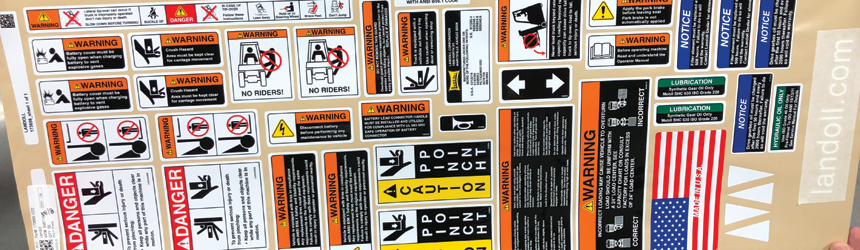
Above: DuraMark Technologies customizes label kits for its clients, including all the labels for a specific product on a single sheet. It prints using a Durst Tau 330 with proprietary media.

Labels in the Fast Lane
A wide format printer/cutter presents more opportunity than the average PSP may expect. A variety of these devices offer expanded capabilities such as varnishing, embossing, and contour cutting—ideal for label, decal, and sticker production.

Located in Welcome, NC, RCR Graphics Center is a print shop dedicated to producing graphics for Richard Childress companies. The PSP started in 2010 as an exclusive race car graphics provider for NASCAR driver Richard Childress.

From the beginning it used digital print technology to provide race car graphics in house. “We became the first team in NASCAR to do so,” admits Nick Woodward, graphics manager, RCR Graphics Center. The company was first established as a means to save money, time, and be more confidential for Richard Childress’ race car wraps. “We also wanted to have control of our brand with the design process all the way through the installation process,” adds Woodward.

RCR Graphics Center quickly expanded and now offers a variety of graphics for additional Richard Childress companies and local businesses. With a total of eight employees, it operates from a 7,500 square foot workspace.

Roland DGA Corporation powers the RCR Graphics Center with a fleet of digital presses including the Roland TrueVis VG-640, VersaUV LEC-330, VersaUV LEJ-640FT, and two SOLJET Pro XF-640 printer/cutters. “Roland printers are user-friendly machines that print great colorswith easy-to-use VersaWorks RIP software,” offers Woodward. In addition to VersaWorks RIP, the print provider also uses Adobe Illustrator and Photoshop.

RCR Graphics Center quickly grew comfortable with producing digitally printed race car graphics. In 2011, the PSP decided to add additional services and take advantage of its presses by producing short-run labels for Childress Vineyards in Lexington, NC.

A typical label order for Childress Vineyards is generally 100 labels with two-sided printing. RCR Graphics Center prints its labels on the Roland VersaUV LEC-330. It offers the ability to print, varnish, emboss, crease, and contour cut with one device. The VersaUV LEC-330 handles media up to 30 inches wide and prints up to 101 square feet per hour.

According to Woodward, the VersaUV LEC-330 allows Childress Vineyards to quickly run small jobs at any time for any event. It prints for weddings, RCR wins, holiday gifts, and special bottlings.

The Roland VersaUV LEC-330 is currently the only printer the company uses for label printing. It offers the ability to use CMYK, white, and clear coats for special effects ranging from gloss or matte finishes to custom textures and simulated embossing. For short-run label production, print providers print CMYK plus white on foils, BOPP, PE, PET film, and offset printing stock.

Mainly purchased for wine labels, the VersaUV LEC-330 is also used for white ink decals on clear media for Richard Childress race cars. According to Woodward, its ability to print white and gloss ink with CMYK is helpful if the company decides to print on a substrate other than white. “The use of white and gloss ink can help with different substrates. The gloss ink allows us to emboss certain places on the label to give it a cool effect.”

For digital label printing the PSP uses Roland UV ink and Avery Dennison Graphics Solutions MPI 3303 Series. MPI 3300 is a flexible, calendered vinyl film that features a permanent adhesive. It’s designed for short- to medium-term graphics for applications such as general signage, labels, and point of purchase displays. “We use Avery Dennison on our race car wraps, so we asked them what product would work well for printing on the UV printer along with applying to a wine bottle,” explains Woodward.

Advancements in digital technology affect label production growth. For RCR Graphics Center, the ability to print and cut on the same device helps them a lot. “We can send the job to the machine and not have to worry about it until it is finished,” he adds.

Harsh Environments
While a wide format digital printer/cutter is one option for producing digitally printed labels, other PSPs opt for a dedicated narrow format label press. These devices are exclusively designed for digital label production in short runs, with the ability to add customized features.

Established in 2007 in Westfield, IN, DuraMark Technologies, Inc. started with four employees in an 800 square foot workspace. Since the start its primary focus is the durable label space with full design services.

The company now has production facilities in IN, WA, and WI—totaling 26,000 square feet. With 67 employees, DuraMark Technologies offers labels and product-specific kitting. The majority of its clients are North America based.

Bill Bussick, president/founder, DuraMark Technologies, worked in the printing industry for over 30 years with large national printers that offered label printing as well as other types of printing. In 2003, while at The Relizon Company, he recognized a need in the marketplace for a device that could digitally produce durable labels in small quantities.

After three years of research and development, Bussick’s engineering team developed a prototype. In that same timeframe, he says the industry experienced a massive consolidation. “The creation of that equipment and the sale of the company at roughly the same time created an opportunity for us to acquire the prototype machine and intellectual property to start DuraMark Technologies with the single focus of producing durable labels digitally—the company’s same focus today.”

95 to 98 percent of the PSP’s business is label production with a primary focus on the durable decal space for branding, warning, and instructional markings. The majority of its customers are industrial manufacturers seeking durable labels that last years. The company also creates labels for consumer products, healthcare, heavy equipment manufacturing, automotive, and transportation. According to Bussick, many of these products remain outdoors and also have to withstand harsh environments.

Digital print engines are the only devices that DuraMark Technologies used since its start. The majority of its printing is completed on Durst Image Technology US, LLC Tau 330 UV inkjet printers.

The Durst Tau 330 is exclusively designed for digital labels and specialty packaging. It features a print speed of 157 feet per minute and enables a configuration with up to seven UV inks, including CMYK, orange, violet, and white.

Aside from its Durst digital presses, the label manufacturer also utilizes thermal transfer and dry toner print engines, but the majority of its work is produced with inkjet. With its digital presses, DuraMark Technologies offers a printable width of 12.5 inches. “As technology improves, we take advantage of those improvements,” offers Bussick. He believes inkjet technology gives the company an advantage over thermal and toner-based print technologies, primarily in speed and color capabilities.

For label production, DuraMark Technologies develops and utilizes proprietary media. “It is important to have a finished product that outperforms the industry standard for durability,” says Bussick.

DuraMark Technologies’ engineered and manufactured custom finishing equipment laminates, laser die cuts, and sheets the finished product in a single machine. According to Bussick, the company may be the first all-digital durable label manufacturer in the country. “Our clients want the ability to get finished products fast without investing in inventory to achieve that,” he explains.

With its digital print technology, DuraMark Technologies produces label quantities cost effectively as low as one due to no required setup or hard tooling costs such as screens or dies. In fact, Bussick says educating his clients on digital is interesting as they are accustomed to long lead times for new items in a four to six week range. “When I tell them our standard lead time is three to five days and if needed we can have the finished product in minutes, they can’t believe it,” he shares.

At quick production speeds, the company recommends clients only order what they need up until the next two weeks. Many times, Bussick says clients provide a production schedule to work off of. “They no longer have a need to keep months of inventory in stock.”

In addition to reduced stock, Bussick also finds the benefits of digitally printing labels in no press setup, economical short-run capability, and the ability to make quick changes. “We give our clients the ability to be very agile when it comes to labels and decals.”

Product-Specific Kitting
The definition of a label kit varies and is often referred to as several cut labels placed in a plastic bag or a sheet of standard labels that are applied to product models. DuraMark Technologies’ approach to kitting offers the ability to place every branding decal, safety label, and instructional label onto a single sheet.

With its digital print technology, the company customizes kits for each specific product including the ability to customize down to the serial number level. “Our clients regularly tell us that using our kitting approach helps them facilitate a more efficient production process, better adapt to changing requirements, and improve error proofing for their production/assembly teams,” says Bussick.

He adds, “they also want the ability to assemble all of the decals for a given product into a kit—all the labels on a single sheet—to bring efficiencies to their production floor such as error proofing, elimination of inventory obsolescence, improved tack times, add variable data to their labels, and have the ability to make changes quickly to any label in the kit.”

Sticky Production
Digital label printing equipment comes in many forms from narrow format dedicated systems to wide format printer/cutters. Adding digital to a printing environment enables PSPs like RCR Graphics Center and DuraMark Technologies to effectively handle short-run demands as low as one.

Both of these PSPs indicate growing interest in digital label production and the variety of solutions available support this demand.

Oct2018, Digital Output

Digital Printing
Labels

Creative Thinking

By Olivia Cahoon

Packaging is no longer an exclusive market for offset and flexographic printing. Digital presses offer high quality, short runs, and prototype capabilities that reduce turnaround time and provide value-added features.

A variety of print service providers (PSPs) utilize both digital and traditional printers. PSPs determine which method is best suited for each customer and job, with digital devices typically reserved for shorter runs.

Above: Creative Printing Company printed 50 corrugated boxes for Lee Jeans using a Fujifilm Acuity F printer.

Get Creative
Creative Printing Company is a family-owned, certified woman-owned business that started in 1967 in Merriam, KS. With two employees it originally offered one- and two-color printing and foil stamping from a 5,000 square foot workspace.

Over the past 50 years, the PSP expanded to operate in a 93,000 square foot facility with 50 employees. The company now provides a variety of printing services nationwide including UV, conventional, and specialty printing; folding carton and packaging; foil stamping; embossing; and assembly and fulfillment. It specializes in packaging and point of purchase (POP) creation.

“Our growth has allowed us to continually invest in equipment and technologies to bring the most efficient production techniques and cost savings to our customers,” says David Leavey, VP, Creative Printing Company.

The PSP services a variety of industries including ammunition, automotive, cosmetics, candy, clothing, electronics, food and beverage, household, medical, pet products, sports equipment, tobacco and vaping, and toys.

In 2004, Creative Printing Company implemented digital printing technology due to increased customer demands for short runs, particularly with packaging. Today it uses the Fujifilm North America Corporation Acuity and Acuity F printers, as well as the HP Inc. Indigo 5900 Digital Press. “They all were chosen because of high-quality prints,” admits Leavey.

Packaging Made Perfect
Shortly after investing in digital technology, the PSP started to produce short runs and packaging samples. Today, 15 percent of its work is digitally printed packaging and prototypes, which according to Leavey, is a great way to allow clients to view and feel their package prior to committing to a large run.

“We continue to see growth as digital allows us to produce high-end saleable packaging to allow for short runs,” he shares. Creative Printing Company’s packaging offering includes 4/6 corner, auto bottom, folding cartons, handle bag, pinch bottom bags, specialty packaging, straight-line, and windowing.

The PSP’s folding carton and packaging services are available with in-house structural design, custom bags, and inline tape strips for sealing stay flats and packaging. Creative Printing Company also offers value-added features for packaging such as embossing, foil stamping, an inline barcode monitoring system, and adding coupons with in-house tipping. Carton folding is available from 65# cover stock to corrugated.

Packaging is produced with a variety of materials like APET, corrugated, CCNB, SBS, SUS, and vinyl. Materials are selected based on customer needs and the products packaged.

As high-quality, short-run packaging is one of the PSP’s leading services, it sees demands for short runs from all industries, including small businesses and digital marketing. “Startups and small businesses want to keep inventory low due to storage and changes that may develop as they see their product on market. We also see a huge digital market for promotions, meetings, seasonal, and special events,” offers Leavey.

In addition to packaging, digitally printed POP displays are a large portion of Creative Printing Company’s business. With its digital presses, the PSP offers the ability to print and cut up to two inches thick, print up to 8×10 feet, and provide hard and corrugated displays. Its POP displays are produced on acrylic, corrugated, film, foam core, SBS, Sintra, static cling, and vinyl.

Short-Run Boxes
In 2017, repeat customer Lee Jeans—a denim jean retailer—approached Creative Printing Company for a short-run packaging box that could mail to specific clients with its product.

Designed in ArtiosCAD, a structural design surface program by Esko, black vinyl was applied to sheets of black corrugate and then printed with the Acuity F. 50 boxes were requested for the final run.

The Acuity F inkjet printer produces a range of print applications at speeds of up to 1,668 square feet per minute. It features a 120.4×98.8-inch maximum print area, seven vacuum zones, automated printhead cleaning, and a UV-curing system for high-speed printing. The press is also available in a white ink configuration to further extend suitable applications and media ranges to include clear and colored substrates.

Creative Printing Company finished the boxes with a Zünd digital cutter followed by hand assembly, this included forming the box so it was prepared for the client to place its product into it.

From job submittal to assembly, it took the PSP five days to complete the project. The final result is a corrugated box featuring a hinged lid.

According to Leavey, this job stands out from others because the customer requested a strike-through effect, which he says is typically completed with coating. Alternatively, Creative Printing Company used the material and the ink’s gloss to achieve a similar effect. “The client was very pleased and they placed additional orders for two similar designed packaging items,” he offers.

Personalized Packaging
Creative Printing Company relies on digital print technology to service the needs of its clients, especially when it comes to short-run, boutique-style projects. Its recent work for Lee Jeans is an ideal example of the capabilities afforded by digital printing.

Oct2018, Digital Output

Digital Printing
Packaging

See the Future

By Digital Output Staff

The Specialty Graphic Imaging Association (SGIA) holds its annual headlining event every Fall. This year it is located at the Las Vegas Convention Center in Las Vegas, NV. Continuing coverage from our September issue, more exhibitors attending the SGIA Expo submitted information on what they plan to showcase on the show floor.

Above: Visit Yesville at HP booths 1147 and 1161.

3A Composites USA, booth 1767, expands its PRO Series of graphic display boards featuring enhanced printing surfaces with Sintra ECLIPSE—a next-generation graphic display board designed for the easy production of graphics that pop on a black PVC board. Sintra ECLIPSE is available in the three-, six-, and 12.7-millimeter thicknesses in 48×96-inch sheets in a one white facer/one black facer/black core color combination.

3M Graphics, booth 2661, unveils its new tech tools—3M Graphics Hub and 3M Graphics Install Wizard. The Graphics Hub is designed to be a daily go-to resource for graphics manufacturers, providing easy access to tips, industry trends, and the ability to manage profiles and connect with potential customers, that will help them to grow their business. 3M Graphics Install Wizard is a new software application for graphics manufacturers and installers to connect and manage installation workflow.

AFFORD, booth 3923, displays its complete product range of inkjet inks including eco-solvent, UV-curable, sublimation, and pigment. The company provides a variety of packaging including cartridges, bulk, bags, and chips for wide and superwide format printing. AFFORD aims to establish a strong dealer network through the Americas and offers exceptional conditions for new dealers.

Arlon, booth 721, invites attendees to experience the latest innovation in cast film, SLX Cast Wrap, and new reflective film, IllumiNITE Wrap. Speak to one of the company’s knowledgeable technical service members or find out what Arlon product best suits your business by speaking to one of its sales representatives.

Barbieri North America, booth 3297, showcases the Spectro LFP qb spectrophotometer for color management and process control. It enables measuring any kind of substrate—including difficult and structured ones such as textiles—in M1, M0, M2, and M3 in reflection and transmission. The measurement head is detachable for manual spot measurements.

Caldera, booth 1373, highlights Caldera StreamLive, which allows users to create their ideal production process, track jobs in real time, and automate time-consuming tasks. It is cloud based and allows users to create customer job sheets, submit files to software workflow, connect with Caldera RIP, and automate email reporting.

Canon Solutions America, booth 2037, demonstrates the Océ Arizona 6170 XT printer, Océ Arizona 2280 GT printer, Océ ProCut 1600 XXXL, and the Océ Colorado 1640 printer. The Océ Colorado 1640 64-inch roll-to-roll graphic printer differentiates businesses with unattended printing technology. According to the company, the Océ Colorado 1640 printer significantly reduces ink costs using UVgel technology and gets jobs out faster with increased customer satisfaction and print productivity.

Colex, booth 1446, is an industry leader in wide format finishing solutions. Its versatility, speed, and price are the ideal combination of affordability and productivity. Colex is the exclusive dealer in North America for Fotoba X/Y cutters with models from 44 to 130 inches wide and 40-mil thick.

Dreamscape, booth 3343, debuts new products in the Special Effects category. Visit the booth for free samples and product demonstrations. Come witness the new print techniques possible with holographic materials, named Deja Vu and Rave. Also introduced, a new metallic product called Platinum, which can be printed by all common inkjet formats.

Drytac, booth 2341, exhibits a range of products set to inspire visitors to create window graphics, wallcoverings, decals, and floor graphics. Stop by the booth to see its most well-known brands—SpotOn, ReTac, and ViziPrint.

Durst, booth 1548, introduces the P5 250 HS, part of the P5 Series. At the core of P5 250 HS technology is productivity, reliability, workflow, versatility, and print quality. With high print quality up to 1,200 dpi and five picoliter droplets, the P5 is the next generation technology printing system for today’s printing industry.

E.L. Hatton Sales Co., booth 3791, promotes silicone edge graphics (SEGs). The Banner Ups SEGDesign modular frame system is a new way to create stunning fabric SEG signs. No assembly tools needed. SEGDesign snaps together instantly. The frames are lower cost than aluminum and made 100 percent in the U.S. They work great with Banner Ups KederTape—a complete no-sew solution. Stop by the booth for a discounted show special on SEGDesign Frames and KederTape.

EFI, booth 301, highlights its portfolio of advanced digital products for LED inkjet superwide format, soft signage, and industrial textile production. The EFI VUTEk h series of 126-inch wide LED printers making its North American debut establishes new benchmarks for productivity and profit opportunity. The new EFI VUTEk h3 prints up to 74 boards per hour and offers eight-color and optional four-color modes plus white and five-layer print capability. It is upgradable to the EFI VUTEk h5 model for up to 47 percent higher productivity.

EnCore, booth 1489, demonstrates its PrintPro Foam Board, the newest edition to printable boards, and the economical choice for combining rigidity and high-resolution print performance. PrintPro’s ultra-smooth bright white print-ready paper surface delivers dramatic images including excellent contrast and color vibrancy. A dense polystyrene core delivers high rigidity from a lightweight foamboard. PrintPro cuts cleanly by hand or machine and readily accepts most glues, inks, and paints.

Esko, booth 938, focuses on automated solutions such as its automatic roll feed system for rolled goods and its take-up unit for non-stop finishing production. These are shown with Kongsberg X24 and Kongsberg C645 finishing tables. Automation Engine QuickStart for Signs, a turnkey automated workflow solution for large format printers, is also at the show.

Expolinc, booth 639, launches its latest portable display system, Fabric Frame. It requires no tools or specialized labor to setup. Unique magnetic connectors guide a smooth, stable, and safe installation. The optimized packaging minimizes shipping, drayage, and storage costs. Its design of smooth, rounded edges provides a finished solution for a stylish environment. Available options include flexibility in sizes, backlit frames, counters, and storage rooms with doors.

Fisher Textiles, booth 1773, unveils a new booth design featuring its newest front lit and backlit silicone edge graphics (SEG) fabrics. It is a leading supplier of fabric for digital printing and has over 150 fabric options on hand for apparel, banner, flag, home furnishing, SEG, tension, and wallcovering applications. Stop by the booth to discuss print media needs with the company’s fabric experts.

Fredrix Canvas, booth 968, celebrates its 150th anniversary with a view into its U.S. factory themed booth and exciting new printable metallic canvas products. The company commemorates its heritage of dependable, consistent canvas with the Fredrix archival quality guarantee. From fine art reproductions to high-volume environments, a U.S.-made canvas is available for any application.

Fujifilm, booth 1119, features a range of innovative wide format printing solutions, including the all-new Acuity Ultra, a high-quality, cost-effective superwide UV press making its North American debut on the show floor; along with the OnsetM, the SpyderX, and the Acuity LED 1600R. Live presentations and hands-on demonstrations of equipment are held each day within Fujifilm’s nearly 6,000 square foot Win Even More Work themed booth.

GMG Americas, booth 3191, powers PrintFactory, a complete production workflow software suite for banner, sign, and superwide format printing. The software offers all the professional job preparation and file correction tools needed to maximize productivity and profitability, with its pioneering automated workflows dramatically cutting media wastage and providing average ink savings of 20 percent. Centralized GMG color management and smart profiles guarantee consistent, high-quality color reproduction across multiple devices.

Graphtec, booths 2031 and 2131, demonstrates its full line of flatbed and roll feed cutters. Highlights include the new Optima V250 4×8-foot digital flatbed cutter that cuts up to three-fourth-inch substrates and the FC8600 Series roll feed cutting plotters. When your job requires the highest precision and speed, Graphtec has a solution for every cut.

Herculite, Inc., the makers of Bantex, booth 1892, launches a new product line up, website, collateral, and distributor network for Bantex Digital Media. It’s all part of a commitment by Herculite to offer one of the industry’s most advanced lines of flexible composite textiles with unmatched color and image clarity and curl-free performance for inkjet printing of banners and signs.

Hop Industries, booth 3911, showcases its full line of Hop-Syn synthetic paper, a durable and environmentally friendly substrate popular for point of purchase displays, transit signs, identification cards, anti-theft packaging, and menus. Featured Hop-Syn grades include G2, XT, TO, DL, and BL. The company also releases a how-to booklet and product guide for its synthetic paper line. Hop-Syn experts are on hand to answer questions about the various uses of Hop-Syn synthetic paper for all printing processes.

HP, booths 1147 and 1161, invites attendees to get hands on with the latest applications, made possible by the company’s innovative technology including the new HP Latex R-Series Printers and the HP DesignJet Z9. Yesville comes to SGIA to encourage print service providers to open their minds and see the possibilities now available for any print job imagined.

ImageOne Impact, booth 970, exhibits tools and hanging hardware for signs and banners. Everything offered is specifically designed for the sign and graphics industry. If you want to learn how to do your job faster, safer, or easier, be sure to see all the tools and hanging hardware available.

KAPCO, booth 3552, introduces K-Mag SB, an innovative new product that can take the media of your choice and make it magnetic receptive. Laminate K-Mag SB to almost any media to help create a high-quality, cost-effective, magnetic-receptive substrate that fits your printer needs. This can help create new market space and capture smaller run opportunities. Perfect for easy updating and simple installation.

Klieverik, booth 617, presents the GTC 111-5400 fixation calender, designed for extra large format printing. Thanks to the incorporated easy feeding system it only takes two users to feed the calender. To learn more about this machine or other fixation and transfer calenders, please visit the Klieverik booth. The ten-foot transfer printing and fixation calender is on display as well as a Single Piece Transfer printing calender.

Leister Technologies, booth 553, features the HEMTEK ST banner welder. A stationary welder, it is one of the most efficient and affordable banner finishers. Capabilities include hem welds, pole pockets, and hems with rope. Quickly weld promotional banners or tarpaulins from corner to corner with ease.

LexJet, booth 1185, shares how print service providers can expand their offerings to not only serve the growing trends in décor, textile printing, and expanded outdoor products, but also boost their bottom line, discover new and exciting markets, and deliver the capabilities their customers and designers demand.

Mactac, booth 2539, invites attendees to visit for hands-on demonstrations and see their name in the lights with an application spotlight from customers. Also, join Mactac for a first look at the newest products making their debut at this year’s show, including StreetTRAX, for outdoor concrete floor graphics and M-Dot, the new standard in easy-to-apply short-term indoor promotional graphics.

Magnum Magnetics, booth 661, offers DigiMaxx—the innovative printable, flexible magnetic material from Magnum Magnetics designed for superwide signage and graphics applications 40 inches and wider. DigiMaxx is made in the U.S., meaning better material lead times, outstanding product quality, and unbeatable customer service. Have confidence in knowing the company has the materials and capacity to have your product delivered on time.

Marabu, booth 2561, draws on more than 150 years of experience developing high-quality digital printing inks, innovative liquid coatings, and valuable printing solutions. It provides customers with superior products, unbeatable support, and exceptional value. For 2018, Marabu showcases products designed to increase efficiencies and decrease costs. These include the latest line of UV LED digital inks for glass containers, the ClearShield line of liquid laminates, and the StarLam roll-to-roll laminator.

Mimaki USA, Inc., booth 2161, highlights a vast selection of digital printing solutions in each industry segment—sign graphics, textiles and apparel, industrial products, and 3D. This includes the newly expanded UCJV300 Series, available in four efficient sizes, as well as the U.S. premiere of the Tiger-1800B MkII industrial high-speed textile printer. Mimaki also showcases the JFX200-2513 UV LED flatbed printer, the CF22-1225 cutting plotter, and the TS30-1300 dye-sublimation inkjet printer.

Mohawk, booth 1797, brings a new and expanded portfolio of media for wide format printers and is proud to be the exclusive North American distributor of Xanita Board. The exhibit booth is constructed entirely of Xanita Board. Also on display, over 60 flexible wide format substrates for a variety of applications including fine art reproduction, metallic-faced adhesives, PaperTyger for wide format, canvas and textiles, films, DuPont Tyvek, and specialty products.

MultiCam, booth 1625, introduces its all-new suite of Celero digital flatbed cutters and routers. The Celero 7 Series utilizes linear motors, which allow cut speeds of up to 8,100 inches per minute. The modular design features cutting areas from a 5×10- up to a 10×13-foot table size. With the registration precision of .001 inches, the Celero brings display graphics the highest accuracy available for repeatable cutting and high-power routing.

Mutoh America Inc., booth 900, features its new PerformanceJet 2508UF 4×8-foot true flatbed UV LED printer along with many of its industry-leading ValueJets including its 1938TX direct to textile printer and the 1624X eco-solvent printer.

Newlife Magnetics, booth 2990, showcases the new Platinum magnet-receptive product line. This new premium line offers improvements in white point, thickness, and usability. Newlife also introduces its new HP-certified magnet sheets for Indigo presses and new 60-inch wide printable magnet sheeting.

OKI Data, booth 2249, highlights the color vibrancy and high performance of its ColorPainter printers. OKI delivers unique print solutions, industrial printheads, and efficient ink solutions for graphics and automotive restyling. Color-rich, glossy output with maximum durability at a low price-per-print. Stop by to see a preview of the car build that OKI, in cooperation with Petty’s Garage, is producing for SEMA Cares.

Onyx Graphics, Inc., booth 1032, demonstrates its latest version release, ONYX 18 that includes new technologies for color accuracy, consistency, and conformance to standards such as G7 and Fogra. ONYX 18 software is the first solution compatible with iccMAX, the new ICC recommended standard for all wide format print applications. This release brings next-level power and reliability to the full ONYX portfolio with the latest Adobe PDF Print Engine.

ORAFOL Americas, booth 924, invites attendees to join them for in-booth brick wall and vehicle demonstrations. Learn more about ORATAPE MT80P Application Tape, an easier, more efficient way to pre-mask graphics; ORACAL 641, now offered in 21 of the most popular graphic film matte colors available; and ORAJET 3751RA and 5650RA for commercial wraps. Watch daily vehicle wrap demonstrations with Series 3751RA and reflective wrapping film ORAJET 5650RA.

Orbus Exhibit & Display Group, booth 1693, exhibits many new products including the backlit Embrace Collapsible Display, Modulate Magnetic Banners, Hopup Lite Collapsible Display, and Flat Wayfinding Signage Solutions. In addition to new products, Orbus’ booth features the company’s most popular product lines. Attendees can handle and discuss products with Orbus’ experienced sales staff as well as learn about all of the marketing services the company offers to help distributors sell display products.

Photo Tex, booth 3338, is the number one peel-and-stick, multi-U.S. patented, adhesive material made of 100 percent polyester fabric. The fabric can be installed on almost any surface and remain adhered in all-weather conditions. Its patented dependable adhesive can be removed and reused multiple times without any alteration or loss of StikAbility. The material is Class A or 1 fire rated, non-toxic, “green,” and phthalate free.

Piedmont Plastics, booth 1761, is a national distributor of plastic sheet, rod, tube, and film products with over 40 locations across North America. Print materials include rigid substrates, flexible media, and accessories from the Piedmont Sign Grade product line. Sign materials include polycarbonate, acrylic, ACM, aluminum coils, and LEDs. Piedmont market specialists are trained in the latest material specifications and technologies effecting sign and print markets.

Polymeric, booth 3197, manufactures a variety of inks and coatings for screen, digital, and flexographic printing. This year, it features some of its most innovative inks and coatings to date, including Smokescreen, Dry-Erase/Anti-Graffiti, and UV LED rollcoats. It is also excited to exhibit specialty screen inks including the versatile Shurfoot and Checkmate FL.

Ricoh, booth 3601, displays two pop-up shops, a traditional retail and outdoor sporting goods store, for a holistic view of how print impacts the commercial environment. The floors, walls, and apparel are all printed by Ricoh devices, highlighting the diverse applications print service providers can create to broaden revenue streams. The RICOH Pro T7210, RICOH Pro C7200, EFI Pro 16h, and EFI Pro 24f are in the booth as well as forthcoming technology.

Sensient Imaging Technologies, booth 3436, showcases its inkjet expertise; especially for regulated markets. Highlighted products include SensiJet SX, a pigmented, water-based inkjet ink developed for printing onto non- and semi-porous substrates; SensiJet FSE, edible inks for printing directly onto food and pharmaceutical products; and ElvaJet Opal SC, a new industrial sublimation ink with Sensient’s Signature Black.

Tekra, a division of EIS Inc., booth 347, features new ProTek Velvet Texture Polyester, hard coated for chemical resistance, and JetView Latex White PVC for an economical inkjet media solution. The company offers extreme solutions for extreme applications. Offering everything from hard coated and inkjet printable films and 3M adhesives, it satisfies a variety of needs. Stop by the booth for free samples.

UltraBoard, manufactured in the U.S. by United Industries, booth 3481, is a premium line of foamcore board products used in digital imaging, photographic, and graphic arts. The foamcore sheet products are available in an array of sizes and thicknesses, and consist of materials including PVC, premium papers, and aluminum. Learn about UltraBoard Lite; aggressively priced and cost effective.

Ultraflex Systems, Inc., booth 1737, is a global leader, supplier, and one-stop shop for high-performing, digitally printable textiles and substrates. In its booth it features popular textile solutions such as VorTex Backlit Event T202, VorTex Soft Stretch T222, and MultiTex S285. Soft signage customers use these and other materials from the company’s textile line to captivate individuals where they shop, play, learn, and work.

Summa America, booth 1861, demonstrates how to optimize production to the max with its Class 2 and SummaCut Series of vinyl roll plotters, as well as its sturdy F Series flatbed finishing systems—the F1612 and F1832. Summa offers high speed, impeccable precision, and unsurpassed cutting quality no matter if it is for textiles, packaging, sign making, or traffic.

Zünd, booth 701, exhibits the latest solutions for industrial-level finishing, including the high-speed Over Cutter Camera system that captures all registration marks in a single image, the powerful 3.6kW RML routing system with automatic tool/bit changer, and a brand-new, fully automated Board Handling System for high-volume production lines based on the Zünd G3 and dual-beam D3 cutting systems.

We hope to see you October 18 to 20, 2018 at the SGIA Expo! Be sure to visit us in booth 3937 and pick up copies of the September and October issues.

Oct2018, Digital Output

Digital Printing
SGIA Expo