Reflecting on Reflective

By Cassandra Balentine

Reflective media is traditionally used for graphics on applications like emergency vehicles and municipal signage. However, it increasingly amplifies creative campaigns.

There are several types of reflective media, many of which are printable. They come in both commercial and engineering grades. Additionally, both prismatic and glass bead media is available. It is important to consider the final application and its intended viewing distance when weighing the options.

Above: 3M recently introduces its 3M Scotchlite Print Wrap Film 280mC-10R product, featuring wider angle reflectivity and comply adhesive with micro technology.

Popularity and Applications
The use of reflective media includes traditional applications like emergency vehicles and wayfinding signage, but is expanding into new markets. Brand owners and print service providers (PSPs) are starting to think outside of the box and gravitate toward reflective media to generate attention and stand out from the competition. Reflective media is also addressing the growing need for graphics to be seen during the day and at night.

Popular for years, interest in reflective media continues to grow. “It is becoming easier to apply and install and helps brand owners with additional ways to create greater branding visibility 24/7,” offers Paul Amos, marketing manager, 3M Commercial Solutions.

3M offers reflective films in solid colors for electronic cutting and printable films. Most recently, it introduced 3M Scotchlite Print Wrap Film 780mC-10R, featuring wider angle reflectivity and comply adhesive with micro technology, to help with ease of installation and provide a smooth finish and easy removal.

Cindy Richards, technical specialist, Avery Dennison Graphics Solutions, says emergency vehicles use reflective media to make themselves visible to other vehicles they share the road with. However, this functionality can be taken a step further. “Fleets take a creative approach to highlight the business and brands they serve. For example, gas tankers use reflective film to brightly advertise gas stations or travelers’ centers. Reflective is also found in railroad applications, street signage, real estate signage, conspicuity tape, and for added value on commercial wraps.”

Avery Dennison offers a number of reflective media products. These include different options for tapes, sheeting, and beaded films such as VisiFlex V-8000, V-5720 Series and V-9700 Series Conspicuity Tape, and T-1500 Series.

“Reflective materials are seen everywhere—from a school zone crossing guard, traffic signage, and barricades; from monument signs in front of an office park to police cruisers, ambulances, and fire trucks. These are more traditional uses for reflective films, but we’re seeing more creativity and implementation of these eye-catching safety products,” comments Josh Culverhouse, graphic innovations market manager, ORAFOL Americas.

He says back in the day, one would typically see a boring, predictable red or black stripe down the side of an emergency vehicle. Now, graphics companies and designers are stepping out—expanding their creative pallets and producing elaborate, high-impact graphic packages. Not just on emergency vehicles but on state welcome signage, unique accents applied to a vehicle wrap, full vehicle wraps, and wall murals.

ORAFOL provides several printable reflective materials including ORALITE 5600 Fleet Engineer Grade, match with ORAGUARD 293 overlaminate; ORALITE 5650RA Fleet Engineer Grade, match with ORAGUARD 293 overlaminate; ORALITE 5400 Commercial Grade, match with ORAGUARD 215 overlaminate; ORALITE 5800 High Intensity Grade; ORALITE 5900 High Intensity Prismatic Grade; ORALITE 6700 Engineer Grade Prismatic; and ORALITE 7900 Wide Observation Angle Prismatic.

Brian Ayers, market development specialist, product identification business team and Steve Tomas, director, product branding business team, FLEXcon, add that reflective media is popular for applications where visibility is required. “In advertising applications, reflective media can eliminate the need for lighting—like an unlit stretch of a roadway or low-lit parking lot,” they offer. It can also add an element of safety to advertising on vehicles.

For use in advertising, Ayers and Tomas say printable, reflective media applications typically have a wide angle pattern for reflection and most retro-reflective media only reflects directly back towards the light source.

FLEXcon offers several different reflective products that are compatible with narrow web digital as well as large format digital printing.

Tammy Bui, product manager, Arlon Graphics, LLC, explains that when focused on graphical purposes, reflective products were always available, but never gained the same traction of cast or calendar vinyl film for a couple of reasons. First, they are generally more expensive than average media due to the technology cost of the film and secondly they require learning new installation techniques.

Arlon recently introduced a new reflective film wrap, IllumiNITE Wrap with FLITE Technology, which is designed to help bridge the gap between the end user and reflective wraps. “With this product, we want to show the worth of reflective media and break the stigma that reflective films have always had,” she offers.

The company also provides Series 2400 non-printable, cut graphic reflective film, which is available in eight colors as well as DPF 2400 digitally printable cut graphic reflective film.

Demand for Printable Use
The demand for printable reflective media is growing.

Amos believes this is happening as brand owners look for ways to gain greater visibility when shipping and transporting goods and in storefront or promotional applications. “It has the appearance of non-reflective media, but the graphics stand out 24 hours a day.”

Bui agrees, adding that printable reflective media is huge for end users wanting to obtain more graphic impressions of their business advertisements. “The main reason to have graphics on your vehicle or any substrate is to advertise your brand. Reflective films not only enable you to see the graphic in the day, but also reach out to a new audience during the night.”

Culverhouse sees interest from state department transportation agencies looking for high-quality, high-intensity prismatic printable reflective media. “There’s a demand from emergency services for longer lasting, more durable fleet engineering grade glass bead printable reflective materials. There is also a demand from general signage and graphics companies for more cost-effective, commercial-grade printable reflective material for general purpose applications like municipal wayfinding signage, park and recreation area signage, and stickers.”

Richards says the ability to customize designs on the film using graphic images with photographic quality is desirable for many brands. It allows the design to be more complex than shapes, text, and numbers, which are limited options offered by pigmented vinyl.

Based on different end uses, Tomas and Ayers point out that printable reflective media is well suited for monochrome applications like long-ranging barcodes for warehouse racks, all the way to vehicle wraps with reflective elements that grab consumer attention.

Wrap fabricators find reflective media designed for printing also ideal, especially because the graphics can be viewed in both day and night conditions. “Police and fire use it primarily for safety and the ability to print a traffic sign, without the need to weed or cut and transfer sheeting. It is very efficient and a cost savings compared to the past application methods,” admits Charlie Bond, director of sales, Nippon Carbide Industries (USA), Inc., Nikkalite reflective division.

Nippon Carbide Industries manufactures the Nikkalite brand of reflective films for fleet graphics and traffic sign applications. Its digitally printable reflective media is used in a variety of printers for graphic applications and wraps. The company offers the Nikkalite Brand 48000 Series Flexible Engineering Grade.

Tips and Challenges
While reflective media presents many benefits to a growing range of applications, there are several challenges that arise in design, production, and installation.

Reflective films can be difficult to profile. Culverhouse recommends downloading the correct ICC profiles from the material manufacturer’s website. “Most printable white reflective materials feature a silver appearance, so running a generic profile that was setup for a traditional white PVC print film throws colors off a bit. Utilizing the correct ICC profile ensures the ink levels, heat settings, and color settings are all tailored for the specific media produced.”

He also points out that the darker the print, the more muted the reflective properties become. “Designers should be cognoscente of the color pallets in their designs to ensure there are nice light and dark contrasts. If the graphic has a darker color pallet, the reflective properties become muted and will not create the impact the customer is most likely trying to achieve.”

Further, users should be aware that black reflective will create a silvery white appearance when illuminated in dark or dim conditions. “We’ve seen customers try to print black on white reflective thinking they’ll achieve the same appearance as stock black reflective film out of the box, I’m afraid this isn’t the case,” cautions Culverhouse.

When printing individual letters, numbers, and symbols, it’s a good idea to have a solid black or dark color outline implemented into the design. “This allows the message of the graphic to be more legible or identifiable when illuminated in dark or dim conditions. Otherwise, plain reflective text by itself will appear as a bright, unidentifiable blob when illuminated in dark or dim conditions,” advises Culverhouse.

Bui says the great thing about printable reflective media is that it is compatible with typical print platforms such as latex, solvent, and UV. However, choosing the right graphic is important. “The purpose of a reflective wrap is to have your film reflect light, and it cannot necessarily do so if the ink loading of the graphic is opaque enough to the point where light cannot shine through. As a result it is best to optimize the ink levels where possible, but of course, this will vary with the design if opacity is needed,” she shares.

In terms of print production, Bond points out that reflective media—specifically glass bead reflective graphic film—can be as thick as 20 mil, and require special printer systems in order to ensure outdoor durability with a laminate.

Ayers and Tomas explain that reflective—like other films—can have a top coat applied so it is more compatible with various printing technologies. However, they point out that challenges are presented when the media includes a matte top coat. Although it tends to be more universally printable, the matte blocks the reflectivity of the product.

In most cases, an overlaminate is suggested to help protect the printing film and prevent weathering. “Different inks require different approaches for off gassing prior to lamination and installation,” adds Amos.

Culverhouse suggests printable fleet engineer grade reflective materials should be laminated with one- or two-mil cast overlaminate to protect and extend the life of inks. Printable commercial grade reflective film should be overlaminated with either one- or two-mil cast overlaminate—or at a minimum—a high-performance calendared overlaminate to help protect and extend ink life.

Installation is another consideration. For reflective media, many media manufacturers suggest hiring a professional over a novice installer. For example, conformity is limited due to material thickness.

Richards says reflective media tends to be more difficult to install compared to traditional cast vinyl wrapping films. “This is due to a tackier—or more aggressive—adhesive.”

Tomas and Ayers admit it is harder to wrap with, as the reflective coating makes even conformable films more stiff and difficult.

Additionally, Richards cautions that bruising can occur with reflective media, which happens when the material is lifted to reposition and breaks the glass beads, causing a dark spot.

As printable reflective films become commonplace, the key is to have a product that utilizes common wrap material features like repositionable, air-egress adhesives. “It’s also nice to choose a product that can be removed easily with heat. When choosing a reflective material for vehicle graphics or wraps, make sure it carries a fleet engineer grade classification. These films are more flexible and have a more user-friendly adhesive than the traditional sign grade reflective films,” shares Culverhouse.

Bui says in the past, reflective films were designed for the more experienced installer because of the difficulty of application and cost associated with it. However, this is something Arlon trying to ease with IllumiNITE Wrap, which is designed for all installers—novice or experienced. “However, regardless of application, I would highly recommend learning about the nature of reflective films before application,” she cautions. Some reflective films embody glass bead technology, which is not 100 percent PVC.

“Reflective media, while more difficult to install, should be a value-added benefit to any shop. It can help set you apart from the competition, add more portfolio options to your clients, and really bring the wow factor,” offers Richards. “Taking time to learn how to print and install reflective vinyl is worth the time and effort.”

Reflecting on Reflective
While reflective media is a well-known solution for emergency fleets and municipal wayfinding signage, creative professionals and PSPs find new ways to integrate these solutions into more markets, with advertising as an example. Using reflective media allows graphics to be visible at all times—adding value and a differentiating factor.

Sep2018, Digital Output

Digital Printing
Reflective Media

Rolling the Dice in Vegas

By Digital Output staff

The Specialty Graphic Imaging Association (SGIA) is welcomed back to Las Vegas, NV for its annual SGIA Expo this October 18 to 20, 2018. Held in the Las Vegas Convention Center, over 550 exhibitors are set to showcase new products and services. If you plan on attending the event, look no further than this guide to help map out your time on the expo floor.

Above: TVF introduces its complete premium lines of digital textiles for both active wear and contemporary apparel in booth 1848.

At the Show
Here we include information on some of the vendors exhibiting at the show. Be sure to pick up a copy of the Digital Output October issue, which profiles additional companies attending the SGIA Expo.

Advanced Color Solutions, booths 3463 and 4725, presents the Vision Laser Cutting product. It is a one-step laser cutting solution for sublimation printed textiles. Simplify production with automatic cutting for roll fabrics. Save on tool and labor costs, all while offering precise cutting with a sealed fabric edge.

Agfa Graphics, booths 1460 and 1561, debuts the new Jeti Tauro H3300 LED system. It’s a hybrid 3.3-meter UV inkjet printer that produces large format prints up to 126 inches wide at speeds of up to 4,676 square feet per hour. Its seven picoliter printheads offer outstanding resolution; the UV inks produce smooth, detailed prints; and Thin Ink Layer technology offers a low ink consumption rate.

D&K Group, booth 3903, exhibits its popular line of print finishing equipment including wide format laminating and mounting machines and fully automated lamination systems. The Expression 42+ is ideal for finishing graphics up to 41 inches wide, while the Double Kote Digital offers automatic sheet feeding, laminating, and cutting. These machines are made in the U.S. and can be customized to work in conjunction with many printing and other finishing systems.

DGI, booth 2515, introduces the new FH-3204, a 10.5-foot grand format hybrid textile printer for soft signage and home textile using four Kyocera printheads. Maximum speed is 1,600 square feet per hour (sf/h) using special fabrics and papers. Another new product on display is the industrial sublimation printer, the HS FT III. It is also equipped with four Kyocera printheads. Staggering of the printheads allows for a print speed of up to 2,690 sf/h.

Dickson Coatings, booth 1975, showcases the Evergreen Collection of eco-friendly/PVC-free fabrics, which includes Jet Tex, a wallcovering fabric that is Greenguard Gold Certified and available in 126 inches wide. This allows for a seamless wall graphic installation. New this year is Jet Tex Comfort, which features more texture and hides imperfections in the wall. Jet Up is ideal for curl-free, hanging retail banners.

Direct Color Systems, booth 2677, highlights the versatile Direct Jet 1800z UV LED printer. And yes, DTG with UV is possible. In fact, one Direct Jet UV LED printer prints shirts, Braille, and bottles. Be sure to visit the booth and grab a printed sample.

Epson, booth 1414, displays a range of printing applications including the new SureColor F2100 direct to garment
(DTG) printer. The SC-F2100 offers an entirely purpose-built system for producing high-quality prints and leverages the Epson PrecisionCore TFP printhead and UltraChrome DG ink technology to achieve twice the print speeds of previous DTG generation printers. In addition, Epson shows its new DS Transfer Photo Paper, a high-quality, lightweight dye-sublimation transfer paper specifically designed for photo panels and other rigid substrates.

FASTENation, Inc., booth 348, demonstrates its SUMMIT Double Coated Adhesive Tapes. The line includes high-performance adhesive tapes ideal for demanding sign and graphic applications where high bond strength, excellent temperature performance, and UV resistance are required. These tapes feature a double-coated adhesive on a PET carrier film that offers high tack and superior peel performance. They bond to a variety of similar and dissimilar materials and surfaces—extrusions, papers, films, and textiles. All tapes are available in custom die cuts.

Foster, booth 306, offers two new innovative products. The Excalibur S3 vertical multi-substrate cutter provides almost all the capabilities of a SteelTraK, at 25 percent less cost. The All-A-Board Lifter provides ergonomic sheet material handling and is the ideal companion for every flatbed printer. Visit the booth to see a complete line of roll lifters, cutters, and trimmers for wide format, display, and fabric graphics finishing.

GBC/SEAL, booth 3243, encourages attendees to expand product offerings and enhance productivity with solutions from the company. Featuring the SEAL 62 Base with Productivity Pack, it can show the value of a machine with the versatility to create most applications. Offering laminating and mounting capabilities up to 61 inches wide, this top heat assist laminator is ideal for shops large and small. See how this workhorse is easy to use and delivers superior results.

GCC, booth 3441, features the GCC JF-240UV Flatbed Printer. It is equipped with high throughput, standard dual UV LED lamps, one liter bulk ink, and CMYK and optional Varnish and White that offer outstanding printing quality for short runs and on demand printing. With specially-developed ADA and ink layering printing technology, JF-240UV enables various personalized and creative products in small quantities, ensuring a high rate of return on investment.

Gerber Technology, booth 3291, provides carefully integrated digital design, print, and cut production systems for sign shop, industrial, and graphics professionals. These comprehensive solutions for durable material cutting, digital color printing, and dimensional signage are also supported by the company’s quality, state-of-the-art aftermarket materials. Come see the latest OMEGA design/output software, GERBER EDGE FX thermal printer, enVision 375 cutter, EDGE READY and cut materials, GerberColor foils, and obtain information on Gerber’s apparel, upholstery, and packaging design, cutting, and finishing solutions.

Gfp, booth 974, debuts the new 263C version of its popular 200 Series Cold Laminator line. Also in the booth, the new 60FT Finishing Table, featuring one side for feeding boards and the reverse side with a self-healing cutting mat, for use with any laminator. Also on display is the 563TH-3 top heat machine with swing-out shafts and the 355TH Professional Top Heat laminator.

GPA, booth 338, reveals developments changing the way people look at the company, giving visitors a chance to explore the latest evolution of GPA. Attendees can experience GPA’s Sports Edition book, a feature of several key substrates and innovative print techniques, as well as a special edition Digital Swatchbook.

Gravotech Inc., booth 621, showcases its latest marking, engraving, laser cutting, and dot-peen solutions. The Gravograph IS800 rotary engraving solution is for professional engravers and industrial users and the LS1000 XP large format CO2 laser is ideal for signage, part marking, and printing on oversized items.

GTI Graphic Technology, booth 831, is a leading manufacturer of lighting systems for critical color viewing. It offers a range of products to help meet this goal. GTI’s products include desktop systems, press viewing stations, large format viewing solutions, and systems for soft proofing. All products comply with industry standards.

Heraeus Noblelight America, booth 126, offers individual application-focused UV and IR solutions for cost and energy efficient process solutions. It offers high-power UV solutions, which enhance speed and stability of the curing process. Customers benefit from the entire UV portfolio, encompassing the entire spectrum of technology—system solutions with standard microwave-powered lamps, medium pressure lamps, UVC cure systems, or innovative UV LEDs.

INX Digital, booth 2149, encourages attendees to find incredible value with new and advanced TRIANGLE alternative inks. They match nearly every OEM printer and printhead type for UV-curable, solvent, or aqueous inks; bulk delivery systems; and liquid laminates. Prodigy industrial and packaging application inks are well suited for digitally printed plastics, textiles, and home décor. INX also offers direct to object digital printing and custom integration services through EVOLVE Advanced Digital Solutions.

Lawson Screen & Digital Products, booths 2976 and 2977, presents various screenprinting and digital output machines for textile, ASI, and graphic printers. In business since 1949, Lawson manufactures and distributes high-quality imaging devices for a variety of printing solutions. These include wide format printers, inkjet printers, direct to garment machines, and screenprinting presses and ancillary equipment. Show specials are offered.

Massivit 3D, booth 2969, demonstrates how print providers can grow their business with its pioneering large format 3D printing solutions. Live, on-stand 3D printing demonstrations take place in the booth.

Master Magnetics Inc., booth 3022, exhibits PrintMagnetVinyl and FlexIRON, which allow for beautiful, easily interchangeable graphics. The magnetic graphic sheeting system provides cost efficiency of printing direct with solvent, eco-solvent, UV, and latex ink systems. Either PrintMagnetVinyl or FlexIRON can be the changeable graphic layer or the base of the system. The overall simplicity combined with high-resolution, photo-quality printing surfaces and comparatively low costs make the combination a versatile and valuable graphic system for retail environments.

Quality Media, booth 1585, showcases the Kala Mistral 1650 65-inch waste-free laminator. Kala provides a high level of excellence in finishing operations, reduces wasted materials during set up, and only requires a small workspace footprint. Top heat assisted roller, unique patented Auto-Calibration function for perfect tracking, five shafts, LED light kit, and roll to roll are among the many standard features that sets this laminator in a class of its own.

Ritrama, Inc., booth 2451, is a market leader in the design and manufacture of self-adhesive materials. At the show, it exhibits its large format digital range with a vast selection of solvent, eco-solvent, UV, latex, and water-based inkjet printable media for a range of applications for windows, walls, floors, vehicles, and promotional. Some featured products include Slide&Tack, RI-Dot, Performance Floor Talker, and Overlaminating Media.

Roland DGA Corporation, booth 1137, shows its latest digital imaging technologies, including newly updated VersaUV LEF series UV flatbeds, TrueVIS eco-solvent wide format printer/cutters, and Texart series printers for dye-sublimation. Roland also showcases its new DGSHAPE LD-80—a laser foil decorator. In addition, the company conducts live, in-booth vehicle wrap, apparel heat transfer, and sublimation demonstrations daily.

SA International (SAi), booth 932, highlights how large format print providers and sign shops can enhance their business using its extensive software solutions, including the relaunched SIGN.com platform. Available free to Flexi subscribers, the platform directs online signage jobs to local print shops, enabling them to extend their customer base and boost turnover from new and repeat business.

Sawgrass, booth 3739, debuts its new Ultra HD Flex ink for the VJ 628 printer. This ink set offers true fluorescents, spot colors, and deeper, more neutral blacks, as well as the ability to print photorealistic images and eight-point text—all without having to use multiple ink sets. It’s the ideal balance of quality and versatility, eliminating the need to balance color with detail. These inks are environmentally friendly and have a 24 month shelf life.

SENFA – DECOPRINT, booth 3023, launches a new version of SUBLIMIS, a product for transfer and direct sublimation printing. SUBLIMIS opens up new possibilities for print business that use dye-sublimation technology for backlit graphics applications. The company also presents its interior design textile—DECO WALL SOUND, which is a high-performance acoustic solution capable of absorbing sound reverberation in a room.

ShopWorks Software, booth 3285, specializes in developing business software specifically for the embellished product industry. At the event, it showcases a more intuitive and collaborative way to track and manage orders with OnSite 8. OnSite helps eliminate risk by showing business owners and their employees the status of all orders and related information with just a few clicks of a mouse.

Splash of Color, booth 351, exhibits the NEPATA Converting Center for efficient film rewinding, trimming, and slitting. Also featured is the Guardian Calender, an affordable, easy-to-use rotary heat press for all dye-sublimation paper transfer and direct to fabric applications. The Jumbo On-A-Roll Lifter is ideal for moving and loading large media rolls onto a grand or extra-wide printer.

Stimpson, booth 449, provides quality products and trusted fastening solutions for commercial printing. Stimpson grommets and washers are available in a variety of metals, finishes, and types for all commercial printing, sign, and banner needs. It showcases the 405 Bench Press and self-piercing grommets that strengthen products without pre-punching holes.

swissQprint, booth 950, presents the brand-new Generation 3. These LED large format printers deliver even more precise and stable printing results, offer an extended variety of applications, and increased user friendliness. The range comprises of five models, two of which are high-performance printers. Maximum productivity is now at 3,982 square feet per hour. As part of Generation 3, swissQprint introduces a dual roll option to double productivity.

Top Value Fabrics (TVF), booth 1848, unveils innovative performance-driven fabrics for soft signage, apparel, and home furnishings. Debuting cutting-edge fabrics from Georg+Otto Friedrich, TVF’s Print Media division showcases Microlux 240 8169WGFS and Deko-Tex 7048SUN—an outdoor fabric with impressive color-to-lightfastness. Additionally, TVF introduces its complete premium lines of digital textiles for both active wear and contemporary apparel and home furnishings for dye-sublimation and digital pigment printing.

Verseidag US, booth 117, offers its full line of seemee printable textiles and flexface. It showcases a number of new fabrics for various print outputs, including the B4420 Backlit Select FR, which is a 7 oz. eco-friendly, knit non-pinhole fabric offering 18 percent translucency for direct dye-sublimation. It also showcases Insight Supreme and Corpus, both fabrics recently receiving certification into HP’s Durable Goods program.

Zimmer Austria, booth 1285, demonstrates the COLARIS.12-2200 small production pigment inkjet digital printer for textiles, carpets, mats, and piece goods. With pigment inks—four or six colors—on the COLARIS, reliable printing results like brilliant colors, excellent light, friction, and wash resistance are achieved. The COLARIS.12-2200 is also suitable for acid, disperse, reactive, and VAT inks. Zimmer offers a range of pre- and post-processing systems like coating machines, steamers, washers, hot air dryers, and infrared fixation.

Up Next
We hope to see you at the SGIA Expo in October. Stop by booth 3937 to visit us and pick up copies of the September and October issues.

Sep2018, Digital Output

Digital Printing
Finishing
Media

The Great Debate

By Melissa Donovan

Friendly competition is healthy and keeps vendors honest in regard to supplying products. Print service providers (PSPs) are presented with a number of options when it comes to choosing ink. While original equipment manufacturer (OEM) ink sets are bundled with printers, third-party inks are often available. There are advantages to both and we asked vendors as well as PSPs to share their take.

Above: Signage produced by Pronto Signs and Graphics of Santa Fe, NM.

Both Bring Advantages
Both OEM and third-party inks have their advantages. For PSPs, the key is to find out which advantage aligns with their business model and philosophy.

For OEM inks, advantages include, according to Shaun Jaycox and Shauna Malgieri, product managers, S-One Holdings Corporation, a consistent formulation, brand recognition, warranty support, and profiles/color matching.

“Inks developed by the equipment manufacturer enhance the development cycle. In this regard, the equipment and ink can be adjusted as needed to create a more harmonious product combination resulting in a better experience. This also reduces the time between adjustments to both products should an issue arise,” recommends Michael Maxwell, senior manager, Mimaki USA, Inc.

Companies like EFI work closely with the manufacturers of the printheads used in their devices to yield optimum printing results. “This takes a close collaboration and significant investment between the printer hardware, ink delivery system, ink chemists, and software and printhead engineers to ensure the total system performs as intended,” advises Mark Goodearl, senior ink product manager, EFI.

“Regardless of ink type, OEM inks are designed to bring out the best in the manufacturer’s printheads. Factors such as viscosity of the inks, the consistency of the dyes, and raw materials in the ink are engineered to work optimally with the OEM printheads,” explains Lily Hunter, product manager, textiles and consumables, Roland DGA Corporation.

A printer’s warranty when using an OEM ink set is important. “OEM inks are typically developed and specifically tested by the printer manufacturer to assure a balance of cost, range of applications, and warranty of the printer. Most printer manufacturers offer a warranty on the printer when using the OEM inks,” says Marty A. Rugen, director of product marketing and education, Mutoh America, Inc.

Sarah Stafford, sales and marketing, printing inks, Marabu North America, points out that many OEMs do not manufacture their own inks. “These OEM inks are manufactured by other ink companies, making the only difference between OEM and third-party inks the label.”

One company that operates like this is Prism Ink. “The advantage of working with printer manufacturers is that when developing new products and formulations we are peering three to five years into the future. As one can imagine, we push the boundaries of current technology in order to achieve the requirements of our OEM partners,” share Amir Ajanee, CEO/president, and Dan Barefoot, VP global sales and marketing, Prism Inks, Inc.

Third-party inks present advantages as well—but not all third-party inks are created equal. “Serious third-party ink vendors offer similar to support to OEM. In order to be successful in the third-party ink market, a vendor has to be able to offer advice on how to fix or maintain the printer models they support, which printer model to buy, issues with printer and software settings, and a plethora of issues unrelated to inks,” suggests Tony Martin, president, Absolute Inkjet.

“A common misconception of third-party inks is formulation. Just like OEMs, certain third-party inks are formulated based on market needs specifically for a variety of printheads, applications, and customer requirements. They are not just compatible, but designed for the exact printhead and applications, increasing functionality like adhesion and start up,” continues Stafford.

Saving Money
Third-party inks traditionally cost less than OEM, and that is the advantage they are most known for. For example, Supply55, Inc. provides users with up to 35 percent savings compared to OEM ink.

“OEM ink pricing is market driven whereas third-party ink pricing is customer driven. Third-party ink manufacturers determine how much it costs to produce a quality ink, and then how much a customer will be willing to pay for that ink compared to the OEM. If the margin available is sufficient to support their operational costs and make a modest profit then that sets the price,” explains Martin.

The lower price is proportional to a third-party provider’s operational costs. “Remanufactured ink providers do not have the expense of creating the cartridge and components to deliver the ink, only to refill them and replace the chip,” suggests John D. Peterman, EVP sales and marketing, Big Systems, LLC.

“The cost of OEM ink can be anywhere from 30 to 70 percent higher than an equivalent third-party ink. General manufacturing and market costs on third-party ink are affected by the amount the manufacturer can produce at one time, shelf life, chemical composition, and the delivery device,” adds Rich Gigl, VP of sales and marketing, National / AZON.

Of course, cost savings varies based on ink type. “Cost per liter is driven by the chemical components required to build the different ink platforms. The more costly the components, the higher the per liter cost,” says Chase Pender, marketing manager, Supply55.

Martin agrees, citing the example of the cost savings for third-party aqueous ink can be as much as 70 percent, which equates to many thousands of dollars per year—even for modest print volumes.

Stafford cautions PSPs to remember lower price doesn’t necessarily mean inferior quality. However, third-party inks aren’t always the answer. “It is important to have a decent knowledge of the third-party manufacturer, their reputation throughout the market, and the products they offer.”

OEM ink suppliers argue that cost should be discussed as part of the entire application lifecycle. “Many will try to simply look at the cost of the ink itself, while not considering the cost of the entire process and the losses that can occur with certain third-party inks that may not be fully approved by the manufacturer,” advises Rugen.

Cost of ink includes the cost of developing it and finding out how it works best with printheads and printers. “In many cases, the cost of an OEM ink is more expensive since the ink is sourced. However, that does not mean that the ink is more expensive to utilize. Since the quality control processes are much tighter with these manufacturing relationships, the cost savings can be realized through increased uptime, image consistency, and repeatability,” recommends Maxwell.

“When you look at the overall cost of ownership, including warranty coverage, uptime, and quality of output, OEM inks offer a greater return on investment. While some third-party inks may save a little bit of time up front, doing so can result in damaged printheads, costly repairs, downtime, and loss of quality,” adds Hunter.

OEM to Third Party
It is common for PSPs to start with an OEM ink set when they purchase a printer. This often has to do with the printer warranty. Once the warranty period is over, some choose to use third-party ink sets.

“There is a direct correlation to the warranty and what is supported by the printer manufacturer. Most manufacturers won’t support a warranty claim for non-OEM inks. We see the majority of third-party ink users switch once their printer goes out of warranty,” admit Jaycox and Malgieri.

Pender attests that “as the performance and quality of third-party offerings have improved, PSPs start with OEM ink and the transition to third party as their ink consumption increases,” and not so much because of the warranty period lapsing.

Martin says using OEM and then transitioning to third-party ink has a lot to do with the type of PSP. “Many low-volume PSPs who have just the one printer are nervous about warranty issues with the OEM when using a third-party ink, and will wait until a printer is out of warranty before switching to a third-party ink. Larger PSPs with multiple machines often understand this, and will start from day one with a third-party ink so they can enjoy cost savings right out of the box,” he explains.

“There are many PSPs that transition new equipment to third-party ink, recognizing the validity of and savings that are associated with using a third-party ink. The amount of savings that come with volume can outweigh the value of the OEM warranty,” agrees Stafford.

Switching from OEM to third-party ink does have its challenges. For example, Gigl points out that the transition requires conducting new profiling, which could be time consuming and expensive.
“Just as many who switch to third party to save money switch back to OEM after they have had an incident that cost them downtime, service issues, and printheads,” admits Peterman.

From Goodearl’s experience, there hasn’t been a lot of back and forth between each option because of the pace of the technology changing in digital printing. “Customers investing in a few hundred thousand or more in capital equipment are most concerned about the printer producing the quality work they commit to providing, and our inks are a critical part of ensuring that happens,” he shares.

The Third-Party Argument
Ann Charback and her sisters work and own JMC Photo & Digital Services based in Bloomington, IL. Started in the 1970s by the women’s father in their family living room, the company originally scanned and printed slides. The business grew out of the family home and eventually into the building it is located in today in 1989.

As digital moved into the photo finishing market, Charback recognized the path of the industry and invested in her first digital printer, an Epson Stylus Pro 9600. Today it uses an Epson Stylus Pro 9800 and offers large format, canvas, metal, and photo prints in addition to photo books, photo gifts, and greeting cards.

Using the Epson Stylus Pro 9800, the company prints on fine art paper, photo paper, and canvas. It initially used Epson OEM inks when it first purchased the Epson Stylus Pro 9600, but soon learned from peers that third-party inks were an option.

According to Charback, the cost and quality are two of the biggest motivators when it comes to using third-party ink, which it does through Absolute Inkjet. “We are small shop without a lot of overhead, so we need to save money and look for places to do that when we can. Absolute Inkjet’s quality is great, since we started using its ink we have not had one customer voice concern over quality,” she shares.

Another benefit for Charback, the distance between Absolute Inkjet’s warehouse and JMC Photo. “It’s about a two hour distance between our businesses, so most of the time if we run out of ink, we can get next day delivery,” she adds.

Mike Rosenbaum, owner/operator, Hipps Graphic Solutions and J&M Custom Cornhole, also relies on Absolute Inkjet for ink. The self-employed apparel, graphics, and printing business began in 2016. The majority of Rosenbaum’s work is for local MD customers, although some clients are located in various states. The space he works out of is about 1,500 square feet.

Rosenbaum has over a decade of experience using Absolute Inkjet’s ink, specifically its water-based and UV ink configurations. “I have tried many different brands of ink, including the OEM inks. Third-party ink is all about the price. As long as the ink produces the same quality images and the cartridges are good—why would you spend more money to get the same results?” he asks.

The OEM Argument
Pronto Signs and Graphics of Santa Fe, NM produces signage and prints for art galleries, museums, state and local government, and business-to-business projects, along with graphic and interior designers, and increasingly, the film industry.

The company owns Roland DGA Corporation SOLJET Pro 4 XR-640 printer/cutters and recently added a Roland VersaUV LEJ-640FT UV flatbed printer. The device’s quick drying UV ink was an important component of the purchase. “Film production teams are always asking for a quick turnaround—the instant dry UV ink is a must and the quality just keeps them coming back,” says Matthew Noe, president, Pronto Signs and Graphics.

“We have always used Roland inks—they’ve been trouble-free, vibrant, and consistent. Our output is typically sold on quality, so risking consistency or quality issues with other inks just isn’t worth the trouble,” he explains.

The Ink Debate
The points are clear when it comes to third-party and OEM ink sets. Each offer advantages and it is up to the PSP to determine which works best for them. While choosing may be difficult, it’s good to know that there are so many options available. The process of determining the correct fit might take awhile, but the result is a trusted vendor partner that is looking out for your business and consequently your customers’ companies as well.

Sep2018, Digital Output

Inks

Small Flatbeds, Large Benefits

By Melissa Donovan

For print service providers (PSPs) looking for a great add on to existing services, pad printing or small format flatbeds are ideal options. Today’s technology gives print shops the ability to cost-effectively customize products with direct to object printing. This includes promotional items like sunglasses, key chains, and USB drives to smaller signage and other unique projects. Creating a banner or some other graphic can complement the same job to increase the bottom line.

Above: 1 Hour Signs & More, servicing the greater Sudbury, ON area in Canada, uses its Roland VersaUV LEF-200 to print common requests from customers that include wayfinding signs, door nameplates, and nametags.

Elements that Fit
Today’s recent technological advancements allow print providers in the wide format space to successfully adapt smaller format flatbeds for use in direct to object printing. Elements like printheads, ink, physical features and attachment options, and software all play a role.

Printhead technology, curing lamps, and ink components combine for an essential part of the process, according to Jay Roberts, product manager, UV printers, Roland DGA Corporation. He claims there is a “unique synergy” between these key features.

“UV ink has photo-initiators within it, which when ‘hit’ with a UV light source are cured immediately. This is made possible by smaller, low-heat UV LED lamps that use less power than their predecessors but cure at a significantly different UV light range. That said, the printheads must be able to accommodate the ink, and do so at that specific light range,” continues Roberts.

Advancements in ink chemistry are influential. “Flexible UV inks provide the ability to print on items like leather goods and garments, white ink offers the ability to print vibrant colors on the darkest of products and substrates, and the curing of variable amounts of ink provides extreme texture in a single pass—the ink is the core in all of these applications,” admonishes Michael Perrelli, marketing manager, Direct Color Systems.

“The improvement of durability and the bonding property of UV LED ink allows for colors to fix onto various materials like stone, wood, glass, leather, and metal. The existence of colors such as white, varnish, silver, and fluorescent makes various special effects,” agrees Christin Park, marketing manager, Valloy Incorporation.

Physical features and attachment options drive usage. Vacuum tables and shirt platens, according to Perrelli, expand a machine’s capabilities. “The other area is the availability of rotary attachments and roll-to-roll systems for flatbed printers, which allow small flatbeds to deal with cylindrical objects and roll media,” explains Keira Lee, senior marketing specialist, GCC.

Also, Craig Smith, CEO, Innovative Digital Systems, says the height clearance on small format flatbeds is advantageous. “Many wide format printers are limited to printing only about two inches in height, while small format printers are able to print up to six inches in height or more.”

“The software that runs the printers continues to evolve as well. Print modes, ease of file setup, and workflow processes are updated or adjusted with an eye towards producing higher quality products at faster speeds,” adds Perrelli.

Expand Beyond the Norm
Adding direct to object services with a small format flatbed printer benefits the print provider and their customer. More ideal, these devices complement a PSP’s existing wide format printing offerings.

Adopting this technology introduces to new industries and markets. “Driven by the expansion of eCommerce, the need for customization and print on demand services are mainstream. A small format flatbed excels at providing custom product in small quantities, and therefore print providers who incorporate small format flatbeds enhance their ability to satisfy distinct needs from each individual, which suggests extending business to not only the sign industry but also the personalized gifts market,” shares Lee.

Michael Maxwell, senior manager, Mimaki USA, Inc., agrees and says that the continued adoption of mobile technologies furthers consumers’ needs to differentiate themselves, and this can be done through personalized smartphone and tablet cases. “Since local print providers are already known for banners and decals, they are often the first place a customer will look to obtain these services. This allows the business to easily add a high-value, high-profit print service that can realize more return business due to the rapid replacement mobile technologies experience.”

The ability to offer new products to existing customers is a benefit. “The print provider can offer products produced on the small format that can’t be produced on other printers like Braille signage or water bottles. We also see customers using their small format UV printers to add texture or raised element to preprinted products,” says Perrelli.

“Being able to transform standard or blank products by adding unique printed designs and eye-catching dimensional effects allows for the creation of products with a higher perceived value than typical mass produced offerings. Having the ability to enhance everything from picture frames, shoes, and cell phone covers to water bottles, hats, cases, and luggage with rich, vibrant graphics opens a new world of opportunities,” adds Roberts.

Selling a variety of many products makes the PSP a one-stop shop. “The print provider gains a reputation that they can be the one place where a consumer can bring anything for printing. Small format flatbeds allow for short-run jobs or jobs specific to a particular geography to be set up, printed, and completed in a timely and economical fashion,” explains Mark Rugen, director of product marketing and education, Mutoh America, Inc.

“Customers who have a variety of products will reach out to a business who is capable of printing more of their products. It will enable more savings for them, which aids in creating a loyal customer base,” suggests Smith.

Lee points out that by implementing a small format flatbed, a PSP can offload some of the smaller work it once completed on a wide format device. “Often sign making isn’t limited to a big size, but instead smaller size items like restaurant menus, tabletop signs, and point of purchase. A small format flatbed printer can handle these tasks and reserve large format devices for other print jobs. By doing so, capacity utilization is optimized and hence uplifts the productivity.”

A Great Addition
Since 1997, 1 Hour Signs & More has serviced the greater Sudbury, ON area in Canada. It currently operates out of a 4,000 square foot 100 year old farmhouse. With a small staff, the company relies on its digital printers to do a lot of its heavy lifting, admits Jodie Parnell, owner, 1 Hour Signs & More. These printers include three wide format and one small format flatbed, all from Roland.

Since the late 1990s, the Roland brand has been a mainstay in the shop. Its small format flatbed, the 20×13-inch VersaUV LEF-200, was added about four years ago. The intention was to use it for printing promotional items, however the original plan did not pan out and instead the VersaUV LEF-200 “is a tool that creates some really unique products,” shares Parnell.

According to Parnell, just about anything that fits into the machine is printable. Since its purchase, the team used it to print onto glass, wood, rubber, metal, and brick. Customers that purchase applications printed on the VersaUV LEF-200 include institutional clients such as colleges, hospitals, and government agencies. Wayfinding signs, door nameplates, and nametags are common requests.

Part of the advantage of the VersaUV LEF-200 is its ability to print raised ink. “It allows us to add that extra pop to the sign that a standard printer or engraver can’t offer. We own an engraver and haven’t used it since purchasing the VersaUV LEF-200,” admits Parnell.

Another positive, the VersaUV LEF-200 allows 1 Hour Signs & More to minimize its waste. A lot of the offcuts from its larger print jobs are put aside and run through the VersaUV LEF-200 for small signs and identification badges. Parnell says this not only maximizes profit but provides options for unique projects.

The process of implementing and using the VersaUV LEF-200 brought few learning curves. Instead, Parnell shares that the biggest challenges were reconfiguring its pricing structure for some of the unique items and learning how to design and set up a file to print on untraditional objects.

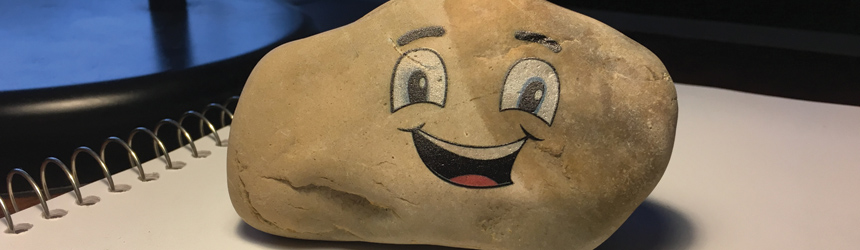
For example, when a customer supplied a rock to be printed, it brought up a whole new set of challenges for the graphic designer and production staff. “The design to set up to print on a 3D curved bumpy object is different than the set up and design of a coroplast sign or banner,” admits Parnell.

With the nature of the VersaUV LEF-200, each unique job presents its own set of obstacles. However, 1 Hour Signs & More is up to the task. “For us, the small format flatbed is a great addition to our business. It took some time for us to build our customer base. The key to being profitable with it is to think outside the box and sell items that no one else is producing,” explains Parnell.

Inviting In Opportunity
Small format flatbed printers print to premanufactured materials used for promotional purposes and surfaces such as brick and metal. Both of these scenarios present new industries to PSPs. In addition, the implementation of a small format flatbed can speed up productivity, as some of the smaller jobs previously done on a wide format device are transitioned to the smaller printer. By adding a small format flatbed, PSPs invite new opportunities into their business.

Sep2018, Digital Output

Direct to Object Printing
Flatbed Printers

Growth is Imminent

By Melissa Donovan

For the graphic arts and specifically digital printing with a focus on wide format, most industry insiders agree that while signage is a mainstay, specialty applications are pivotal components in growth. Print service providers (PSPs) taking on specialty services are strategically positioned to increase their bottom line.

Keypoint Intelligence – InfoTrends recently conducted a survey—produced by the International Sign Association—with findings aligning with the aforementioned statement. In Looking for BIG Opportunity in Graphic Communications & Specialty Printing, 68.8 percent of the respondents polled believe their wide format print volume is increasing.

According to the survey, reasons for growth include expanding the type of applications produced to appeal to new markets, adding services to become one-stop providers, and focusing marketing efforts on vertical industries. Over 300 companies including commercial printers, sign shops, digital print specialists, screenprinters, and advertising specialty providers participated in the report, published May 2018.

The participants of Looking for BIG Opportunity in Graphic Communications & Specialty Printing are an accurate representation of where the players in the graphic arts are headed. Many of the market share leaders interviewed in our annual state of the industry report agree.

In each of the topics—UV and latex, textiles, vinyl and film, and automation—we focus on here, the underlying trend is growth. While all are still used very much in signage applications, there is also a transition into specialty fields like apparel and décor—which moves further into untapped industries like manufacturing.

Above: Blue Designs, LLC won third place in this year’s Application of the Year awards. The Troy, MI-based shop created this wall graphic for Cranbrook Art Museum using Avery Dennison MPI 2611 Matte Removable Wall Film on an Epson SureColor S30670 printer.

UV and Latex
Many PSPs opt to move away from solvent-based digital printers, transitioning to UV and latex printing devices. This influences the increased use of digital printing in applications like flooring, packaging, and wallcoverings.

“We’ve seen a major shift toward both latex and UV inkjet, specifically for production-level wide format. Solvent and even eco-solvent are seeing less use as the flexibility and diversity of substrates for latex and UV inks have caught up to market demand,” explains Dan Johansen, marketing manager, wide format solutions, commercial and industrial printing business group, Ricoh USA, Inc.

UV in particular continues to gain traction because of reasons like environmental concerns, lower energy usage, and wider substrate compatibility. “Companies are becoming more conscious about their ecological footprint and looking at technologies that help them reduce it. LED curing is not only environmentally friendly but also highly energy efficient. Another huge advantage that brings the industry toward LED curing is the little heat it produces, which gives them a much wider media diversity,” shares Mike Kyritsi, president, swissQprint America.

“The transition from mercury arc UV to LED has helped customers tremendously as our LED cool cure platform can print nearly any rigid or roll-to-roll substrate. The energy savings with cool cure has a direct financial benefit to our customers in terms of lower electricity usage,” agrees Ken Hanulec, VP of marketing, EFI Inkjet.

According to Jim Lambert, VP/GM, INX International Ink Co., UV inks have advanced in recent years in regard to adhesion and durability. “This makes them much easier to use in the production environment because they are printer friendly,” he continues.

“Consumers are seeking more personalized experiences, and UV LED is well positioned to offer the ability to print on a variety of products thanks to adhesion versatility. As brand owners seek to tap into this trend, they add a variety of digital print hardware to their traditional mass production decorating technologies. These implementations are often happening in store, at the point of purchase (POP),” says Andrew Oransky, president, Roland DGA Corporation.

UV and latex printing technologies allow for customization on a number of materials. According to Ralph Giammarco, VP, S-One Labels & Packaging, a division of S-One Holdings Corporation, “when wide format digital printing began back in the 1990s, the highest value proposition was being able to do small runs with good quality and more quickly and efficiently compared to analog methods. Customization was a feature that the print provider could offer with this new technology. Today, it is driven from the opposite direction. The customer demands customization and wants it in everything, from signs to home décor to packaging.”

“PSPs are almost turning into service bureaus, finding additional markets they can address. A lot end up in the promotional products area. Things that conventionally were screenprinted or pad printed are now part of bigger marketing campaigns that include digitally printed cups, water bottles, and golf balls,” suggests Lambert.

Armed with experience, PSPs leverage knowledge and expertise in digital print to exploit some of the newer opportunities, recommends Larry D’Amico, director of sales, large format, Durst Image Technology US LLC. Specific industry verticals where opportunity is found include décor, packaging, architectural, and electronics.

“Décor, in particular, is seeing strong growth in the areas of window blinds, wallcoverings, cushions, and canvas prints,” comments Tom Wittenberg, U.S. marketing strategy, planning and content development lead – latex signage and décor, HP Inc. He cites a number of studies that point to overall growth in digital decoration. IDC reported an overall digital compound annual growth rate (CAGR) of 18.1 percent from 2016 to 2021 for wallcoverings alone, with latex and UV technologies at CAGRs of greater than 20 percent for the same period.

“For those just entering the market, décor represents an excellent opportunity for growth. For those in traditional areas such as signage, it represents a greater opportunity. It allows them to expand their offering portfolio and continue on the path of growth,” says Wittenberg.

PSPs aren’t the only ones benefiting for UV and latex printing technologies. “Consumer products companies—particularly in fashion accessories, apparel, and personal electronics—are starting to adopt digital printing technology. In many cases, margins on these products can be razor thin, and the additional charges for personalization can be more profitable than the item itself. While much of this customization is done at the point of manufacturing or distribution, we are seeing printing equipment installed in retail locations as a way to drive traffic offline and back into stores. This can create opportunities for kiosk and display builders, as well as POP sign producers,” shares Oransky.

UV and latex technologies also play a role in digital’s recent influence in manufacturing processes. Deborah Hutcheson, director of marketing, NAFTA, Agfa Graphics, explains that inkjet printing in manufacturing facilities is moving in two paths. “The first uses existing wide format equipment to print directly onto more industrial surfaces such as wood, tiles, counter tops, and flexible membranes for push button surfaces in automobiles and kitchen appliances. This is the area where a current PSP can more easily participate. The second path is when inkjet printheads are incorporated directly into the manufacturing process of the product, thus eliminating post-processing steps, reducing cost, and adding all of the flexibility and customization that inkjet printing can provide,” she shares.

“Advances in wide format digital printing allow manufacturers using the printed piece as part of a finished good to expand their portfolios and feed their path to market by using digital print technologies for everything from prototyping to mass production. We see a continuing of lines being blurred between different areas of print and production as the technology makes diverse product offerings easier to implement for printers of all types,” adds Johansen.

Textiles
There is a lot of focus on textiles. While many PSPs are not strangers to printing on fabric, the capabilities that digital affords means it is being used in other applications. Traditional digitally printed fabric work involves soft signage found in trade shows and at the retail level, this includes silicone edge graphic frames, flags, pole banners, backdrops, and table covers. Today digitally printed fabrics are found in apparel, garment, and décor businesses.

Tim Check, senior product manager, professional imaging, Epson America, Inc., says there has been double digit growth of wide format textile technologies including direct to garment, dye-sublimation (dye-sub), and direct to fabric. “The print technology used for textile applications spans multiple markets, of which there are different trends driving the increased adoption of digital textile printing. In signage, fabric soft signage using dye-sub is quickly being adopted because of three major factors—cost, ease of installation, and environmental,” he explains.

Soft signage is popular because it is reusable, lightweight, and easy to store and shop, according to Hanulec. He says in applications like exhibition graphics much of the vinyl-based product is being replaced with textile.

“Over the past five years, Top Value Fabrics has seen significant growth in product sales trending toward digital printing on textiles. This is due to the continued expansion of our digitally printable fabric portfolio of products. Furthermore, the introduction and advancements of high-speed dye-sub, direct disperse, latex, pigment, and UV printer technology play a major role and push business to record levels,” shares Mike Compton, product marketing manager, Top Value Fabrics.

Beyond graphics signage, the economics of digital printing, namely the ability to cost-effectively produce short runs or customization on demand, is attractive to other markets. “Specialty printing applications for home décor and high fashion are embracing the ability to provide samples and short-run production with custom designs to clients and end customers,” adds David Conrad, director of sales and marketing, Mutoh America, Inc.

“One Israeli fashion designer, Michal Ratzman, is using digital textile printing to make her dress designs stand out in a profitable way. Digital printing allows Ratzman to create dresses after they are ordered, thereby reducing costly inventory, returns, and waste,” points out Eric Hawkinson, VP of marketing, production print solutions, Canon Solutions America.

Apparel manufacturers looking to bring textile production back to the U.S. leverage digital print. Check says this is to address the trend of retailers rotating product every two weeks to entice customers. “A few years back, apparel had designated seasons, however customers today are constantly seeking fresh looks and retailers are looking to provide reasons for customers to visit their stores. The traditional business model of ‘produce then sell’ is being flipped to ‘sell then produce,’” he suggests.

“Apparel and interior designers have creative abilities and opportunities like never before and savvy, experienced PSPs are integrating digital textile printing to custom print on demand. Expansion into these new markets increase sales and growth domestically due to the ability to meet short turnaround times. Many PSPs have diversified their operations by adding home, interior, and architectural departments,” says Compton.

Vinyl and Film
Looking for BIG Opportunity in Graphic Communications & Specialty Printing asked respondents what percentage of their work was printed on flexible versus rigid media. 76 percent answered flexible media. The respondents were also surveyed about their most used flexible substrate. Overall, pressure-sensitive vinyl was the most used media at 33 percent.

In response to customer demand for sustainable products, materials constructed with little to no PVC are trending. The total solution is attractive for traditional applications like vehicle wraps to newer products like wallcoverings. Also, advancements in ink technologies allow for new products like floor graphic media that does not require an overlaminate.

“Consumers demand digital media made without PVC for reduced environmental impact. We also see more shops transitioning to latex from solvent and eco-solvent printers. Media that is printed on a latex printer is instantly cured, without requiring dwell time before being able to apply the overlaminate. Shops appreciate the ability to print and laminate immediately,” shares Joey Heiob, technical service representative, Avery Dennison Graphics Solutions.

Changes to the material composition of the media allow for growth into home décor, hotels, and hospitals. Tammi Johnson, business development manager, 3M Commercial Solutions, believes graphic films are becoming key components of many interior design projects and are ideal for refreshing a space quickly and efficiently. “Growth of graphics in interior décor applications enables PSPs to expand their business with existing customers, as well as to explore new opportunities with a broader set of customers,” she continues.

“We see PSPs with roots in the graphics arts expanding into a range of signage applications and beyond. Two of the most significant growth areas are vehicle and architectural graphics. End user demand for customization and personalization is now accomplished with these latest print technologies and graphic materials,” says Adam Bratter, senior director of product development, Arlon Graphics, LLC.

Darren Speizer, VP of sales, Drytac, points to ink technology advancements as propelling the vinyl and film segment forward. “Several innovative technologies have emerged in the last five years in the industry. The advances in ink technologies have allowed us, as adhesive coated media manufacturers, to create certified post-printed floor graphics that do not need an overlaminate. This saves the users time and money.”

Automation
The ability to offer a mix of traditional signage services and new specialty printing applications is nice, but it can’t be leveraged until a print shop is running at its peak efficiency. Enter automation.

“The greatest trend is toward automation. As PSPs expand business by adding more equipment, they recognize a need for wide format automation. This helps to contain costs while streamlining production, resulting in greater return on investment for PSPs,” explains Hutcheson.

Bryan Manwaring, director of product marketing, Onyx Graphics, Inc., agrees and says in addition to increased demand for automation there is a need for connectivity, simplification, and application support. This is all “in order to increase production staff efficiency, reduce waste, and increase profitability.”

In Looking for BIG Opportunity in Graphic Communications & Specialty Printing, 78.6 percent of respondents said that demands for shorter turnaround times are increasing. For those surveyed, the majority of wide format work was produced in less than 24 hours.

“Today’s business climate has created a need for fast deliverables. In the internet commerce age, customers want to make a quick decision, and have products delivered seamlessly. PSPs must be able to rely on their workflows. Regardless of ink technology, a solid workflow can enable PSPs to meet production deadlines,” suggests Michael Maxwell, senior manager, Mimaki USA, Inc.

Automation can be enacted in many ways. Commonly, using a software or workflow solution can help achieve efficiency. “With increased competition, PSPs must minimize the labor component of each job, while providing consistent color output across various printing technologies from numerous printer manufacturers. Reducing manual touch points can increase the predictability of the printed output. Additionally, PSPs need to be able to analyze production data in one format across multiple platforms,” recommends Manwaring.

Jan De Roeck, marketing director – industry relations and strategy, Esko, admits that the speed of a press is no longer the key driver of a business, instead it is workflow’s overall throughput. “Printers realize that there’s a lot to win from investing in the entire workflow before the printing press, automating everything from order entry to print—especially with short runs and substrate variability.”

“Vendors need to focus on the business needs of customers and how to streamline their workflow processes as well as give them innovative tools to step ahead of the competition and make their life easier,” confesses Don Feagan, president, SA International.

Automation should be addressed at bottlenecks, which all too many times are found at the finishing point of the overall print process. As digital printers become faster, manual or semi-manual finishing components can’t compete.

Steve Aranoff, VP marketing and business development, MCT Digital, provides the example of the handling of digitally printed fabrics being more than 50 percent of a PSP’s costs. “Wide rolls of fabric are heavy and the material is hard to handle manually. Delays in manual cutting lead to delays in sewing if it is a required next step, bringing further inefficiencies into the process. Not only must a PSP automate processes to maintain high quality and reduce delivery times, but they must also consider how each new piece of equipment fits into and supports it,” he adds.

“With growth in areas like packaging and textiles projected to outpace the average print service, providers continue to seek innovative ways to respond to market demands particularly as they relate to increased workflow automation and productivity, simpler and more efficient operation, as well greater flexibility to adapt to changes in demand and in materials,” says Heather Roden, strategic account manager, graphics/packaging, Zünd.

Certain substrates also offer PSPs and their customers increased efficiency. “The transition to fabrics and more easy to use and install media like magnetic-receptive media, allow for retailers to save money on installation without compromising image quality,” explains Kylie Schleicher, product manager, Ultraflex Systems, Inc.

“Magnetic media is transitioning towards thinner and stronger. Utilizing high-energy manufacturing technology to make magnetic sheeting thinner while maintaining or exceeding the strength of regular strength sheeting, and at a comparable cost, has many benefits. It is easier to work with, easier to print, and costs less to ship. The same trend towards thinner and lighter weight is also true for magnetic-receptive sheeting, the other half of magnetic graphic systems continually gaining in popularity for easily changeable graphic displays,” adds Mike Gertz, marketing manager, Master Magnetics, Inc.

Automation is also a theme when it comes to adapting digital printing into traditional analog applications. Take for example large format 3D printing being used in conjunction with thermoforming. Sharon Rothschild, product manager, Massivit 3D, explains that with “3D printing, print providers can quickly 3D print large molds that can withstand the thermoforming process, enable cost-effective customization, and greater design freedom. Traditional manufacturing methods often require several weeks to produce mold inserts with significant outlay.”

Previewing 2019 and Beyond
While UV and latex, textiles, vinyl and film, and automation are all relevant when it comes to traditional signage applications, the trends and advancements in each of these segments is also transitioning digital printing into specialty applications like apparel and décor. The fashion industry, packaging, architectural, and consumer products are all experimenting and realizing the potential of digital printing.

This is depicted perfectly by this year’s Application of the Year winner, ARB Digital of Sacramento, CA. It printed on 512 travertine tiles using a Roland digital printer to create a 14×7-foot mural for Mexican restaurant, La Fiesta Taqueria in Folsom, CA. UV technology allowed ARB to print directly to the tiles. You can read more about the project and the second, third, and honorable mention winners by visiting digitaloutput.net in August.

Moving forward, digital printing will be used further down the production chain, integrated into manufacturing facilities at the initial level of a product’s creation. While PSPs aren’t necessarily the ones poised to benefit from this change, they have an upper hand. Their extensive knowledge about digital printing, specifically wide format, makes them a valuable player in these beginning stages of growth.

Aug2018, Digital Output

Digital Print

Textiles

UV and Latex

Vinyl

Sublimation Innovation

By Olivia Cahoon

Print service providers (PSPs) have many options when printing textiles with inkjet technology. They can print directly to a textile using UV or latex ink, or they can work with dye-sublimation (dye-sub). Dye-sub printing is categorized by two types—transfer and direct.

Direct dye-sub devices print ink directly on the fabric followed by the process of sublimating. Transfer printing involves printing to paper. The graphic is transferred from the paper to the fabric with a separate device such as a heat press or calendar.

Dye-sub transfer printing requires specific ink sets to ensure the color transfers well from paper to fabric. These inks should offer color vibrancy while providing print stability and fast drying capabilities for improved efficiency. To offer print service providers (PSPs) the best type of ink for transfer dye-sub printing, new sublimation ink sets are formulated for reduced water consumption and vivid output.

Above: Sawgrass developed the SubliJet-HD Flex high-viscosity sublimation ink set with an expanded color gamut including hard-to-achieve colors.

Textiles Seek Efficiency
When it comes to sublimation ink for transfer printing, PSPs request a variety of features including print stability, fast drying qualities, and color vibrancy. Together, these features allow PSPs to maximize productivity with shorter sublimation times.

Transfer sublimation inks designed for print stability offer consistent output, ideal for printed garments displayed in large volumes. Print stability varies based on the quality of the dyes and other components used in ink formulations, says Lily Hunter, product manager, textiles & consumables, Roland DGA Corporation. “This allows for lot-to-lot consistency in manufacturing, as well as quality control.”
David Lopez, textile solutions specialist, textile and apparel business development, Mimaki USA, Inc., considers print stability as one of the most important qualities of digital inkjet printer inks.

In addition to print stability, fast drying capabilities are important for sublimation inks because it speeds the workflow and helps maximize productivity, shares Hunter. Specific formulations allow ink to dry quickly and are typically vendor specific but also include simple formulations like less water for faster drying time. Without a fast drying capability, wet inks may transfer onto the back of the roll and require re-printing.

Inks with less water in the formulation usually have a higher dye content. This speeds up drying time, but also offers reduced water and ink consumption. Hunter offers, “that means a little bit of ink goes a long way when it comes to producing rich, vibrant sublimated output.”

Those in search of sublimation ink also look at color vibrancy. Tony Cox, business manager, Sun Chemical Corporation, explains that this includes inks with brighter and stronger colors, complemented by black inks with high-er density. A majority of ink demands are targeted toward shorter sublimation times to increase productivity and reduced weight transfer papers for significant cost savings, he adds.

According to Hunter, color vibrancy depends on the quality of the dyes used in the inks—the better the dye quality, the higher the vibrancy. She believes dye-sub is so popular because it produces eye-catching, appealing colors, which has a lot to do with dye and ink quality.

Batch-to-batch color consistency allows printed colors to maintain the same vibrancy over a period of time, shares Dan Barefoot, VP of global sales and marketing, Prism Inks, Inc. It’s also important that sublimation inks offer jetting reliability with little chance of printhead clogging. He explains, “the value proposition we most hear about has to do with providing product, which can be counted on to work day in and day out.”

Vendors Meet Demands
When seeking sublimation ink for transfer printing, PSPs look for a variety of attributes including print stability, color vibrancy, and reduced consumption. To meet these demands, ink vendors advance their ink sets with proprietary components.

Advanced Color Solutions (ACS) carries high-quality inks, consumables, and sublimation equipment. Its sublimation ink offering includes J-Next Subly ink, available in a variety of colors including fluorescent pink and yellow. “If you use the proper supplies and maintain your equipment, dye-sub is a sustainable business,” offers Nick Buettner, director of global technical sales, ACS.

Epson’s latest dye-sub ink technology, UltraChrome DS sublimation ink with high-density black, produces exceptional color saturation and high contrast. By offering improved black density with better tonal transitions and grayscale, Tim Check, senior product manager, professional imaging, Epson, says the SureColor F-Series dye-sub printers deliver high-quality results in the roll-to-roll fabrication product market. In addition, fast drying times and improved ink efficiency deliver low total cost of ownership for customized promotional production, soft signage, and cut-and-sew sports apparel, fashion, and home décor.

Mimaki’s dye-sub solutions include printers and ink designed to use less ink and achieve vibrant colors. “Because Mimaki engineers its own inks, we have total control over changing the ink for new technologies,” says Lopez. As the market continues to grow, he says Mimaki tries to stay ahead by creating new inks that have brighter colors and more stable printing qualities. Ink sets for transfer dye-sub include Sb54, in CMYK, light blue, light ma-genta, and fluorescent yellow and pink.

Prism Inks optimizes its ink particle size to enhance the vibrancy of inks while also balancing it to give higher lightfastness. Its color gamut is enhanced by neon and spot color offerings. “Our high-frequency jetting is based upon technology used in our other high-speed jetting products, which means consistent printing without printhead drop-out issues,” shares Barefoot. Additionally, its sublimation inks have an 18 month shelf life.

According to Hunter, Roland provides stable, high-quality sublimation inks at competitive prices to meet user demands. “We strive to develop and provide superior sublimation inks—like the Texart SBL3 formulations—that incorporate the qualities our customers are looking for and exceed their expectations when it comes to overall performance and output quality,” she offers. Roland’s Texart SBL3 sublimation inks are designed with less water in the formulation to reduce water consumption, produce vibrant output, and allow for faster drying time.

Sawgrass Inc. developed the SubliJet-HD FLEX high-viscosity sublimation ink set to provide the ability to achieve an expanded color gamut including hard-to-achieve colors. Within this formulation, the company also provides fluorescent capabilities. “With each new ink formulation and update to our printer software and solutions, we deliver more color options, greater print efficiency, and direct responses to market demands for sublimation printing,” explains Robin Kavanagh, PR manager, Sawgrass.

Sun Chemical recently launched its SunTex inkjet inks to meet key trends and challenges in the marketplace. Cox says this includes bright strong colors, dense blacks, strong resistance characteristics, and show through for double-sided textiles like flags. “As a leading supplier of pigments and colorants, we can access these materials to use with our inks in a way that is far ahead of our competition,” he adds.

Ink Challenges
While challenges are continually addressed by transfer dye-sub ink vendors, outdoor durability and proper maintenance remain concerns.

Sublimation inks typically last up to six months outdoors, presenting a challenge for PSPs with clients that demand high-level durability. At present, Hunter says improvements in durability are coming more from blank manufacturers rather than ink vendors. By using a blank with a special coating, PSPs can achieve printed output with up to three years of outdoor durability.

Ink challenges also result from how PSPs handle equipment throughout the entire printing process. Kavanagh believes this includes clean printer maintenance, calibrated heat presses, and transfer papers with consistent results. “If sublimation users don’t pay attention to the entire process, the quality of their output will suffer.” For example, while it may be tempting to lower costs by using cheaper transfer paper, Kavanagh cautions it may result in lower image quality with less-defined lines and borders or increased ink bleeding.

Maintenance and cleanliness problems often occur when the ink sits stagnant and the printer isn’t regularly used. “The longer the printer sits without use, the more a problem presents itself,” offers Buettner. This can be avoided by practicing proper use and manufacturer-specific maintenance instructions.

Challenges with sublimation inks are not only limited to output quality and maintenance. Market changes affect the price and availability of inks as well as transfer papers. Recently, market prices have dramatically decreased in addition to major companies stirring up the price competition, suggests Juan Kim, CEO, Valloy Incorporation.

Additionally, there is a rising concern for available sublimation ink sets for newer printheads. “Most inks are stabilized for Epson DX5/7 printheads, but there are high-frequency printheads coming like Epson 5113, Ricoh GH2220, and Xaar 1201,” offers Kim. “It’s important to develop stable ink to support those new printheads.”

Enter Pigment Inks
Advancements in pigment inks allow direct print technologies to serve as an alternative for dye-sub transfer printing. Pigment inks are expected to make inroads into the apparel and décor markets due to advancements in UV stability and general durability. “The ability for pigment textile ink to work with not only natural fabrics, but synthetics, gives pigment textile ink a strategic advantage,” explains Barefoot. “Color gamut and vibrancy gets better every year with pigment textile ink, and the fabric feel is almost as good as dye-sub.”

Pigment inks offer compatibility with a variety of fabric types, but when compared to polyester, sublimation inks tend to hold greater value. Sublimation inks penetrate and dye the actual fabric fibers of polyester material for a soft feel. Unlike dye-sub, pigment inks sit on top of the fabric fibers. By penetrating the fibers, sublimation ink allows for sublimated products to maintain a high-rub resistance without rubbing off or onto other projects, says Hunter. This also holds true for sublimated rigid substrates where the ink dyes the polyester coating. “Dye-sub transfer printing onto polyester still yields output that’s extremely vibrant,” she adds.

Check finds that sublimation ink’s ability to penetrate fibers gives it the advantage of having greater color vibrancy with sharper detail. “It can also be used with raw/uncoated polyester fabrics, resulting in no change to the hand of the fabric.”

Because it penetrates fibers, Lopez believes the longevity of dye-sub surpasses textile pigment when items are washed or worn. Additionally, dye-sub isn’t limited to fabric. “There is an emerging market with photographic dye-sub to metals and woods that feature a polyester-based coating on them, which cannot be done with textile pigments. The versatility of dye-sub will always be greater than textile pigments,” he suggests.

While Barefoot believes pigment inks are advancing, he says there will always be a need for sublimation inks, especially for hard goods. “Pigment textile ink does not work well with ceramics, metals, or non-fabric products.”

Despite advancements, Cox doesn’t see pigment inks for direct print technologies immediately affecting the industry. Broadly speaking, he says sublimation inks are formulated to print on polyester and polyester-rich fabrics, while reactive inks are ideal for natural fibers. “As a general rule, reactive dye and pigmented inks are suitable for a wider range of fabrics, but there is still a place for sublimation inks for transfer printing.”

Performance capabilities aside, transfer inks typically yield greater inventory and stock redundancy advantages including an overall lower production cost. According to Cox, the financial risk of holding stock of unprinted transfer paper is lower than holding stock of finished garments, and the disposal cost of unwanted or unsold stock is significantly lower.

Sublimation Advancements
PSPs select transfer dye-sub technology for eye-catching images with a durable, soft feel. To keep up with demand, advancements in transfer ink sets and devices are designed to expand compatible materials and available colors.

New self-weeding technologies allow rich sublimation colors to be transferred to natural fibers like cotton. “It’s becoming an attractive alternative to direct to garment pigment inks,” says Kavanagh.

Self-weeding transfer paper allows images to be transferred without leaving a window or shadow on the garment. According to Kavanagh, weeding can be accomplished using different methods, generally with multi-step processes.

Advancements also expand UV resistance and weatherability for transfer sublimation inks. For example, Barefoot shares that Prism Inks’ polymer scientists are developing new UV inhibitor technology to increase outdoor durability. In addition, the company is developing new polymer technology that allows customers to use less expensive paper.

According to Hunter, one of the biggest transfer sublimation ink trends is the introduction and popularity of specialty colors like fluorescent. “These inks can be combined with process colors to create a multitude of eye-catching fluorescent inks.”

Vibrant Prints
Sublimation transfer technology is versatile and spans a range of applications including awards, promotional products, garments, and home décor. While pigment inks are advancing into apparel and décor markets, sublimation inks remain a cost-effective solution for printing to polyester-based surfaces.

Aug2018, Digital Output

Digital Print

Dye-Sublimation

Textiles

Transfer Printing

Making Strides

By Olivia Cahoon

Floor graphics are ideal for marketers, brand owners, and those in search of customized décor. Due to a large surface area, these graphics attract attention from pedestrians and provide a growing marketing platform. To keep clients satisfied and pedestrians safe, print service providers (PSPs) select floor media based on printability and non-slip characteristics. One such PSP is Trinity Graphic. Founded in 1967 in Hull, England, Trinity Graphic started as a flexographic trade shop with five employees in a 3,000 square foot workspace. The company originally produced printing plates for flexographic printers in the label and carton industry. In 1988, it opened its U.S. operation headquartered in Sarasota, FL.

Today, Trinity Graphic operates as a print shop that manages creative, custom, and branded digital print solutions with 52 employees. From a 28,000 square foot facility with additional offsite storage, it supplies products to all areas of the U.S., South America, and other countries.

Above: Trinity Graphic based in Sarasota, FL, offers floor graphics to its customers. The application is about ten percent of its current business. Beyond traditional floor graphic applications, it also offers Dekomat-customized gold cart flooring.

Buying into Digital
In 2009, the company purchased its first digital press to produce custom printed products for an insulated cup company. “This project was a major hit and as the need for more printing equipment expanded, so did our project range to all areas of wide format printing including banner, giclée art, printing on glass, acrylic, and metal substrates,” says Robert Smithson, president/CEO, Trinity Graphic.

According to Smithson, the company prides itself on ingenuity and a “can do” attitude for customers with unique printing requests. When asked by the insulated cup company for a 360 degree solution for advertising between two layers of plastic, Trinity Graphic created the Trinity Wrap. “This one product helped the customer grow their sales from $45 to $150 million in three years,” he admits.

The PSP produces custom applications for both home and commercial interior design products like custom wallpaper, canvas and acrylic arts, and printing directly to glass for countertops, backsplashes, or shower walls. Its printed custom furniture offering is available on several different materials including aluminum and wood for indoor and outdoor use.

Trinity Graphic also offers commercial printing for mill posters, banners, PVC sheet printing, and coroplast for large chain supermarkets and furniture stores throughout the U.S.

The company entered digital printing on the EFI VUTEk GS3200. Today, nearly all of its presses are EFI VUTEk devices including several GS3250, HS100 Pro, and GS2000 presses. “All of these were purchased due to their use of four colors plus white, as well the photorealistic quality and high productivity. This technology is critical for many of the products we create,” shares Smithson.

Other digital technologies include an HP Inc. Latex 3000 and a liquid laminator for wallcoverings, posters, and banners. All of Trinity Graphic’s UV printers use EFI VUTEk ink and the HP Latex 3000 uses proprietary ink. “We have tried other ink manufacturers, but we had consistency issues and reverted back to the equipment manufacturer’s line,” offers Smithson.

Decorative Flooring
Floor graphics are one of Trinity Graphic’s fastest growing business segments. Although only ten percent of its current turnover, Smithson anticipates rapid further development with the majority for short- to mid-term use.

“With the floor becoming a major avenue for directional signage or alerting either clients or visitors to a product or space, we only see growth potential,” he offers. The company’s floor graphics include exterior wayfinding signage, custom wall-to-wall vinyl flooring, location graphics for local transit, and marketing logos for businesses inside international airports.

“Malls, schools, airports, downtown areas, museums, sports arenas, and other highly trafficked areas are ideal candidates for floor graphics as they can be used to show off something new or give direction to hundreds,” continues Smithson.

The PSP sources its media from a variety of suppliers including Better Life Technology, LLC, which produces G-Floor, a 75-mil flooring media with reverse printing capabilities. “Using the EFI VUTEks, we printed samples with several different designs, the results were incredible with a jaw dropping wow factor,” he admits. Graphics are printed on the smoother side of the material at a resolution of 1,000 dpi.

According to Smithson, the inks cure very well to the flooring material, which is then coated with EFI VUTEK’s opaque white ink. “This makes the colors on the graphic pop when the material is turned over,” he adds.

For non-slip floor graphics, the PSP uses Mactac Distributor Products StreetTRAX, a grit coated 13.5-mil media with permanent adhesive. It’s used for both indoor and outdoor applications like parking areas, sidewalks, and entranceways. “It’s virtually non-slip due to the grit of the texture and using our EFI VUTEks, it is surface printed,” says Smithson. The company also works with Mactac StreetRAP for flooring inside and outside, including lamination for further durability.

Trinity Graphic recently received several requests for printed products that adhere to carpet, tile, wood, stone, and metal. For this application, panoRama Walk & Wall from Continental Grafix preferred, as it is a one-step solution. “This short- to medium-use product requires no additional lamination and meets many non-slip requirements,” he shares.

Learning Curves
Despite its success with digitally printed floor graphics, Trinity Graphics has experienced its fair share of challenges. In June 2015, it received a floor graphics job from a local company who creates backdrops for stage and theater productions. The client requested an 800 square foot stage floor that resembled Grecian marble. Using the 35-mil G-Floor from Better Life technology, Trinity Graphic printed two 40×10-foot pieces that could roll together for reuse.

According to Smithson, this proved to be a major challenge as the rolls were heavy plus the material had the tendency to telescope on the rewind side of the press. “Luckily, Better Life Technology came to our assistance and helped us. This process has now become a Better Life Technology certification and if you wish to try and print their product, you must go through it.”

Cutting floor graphic material to the proper size also presents challenges. When laying out large areas onto a floor, Smithson advises to always print an overlap. “When installing the material, it is critical that the alignment is perfect, and an extremely sharp knife is used for trimming.” For smaller flooring projects, the company uses an Esko Kongsberg digital die cutter for accuracy.

Additionally, he recommends experienced professionals install graphics on rough floor surfaces. During installation, the use of a heat gun to properly adhere the graphic may be needed. Exact surface composition should also be known prior to install as some adhesives can damage the seal on polished concrete floors, for example.

Golf Cart Mats
Thinking outside the box, floor graphics aren’t just used for what is traditionally considered a floor. The owner of Trinity Graphic thought his golf cart’s black rubber mat was boring. In 2017, Trinity Graphic applied for a patent pending and trademarked Dekomat—a concept for golf cart flooring that takes advantage of previously unused space. Smithson cites how large the custom golf cart market is—with over one million privately owned carts in the U.S.

Dekomat is decorative but also functions well with non-slip surfaces and high-wear layers thanks to the use of Better Life Technology’s G-Floor material. It’s used for advertising and promoting products to raise revenue for golf courses. Recently, Trinity Graphic completed an order of 74 golf cart mats for a large car dealership in Saco, ME.

The order was placed by Mark Galos, principal, Frank Galos Chevrolet Cadillac, who heard about the Dekomat from a PGA professional. For this order, five different designs were selected that advertised the dealership. The mats were installed at the Dunegrass Golf Club in Old Orchard Beach, ME.

Because the Dekomat’s vinyl material is oil- and acid-resistant, Smithson says it is ideally suited as parking mats for other vehicles like motorcycles and automobiles also.

Floor Projects
Trinity Graphic has also completed a variety of other floor graphics projects in the more traditional sense. In 2017, a private residence in Golden Oak at Walt Disney World Resort requested floor graphics for a 600 square foot children’s bedroom with a design based on Mr. Potato Head.

The company printed two 10×30-foot rolls on the EFI VUTEk GS3250 using UV ink and 75-mil G-Floor. It took three hours to print the floor graphics and five hours to install. During the job, Trinity Graphic experienced few challenges with the exception of the material being heavy and the large graphic files taking additional time to load and RIP.

The Mr. Potato Head floor graphic was completed on time in addition to custom wallpaper to accentuate the floor’s design. “This was stunning when finally installed. The client absolutely loved it and said it turned out better than they could have ever imagined,” offers Smithson.

High Expectations
Meeting clients’ expectations for high quality and durability is essential to how Trinity Graphic effectively creates floor graphics. In doing so, it offers its clients digitally printed floor applications for a range of uses including marketing, home décor, and outdoor use.

Aug2018, Digital Output

Digital Print

Floor Graphics

Wide Format