Take A Seat

By Melissa Donovan

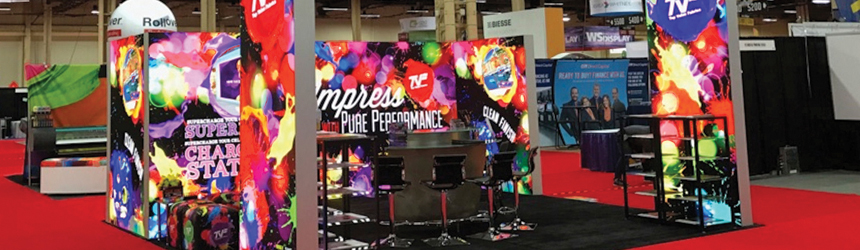
It’s no surprise that customization is becoming common in all aspects of daily life. Consumers look for unique products with favorite colors, patterns, characters, or logos. Digital fabric enables personalization to expand into décor items like ottomans, chairs, couches, and loveseats as well the pillows and cushions that complement them.

Fabric optimized for digital printing and dedicated to upholstery applications is mainly either cotton, a cotton blend, or polyester. Depending on the material it can be printed via dye-sublimation (dye-sub) transfer or direct and direct print with ink sets such as UV or latex. Specific features in these fabrics define them as acceptable for upholstery. Durability as well as crock fastness and abrasion resistance are important factors to consider.

Above: PremEx Solutions’ DuraVibe fabrics are available in cotton, cotton blends, and polyester.

Demand Settles In
For print service providers (PSPs) looking to break into a new market, fabric printing—specifically with upholstery applications in mind—is a lucrative option. Customized furniture is alluring to consumers from many backgrounds. There is the media buyer looking to promote a brand in a unique way, a chain of hotels planning to decorate rooms with a one-of-a-kind feel, or a designer hoping to reach out to residential clients with the offer of never-before-seen prints used in their homes.

“Designers and buyers don’t want to be limited to cookie-cutter fabric options like in the past,” admits Sharon Roland, advertising and PR manager, Fisher Textiles. “People like options to showcase creativity and individuality, especially in home or business living spaces. Additionally, design challenges in coordinating elements for living spaces increases the demand for customized upholstery printing.”

Hunter Ellis, president, Jacquard Inkjet Fabric Systems, says customized upholstery allows both renters and homeowners to quickly and affordably put their own spin on furnishings and decorations. “It’s a great way to make a house feel like a home,” he adds.

Digital print is well suited for customized upholstery fabric. “Typically the run length of custom fabric is short, and digital can meet this demand more cost effectively than analog technology,” explains Dan Halkyard, senior marketing manager, S-One Holdings Corporation.

The ability to quickly turnaround smaller volumes has other benefits. “It also allows for the supply chain to respond quicker to market trends and enables more test marketing programs,” says Ann Sawchak, partner, PremEx Solutions.

According to Kathryn Sanders, product marketing manager, Top Value Fabrics, designers and artists look to use digital instead of traditional rotary screen and flatbed printers because of the cost savings. “Screens typically range from $350 to $1,000 each with a maximum of 16 color ways. Designers can print short, exclusive collections, incorporate unlimited colors, and experiment with scale without breaking the bank,” she suggests.

“The demand for customized upholstery is growing so fast due to the fact that digital printers are becoming more efficient, cost effective, and user friendly. Heat presses and calendar units offer more solutions. You can do short runs, customize to end users’ preferences, offer one-of-a-kind artwork, and print on demand,” shares Marty Meisner, sales manager, Media One Digital Imaging Solutions, LLC.

In addition to positive improvements to digital hardware, fabric optimized for this process continues to advance. “Digital textile fabrics now have the same rich quality, weave, and abrasion characteristics as traditional analog printed fabrics,” adds Sawchak.

Accommodating Customers
PSPs familiar with common signage requests may find upholstery fabric orders daunting. Conducting a transaction with a fabric décor designer versus a brand manager looking to print a fabric banner or wall graphic does differ. Both parties have specific requirements when it comes to the job.

“Both types of clientele are very specific in their desired fabric properties and capabilities based on the end use. For instance, a sign customer may need the fabric to have a certain white point and stretch percentage, whereas an upholstery customer may be more concerned with texture of the fabric, durability, and wrinkle resistance. Every job requirement is different,” explains Roland.

Specifically, “in my experience, interior furnishing customers are looking for natural fabrics such as linen or canvas. Some customers will settle for polyesters, but the hand and feel of the fabric is much more important than it is with signage,” adds Ellis.

The good news is that customers looking for upholstery fabric could be current customers of a PSP. “Clients seeking digitally printed upholstery/décor fabric could be current customers for the sign printer, but the sign printer has not yet approached them for décor solutions. Examples include commercial customers such as offices, architectural firms, or boutique hotels. If not a current customer, then the printer needs to look at different markets to find these customers. Markets such as home furnishings, interior designers, and trade shows,” continues Sawchak.

Resting on a Fabric Type
Certain types of digitally printed fabric are ideal for upholstery use. Vendors overwhelmingly suggest cottons and cotton blends or polyester. Print processes—dye-sub transfer and direct, or another type of ink—also are a consideration.

“Cottons and cotton blends can be printed with reactive dye, direct pigment, and latex. Pigment has come a long way in reaching the durability desired by the customer as it relates to crock fastness,” says Sawchak.

Sanders agrees that cotton and cotton blends can be successfully printed with pigment, but cautions that they need to pass the American Association of Textile Chemists and Colorists (AATCC) crocking standards. For example, the AATCC TM8-2016, Colorfastness to Crocking: Crockmeter Method and the AATCC TM116-2013, Colorfastness to Crocking: Rotary Vertical Crockmeter Method are both designed to determine the amount of color transferred from the surface of colored textile materials to other surfaces by rubbing.

On the other hand, polyester fabrics are ideal because of their durability in indoor and outdoor environments and compatibility with dye-sub printing, according to Sanders. She adds that polyester is also advantageous because finishes like DuPont Teflon Durable Water Repel (DWR) and soil release can be applied that are not normally compatible with other print processes.

“Polyester fabrics can be printed either transfer or direct. Direct uses disperse dye inks or pigment. We have found to get fine details when printing direct with disperse dye it is necessary to have the fabric pretreated so the ink does not migrate. If the design does not have fine details you may not need to pretreat,” recommends Sawchak.

Ellis shares that most of Jacquard’s upholstery customers request linen or canvas. “Permanent pigment textile inks are what I recommend to most, although a few are printing high-end silk pillows that call for acid dyes,” he adds.

Features that Take a Load Off
Fabric ultimately used as upholstery must remain durable despite human interaction, safe in regards to fire hazards, and still be comfortable. In addition to durability, safety, and soft hand, abrasion testing and lightfastness are important considerations.

Sawchak says abrasion testing is important to understand the strength of the fiber. Most standards begin at 15,000 rubs and higher to see where the fiber will break. Popular testing standards are held up by ASTM International.

“It is imperative that print providers choose textiles that pass the ASTM D4157-13 abrasion test. If the fabric doesn’t meet that standard, then it simply is not suited for the home furnishings market,” argues Sanders. This test method covers the determination of the abrasion resistance of woven textile fabrics using an oscillatory cylinder tester. It may not be applicable for some fabric constructions.

ASTM also conducts the ASTM D3884-09 abrasion test. This covers the determination of the abrasion resistance of textile fabrics using a rotary platform, double-head tester. “It uses a specialized machine to determine the number of cycles a fabric can go through before it is worn down. The test measures the fabric’s deterioration, including the effects of abrasion,” explains Roland.

When fabric is placed in direct sunlight it could fade. This is especially true in regards to cushions or pillows used for outdoor furniture. “Another consideration is lightfastness—dyes placed in direct sunlight will fade over time, which is another reason to turn to natural fabrics printed with pigmented inks,” adds Ellis.

“Pigment, latex, and high-energy disperse inks have the best lightfastness properties,” suggests Sawchak.

Sit Back and Relax
While many digitally printable textiles are available, here we include those specifically tailored for upholstery use. When possible, each vendor has shared ideal furniture applications, any testing standards passed, maximum width and thickness, weight, compatible print processes, and pricing.

Aurora Specialty Textiles Group, Inc. offers Upholstery FR, which consists of tightly woven ring spun yarns. The polyester fabric gives a look of fine cotton upholstery. It is treated to meet the NFPA 701 flammability standard. It is printable with UV and dye-sub transfer processes. Available in roll widths of 60 and 120 inches, the material is 19 mil thick and 8 oz.

Fisher Textiles provides several fabrics for upholstery purposes. GF 1010 Element is a woven fabric that is waterproof, bright white, and sturdy, making it ideal for outdoor upholstery. It is compatible with dye-sub transfer and UV-curable printing and offered in 60- and 125-inch widths at a weight of 8.5 oz. 7777 Casino Suede is a soft, warp knit fabric treated with a durable water resistant coating and tested under ASTM D3884-09 to withstand 9,000 cycles on a rotary platform machine. It is ideal for chairs and ottomans, compatible with dye-sub transfer, and offered in 72 inches wide at a weight of 7.4 oz. GF 9766 Poly Cube is a 100 percent polyester knit that is dye-sub transfer compatible and 118 inches wide at 6.6 oz. It is popularly used for pillows due to its unique texture and soft hand.

Jacquard carries a variety of furniture-favored fabrics. 3.5 oz. bleached linen, 5.5 oz. bleached linen, 5.5 oz. natural linen, 6.5 oz. optic white canvas, 8 oz. optic white duck, 10 oz. optic white canvas, and soon a 10 oz. canvas grown and woven in the U.S. Fabrics are treated for pigment, reactive dye, or acid dye ink. Linens are available up to 54 inches in width and canvas is available up to 58 inches in width. Pricing ranges from $228 to $411 for a full width 50-foot long roll, depending on the type of fabric.

Media One offers Endutex Napa Print for upholstery, specifically sofas, ottomans, and bean bags. It is a combination of PVC and polyester and features brilliant colors, elasticity, and softness. Compatible with solvent, eco-solvent, UV, and latex ink, it is available in 55 inch by 50 meter rolls. It weighs 550 gsm. Pricing is less than $0.80 per square foot.

PremEx Solutions’ DuraVibe fabrics are available in cotton, cotton blends, and polyester. The cotton and cotton blends are printable with reactive, pigment, and latex. The polyester is printable via direct or transfer dye-sub, with direct using disperse dye or pigment ink. The products are available in widths of 56 inches up to 3.2 meters. The average price per square yard for the cottons and cotton blends is $5.50. The polyesters average $6.25 per square yard. According the company, the media is ideal for upholstery due to its durability in both crock and abrasion.

Top Value Fabrics offers multiple fabrics specifically engineered for upholstery applications using dye-sub printing. Glacier S/567, Denali S/568, Zion S/569, Yosemite S/570, and Heavy Poly Linen S/535 are all 100 percent polyesters available with DuPont Teflon DWR finish. Weights are 15 oz., 11.5 oz., 10.3 oz., 9.4 oz., and 9.4 oz., respectively. Widths vary around 56 inches.

Pull Up a Chair
Upholstery fabric has specific requirements, but most importantly it needs to be able to withstand abrasion. Textiles optimized for digital print—when paired with the correct print process—are available to meet this need and more. Not only are they durable, they also offer a soft hand, crock fastness, and lightfastness.

PSPs looking to expand into new markets should consider textile printing and by extension upholstery applications. Not only are designers and artists a group of new clientele worth pursuing, current customers are also ripe for choosing. Digital print’s short-run capabilities make customization of furniture including couches, chairs, and ottomans a possibility for many buyers.

Nov2017, Digital Output
Creative Views

By Olivia Cahoon

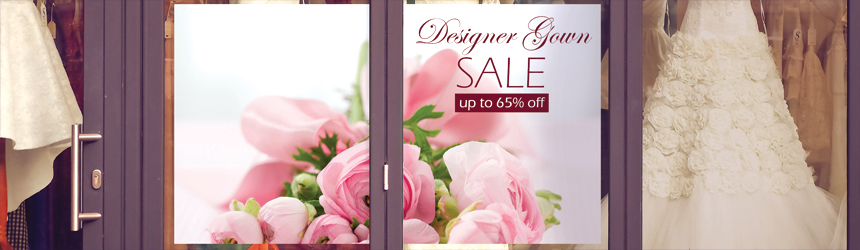
Print service providers (PSPs) offer window media for a range of locations including corporate, hospitality, medical, and retail. From adhesive-backed perforated and non-perforated to static cling and static cling-like options, a variety of substrates are used in window applications. PSPs search for the best media solution for the job considering durability, location, climate, and cost.

Above: LexJet, part of S-one, WR Window Graphic Film is a water-resistant white polypropylene film with a low-tack adhesive.

Adhesive-Backed Perforated
Adhesive-backed perforated media offers durability for interior and exterior windows in buildings, convenience stores, restaurants, vehicle graphics, and other areas that seek to enhance space while allowing customers to view through the window from inside.

Adhesive-backed perforated media is typically used for outdoor, short-term applications. The material’s perforated hole sizes determine transparency. Lily Hunter, product manager, textiles and consumables, Roland DGA Corporation, says perforation hole sizes differ according to application and the graphic’s location. “Vehicles are typically 50/50, whereas building wraps can be 80/20,” she explains.

50/50 applications offer equal printability and visibility on the surface area while 80/20 allows 80 percent printability and 20 percent open transparency. View-through vinyl allows for seeing out but not in—providing security and privacy. Hunter suggests using optically clear overlaminate with this media to extend the durability of the application.

Dennis Brunnett, technical service specialist, FLEXcon, agrees and says adhesive-backed perforated window films are used whenever one-way vision is desired—especially in privacy applications like conference rooms or ATMs. These films require installation above 50 degrees and typically last up to 180 days.

However, adhesive-backed perforated media can be difficult to install and generally requires a professional. PSPs may also have difficulty printing this material due to the holes.

Adhesive-Backed Non-Perf
Adhesive-backed non-perforated media is preferred for communication and decorative space enhancements. Tammi Johnson, business development manager, 3M Commercial Solutions, says adhesive-backed non-perforated films are often applied in environments where visibility is not preferred, like retail units under construction.

These films can also be printed as full opacity to mostly translucent. “Depending on the printer and RIP used, it’s possible to perform a day and night print producing the same image on either viewing side of the film,” offers Jim Halloran, VP sales and marketing, Lintec of America, Inc.

Printing to optically clear, non-perforated film allows PSPs to produce graphics that appear as if the glass was actually printed. Halloran says an additional benefit of these films is most can be removed with minimal effort and replaced at the discretion of the customer.

Alan Dworman, president, Catalina Graphic Films, Inc., believes that adhesive-backed, non-perforated media offers a lower cost than perforated media and doesn’t require professional installers. This media is typically durable for up to one year and is used with multiple printing platforms.

Clear and white products are applied in hospitality and retail markets. White products are used to create a backer for clear films, according to Darren Speizer, VP, sales and marketing, Drytac.

Adhesive-backed non-perforated media can provide an added design element for retail. Frosted films are translucent and simulate etched glass with an optically clear adhesive. René Bourgeois, key account manager, ASLAN, Schwarz GmbH & CO. KG, says decorative films etched in glass, dusted glass, and milk glass effects are ideal for creating custom durable privacy screens in offices, hospitals, and private homes.

“Etched glass is primarily used for office decoration where the film allows for partial privacy in offices while still leaving the area feeling open,” agrees Kelly Kwo, technical services manager, Arlon Graphics, LLC.

The longevity of adhesive-backed graphics depends on the substrate’s base. Cory Jones, associate product manager, wide format, GBC & SEAL, part of ACCO Brands, explains that self-adhesive vinyl can be monomeric or polymeric. Polymeric is durable for up to seven years outside while monomeric is durable for five years. The longevity of graphics also depends on adhesive types—permanent or removable.

Additional non-perforated media considered for window applications includes pressure-sensitive films and transparent cast PVC printing films. “Digital printing on these materials provides both customization and personalized design options,” says Johnson.

Metalized adhesive-backed vinyl is one example. “It offers an eye-catching solution for indoor and outdoor window signage. If a customer is looking for a unique material to draw consumer attention quickly they should consider metalized adhesive-backed vinyl,” shares Laura Slovensky, commercial project manager, Nekoosa.

Static Cling
Static cling is used for interior applications like short-term indoor and outdoor promotional materials. Depending on the décor, print providers can use clear or white vinyl for static cling media. If stored properly, the media is generally reusable.

Matt Buckley, director, business development, wide format, GPA, Specialty Substrate Solutions, believes static cling media is ideal for consumer goods, food and beverage, grocery, and automotive markets. Its applications include window advertising, point of purchase (POP), temporary signage, and freezer door clings.

E. Tyler Reich, director of product development, Que Media Inc., agrees and says that most fast food restaurants use static cling because it’s easy to apply and remove. “It’s common in fast food chains because they are usually installed by management or employees who are not professional sign installers,” he explains. Static cling offers repositionability to avoid mistakes or reprints.

While static cling is a popular choice for temporary POP applications, Judy Heft, product manager, graphic consumables, Nazdar SourceOne, advises PSPs to consider the shelf life due to the high concentration of plasticizers. She advises, “these films become unsuitable for printing in as little as three months from date of manufacture. The low cost of static cling jumps significantly if waste material is considered.” The oils in old cling media can surface and affect quality and printability. Static cling media usually has a shelf life of up to six months.

Static Cling-Like Options
Static cling-like options use alternative methods to adhere to a surface. “These would give you a longer term of usage but have similar qualities as a static cling product,” says Shaun Jaycox, product specialist, S-One Holdings Corporation. For high climate and traffic areas, he suggests considering a laminate for additional protection.

Static cling-like options incorporate very low-tack adhesives that mimic easy installation and removal properties of static cling. “This construction is a bit more robust than static cling and therefore can be used in more environments and for larger coverage areas,” shares Ed McCarron, wide format applications manager, Dietzgen Corporation. He believes the adhesion is barely noticeable while securing to the glass.

Another benefit, according to Larry Delesio, business development manager, wide format materials, DAF Products Inc., is that for mounting directly to the inside of windows no other mounting films or tape is required.

Companies like Ritrama offer static cling-like options. Optically clear graphics don’t build adhesion and are suggested for wet application. Ultra-removable PVC clear films are also offered as static cling-like options with little adhesion but are easily removed with no residue.

Some static cling-like media uses proprietary technology to adhere to the surface. For example, micro-jell applications allow for easy installation and removal without shrinking or curling from temperature or climate change, explains Mark Feibig, VP of sales, GlassApeel, Infinity Media Company.

Similarly, micro-suction technology is used to avoid adhesive synthetic papers. Bill Hewitt, marketing manager, Yupo Corporation, says tiny suction cups form on one side to grip any flat, smooth surface.

“This material can be removed and reused many times. It can also be used on other solid non-porous surfaces where air cannot pass through,” cites Darrel Adams, VP, America, Newlife Magnetics LLC.

Considerable Elements
Selection of the best material for a window application is based on the environment. This includes durability, distribution methods, finishing requirements, length of time, removability ease, sun exposure, and temperature. PSPs must work closely with customers to understand the application and the project’s goals.

“It’s also important to identify if the desired media is used either as a communication vehicle or as a design aesthetic to enhance an environment,” suggests Johnson.

Gary York, wide format specialist, Agfa Graphics, recommends PSPs be aware of the different grades of PVC and PET products. He advises PSPs to become familiar with the specifications of each to select the right material for the job. Some are longer lasting while others are better for scuff resistance, shrinking, and opaqueness.

PSPs should also consider pattern types for each application—patterns yield different results based on printable surface and transparency. Jason Maricle, product manager, Concept Perforated Window Film, General Formulations, explains that the first number in a pattern represents the amount of printable surface area and the second number represents the open area for transparency, which determines visibility.

He offers, “a 50/50 pattern offers equal percentages of printable surface area and open area for visibility. The 50 percent transparency offers maximum see-through visibility however, image vibrancy is reduced due to less printable surface area.”

Installation Technique
Efficient window applications not only rely on media type but the installation process as well. Hunter warns that applying any media to a dirty window can result in adhesion problems, therefore it’s important to make sure the glass surface is clean prior to application.

She also suggests PSPs be conscious of the direction the graphic is facing. “It’s important to consider how much exposure to direct sunlight it will receive. Depending upon the placement of the graphic and how long it will be displayed, you may want to consider using an overlaminate to extend the print’s life,” advises Hunter.

Josh Zaller, product manager, Avery Dennison Graphics Solutions, warns PSPs to not apply graphics to exterior windows if the glass surface temperature is below 50 degrees because pressure-sensitive adhesives don’t stick well to cold surface substrates. Using opaque films on external windows to block sunlight may result in glass breakage from elevated surface temperature.

Marcel Medved, business development director, Continental Grafix, believes that exterior-mount materials offer the best color vibrancy. However, he cautions that exterior materials require skilled installation and are subjected to vandalism. While interior-mount graphics are easier to install, color hues can be affected by glares or tinting.

“Usually, more expensive products are easy to install and cheaper materials are more difficult,” shares Clay Reierson, director of operations, Xcel Products, Inc. Understanding the situation, like graphic and program size, can help determine the best solution for the job. He says PSPs shouldn’t hire professional installers for larger quantities spread out over the country. Instead, he advises PSPs to invest in an air release product that provides a quality look even by novice installers.

Innovative Windows
Window media is extending beyond building windows to buses, trains, and subway wraps—offering brands and marketers more promotional area. “In Detroit, we’ve seen automobile manufacturers incorporate building wraps into the launch of new vehicles and advertising campaigns centered on the Super Bowl,” explains Zaller.

In fact, Johnson believes windows are the most underutilized space in a commercial environment. “With more transparent building designs, we are starting to see individuals acknowledge the benefits of putting their glass surfaces to work,” she offers. Customers now utilize varied and creative concepts by combining advertising campaigns, architectural guidelines, and brands.

Eric Bartosz, director of business development, Contra Vision, notices see-through window graphics being used more than ever. They offer the potential to transform glass into promotional materials while maintaining the window’s primary function.

Illuminated windows have also begun to appear in retail window spaces. Rebecca Fuhrman, digital market development manager, Tekra, a division of EIS, Inc., says that as a result of illuminated windows, more materials are appearing with proper translucidity, which allows materials to be lit from the front or back without creating hot spots or glares.

“Designers want a broader palate for design as well as durability. Trending now is full-scale colored art for glass designs, with the added advantage of using natural ambient or LED lighting on the glass designs, accomplishing translucent or purely optically transparent color effects,” agrees Richard Purdum, president, Solar Graphics Inc.

Other window media trends include the growth in popularity of static cling-like products. According Josh Cormany, media division manager, Gans Digital, these types of materials offer a bubble-free installation area for permanent adhesive vinyl installation. They act similarly to magnetic wall applications, except the permanent adhesive vinyl becomes a removable, static cling-like material.

“Recent trends are toward easier application products. Static cling-like materials offer excellent performance and an ease of application not seen with many traditional window products,” adds Ted Isbell, graphics specialist, Piedmont Plastics.

Treated Media
From office buildings and hospitals to restaurants, buses, and retail, every piece of glass is an opportunity for advertising and décor. A variety of media options are available for window graphics including adhesive-backed perforated and non-perforated and static cling and static cling-like options. Before choosing media, PSPs should consider the graphic’s durability needs, environment, and printing methods.

Nov2017, Digital Output

Honoring some of the Finest

By Melissa Donovan

Daily, DOdirect.net—a lead generation system—compiles requests from Digital Output readers based on queries into vendors and specific products. These inquiries are generated from editorial and advertisements found in both the print magazine and online at digitaloutput.net. The information nets the results of the annual Readers’ Choice Top 50 winners and ten honorable mentions.

This year welcomes new faces to the list as well as a healthy mix of returning favorites. If you don’t see your preferred vendor included, be sure to reference their product and company announcements on DOdirect.net throughout 2018. Your response to editorial and advertisements—in print and online—drive the Readers’ Choice Top 50.

From the Top
Congratulations to all of the 2017 Readers’ Choice Top 50 winners. Background information on vendors is included here, sorted alphabetically by company name. Turn to page XX to learn more about top products introduced or promoted by the companies this year.

3M Commercial Solutions helps customers worldwide build brands by providing total graphics and light management solutions. The company manufactures or certifies graphic films and graphic protection‚ flexible substrates‚ as well as inks and toners used to create finished graphics that are consistent‚ reliable, and durable.

Agfa Graphics assists customers in producing more powerful messages by making graphic communication solutions more attractive, affordable, and profitable. The company provides one of the most innovative and broadest portfolios of products and services to help choose the right hardware, software, consumables, and services that meet budgets and goals. Agfa offers integrated solutions that maximize purchase power and place customers in a position to profit.

Alpina Manufacturing offers LED Lightbox, Flip-up, Slide-in, or Banner Grip Frames made in any size or quantity to hold graphics or banners. Change graphics without removing frames from wall. Beautiful presentation, low cost, and indoor or outdoor use. A 24/7 online quote and ordering website with no minimums; all manufactured in Chicago, IL.

Arlon Graphics, LLC manufactures and markets a full line of high-quality pressure-sensitive cut vinyl and print media films for digital imaging, signage, vehicle graphics, and screenprinting. The company is headquartered in Placentia, CA, with strategically positioned distribution out of Australia and Europe to service customers worldwide.

Avery Dennison Graphics Solutions manufactures self-adhesive film for digital and screenprint and sign cut technologies. Applications for films range from promotional graphics such as signage, exhibits, displays, car wraps, and bus graphics to longer term applications like fleet markings, backlit signs, vehicle color change, and architectural graphics.

Caldera is a software company with almost 25 years of experience in developing, marketing, and supporting high-quality technological software for wide format imaging with a commitment to increasing productivity, cost efficiency, and color output. Caldera’s suite of production-orientated print and print to-cut workflow programs offers color management, imaging, and driving solutions for large and grand format peripherals.

Canon Solutions America, Inc., a Canon U.S.A. Company, provides enterprise, production, and large format printing solutions, supported by professional service offerings. Helping customers stay ahead of print industry trends, Canon Solutions America provides companies of all sizes with technology offerings supported by the Canon and Océ brands.

CET Color is a pioneer in the wide format UV printing industry. Founded by a print shop owner, CET draws on firsthand experience to innovate flatbed and hybrid printers that offer both quality and efficiency at an unbeatable value. With field upgradability and custom configuration options, CET takes business to new heights.

Condé offers everything needed to get into the custom imprinting business including transfer systems, software, blank imprintables, transfer paper and supplies, and instructional videos.

DGI manufactures quality user- and budget-friendly cutters and wide and grand format printers 64 to 126 inches. Printers are available in variety of printhead and color configurations and feature onboard bulk-in systems and carry full warranty. The Fabrijet product line features dye-sublimation inks and the Polajet line features solvent inks.

DreamScape, a division of Roysons Corporation, manufactures textured digitally printable/special effect wallcoverings and protective topcoats. With over 35 years of experience in the wallpaper industry, DreamScape offers the largest selection of high-quality certified, Class A commercial grade vinyl and PVC-free wallcoverings for residential and commercial applications. Available in rolls for solvent, eco-solvent, UV-curable, and latex printers.

Drytac is an international manufacturer of adhesive-coated products, including self-adhesive print media, graphic films, window films, double-sided tapes, label stock, industrial adhesives, and heat-activated and pressure-sensitive laminates and mounting adhesives.

Durst manufactures advanced digital production technologies. In today’s active imaging industry, Durst products are designed for performance, reliability, and longevity—offering high print quality, productivity, flexibility, and efficiency. Durst is a family company with an 80 year history, where values are focused on innovation, customer orientation, sustainability, and quality.

EFI is a global technology company leading the worldwide transformation from analog to digital imaging. It is passionate about fueling customer success with products that increase competitiveness and boost productivity. To do that, the company develops breakthrough technologies for the manufacturing of signage, packaging, textiles, ceramic tiles, and personalized documents, with a range of printers, inks, digital front ends, and a comprehensive business and production workflow suite.

Epson America, Inc. offers an array of image capture and image output products for business, commercial print, graphic arts, photographic, signage, direct to garment, and fabric production.

Esko is a global supplier of integrated solutions for sign and display, packaging and label, and commercial printing companies. The company’s products and services drive profitability in the printing supply chain by reducing time to market and raising productivity.

Fisher Textiles’ reputation in providing quality textiles with service is reflected in over 25 years of producing fabrics for digital printing. It is the company’s mission to keep its value proposition high while maintaining quality and service to the entire customer portfolio. Three warehouse locations allow for filling just-in-time requirements. Fisher Textiles stands behind its products and takes pride in providing some of the best fabrics in digital print.

FLEXcon understands relationships matter and that’s why it sells directly to printers. Benefiting from the company’s over 60 years of industry knowledge and experience in self-adhesive films, customers gain a competitive advantage by collaborating with FLEXcon.

Fujifilm North America Corporation’s graphic systems division delivers solutions for workflow, consultative services, remote monitoring, color standardization and G7 implementation, pressroom products, CTP, proofing, digital printing, wide format, packaging, labels, and specialty printing. Fujifilm also manufactures and distributes Sericol inks and is a leader in the development of UV inks for screenprinting, narrow web, and large format digital printing. Fujifilm is committed to minimizing the environmental impact of its products and operations, proactively working to preserve the environment, and strives to educate printers about environmental best practice.

Graphics One develops and is an international distributor of professional digital imaging products. It provides a worldwide network offering in-country installation, service, and technical advice in support of its products. In 2017 it was acquired by Prism Inks.

HP, Inc. creates technology that makes life better for everyone, everywhere. Through its portfolio of printers, PCs, mobile devices, solutions and services, the company engineers experiences that amaze.

InkTec develops and supplies various high-quality inks for digital printers. These are based on inkjet technology used in everything from regular office printers to printers for actual photos in the outdoors. Additionally, InkTec develops UV-curable inkjet printers, the JETRIX line, and high-quality UV ink.

INX Digital delivers technologies that drive digital growth all over the world. Combining the ink formulating expertise of INX with Evolve, Prodigy, and Triangle brands makes INX Digital a source for products, technologies, systems, consultation, and services to help reach new levels of digital production excellence. The company offers services and manufacturing with operations located in China, Europe, and the U.S.

Kapco Graphic Products manufactures/converts digital media for water-based inkjet and solvent/latex/UV printers, mounting adhesives, laminates and backers, sign, vinyl, and supplies. Adhesive-backed, water-proof, and specialty vinyl; banner; canvas/fabric; film and paper inkjet media; plus PSA UV and thermal laminates in four finishes are all available.

Kornit Digital develops, manufactures, and markets industrial digital printing technologies for the garment, apparel, and textile industries. Through its NeoPigment process, including an integrated pretreatment solution, the company caters directly to the needs of both designers and manufacturers to address the changing needs of the entire textile printing value chain.

LexJet is a one-stop, direct source for equipment, materials, and software used to print fine art, photography, point of purchase and trade show displays, and commercial graphics. Dedicated to total convenience and personal customer service, LexJet provides one day ground delivery to most of the continental U.S., online ordering, trained account specialists, free and unlimited product and technical support, and educational resources.

Lintec of America is a manufacturer of pressure-sensitive films for visual marking, signage, and architectural window applications. It specializes in optically clear, frosted, and textured films for display, point of purchase, and window graphics. Lintec’s VisionControlFilms consist of a family of specialty privacy films. When adhered to glass the layers of film provide a frosted effect that can appear and disappear as the viewing angle changes. These are available in varying levels of degree from either the horizontal or vertical positions.

Mactac celebrates 50 years at the forefront of product development for digital printing, mounting, laminating, screenprinting, and cut vinyl needs. Mactac applications include indoor and outdoor signage, vehicle wraps, trade show displays, and wall environmental graphics. Rely on the company for quality and service, and trust it has the next up-and-coming innovation to transform business.

Magic’s, part of Dietzgen, comprehensive print media offerings include universally compatible products as well as solutions optimized for each segment of wide format print. Magic products include canvas, photo paper, poster paper, matte paper, banner, vinyl, photorealistic paper, display film, backlit film, clear and matte film, pressure sensitive, textile, wall décor, fine art paper, and eco-friendly alternatives. The Magic portfolio includes Magic, Museo, and JetSet brand products.

Magnum Magnetics is the U.S. manufacturer of flexible magnetic sheeting, strip, and custom profiles. It offers printable magnetic sheeting for multiple printing presses including offset, flexography, inkjet, and digital. The company takes the time to understand an application before recommending a magnetic solution.

Marabu North America draws on more than 150 years of experience in developing inks and coatings. The product line includes MaraJet digital printing inks, ClearShield water-based coatings, the StarLam liquid laminator, and Marashield UV-curable coatings. The company’s success is built on not just its high-quality products but its ability to work with customers to offer tailor-made solutions to printing and coating needs.

Master Magnetics, Inc. features a robust line of magnetic assemblies, flexible magnetic sheeting, magnetic receptive, and magnetic strip. Ideal for signmaking, advertising specialty, vehicle graphics, and point of purchase displays, PrintMagnetVinyl and FlexIRON—printable magnetic and receptive sheeting—works with most large format standard inkjet printers and plotters.

MCT Digital engineers and manufactures the VersaTech2 in the U.S. It is a three-in-one finishing platform that delivers productivity and sensible automation for both board and fabric rolls. Add options and automation as business grows.

Mimaki is an innovator and pioneer in the development of digital printing and cutting products worldwide. The company engineers and manufactures a complete line of digital printers and cutters, and offers a total workflow solution for the many applications found sign and graphics, textile and apparel, and industrial.

Mutoh America, Inc. manufactures wide format printers and plotting cutters for a number of markets and applications. Eco-solvent printers for signage and wraps, dye-sublimation printers for soft signage and clothing, textile printers for home décor and custom apparel, and UV LED printers for industrial, specialty, and package printing are all part of the Mutoh product family. Mutoh’s line of inkjet printers are known for quality, speed, and superior reliability and support.

Newlife Magnetics, LLC specializes in wide format magnetic media. It makes printable magnet sheeting up to 48 inches wide. The company manufactures the Maco Magnetics Display System consisting of Ino-Steel and Wall-Mag or Mag-Paint. Cling-King print media adheres to smooth and non-porous surfaces, without any adhesives. It is ideal for window graphics and car signs. Cling-king is available in white, transparent, and frosted in 100-foot rolls by 50-inch widths.

OKI Data Americas provides print professionals with a color palette unmatched by its contemporaries in the sign and graphics, production, and specialty printing markets. For wide format applications both outdoor and indoor, OKI’s ColorPainter line of wide format printers use eco-solvent inks that last longer, cost less per square foot, and provide color density and image quality at fast real-time speeds. For graphic design and specialty print applications, OKI’s proColor LED light production and textile transfer printers feature white toner for printing on dark stocks.

Onyx Graphics, Inc. is dedicated to helping customers increase productivity, reduce costs, and gain a competitive edge with superior print and color quality. Global channel partnerships and longstanding relationships with printer manufacturers position Onyx as a market leader in powerful, reliable, large format printing workflow software.

ORAFOL Americas Inc., a subsidiary of ORAFOL Europe GmbH, is a global manufacturer of premium vinyl graphic innovations, reflective solutions, and adhesive tape systems used in signage, graphics, industrial, and traffic and safety applications. The company’s distribution network spans Canada, and the Caribbean, Latin America, and the U.S.

Pacific Coast Fabrics (PCF)—now a part of Top Value Fabrics—is a pioneering provider of polyester, cotton, and silk textiles for digital print. Offering a complete line of premium digital textiles for soft signage, apparel, and home furnishings applications, PCF specializes in supplying an array of fabrics for dye-sublimation (dye-sub), direct disperse, pigment, UV, and latex printing. PCF is a global partner with Georg+Otto Friedrich, Europe’s largest digital warp knit manufacturer, and stocks its most popular fabrics in wide and grand format, 60- and 120-inch widths. PCF’s collection of apparel fabrics are developed with the latest in advanced moisture management and wicking technology and engineered with a full line of luxurious upholstery weight polyesters for dye-sub printing.

Photo Tex Group Inc. is an exclusive distributor for this four-time U.S. patented Photo Tex self-adhesive removable fabric material for the past 13 years. Photo Tex is distributed through an authorized worldwide dealer channel. It is a 100 percent polyester fabric and does not shrink, rip, or wrinkle in any environment. It can be easily installed, repositioned, removed, and reused. Since Photo Tex patented adhesive is fully cured prior to shipment, there is no time limit on removal, so feel free to install for a day or a decade.

Que Media, Inc. is a global coating manufacturer of aqueous, solvent/eco-solvent, and latex digital print media for display graphics, point of sale advertising, and photo reproduction. Its expertise is most influential in wide format and color laser. With regards to the wide format, the company currently coats substrates such as polypropylene, BOPP, PVC, backlit film, fabrics, banner material, and multi-layered PET film in addition to a full line of pressure-sensitive laminates.

Roland DGA Corporation offers a lineup of wide format inkjet printers and integrated printer/cutters, including TrueVIS, SOLJET, VersaEXPRESS, and VersaStudio eco-solvent printers; Texart dye-sublimation printers; and VersaUV UV printers. All Roland inkjets come bundled with RIP software and several models offer specialty ink options including white, metallic silver, fluorescent, and clear coat inks.

Sensient Imaging Technologies is a developer and manufacturer of high-quality, innovative inkjet inks. The company has the background, expertise, and technology to help guide customers into new markets, media, and applications with high-performance digital ink solutions.

Signs365 is the pioneer of trade-only grand format printing.

Top Value Fabrics is a supplier of quality print media. With more than 40 years of success in the textile industry, it offers a complete line of printable banner media including digital and screen banner, specialty textiles, and dye-sublimation, for indoor and outdoor use. Top Value Fabrics supplies a wide selection of frontlit, backlit, blockout, PET, water based, mesh, PP, and specialty textiles in standard and custom widths from 38 to 197 inches.

Ultraflex Systems, Inc. is an international innovator and leader in PVC, fabrics, and specialty substrates. With a commitment to progress, quality, and product development, Ultraflex continually adds and modifies formulas to offer a variety of materials to meet the ever-changing needs of the global market. The company services Canada, Latin America, and the U.S. through five North American warehouses and a network of distributors.

Valloy Inc. provides total solutions in digital packaging and textiles, including label and garment applications. The company has numerous worldwide installations of digital label presses and finishers for short-run production of various labels for cosmetics, food, winery, and chemicals. Durability of printing is one of the company’s main strengths. It also offers various solutions for garment and textile items like laser transfer films, inkjet transfer paper, and rotary heat press machines.

Verseidag US manufactures and distributes more than 50 PVC coated, laminated vinyl, and textile substrates for solvent, latex, UV, aqueous, screenprint, transfer/direct dye-sublimation, and flexible sign applications. A versatile offering ranging from 36 to 196 inches wide seamless goods is available at a number of warehouse locations throughout North America.

Zünd offers multi-functional cutters/routers with a range of tools and automated/robotic material handling options for processing rigid and flexible substrates. Designed for maximum versatility and modularity, G3/S3 and dual-beam D3 cutters are powered by Zünd Cut Center, a simple but comprehensive user interface and end-to-end production workflow.

Ten More
With more companies introduced on a regular basis or existing ones making waves in the graphic arts space, 50 is just not enough for the Readers’ Choice awards. Here we include ten honorable mentions that readers felt should be recognized. Companies are listed alphabetically.

Advanced Greig Laminators, Inc. (AGL) is an engineering and manufacturing facility specializing in custom designed industrial and wide format digital imaging laminators. In many laminating markets standard laminating presses do not meet specific laminating requirements. AGL has found a solution by customizing it various laminator models to suit specific customer requirements. From laminators for digital imaging, or for industrial applications, it has the solution.

Aurora Specialty Textiles Group, Inc. is a U.S. manufacturer, coater, and finisher providing a range of high-quality textiles and canvases for today’s wide format digital printing market. Aurora’s fabrics are compatible with, latex, solvent, UV-curable, dye-sublimation (dye-sub) transfer, and dye-sub direct ink technologies. The company produces all fabrics in widths up to 126 inches.

Colex offers precision cutting equipment together with premier service. The Colex Sharpcut Flatbed Cutter features a triple interchangeable tool head, energy efficient six-zone vacuum system, and vision registration offering versatility, speed, and price for the ideal combination. Colex is the exclusive dealer in North America for Fotoba X/Y roll cutters offering models from 64 to 126 inches wide for flexible media and textile fabric.

Gans is an authorized dealer for HP latex printers, Mimaki sublimation printers, Graphtec cutters, and GFP laminators. Gans also has an exhaustive media catalogue that is compatible with UV, aqueous, latex, solvent, and eco-solvent printers. The company is a one-stop solutions for all digital and offset needs.

Mac Papers is one of the largest wholesale distributors in the Southeast U.S., with 23 locations and 16 retail stores across nine states. Founded in 1965, the family-owned and operated company works with best-in-class suppliers in paper and print, packaging, facility supplies, and office products to help businesses and consumers deliver quality results, improve efficiency, and increase bottom line. When it comes to wide format and graphics, Mac Papers has a comprehensive offering, from the latest in printing and finishing equipment to an extensive line of rigid materials and roll media. Its wide format experts develop customized solutions for improved workflow and job turnaround time, and support the equipment offered with training and expert technical service.

Media One is a full-service provider for large format inkjet. Its specialty is print manufacturers with production environments. The company covers the whole workflow from equipment, RIP software, color management, finishing equipment, consulting, and consumables. Media One offers full nationwide technical support.

MultiCam Inc. manufactures heavy-duty machines that route, knife cut, crease, and perforate at speeds up to 7,000 IPM. The EZ Knife supports rotary, kiss cut, drag, angle knife, oscillating, and ultrasonic cutting. The company’s automatic knife-changing system ensures seamless production.

Nazdar SourceOne offers screen and digital printing equipment, inks, and supplies. It maintains relationships with the world’s foremost manufacturers, providing best-in-class technology and quality to specialty graphic printers in Central America, Mexico, and the U.S.

SA International (SAi) provides complete, professional solutions for signmaking, digital printing, and CNC machining. In addition to software, SAi offers added-value services through its cloud platform.

Supply55, Inc. manufactures and distributes workflow products for the digital printing segment of sign, screen, graphic arts, exhibit, home décor, corporate identity, and athletic apparel.

Cheers to 2017
Congratulations again to all of the honorees part of this year’s Readers’ Choice Top 50. Their contributions advance the graphic arts as well as other industries where digital maintains a strong presence.

Nov2017, Digital Output

Big & Bold

By Cassandra Balentine

Commercial vehicle graphics and wraps help businesses promote brands and events, while personal wraps offer a fresh look. The application is and has been popular for some time, and with its popularity comes requests for more unconventional projects.

Industrial wraps decorate functional equipment outside of traditional vehicles. From construction trucks to plows and Zambonis, motivated wrappers take on this equipment and contend with challenges such as size, unique shapes, and rugged environments.

Above: WrapItBoston employs wide format inkjet printers from HP and Mimaki and utilizes approved 3M latex and solvent inks and 3M vinyl.

Supporting a Good Cause
Visual Horizons Custom Signs is a print provider based in CA’s Central Valley. The shop employs a staff of three in addition to husband and wife owners, Charity and Gavin Jackson. “We work in an industrial area of town. Our shop is about 6,800 square feet and allows us to pull an entire city bus into our back shop for installs,” explain the Jacksons.

Visual Horizons does about three to five vehicle wraps a week, and this includes everything from partial to full wraps. The Jacksons estimate that they also letter about five to ten vehicles per week.

Because of its location in a large agricultural area of CA, the shop attracts a lot of customers with large equipment, truck mounted cranes, bobcats, semi-trucks, and tanker trucks. “Many of our vehicles are spot graphics or partial wraps, as opposed to full wraps,” they add.

The Jacksons recall a job completed for a long-time customer that owns a local propane company. The company has three divisions, Van Unen Miersma Propane, Sierra Propane, and Windmill Propane. “We’ve been lettering/partial wrapping its propane tank trucks for years. Recently it asked us to do a special version with a marine pattern camouflage for the Semper Fi Fund that it supports,” share the Jacksons.

The primary goal of the wraps for all of the propane trucks Visual Horizons letters is business recognition and consistency among their fleet. For the three trucks with the camouflage wrap, the main focus was to generate attention for the Semper Fi Fund, and business recognition second.

The shop was asked to keep the main company logos consistent with the client’s other tanker trucks, but the camouflage print and Semper Fi Fund logos needed to be displayed prominently.

The wraps were all printed using 3M Commercial Solutions’ 3M Controltac Graphic Film with Comply Adhesive v3 IJ180Cv3-10 with 3M Envision Gloss Wrap Overlaminate 8548G. Graphics were produced on a Roland DGA Corporation SOLJET Pro 4 XR-640 printer/cutter with Eco-Sol MAX 2 inks. “Since we use premium wrap media, we offer a three year warranty, but the graphics are expected to last five years before there is noticeable fading, peeling, or lifting,” say the Jacksons.

The tanks are curved top to bottom in the center, so the shop did large center panels, squeegeeing top to bottom for the camouflage wrap section. The Jacksons explain that each end of the tanks curve top to bottom and left to right, so the compound curves were harder to wrap. Smaller sections were installed allowing them to overlap and follow the curves for minimal distortion and avoid overstretching.

The Jacksons say that many of the industrial equipment and vehicles they install graphics on have obstacles that regular vehicles may not. “We also notice large compound curves on the semi-trucks we’ve wrapped require extra time to wrap correctly,” they share.

Visual Horizons is dedicated to customer satisfaction. As long as vehicles and equipment need to be wrapped, it is happy to do it. “Since we’re in an agricultural area we’ll continue to see more of these types of vehicles,” predict the Jacksons.

Vehicle Showcase
Car Wrap City started in the early 2000s and now has two locations—in Sherman and Carrollton, TX—and more than 80,000 square feet of space. The shop employs certified installers from 3M and Avery Dennison Graphics Solutions.

The company’s sole focus is vehicle wraps, and it completes several a day. The team has wrapped everything from Aston Martins to Zambonis. “We are fully invested and very passionate about what we do,” explains David Badger, installer, Car Wrap City.

Car Wrap City doesn’t back away from wrapping industrial vehicles, like cranes, dump trucks, and tractors. “These are not your everyday wraps, so we tackle them as they come in,” admits Badger.

The company walks us through a recent industrial job, which involved a tow truck, a 2017 Peterbilt Century Rotator. The client, Ward’s Towing, is a repeat customer and knew Car Wrap City was up to the challenge. “This is the biggest vehicle of the client’s entire fleet. The mission was to make a design for a tow truck trade show he was showcasing the vehicle for,” says Tyson Summers, designer, Car Wrap City.

Summers wanted the design to reflect the size and industrial strength of this monster tow truck. “The truck looks like it could pick up and move a building, so everything was designed to reflect strength and style,” he continues. “It really is a huge machine. It may be the biggest tow truck I’ve designed. I also wanted to do something a little different than something you’d expect to see,” he offers. The design features stripes with a lot of metallic textures included, which would ordinarily be a solid color with an outline.

The vehicle already had a lime green crane, so Car Wrap City matched its printed green to that color. “It’s all about those details when you’re making a custom wrap. If we don’t color match, our printed green wouldn’t be as over the top as we wanted. We’re always shooting for perfection,” says Summers.

The design process was straight forward. “I created a few mockups and tweaked from there,” recalls Summers. “Being such a huge vehicle, a lot of work goes into just making an accurate template. Everything is based around measurements and a template you can trust,” he stresses.

For the Peterbilt Century Rotator wrap, the shop used Avery Dennison MPI 1105 Easy Apply RS media and laminated it with DOL 1360. The graphics were printed using the shop’s Mutoh America, Inc. printers and eco-solvent inks.

Depending on the surface and the car, the manufacturer’s warranty is about five years for the wrap.

Industrial machines, like the Ward’s tow truck, are case-by-case jobs. “They have more physical obstacles to account for,” explains Badger.

Summers admits that while it’s all pretty similar, one thing with industrial machines is that people tend to climb on them and things bang into them. “Most of it is making the client aware that just because you have a wrap now doesn’t mean that wear and tear will stop. Just be mindful as you climb your rig,” he suggests.

With industrial wraps, Summers suggests always making a custom template. “Getting access to working vehicles is hard just because they’re out in the field when you’re at the computer. The huge industrial vehicles are complicated to move. I give clients measurement diagrams to show them where to measure for me. You also need to check the surfaces to make sure they are in wrappable condition. Oil and old beaten up areas will need to be addressed before the install date,” cautions Summers.

Badger adds that finishing is an important aspect of industrial wrap installs. “These vehicles will be in the elements full time. All edges need to be sealed and post heated. Heavy-use edges—like doors and compartments—may also be sealed with a quarter-of-an-inch lamination tape for extra durability,” he advises.

While Car Wrap City is well versed at wrapping every type of vehicle, it welcomes work on industrial vehicles because it truly enjoys a challenge and the ability to show off its skills.

Name Recognition
Artworks is a full-service interior and exterior graphics company based out of Irving, TX.

The company completes up to five vehicle wraps a week. In addition to standard vehicles, it has worked on brand mixers, excavators, pneumatic trailers, and various other industrial machines. The goal of these projects is typically to provide name recognition to the construction/demolition field.

The company recently wrapped a fleet of cement trucks for a regular client that was bought out and needed to rebrand.

“While working closely with the salesman at MHC and Martin Marietta representatives, a trust developed that we would get the job done no matter the time and resources it took to accomplish the finished product our clients desired,” says Joseph Price, president, Artworks.

The fleet involved multiple drum manufacturers and sizes, the process took a few weeks of trial and error. “The drums are egg shaped so the panels had to be distorted to fit together like puzzle pieces. Each logo is made up of four panels. Due to shipping out about ten of these kits a week, we also custom created an installation instruction sheet,” explains Price.

To wrap the cement trucks, the shop used ORAFOL Americas’ ORALITE 5650RA Fleet Engineer Grade media and ORAGUARD 290 performance laminate and HP, Inc. latex printers.

The wraps are expected to be in place for two to three years.

Price notes that the company is in year three of a three year branding phase for its client. “Next year we enter the maintenance phase, replacing mixer kits and logos as needed,” he offers.

Close Client Interaction
SignArt started 41 years ago as a sign lettering, design, and production company. Throughout the years, it created, manufactured, installed, and maintained thousands of signs throughout New England. About ten years ago, the company formed a subsidiary, WrapitBoston, when Ed Spinney, VP, SignArt, realized the significance of vehicle wraps. It is based in Malden, MA.

Today, the company has 18 employees, including three full-time designers, two full-time certified wrap installers with helpers, welders, fabricators, installers, and service people. Its 10,000 square feet facility features a drive-in bay capable of wrapping three vans at once, or one, 54-foot trainer.

According to Spinney, the shop has wrapped as many as three vehicles and lettered two trucks in one day, and the average is two vehicles per day.

It has wrapped almost everything—planes, buses, all types of construction equipment, hockey helmets, Zambonis, boats, motorcycles, spray booths, and interior and exterior walls.

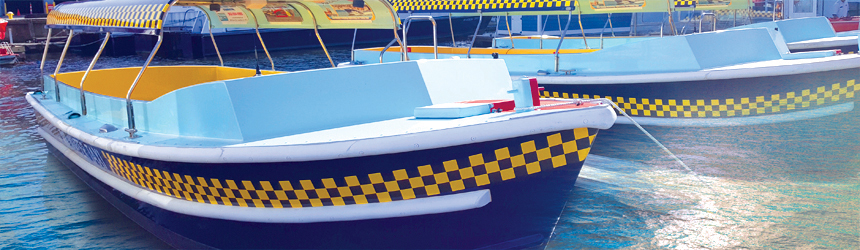
More specifically, Spinney says the company wrapped several noteworthy local vehicles, including the MIT Hyperloop high-speed transportation pod; a snow blower for the town of Framingham, MA; a wrap for GJ Towing of an 80 ton Rotator Wrecker—one of the largest trucks in MA; most of the Boston Water Taxi boats; and a large excavator for McKay Constructions.

Spinney says in the beginning, about 60 percent of the company’s wrap jobs were from existing customers and the rest new. “Now we get new customers every week so it’s about 30 percent regular and 70 percent new.”

The company works very closely with its clients. “We are very concerned about the quality and final look of our products and their image,” he attests. To help envision a job, the design processes starts with an interview with the customer to help determine visions and expectations. From there, WrapitBoston has an internal design meeting to discuss the direction and get started. “The process can be from one proof to as many as the customer needs to get it the way they want it,” offers Spinney.

The shop employs wide format inkjet printers from HP and Mimaki USA, Inc. and utilizes approved 3M latex and solvent inks. “We use all 3M vinyl for our printing. We laminate a clear coating over each print in matte, satin, or gloss,” says Spinney. The wraps are expected to last five to eight years, depending on how well they are taken care of.

For industrial wraps, the shop finds the biggest challenge to be the different shapes of the machinery. However, it won’t shy away from the challenge. “We will wrap anything if we have the chance,” says Spinney.

He shares a special and unique wrap it recently finished. The task was to fabricate and wrap a rolling cart used by Boston Children’s Hospital for the One Mission program, which focuses on young cancer patients.

Spinney says the Boston Children’s Hospital cart started out as a phone conversation. From there it became a discussion of practical design, including the size, shape, and storage. It was approved after a few changes and more discussion on usage. Then the team moved into logistics of construction, materials, weight, hinges, and locks.

Once approved, the shop started construction on a cart with an aluminum welded frame, drawers, and shelves. During this process, SignArt began the actual design and color concepts of the wrap, which was modified and approved a few times before it was printed. Once printed, it was laminated with a high gloss and installed on the constructed cart.

Industrial Vehicle Wraps
While many print providers have mastered the coupes, sedans, SUVs, and pick-up trucks of the world, not all are willing tackle a big rig, garbage truck, concrete mixer. Those with the skills and confidence to wrap industrial-grade equipment further the opportunity for vehicle wraps.

Nov2017, Digital Output

Advanced Technology

By Olivia Cahoon

Point of purchase (POP) applications benefit from digital devices’ abilities to handle thick substrates and sizes up to 120 inches. Digital flatbed and roll-to-roll (R2R) printers offer endless display options for temporary promotions and cost-effective solutions. Wide format flatbed printers allow print service providers (PSPs) advantages like direct printing onto rigid media. R2R printers offer media and job versatility with the ability to print on banners to fabrics. Hardware manufacturers advance these devices to offer improved print quality and productivity. To keep customers satisfied, PSPs create POP displays with the newest technologies.

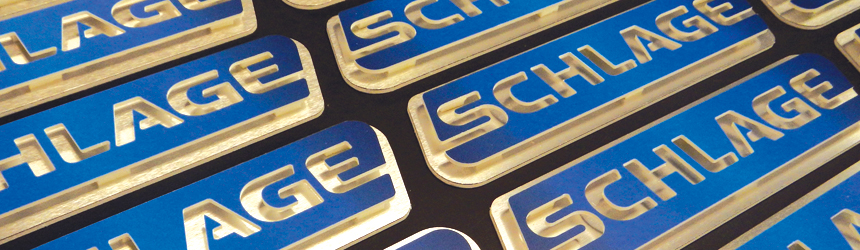
Above: Sign Works of Bensenville, IL, used its Canon Solutions America Oce Arizona 550 XT flatbed printer, Esko Kongsberg i-XL 24, and AXYZ router to create 200 POP pieces for a new Schlage display.

Managing a Fleet
Established in 1976 in Bensenville, IL, Sign Works started with two employees in a 2,000 square foot work space. The company originally offered screenprinted t-shirts and signs printed on a Showcard Machine Co. letterpress with wooden type.

With 19 employees, Sign Works now operates in a 25,000 square foot facility as a complete graphic house. The company offers R2R and flatbed digital printing, CNC router cutting, laser cutting, and screenprinting while shipping across the U.S to offer custom signage and graphics for all industries.

“We are basically a wholesale shop for other sign companies and printers,” says Greg Janowiak, president, Signs Works. Janowiak started the company with his wife and now produces exhibit signage, POP displays, vehicle graphics, wallpaper, and signage for the entertainment industry.

According to Janowiak, Sign Works has no salesforce and obtains all of its work from repeat customers and referrals. The company is recognized for its ability to produce distinctive graphics for all types of environments.

The PSP uses a fleet of digital print technology to satisfy customer demands including two HP, Inc. printers—HP Designjet L26500 and HP Designjet T2500. Both presses have a 60-inch maximum print width and six colors. The HP Designjet L26500 utilizes HP latex printing technology for light boxes, POP posters, temporary textiles, vehicle graphics, and wallcoverings.

Sign Works’ lineup also includes Agfa Graphics’ Anapurna H3200i LED and an Epson SureColor. The Anapurna H3200i is a high-speed hybrid UV LED curable inkjet system with a print width of 3.2 meters.

“Before we purchase any printer, we send the files and materials we use to the manufacturers we choose and have them print samples from our files and then check for color and quality,” explains Janowiak. Using this method, Sign Works previews its usual orders on potential presses to find the most efficient technology for the shop.

Canon Inspired
Sign Works also uses Canon Solutions America Océ Arizona flatbeds and a R2R printer. A year ago, it purchased the Océ Arizona 6170 XTS UV flatbed press with six colors plus white. An Océ Arizona 550 XT with a maximum print width of 96×120 inches is also employed. Sign Works purchased it three years ago.

Like any new machine, Janowiak says there were several challenges for implementing the Océ Arizona flatbed printers. “There is a learning curve that’s mostly trial and error. We are always testing new materials and are never afraid to take on new challenges,” he offers.

Using the Océ Arizona presses, Sign Works prints acrylic, dibond, foamboard, glass, magnetics, polycarbonate, PVC, wood, and other flat substrates. About 40 percent of the work is completed on the Océ Arizona flatbed printers.

The shop’s most recent printer, the Canon Océ Colorado 1640, is a 64-inch roll-to-roll device. It uses UVgel technology—UV-curable ink that instantly gels on contact with media for precise dot placement and area control.

Recently, Sign Works switched all of its machines to Onyx Graphics, Inc.’s new ONYX Thrive, a scalable print production solution based on Adobe PDF Print Engine technology.

For finishing, the shop uses an Esko Kongsberg i-XL 24, purchased five years ago, and an AXYZ International router.

Designed For POP
In 2016, repeat customer Premier Fulfillment & Distribution approached Sign Works for a POP display job. The customer is a distribution company in Mundelein, IL that prides itself in reliability, flexibility, and quick turnaround times.

Premier Fulfillment & Distribution requested 200 two-part headers for an existing POP display of locksets for its client, Schlage. The Schlage POP display was redesigned to present a new look.

“The new Schlage display replaced an older flat header piece and was designed to give the POP display more dimension compared to the flat piece they were currently using,” says Janowiak. Premier Fulfillment & Distribution needed the 200 POP display headers completed in two weeks.

The Schlage display included a top and bottom panel put together with half-inch foam pads. The bottom panel was created with one-eighth-of-an-inch gray laminated PVC with brushed silver Chemetal. Chemetal is a collection of over 200 decorative high-pressure metallic laminate finishes and metal laminate designs.

The display’s top panel was directly printed with the Océ Arizona 550 XT and cut with the Kongsberg i-XL 24. Sign Works also used an ONYX RIP and an AXYZ router. The AXYZ CNC router system handles a maximum width of 128 inches. Its primary applications include exhibition stands, foam packaging, plastic fabrications, POP, signmaking, and woodworking. “We use certain machines for speed and ease of production,” offers Janowiak.

From job submittal to installation, Sign Works completed 200 POP display headers in two weeks. “We are known for fast service. Being a smaller shop gives us a faster turnaround than larger,” offers Janowiak.

Digital Delivers
With the ability to handle output on a variety of materials, digital flatbeds are used for a variety of applications including POP displays. PSPs like Sign Works take advantage of new and popular digital technology to keep up with trends and satisfy customers.

Nov2017, Digital Output

Perfecting Packaging

By Olivia Cahoon

Printing on corrugated board is a growing interest for print service providers (PSPs) entering package printing. Currently, there are two types of methods for corrugated printing with digital technology—pre-printing (see sidebar) and direct printing. In this article, we discuss direct printing onto corrugated board.

Direct printing with digital flatbed devices is commonly used for prototype creation. Flatbed vendors address challenges for direct printing onto corrugated board with load/unload mechanisms, color gamut, image quality, and material hold down to entice PSPs to utilize their newest digital technologies over analog.

Financially Favorable
Digital printing on corrugated board entices PSPs to leave behind traditional analog systems for a number of reasons including short-run capabilities, faster turnaround times, and expanded offerings. Wthout the need to change plates for file change digital quickens the entire order process.

Avoiding makeready allows print providers to go straight into production, increasing the ability for display, packaging, and temporary manufacturers to create prototypes and respond to clients’ demands. Patrick Donigain, specialist and marketing senior, Canon Solutions America, believes that efficient production of variable data and image packaging offers new short-run opportunities that can be highly lucrative.

Transitioning to digital printing for corrugated board comes down to return on investment (ROI). “Digitally printed board is more economical—at certain run lengths—then running the same job on a corrugated press,” says Larry D’Amico, direct of sales, Durst Image Technology US, LLC. The cost of offset or flexographic plates that require press makeready time compared to digital alternatives can be financially favorable for a short-run job.

According to Michael Maxwell, senior manager, Mimaki USA, Inc., the volume of corrugated boards printed in an analog environment can exceed the benefits of digital, however, small runs and prototyping are better served through a digital process. “By assessing the cost-effective quantities for digital versus standard processes, print providers can serve customers in both areas for short and long runs,” he advises. In addition, improvements in printing processes like LED curing make it possible to adopt digital without concerns regarding heat.

Concerns for Corrugated
While digital printing to corrugated board offers a higher ROI with fast turnaround times, it is still a developing technology. However, flatbed device manufacturers offer solutions to address challenges.

Load/Unload Mechanisms
Corrugated board doesn’t lay flat because it is a naturally inconsistent surface, which is sensitive to heat. This is a concern for equipment with printhead technology millimeters from the substrate and must be overcome during loading, imaging, and unloading. Load/unload mechanisms like suction cups, skis, and vacuums offer a solution to secure the corrugated material.

Becky McConnell, product marketing manager, graphic systems division, Fujifilm North America Corporation, believes that because board distortion can happen due to the nature of manufacturing, it’s critical to have a material handling system that not only manages to move sheets from one point to another, but also doesn’t damage the board or flutes in the process.

Fujifilm’s Inca Onset X Series of printers features a dual or single robotic handling system for handling corrugated boards and is fitted with an appropriate specialized head effector. “The head effector features suction cups that are distributed equally over vacuum bars on the underside of each head effector, and they enable substrates to be loaded and unloaded reliably,” says McConnell.

The Inca Onset X Series can be purchased or upgraded to speeds from 2,000 to over 10,000 square feet per hour (sf/h). Fujifilm also offers the Acuity F flatbed with a High Flow Vacuum to hold corrugated boards that produces just under 1,700 sf/h.

Durst printing systems offer a combination of tools to lay corrugated board flat. “Our skis are pneumatically controlled and digitally positioned. We offer three different levels of ski material depending on the flute thickness,” shares D’Amico. Its systems also include 12 individual vacuum pumps to provide power and control while eliminating the need for taping. The Durst Delta SPC 130 prints on corrugated up to 100,000 sf/h.

While options for load/unload mechanisms exist in the corrugated market, some prefer a hand-feed approach, better suited for lower volumes. “Feeding by hand, our changeover from job to job is a few seconds. Our customers prefer to not have the additional setup time that is required with most feeders and stacking mechanisms,” explains Mark Swanzy, COO, Xanté Corporation.

Oversized tables with multiple origin points aid operators that manually load/unload corrugated board. Maxwell says Mimaki’s JFX200-2531 offers an oversized table with multiple origin points to improve the time between prints by enabling operators to prepare a job in one print zone while a different job is printing in the other print zone. Mimaki’s printer speeds for corrugated range from 250 to 600 sf/h.

Color Gamut
In the packaging segment, it’s integral to achieve a wide color gamut with low ink consumption. ICC compliant color profiles optimize color gamut. Eric Carlomusto, inkjet demonstration manager, Agfa Graphics, says users can emulate Pantone libraries the majority of the time. Agfa’s Jeti Tauro prints corrugated board at speeds of 1,485 to 2,960 sf/h. The UV ink creases printed media without cracking. It’s capable of 200 percent stretch—flexible for most corrugated applications.

Extra ink channels are also used for better print quality at high speeds. For example, Donigain says white ink for specialty applications allow presses to achieve a large color gamut on standard corrugated materials. Ink channels that support light cyan and light magenta also allow for smooth print quality.

“White ink capabilities are important for vibrant colors or brand color matching,” explains Mark Schlimme, direct of marketing, Screen Americas. Corrugated board is absorbent, which can affect color and the show-through of the fluted surface. Flood white or white layering can be used as a base or to enhance the final color. However, he cautions that white ink is expensive, even compared to a paper-lined board.

Image Quality
Image quality and resolution is higher on white coated board than uncoated boards. “Uncoated brown corrugated board has a much smaller gamut because of the white point and ink absorption,” says Ken Parsley, product manager, Mutoh America, Inc. The Mutoh ValueJet 1638UH has a top speed of 220 sf/h and a media retaining system standard to assist with difficult media.

High-quality litho-like print quality requires a white top, kemi-board, or kraft liner board. Schlimme recommends only printing directly to kraft or virgin paper surfaces for lower quality, lower resolution applications. Additionally, unlined or uncoated kraft boards don’t support high-resolution printing, fine lines, or small text.

Smaller text can be problematic on flexographic presses with ink bleed, plugging, and a lower LPI screen. “Our print quality is up to 1,600×1,600 dpi, which is printed with a 1.2 picoliter dot and allows for detailed graphics and small point text,” says Swanzy. Xanté’s press speeds are dependent on sheet size—24×28-inch sheets print up to 3,328 sf/h while 48×96-inch sheets print at up to 7,872 sf/h.

The desired image quality also affects the press’ print speeds. Schlimme explains, “while Screen’s Truepress Jet W3200UV HS can print excellent process color image quality to kemi-board at speeds over 1000 sf/h, it’s realistic to expect that the physical handling requirements will limit an operator to something between 800 and 1,000 sf/h.”

According to Donigain, six to 42 picoliter droplets and active pixel placement compensation assures image sharpness, density, and uniformity around the entire flatbed.

Material Hold Down
Flatbed presses with industrial strength and zone vacuum beds hold boards in place for printing. “If the corrugated boards are exposed to variable humidity or changing temperature, however, the board can pop and buckle,” explains Schlimme. He suggests a higher quality board to eliminate the need for tape down.

Other solutions to hold down corrugated boards include vacuums. Donigain says for short-run corrugated packaging and temporary point of purchase (POP) displays, vacuum configurations allow for dynamic, versatile large format printing applications. The Canon’s Océ Arizona 6100 Series features a High Flow Vacuum system that handles warped corrugated boards and plywood sheets without tape or physical means to hold boards down. Canon’s press speeds for corrugated boards range from 200 to 1,000 sf/h.

While vacuum belts are used to help warped boards lay flat and feed smoothly through the printing path, Swanzy warns that corrugated warp can be much more problematic with digital printers compared to flexographic presses. Pinch rollers and vacuum belts should use low pressure to avoid crushing boards. He explains, “corrugated crush can affect the structural integrity and is a concern on most corrugated flexographic presses, which can be difficult to control.”

According to Roger Walkley, product manager, Inca Digital, mechanical systems that push boards down risk injury to the machine as well. “Without sufficient vacuum the board can pop up, damaging an unguarded system,” he says. Flatter boards present fewer problems for mechanical intervention. The Inca Onset X3 prints up to 9,688 sf/h while the Spyder X prints 1,615 sf/h.

Other Concerns
Package printing includes prototypes, packages, and POP standees. It also correlates with food-related applications, which hold specific requirements for ink. According to D’Amico, the application, smell, or chemical composition of digital ink may make it unusable for food applications. Aqueous-based inks eliminate the smell associated with UV inks. “We are looking at low migration inks suitable for digitally printed boxes that come in close contact to food,” he adds.

Print providers that intend to offer packaging for food products must ensure the ink doesn’t contain UV reactive chemistries. To find ink formulations, print providers can use material safety data sheets provided by inkjet press manufacturers.

Due to various paper layers and moisture in the material, printing to corrugated board is a heat sensitive process. LED curing systems reduce the heat to stabilize the shape and dimensions of the material while conventional systems omit heat. “swissQprint offers a new LED curing system that reduces the heat dramatically,” says Carmen Eicher, VP of marketing, swissQprint.

swissQprint printers are intended for small outputs in the corrugated industry. Despite being capable of 2,217 sf/h, Eicher says the performance in the corrugated sector realistically starts at 1,100 sf/h in production mode to produce adequate quality. In quality mode for high-quality results, the output is about 600 sf/h.

The Future of Corrugated
While digital flatbed devices offer a number of benefits to print providers, traditional analog still tends to be a more favorable option. Parsley explains that while high-end machines have the production capability packagers need; there is room for improvement in ink for image quality on uncoated stock.

Donigain believes digital’s print quality surpasses analog quality for low- and mid-volume production, but achieving high levels of quality at analog print speeds is difficult and represents an area for improvement. However, speed is expected to improve as single-pass technology advances.

D’Amico also sees one-pass technology entering the market with speeds ten times or more what the scanning systems produce. Once these products become widely adopted, he believes they will make a significant impact on the corrugated market.

Preparation and Trends
Before purchasing equipment, print providers should fully understand the work they are producing to obtain the technology that best fits those applications. This includes understanding the entire workflow—how the files are received and how the boards are finished. “It is critical that all phases of producing the work must be understood before you consider a digital printer,” says D’Amico.

Schlimme agrees and says that finishing and delivery of printed boards is critical. “Wrapping and packing 1,500 brochures or sell sheets in a box is a very different task than staging even 25 sets of POP standees or ready-for-retail pallet wraps,” he explains. In fact, poor handling during wrapping, packing, and shipment can ruin print jobs if large materials are mishandled or improperly stacked.

Ready-for-retail packaging is becoming more relevant as big box retailers seek more localized and regionalized products. This creates a need for shorter runs. “It’s becoming increasingly important to offer services and solutions across the full spectrum of a product’s branding,” suggests Schlimme. Print providers with clients who already request small format folding carton packaging or labels can offer clients ready-for-retail packaging or in-store standees and displays.

But retail packaging isn’t the only market taking advantage of short-run printing. Eicher points out that designers and marketing agencies prefer seeing and touching mock-up samples rather than 3D CAD simulations, allowing corrugated to enter industries in need of prototypes. Because producing prototypes with analog can be expensive and time consuming, digital prototyping is a lucrative business for print providers.

Steady Demands
The use of corrugated board in digital print continues to grow as customers demand smaller runs and personalization for popular corrugated applications like packaging, POP displays, and prototypes. Before digital technology can make major strides in the packaging segment, challenges regarding printing to corrugated board like color gamut and image quality must be addressed.

Oct2017, Digital Output

Coming In On The Ground Level

By Melissa Donovan

The display and point of purchase (POP) space is always looking for the next big thing to promote a product or service and stand out from the crowd. Floor graphics are one way to do this. Digitally printed floor graphic media is designed to withstand heavy foot traffic while attractively catching the eye of the passerby.

Most advertising campaigns that utilize floor graphics require a media product that is durable, conveys a positive visual aesthetic, and features slip resistance. Despite these qualities, the graphic is usually only in service for a short period of time. There is a juxtaposition between quality and longevity. Print service providers (PSPs) look to vendors to offer something that is economical yet satisfies these needs.

Looking Down
Floor graphics are ideal for short-term display and POP. Many retail-based projects or those found in trade shows are intended to be in place for a limited amount of time. Taking an advantage of an underutilized space—the floor—is an effective marketing tactic in these environments.

“In retail settings, there is a lot of wasted space if someone is not taking advantage of floor advertising,” explains E. Tyler Reich, director of product development, Que Media Inc. Based on his experience, an increase in as much as 50 percent in additional advertising space occurs by adding floor graphics.

“Retail environments are all about real estate, advertising real estate that is, and floor graphics enable a retailer to take full advantage of every square inch of that valuable space. The ability to surround a consumer with a particular branding message is sought after by larger brands,” adds Craig Campbell, market manager, graphic innovations, Orafol Americas.

These environments often lack free wall space and floor graphics are the best option. “Grocery stores are a perfect example. All the food is on the shelves, so the only available advertising space is the floor. These graphics stand out to the consumer as they walk down the aisle,” suggests Alan Dworman, president, Catalina Graphic Films Inc.

“Floor graphics are ideal in the POP space because your ‘medium’ is already in place, just like with your booth display, floor space literally becomes a free marketing platform. Floor graphics sharply focus the consumer’s attention, making any content under their feet instantly meaningful and relevant,” shares Josh Cormany, digital media division manager, Gans Ink & Supply.

Brian Biegel, marketing communications specialist, D&K, agrees that floors are a natural place for graphics, since they offer a large blank canvas for marketing messages of all types. In addition, they aren’t jockeying against as much clutter.

For example, store shelving can be crowded. “Several brands compete not only for shelf space, but also customer mindshare. Floor graphics are not used as commonly as other POP advertising, however this makes them ideal because it allows brands to showcase their products in a larger format,” points out Matt Buckley, business development manager, wide format market, GPA, Specialty Substrate Solutions.

A floor graphic promotes right in front—or underneath—a product, or better yet acts as a directional tool. “Imagine a floor graphic at the entrance of a grocery store that advertises a product, and details its location in the store; the graphic reminds the customer that they need it, or suggests they need it. It lets the customer know where it is, and a complementary product can be advertised with it,” recommends Dennis Brunnett, technical service specialist, product branding business team, FLEXcon.

“This surface is only used to walk on, so putting arrows to direct how to get somewhere or advertise products on an aisle are great ways to utilize space and advertise,” admits Heather McCusker, wide format product line manager, Agfa Graphics. “And now with many people looking down at their phones, floor graphics are finding a larger audience. It’s the last advertising surface to be conquered.”

Never mind looking at phones, Micah Causey, VP, FloorSignage, LLC, points out the fact that people look where they are walking. “We look ahead to navigate so when a floor graphic is in the pedestrian path, it is seen and makes an impression. Floor graphics are eye catching because they are within the peripheral vision.”

Base Features
Features PSPs should consider when choosing a floor graphic material for short-term display and POP include safety, installation and removal challenges, and durability. Outside factors like the intended floor surface and cleaning supplies also play a role in the decision.

Despite a short lifespan, safety and durability are of the utmost importance. “A low slip potential rating for the surface of the graphic is ideal as well as a good adhesive where foot traffic will not cause it to lift,” notes Nate Goodman, product manager, Drytac.

“If a laminate or media is not approved for anti-slip, customers could easily slip and fall, leaving the business owner liable,” advises Cory Jones, associate product manager, wide format, GBC and SEAL.

René Bourgeois, key account manager, ASLAN, Schwarz GmbH & Co. KG, agrees that it is essential a floor graphic media carry an anti-slip rating.

PSPs need to ask specific questions when researching a material that provides a safe walking surface for the life of the graphic in the space it is to be placed, according to Jeffrey Stadelman, marketing manager, Mactac Distributor Products. Does this media meet the current building codes for a safe walking surface? What adhesion level is required to insure the graphic will stay down on the intended surface for the intended life of the graphic?

When it comes to installation and removal and everything in between, “features to look for would include easy to apply adhesive with clean removal and a durable base film that resists punctures, tears, and chemicals, allowing it to be used in areas of high traffic and regular cleaning,” shares Timothy Schoenbeck, business development – wide format, Kernow North America.

“Graphic providers should heavily consider installation as this is the biggest expense in the process, specifically the media should be cost effective, easy to install, and durable,” explains Jason Bartusick, product development/strategic planning, Media One Digital Imaging Solutions, LLC.

High-traffic concerns directly affect the graphic’s durability. “PSPs should know how heavy the foot traffic is in the area where the graphic will be located. For example, will the graphics be near an entry door area that may collect more dirt, moisture, and debris than a floor graphic that is inside the store in an aisle?” asks Molly Waters, senior technical specialist, Avery Dennison Graphics Solutions.

Besides the material, factors like the floor surface and how it is cleaned before install and during placement are critical considerations. “The floor surface, cleanliness of the area, and cleaning methods used at the site also play a key role in determining which materials work best,” suggests Marcel Medved, business development director, Continental Grafix USA, Inc.

“Floor graphic materials must have sufficient opacity and adhesion to multiple types of floor surfaces—they need to continue to adhere until the graphics manufacturer or brand owner selectively removes them,” adds Tammi Johnson, business development manager, 3M Commercial Solutions.

Quality vs. Cost
Media vendors must justify offering a durable, visually appealing product despite the premise it will only be used for short-term POP and display. Cost takes into account the limited amount of time the graphics are in place in addition to the aforementioned features.

“Obviously square foot cost is an important factor when quoting a job, however pedestrian safety must always be the number one consideration when creating floor graphics. Saving a few bucks on the square foot cost to get the job produces an inferior graphic that does not meet current building code requirements,” explains Stadelman.

“There is really no need to cut quality when shopping for a short-term product. If you know your substrates and have a good handle on the different base materials, it is fairly easy to find a coater producing a great product at a competitive price,” agrees Reich.

To combat higher prices, choosing a multi-application film is a good idea, according to Johnson. This allows PSPs to carry less types of print media in their inventory.

Another option, reuse. “The high-quality, more durable floor products can be reused. For example, one chain store can run a promotion using a short-term floor graphic, roll it up, and ship it to the new store. The product can also be rolled and stored for use at another period of time,” suggests Kylie Schleicher, marketing manager, Ultraflex Systems, Inc.

Larry Delesio, business development manager, wide format materials, DAF Products Inc., outlines that no matter the cost spent on the media, the PSP will reap the rewards. “Retail and commercial space is sold or rented by the square foot. Therefore, utilizing floor space as advertising that is normally allocated for foot traffic just makes sense since you are paying for it anyway. The cost to produce a single-step floor graphic option is under $1 per square foot but can be sold from $6 to $10 per square foot.”

Taking it a Step Further
It is important to note that there are two floor graphic solutions. Media that does not require an overlaminate is referred to as a one-step process. A system that includes a base material and a laminate is referred to as a two-step solution.

One Step
Many vendors argue that for short-term POP, the one-step solution is the most effective option in terms of justifying cost versus durability. “Anti-slip floor graphic films that need not be laminated keep costs low and are ideal for short-term campaigns,” adds Bourgeois.

“We understand the difficulty in choosing to spend more on quality material for short-term applications. Media that doesn’t require an overlaminate or heat assist during installation means faster production time and faster installation and removal, all of which saves money,” admits Causey.

According to Alison Zepp, VP of marketing and strategy, Jessup Manufacturing, materials without overlamination still maintain repositionability, ease of application and removability, and slip resistance. Cost per roll extends further when a high level of compatibility is an option—media that applies well to a variety of surfaces including carpet, tiles, wood, metal, painted surfaces, PVC, and untreated stone.

“When it comes to choosing a short-term slip resistant floor graphic material, it will always be quicker and easier to use a material that does not require lamination,” suggests Cormany.

Two Step
A combination of a base material and overlaminate is often more expensive than a one-step floor graphic process. However, PSPs should consider this option for its durability.

“Although quality floor graphics can be expensive, customers do have options for creating a finished graphic perfectly suited for its use and within their budget. The overlaminate is the most costly part of a floor graphic, but is also the most important since it protects the image and provides slip resistance,” shares Buckley.

To get the most out of your material, Waters suggests using a calendered vinyl with a removable adhesive for general purpose smooth floors. For low pile carpet or smooth ceramic tiles, a calendered vinyl with permanent adhesive is ideal.

“PSPs should look to lower the total cost of the floor graphic by using a less expensive adhesive—especially when the graphic will be short term. It’s important not to skimp on safety and instead find adhesives and/or media to pair with the overlaminate that are often less expensive to decrease the overall cost per square foot,” advises Jones.

“The overlaminate is the key to floor graphics. Laminates can run from $1 per square foot down to $0.30 per square foot depending on thickness and finish,” explains McCusker.

Selling Solutions
With a recent rebranding effort underway, Sole Images looks to floor graphics as a marketing opportunity businesses can’t miss out on. Bruce Weber, partner, Sole Images, has 40 years of advertising knowledge under his belt and credits this as part of what’s helped him recognize that the sale of solutions and not products is what makes him and his customers successful.

Based in Scottsdale, AZ, a staff of six at Sole Images not only offers floor graphics but promotional items from key chains and tins to hats, tote bags, and t-shirts. “Our focus is on new opportunities—new avenues in business and marketing. Floor graphics is a great example of this. It’s utilizing an otherwise empty space,” explains Weber.

Sole Images targets very specific verticals for much of its floor graphics work. For example the civic market, reaching out to urban planners, city municipalities, and even school campuses. These end users aren’t necessarily aware of the potential of floor graphics and Sole Images must educate them. To do this, Weber and his team provide samples, usually with FloorSignage’s AlumiGraphics product.

Weber has known about FloorSignage’s AlumiGraphics for the last eight years. He says the foil-based media is ideal for a lot of the work Sole Images does because the product “vacuums” itself to the intended surface and adheres even more over time, appearing as though the image was painted on. In addition, it is fairly easy to remove. “Install and removal is important, even more than the actual physical media,” adds Weber.

It’s an educational challenge, according to Weber, to introduce the AlumiGraphics product—or any floor graphic media—to potential customers. “Building a business based on creativity and new opportunities in a world where people can’t conceptualize is a test,” admits Weber.

But Sole Images is up to the task. With the recent rebranding and a goal to double its workload in the next 12 months, the company is poised to succeed.

Importance of Removability
Established in 1971, Firehouse Image Center began as a 10,000 square foot full-service photo lab with a staff of 12. Today it considers itself a full-service digital print provider, employing 72 in a 40,000 square foot location.

Based in Indianapolis, IN, the PSP started offering floor graphics ten years ago. Initially, these type of jobs consisted of short-term photographic c-prints with low-tack adhesives and laminate. Now it works with General Formulation’s Concept 210 Traffic Graffic with Concept 109 laminate, which it sources from GPA.

“It’s excellent quality and economically priced, which allows us to pass on savings to our customers,” explains Trai Majors, VP of purchasing US/EU, Firehouse. Concept 210 Traffic Graffic also fulfills a lot of the requirements the Firehouse team looks for in a floor graphic material, including removability with no adverse side effects on the flooring and ease of install.

Many of the short-term floor graphics Firehouse produces are for trade show exhibitions and retail environments. Long-term floor graphics are requested by schools and businesses where their logos or graphics stay the same for an extended period of time.

For Majors, the biggest challenge with floor graphics is the install process. “High-quality installers need to improvise in the field in order to meet the demands of the sometimes quick install requirements,” he shares.

Newbie to Expert
Marco Soto, owner, Guardian Printing, began his business in 2011. Six years later he has six full-time employees and transformed the once copy center into a full-blown wide format shop. The PSP is based in La Habra, CA and offers its services throughout Orange County.

Starting to offer floor graphics in 2015, today it is considered about 40 percent of its work. Most of that 40 percent is considered short-term requests for trade events and promotional companies where the graphic will be up for a weekend and then quickly taken down.

Media choice is dependent on what its vendor, Gans, recommends. “We only use media that have been qualified by Gans. It does a phenomenal job at recommending the right materials every time. I was a complete newbie and it helped me with every application I could throw, without its help I would not be in the wide format arena,” admits Soto.

At the beginning of his floor graphics journey, Soto experienced issues lowering cost to be competitive against some of the bigger PSPs in the area. “We found some very unique and profitable materials from our guys at Gans and everything fell into place,” he shares. Soon work was rolling in and repeat orders were the norm.

Trends in floor graphics align with Soto’s top feature requests. He says more one-step solutions are coming to market, which is something he prefers to use in short-term applications. Also, he looks for an excellent removable adhesive and a nice grip texture that is UL slip resistant.

Bottoms Up
Found in what is a generally underutilized space, PSPs and their end customers should consider floor graphics for short-term marketing messages. Despite being used for a limited period of time, the media must offer durability, safety, and visual quality. It is a representation of the brand and should convey positivity while in place.

Oct2017, Digital Output

Full-Force Production

By Melissa Donovan

Savvy print providers that recognize the potential of digitally printed textiles early on are poised to benefit. There is increased demand for customized fabric-based products in a number of industries—trade show, retail, apparel, décor, and hospitality. With such an array of options, requests are endless and companies must be equipped with the right tools to sustain an on demand production process.

Multiple Divisions
Meno Enterprises LLC celebrates over ten years in business. It opened in 2005 with its core offering textile printing, specifically digital dye-sublimation (dye-sub). In addition, the company provides cut and sew manufacturing, customization, embroidery, fulfillment, and material sourcing. The first iteration of Meno Enterprises serviced retail marketing by manufacturing signage, banners, and point of sale (POS) displays.

With a particularly large customer base in the bedding industry, the company created its Retail Mattress Solutions (RMS) division in 2012 to supply point of purchase marketing materials. Continued growth in the popularity of digitally printed fabrics led to the addition of two other divisions in 2013. Planet Trade Show and Sign caters to trade show and graphic signage and Catalyst Fabric Solutions markets vertically manufactured products to the on demand industry as well as traditional retail and wholesale models.

Collectively known as the Meno Enterprises Group, its main headquarters is in Ball Ground, GA. The 25,000 square foot facility is home to RMS and Planet Trade Show and Sign. In 2016, Catalyst Fabric Solutions incorporated as a FL company and moved to its current location in Marianna, FL with over 265,000 square feet of manufacturing space.

Poised for Production
The Meno Enterprises Group as a whole prints a daily capacity of 20,000 linear yards and a weekly capacity of 116,000 linear yards. Of that, it transfers 15,000 linear yards/pieces per day and 105,000 linear yards/pieces per week. These prints are made up into what Meno Enterprises Group classifies as small, midsize, and large and complex items.

None of this would be possible without digital. In all of its divisions, Meno Enterprises Group relies on large format printers from DGI, utilizing equipment up to 74 inches in width since 2005 and adding grand format in 2011. It runs the HS FT, HS FT II, FT-3204X, and FT-1908 models across its production facilities, with ten DGI printers currently under its ownership.

“I was attracted to DGI because of the printers speed and high-volume production capability. My goal was to increase production capacity, improve production times, and perfect print quality. Since becoming a DGI shop, we have seen dramatic improvement in all areas,” shares Chuck Smith, CEO, Meno Enterprises Group.

The printers run with ink from Kiian Digital or Sensient Imaging Technologies. Both offer high density, which results in a large color gamut. According to Smith, the larger color gamut makes it easier to hit difficult, vibrant colors like bright green.

Vibrant Booth Displays
Meno Enterprises Group’s Planet Trade Show and Sign division recently completed trade show graphics for repeat client Top Value Fabrics. In its third year of collaboration, Planet Trade Show and Sign looked to create output with a vibrant color palette while maintaining quality control.

The graphics, for Top Value Fabrics’ booth display at the International Sign Association’s (ISA) ISA Sign Expo held in Spring 2017 consisted of 1,394 square feet of printed material. Coldenhove Papier Jetcol HTR3500 126-inch transfer paper was printed on a DGI FT-3204X printer. The graphics were then transferred onto Top Value Fabrics’ Supernova backlit fabric.

From job submittal to install, the entire project took three to four weeks. Challenges associated included achieving the correct saturation levels for backlit graphics. The DGI printer and Sensient ink produced the client’s desired outcome.

Investing in Growth
Meno Enterprises Group’s investment in a stable of DGI dye-sub printers enabled it to grow three-fold. Because of this, at press time, it purchased an additional ten DGI HS FT devices, with the plan for them to be delivered just in time for the company’s peak on demand season.

Oct2017, Digital Output

Getting Sticky With It

By Cassandra Balentine

Digital print enables personalization as well economical short runs. One application trending in digital environments is labels. The ability to offer cost-effective runs in the hundreds presents value to start ups as well as big brands looking to experiment with versioning.

While digital penetration is still fairly low when it comes to overall label printing, it is a growing market.

Print service providers (PSPs) looking to add a new revenue stream may want to consider investing in printing and finishing equipment that supports digital label production. Some wide format printers and printer/cutters are ideal for this application, as well as stickers and decals. Dedicated digital label systems are another option.

Here we profile three very different print providers. Each offers digital label production in some capacity.

Branching Out
Our first example illustrates the expanded capabilities a wide format printer/cutter presents to a small three-person run print shop. Situated in Costa Mesa, CA, Inkgenda is a PSP passionate about the industry it serves. Jim Gray, partner, Inkgenda, evolved from professional skateboarder to business owner. His print background stems from his days as the owner of Acme Skateboards, where he was introduced to screenprinting.

The road to Inkgenda began when Gray decided to create decals and stickers for the skateboard brand in house. The business as it exists today started in 2009, and primarily consists of screenprinting stickers for well-known skate and surf brands. It’s Gray’s background and knowledge of the industry that keeps the shop’s clients loyal and happy. “We have a broad base of customers. Our model is different in that we don’t have salespeople. I was a professional skateboarder and have gotten to know many in that industry. What drifts outside of these types of clients is from referrals,” explains Gray.

While a majority of the shop’s business is produced with screenprinting methods, Inkgenda decided to invest in digital print technology about three years ago. This decision was based on demand from customers asking for different types of work as well as lower volume sticker runs. A wide format printer would meet these needs. When it was time to shop for a machine, Gray was referred to Roland DGA Corporation by a fellow skateboarder that worked for the printer manufacturer. Shortly after, a Roland VersaCAMM printer/cutter was installed.

Since the addition of its digital wide format printer, the PSP expanded its services with lower runs of stickers, and the addition of new applications like labels, decals, and wide format output like banners, posters, and point of purchase displays. The company has also digitally print and cut labels for water bottles, beer bottles, and other containers.

The Roland VersaCAMM runs Roland Eco-Sol MAX inks and Inkgenda favors a range of media, including products from 3M Commercial Solutions, FLEXcon, and General Formulations. In addition, it employs a standalone Summa America LLC cutter.

Much of the work Inkgenda completes is still better suited for traditional analog processing, but when the volume makes it a close call, Gray says the decision to use digital or screenprinting often comes down to color. “If it’s one or two colors, screenprinting is typically more efficient,” he offers. He points out that for jobs with six or eight colors, digital makes more sense.

The company follows the general rule of thumb that if an order over a couple of thousand comes in at one or two colors, it’s usually screenprinted. Gray stresses that they don’t limit themselves by these guidelines. Occasionally, a job comes through the door that makes sense to utilize both printing capabilities. “If someone needs a fluorescent or metallic color that we can’t digitally reproduce, we print the effect on the screenprinter and move it to digital for cutting rather than creating a die.”

Gray estimates that about 70 percent of its work is still produced with screenprinting. Its digital capabilities make up a smaller, but rapidly growing segment of the overall business.

When the press was first installed, the team had theories about how long it would take to pay for itself. “Now it never stops printing. More projects are requested in the lower volumes and we serve more start ups asking for smaller numbers,” offers Gray.

Inkgenda’s digital print capabilities complement its traditional business. With digital wide format printing, it is able to take on different types of jobs—like labels, as well as accommodate lower runs of stickers and decals. By taking advantage of the latest technologies, in addition to its own versatility and personality, the shop experiences success without stress. “We have fun with what we have. The customer base isn’t made up of big purchase orders from random people; they are all in direct contact with us. Half of our customers can text us their orders,” he shares.

Accommodating Demand
Next, we profile a PSP that added digital label printing capabilities a few years ago to accommodate the latest demands. Strategic Print Solutions (SPS) is a print provider located out of a 12,000 square foot facility in Hiawatha, IA. Established in 1996, it operates with 19 employees.

The company got its start by offering high-quality, remanufactured toner cartridges to local technology companies. To better serve its clients, SPS expanded based on customer demand. The cartridge business eventually evolved to providing service repairs to copying machines, then selling new machines, and expanded into creating small print jobs.

Today, the company offers a range of print services, from post cards, business cards, and booklets to wide format products like posters, blueprints, and canvas printing. Recently, the company decided to add label printing. SPS serves a lot of retail customers, including grocery stores, breweries, and dairies. Adding label production to better help these clients made sense.

Casey Ealy, president, SPS, admits that while its label business is currently minimal, the service is just getting up and running and is expected to pick up rapidly. The goal is to have it be one third or more of its business by the end of 2017.

The company set out on its journey to find the right label printer about a year ago. This decision was sparked by requests by two of its existing clients. The SPS team hit the Labelexpo floor in 2016 and came across the Epson SurePress L-4033AW. They were intrigued by its ease of use, footprint, and price tag. “It seemed like a great starter machine for us,” shares Ealy.

Since its installation, the company produces runs that are typically 1,000 to 2,000 labels. It uses Epson ink and media from Mactac Distributor Products for label production.

Ealy comments that advancements in digital made it easier to invest in a label press. “The Epson SurePress L-4033AW allows us to print labels and opened the door to many new clients and revenue streams,” he adds.

More Business
Finally, we spotlight Diversified Labeling Solutions (DLS), a business-to-business supplier of high-quality, custom-printed pressure-sensitive labels that began offering digital services several years ago.

Established in 1985, DLS offers everything from blank to full-color high-definition labels produced using a variety of equipment. The company operates facilities located in five states—including Atlanta, GA; Cincinnati, OH; Dallas, TX; and Reno, NV—and is headquartered in Itasca, IL. Overall, it employs over 200 people.
The company invested in its first digital press in 2011. “We are motivated by conversations with distributors where there is a desire to work together in order to come up with a unique solution for an end user,” says James Cirigliano, director of marketing, DLS.

DLS initially settled on the INX International Ink Co. NW140 narrow web digital press for its small footprint, low amount of waste, durable inks, and the ability to print on nearly every type of material without the need for a topcoat. Two years later, the company invested in the INX NW210 inkjet UV digital narrow web press. The INX NW210 offers speeds of up to 80 feet per minute and incorporates JetINX Printhead Drive Electronics and Recirculation System.

For its label production, it runs INX ink and uses a range of media. Its go-to is a semi-gloss polypropylene material. The company also operates flexographic and offset printing equipment, as well as a butt splicers, turret rewinders, and laser die cutting services.

Since the implementation of the INX digital label presses, DLS is seeing more digital business come through the door. “We have opened up the market for smaller jobs that were costly to run on flexography,” he shares.

Cirigliano says DLS’ customer base is distributors. “Our jobs can really cover just about any market. What runs on the INX NW210 the most are warehouse rack labels and signage, or durable labels. We see a lot of marketing labels for the short runs,” he offers.

When determining whether to run a job on flexographic or digital, the primary determining factor is the size or number of labels for the job. “The breaking point is somewhere around 7,000 to 10,000 feet of material,” says Cirigliano. “Beyond that, it is more economical to run them on our flexographic equipment.”

For its digital work, typical runs are usually in the 500 to 10,000 foot range, but can be as long as 20,000 or 30,000 feet. The INX NW210 produces both labels and tags. Cirigliano estimates that about ten to 15 percent of its business is currently made up of digital jobs.

DLS plans to continue to grow its fleet of digital presses and expand into new markets. “We see more work for the digital world as it becomes more popular,” concludes Cirigliano.

Added Offerings
Digital label printing equipment comes in many forms, from dedicated, entry- to production-level systems to wide format printer/cutters. Adding digital to a traditional printing environment enables PSPs like Inkgenda and DLS to effectively handle short-run demands. For SPS, adding label printing is a new adventure made possible with advanced technology.

Each of these three examples indicates the growing interest for digital label applications and the variety of solutions available that support demand.

Oct2017, Digital Output