On Your Mark

By Digital Output Staff

Look forward to October 10 to 12, 2017 when the Specialty Graphic Imaging Association (SGIA) hosts its annual SGIA Expo. Held in New Orleans, LA at the Ernest N. Morial Convention Center, the occasion is touted by the organization as the largest printing industry event in North America. Over three days be sure to check out everything the show has to offer—from the Golden Image Gallery, winners of the Product of the Year competition, and over 40 educational sessions, to the vendors exhibiting on the expo floor.

Get Set, Go
We compiled companies displaying products and services at the show. This is only a portion of what will be at SGIA Expo. Be sure to read our September 2017 issue for information on even more exhibitors.

3A Composites USA, booth 2951, showcases Gatorfoam, which consists of polystyrene foam bonded between two layers of Luxcell, a sturdy wood fiber veneer laminate impregnated with a proprietary resin system. This unique construction makes Gatorfoam rigid yet lightweight and warp resistant. Its surface is smooth and strong, offering superior dent and scratch resistance.
3M, booth 2709, enhances the look and feel of any space with the 3M Décor Overlaminate 8600 Series. Distinct patterns, designed to safeguard underlying graphics, are printed on a base film—a flat surface for quality images—then layered with an embossed overlaminate. With matte finishes in Classic Linen, Knit, White Fir, Riverbed, and Plaster, these films are ideal for a memorable brand experience.

AGL, booth 2163, demonstrates its popular Encore SH as well as its 64I model laminators. These laminators are designed to be workhorses for small- to medium-volume markets. With AGL’s proprietary nip roll design, these laminators solve the problems associated with poor laminate adhesion and silvering. AGL also highlights its full line of media, adhesives, PSA vinyl, and overlaminating films.

AnaJet, booth 3419, celebrates a year of dramatic change. It introduced the Ricoh Ri 3000 and Ri 6000 direct to garment printers, a new line of devices that combine the best of Ricoh design, manufacturing, and support with AnaJet innovations. See these new printers deliver quick print speeds, industrial-grade reliability, and showroom-quality prints.

Canon Solutions America, booth 2525, asks what if there was a way for print providers to meet just about any type of customer application? A way to bridge customer demands with your capabilities that could take your business into new market segments for things once deemed impractical to print? Meet Canon’s large format print portfolio. With the recently launched Océ Colorado 1640 64-inch roll-to-roll printer and the Océ Arizona Series UV flatbed printers, Canon enables print providers with the right tools for seemingly any customer application, no matter how big or small.

Coldenhove Papier, booth 2009, continues to play a leading role since the advent of digital sublimation paper in 1998. It presents its Jetcol series that offers premium results for a range of sublimation print jobs. The papers are suitable for both industrial and plotter printers and available in more than 20 different distribution spots in the U.S.

Colex, booth 1209, features the new 126-inch Fotoba XLD 320 X/Y superwide roll cutter, which offers faster speeds and is capable of cutting flexible media up to 40-mil thick. An optional motorized roll feeder is available that holds rolls up to 660 lbs. The XLD320 handles the output of several printers to eliminate the bottlenecks in a finishing department and features a self-sharpening blade system.

D&K, booth 4127, encourages attendees to learn how D&K laminating and mounting equipment can help increase capabilities and profits by producing popular applications including floor, window, and wall graphics. D&K showcases its popular Double Kote digital laminating system that offers a fully automated print finishing solution with sheet feeder, two-sided laminator, and guillotine cutter capable of processing thick laminating films.

DreamScape, booth 3151, debuts Silver Fusion, a new peel and stick, thick and durable wall graphic material. Silver Fusion provides ease of repositionable installation, with a bright silver mirrored finish. It allows typical CMYK inkjet printing to create new metallic looks. Terralon Regatta is a new eco-conscious wallcovering product that contains 31 percent post-consumer recycled polyester from plastic bottles, is breathable, PVC free, and provides a user-friendly canvas-type texture.

Durst Image Technology US LLC, booth 1945, highlights Durst Advanced Digital Production Technology, which provides high productivity, sustainability, and reliability with digital inkjet printing systems. It showcases the Rho 1312 Plus. A new print mode, Smart4, boosts productivity up to 10,760 square feet per hour at the level of high-speed four-color mode.

EFI, booth 1501, displays energy-efficient LED inkjet and VUTEk FabriVU aqueous soft signage printers; high-end and high-speed hybrid roll/flatbed VUTEk inkjet technology; and VUTEk roll-to-roll printers with the best speed and resolution quality in their class. The EFI Midmarket Print Suite workflow drives display, signage, and graphics efficiencies. The newest EFI Fiery proServer on display provides fast, accurate RIPing and high-quality color management.

Fisher Textiles, booth 2201, adds six new fabrics to its 16-foot fabric line, compatible with dye-sublimation (dye-sub) and UV printing. UV printable backlit silicone edge graphics (SEG) and banner styles include GF7100 Bannyl Lite and GF 7200 Bannyl. For double-sided banners, GF 7300 DS Bannyl is opaque, crease resistant, and easy to handle and install. GF 2400 Big Floor is for short-term flooring applications. For dye-sub SEG, DD 7170 Diverse and for roll-up banner stands, DD 4141 Paradise B.O.B., featuring a black back and high level of opacity.

FloorSignage, LLC, booth 3168, the manufacturer of AlumiGraphics foil-based film used for graphics on outdoor walls and walkways, features its latest material, EZGrip Graphics. This new interior floor graphic material does not require a laminate, is easy to apply, and durable for busy retail environments.

Fujifilm, booth 1529, exhibits the Inca Spyder X, a hybrid UV wide format press, making its North American debut, designed and manufactured by Inca Digital. The 3.2-meter wide, six color plus white Spyder X is available as either a flatbed or a combination flatbed/roll-fed model for handling rigid and flexible substrates.

Gandy Digital, booth 1159, presents the Domin8tor UV flatbed printer with roll-to-roll option, which delivers wide format prints on rigid sheets or vinyl rolls. It prints with low ink consumption and prints exceptional quality regardless of speed. Capable of six color and double white combination, it produces ultra-high quality prints at 1,300 square feet per hour.

Gerber, booth 1656, shows the Gerber Edge FX production system. It creates signs, labels, decals, and other professional-quality graphics on an array of specialty Edge-ready materials. The Gerber Edge provides unique digital printing capabilities with more than 60 spot colors including several versions of opaque white, shiny medal series, and fluorescents. Gerber OMEGA 6.5 offers better design tools, easier and faster output, and more PLT informational and presentation tools.

Gfp, booth 2701, promotes its third generation 563TH-3 MAXPRO top heat laminator with more user-friendly features for production lamination, mounting, and board pre-coating. It includes operator-friendly, swing-out supply shafts for easy loading. New Gfp drop-in design rewind shafts are used for quick changeover and new inline side slitters and rewind assembly enable accurate roll-to-roll operation. Gfp 563TH-3 shafts are now all Gfp quick-grip aluminum design for quick web alignment.

Global Imaging, booth 1955, features Caldera RIP software, Aleyant tFLOW workflow automation, the PrinterEvolution online and offline collections of dye-sublimation digital textile printers, Impulsa automated sewing machines, Zünd flatbed cutters, Durst printers, Massivit large format 3D printers, and the REXframe fabric framing solution.

GTI, booth 2208, manufactures ISO 3664:2009 and ASTM D1729 compliant critical color viewing systems. It features a range of products that includes desktop viewers, floor stand models, large format viewing solutions, and soft proofing systems. Whatever the print application, GTI offers a compliant viewing system that allows work viewable in a controlled lighting environment. This helps to improve quality, productivity, and shorten review cycles.

HP Inc., booths 1029 and 1045, demonstrates innovative solutions enabling print shops to grow business in signage, decoration, and display. HP’s booth features HP Latex Print and Cut solutions—combining printing and cutting in a single workflow; HP Latex 560 and 570 Printers—designed for medium to large print service providers; HP Latex 3000 Printer series—supports high volumes and monthly duty cycles; HP Latex 1500—robust, affordable superwide format; and HP PrintOS—cloud-based applications to simplify and automate production.

Inkcups, booth 3001, debuts numerous new and improved pad printing and inkjet printing technologies. This years’ lineup includes an advanced cylindrical machine that quickly prints at unmatched resolutions, a fast high-resolution flatbed inkjet printer, and a laser engraver that consolidates the multi-step platemaking process into one.

Kernow North America, booth 1056, is a global leader in optimized high-performance coatings for print, security, engineering, and industrial substrates. The Kernow range includes synthetics, self adhesives, custom colors, printable fabrics, and metallic. New products include MetaliK Inkjet, MetaliK Cut&Print, and FloorSharK.

Kornit Digital, booth 1617, displays the Storm Duo, industrial direct to garment (DTG) solution optimized to print on light fabric; the Kornit Vulcan, mass production DTG solution; and the Kornit Allegro, direct to fabric printing solution. Whether starting a new business, adding digital equipment to existing production, or relocating sampling production, Kornit Digital has a printing solution to fit unique business needs.

Leister Technologies, booth 3356, introduces the new Hemtek ST banner welder. The stationary welder is one of the most efficient and affordable banner finishers. Capabilities include hem welds, pole pockets, and hems with rope. From now on, quickly weld promotional banners or tarpaulins from corner to corner with ease.

Lintec of America, booth 1022, offers Lintec Digital Window Graphics, which are printable optically clear and decorative films for windows and glass. It showcases VisionControlFilms (VCF), which is a family of specialty privacy films with the ability to control what is visible or hidden from view. VCF films change from clear to frosted depending upon the viewing angle. Ideal for privacy applications and attention-grabbing displays.

Mac Papers, booth 3941, demonstrates eco-solvent and dye-sublimation (dye-sub) printing equipment and showcases its extensive line of media, including Coldenhove digital dye-sub paper. The company’s wide format experts support the equipment it offers with training and technical service.

Magic, part of Dietzgen, booth 2211, exhibits comprehensive print media offerings, which include universally compatible products as well as best-in-class solutions optimized for each segment of wide format print. Magic products include canvas, photo paper, poster paper, matte paper, banner, vinyl, photorealistic paper, display film, backlit film, clear and matte film, pressure sensitive, textile, wall décor, fine art paper, and eco-friendly alternatives. Magic introduces several products including a new poly/cotton canvas, poster papers, scrim vinyl banner, wrapping paper, and polyester woven fabrics.

Magnum Magnetics, booth 2723, unveils its new latex-printable magnetic media, DigiMaxx Latex, available in standard or high energy. DigiMaxx Latex runs well on many commercial latex printers, and is certified for use on HP 300 Series latex printers. The media features a semi-gloss backcoating for easy feeding, prints fully magnetized, and is outdoor rated for one year. Magnetic products are made in the U.S.

Marabu, booth 2119, showcases several innovative digital, screen, and pad printing inks and coating systems. Engineered for ease of use and high-quality output, the StarLam 1600R is a 64-inch roll-to-roll liquid laminator that delivers a smooth, consistent coating of the ClearShield liquid laminate. Also on display, Marabu’s UltraJet digital UV-curable inks and the Tec Lighting UV coater that provides precise performance of Marashield UV liquid laminates.

Master Magnetics, Inc., booth 3751, highlights its magnetic graphics system of PrintMagnetVinyl magnetic sheeting and FlexIRON magnetic-receptive sheeting for easily and quickly changeable graphics, signs, and point of purchase displays. High Energy PrintMagnetVinyl is a new 15-mil high-energy magnetic sheeting that provides the same strength as regular 30-mil magnetic sheeting, the normal requirement for vehicle signs. Also highlighted are magnetic vehicle wrap tools, sign holding magnets, magnetic assemblies, and strip.

MCT Digital, booth 361, is a trusted leader in innovations for digital die cutters. It engineers and manufactures the new VersaTech2, a three-in-one finishing platform that delivers productivity and sensible automation for both board and fabric rolls. Add options and automation as business grows. On the show floor, see two 3.2-meter VersaTech2 cutters, one with a laser.

Media One, booth 3333, displays a range of new technical textiles from specialty stretch blockout to backlit fabrics. It also shows the new Grande H6 a 3.2-meter wide textile printer and the Papyrus Flo high-speed apparel printer.

My Press Needs, booth 1952, embosses and die cuts on its new dual-heater Crest Clamshell, featuring heaters on both the moving and non-moving platen. It also showcases its Soft Cut system, which consists of a urethane pad on a magnetic carrier mounted on a clamshell press. Soft Cut provides greater efficiency and reduced set-up time with zero makeready, while providing the same edge quality as die cutting with heat, even though cut cold.

Nazdar, booth 1545, exhibits in addition to a variety of print media and ink solutions, the EFI Pro 16H UV hybrid inkjet printer designed with a complete stimulus package of features to assure the lowest total cost of ownership, superior image quality, and access to the widest range of substrates/applications.

Nekoosa, booth 154, presents a portfolio of eye-catching print media for eco-solvent, solvent, UV inkjet, and latex wide format printers that transforms ordinary prints into extraordinary statements. Durable polyester, metalized vinyl, chalk board film, translucent backlit polyester, and ClingZ electrically charged adhesive-free signage make visual communications get noticed and create a lasting impression. Paired with RTape application tapes and pre-masks, it offers everything needed to create attention-grabbing signage and displays.

OKI Data Americas, booth 2233, runs demonstrations on a ColorPainter printer. When it comes to color vibrancy, longevity, and production speeds, OKI is a leader in sign and graphics. Renowned for industrial printheads and an efficient ink solution, ColorPainter prints withstand the elements in outdoor applications like vehicle wraps, while achieving a GREENGUARD Gold certification for indoor signage including full wallcoverings.

ORAFOL Americas, booth 233, invites attendees to watch live vehicle wrap demonstrations of ORACAL 970RA Wrapping Cast using two colors—intergalactic blue and mandarin. While in the booth, check out the new matte colors recently introduced in ORACAL Series 641 Economy Cal.

Paradigm Imaging Group, booth 2411, is a distributor of wide format solutions, including large format scanners from Colortrac; large format flatbed scanners from Kurabo and WideTek; as well as eco-solvent printers from Mutoh, PIXis, and SID Signs; and cutting plotters from Graphtec. Come see demonstrations of the latest in wide format technology, including the SmartLF Colortrac SC Xpress and SG Series, and the latest flatbed scanner from Kurabo.

Photo Tex Group Inc., booth 2820, shows its self-adhesive fabric material that holds four U.S. patents. On display is the Opaque Block-Out version of Photo Tex. Stop by the booth and register for a free sample roll.

Piedmont Plastics, booth 1745, offers a broad array of products. Rigid substrates include acrylic, polycarbonate, HIPS, fluted PP, foamboard, Falconboard, Katz bard, foam PVC, AluPoly ACM sheet, and LED display frames, while flexible materials include self-adhesive vinyl, SupraFLEX banner, overlaminates, magnetic products, window films, and wallcoverings.

Roland DGA, booth 601, conducts live vehicle wrap, sublimation, and apparel heat transfer demonstrations daily. Its showcases the newly updated VersaUV LEF series flatbed UV printers, new CAMM-1 GR series large format cutters, and advanced printer/cutters from the TrueVIS family. Booth visitors can also check out the VersaUV LEJ-640FT UV flatbed, the Texart RT-640 dye-sublimation printer, and other Roland devices.

Rollem, booth 1944, demonstrates the Insignia die cutter. The Insignia6 sheet-fed flexo-magnetic die cutter features die cutting, kiss cutting, scoring, and embossing for a range of products and substrates. This easy-to-operate machine delivers production-level die cutting on materials including pressure sensitive, plastics, PVC, Tyvek, and card stocks up to 30 pt. thickness. Sheet sizes are 20×20 inches with the ability to feed the sheet either portrait or landscape to maximize impositions. Other features include waste removal of the matrix, high-capacity stacker, or inline folding and gluing for folding carton production.

Sensient Imaging Technologies, booth 211, displays new technologies that exemplify years of experience and knowledge within digital printing. Stop by and ask about water-based SensiJet SX inks developed for printing on non- and semi-porous substrates, and a sneak peek at soon-to-launch sublimation and pigmented inks for textiles.

Splash of Color, booth 2753, showcases the NEPATA rewinding, trimming, and slitting machine. Take converting to the next level. Also featured is the Guardian calender, an affordable, easy-to-use rotary heat press for dye-sublimation paper transfer and direct to fabric applications. The Jumbo On-A-Roll Lifter is ideal for moving and loading large media rolls of media onto a grand or extra-wide printer.

SWM International, booth 4216, clarifies just what non-PVC means. The phrase non-PVC appears in the descriptions of increasing numbers of graphics media products. But what does it mean? At face value, non-PVC indicates that there is no vinyl, nor any of that polymer’s environmentally harmful chemicals, in the product. But there is more to the term than that. Visitors to SWM find out just what the term non-PVC means when applied to print media and overlaminate film.

Ultraflex Systems, Inc., booth 1517, highlights several new products including a range of fabrics available in up to 198-inch widths. Each product is displayed and samples available. Ultraflex continues to add products in response to global market demand. Join them in their commitment to progress, quality, and product development.

Vanguard Digital, booth 1967, features the VK300D 5×10-foot flatbed UV printer with the latest innovation in Kyocera printhead technology capable of printing up to 40 boards per hour. In addition to the VK300D, Vanguard offers the VR5D 4×8-foot flatbed UV printer aimed at satisfying wide format printing demands. Also on display, two- and 3.2-meter dye-sublimation printers.

Verseidag US, booth 2945, exhibits seemee Premium Backlit developed for LED light boxes and backlit applications using direct or transfer dye-sublimation print outputs. Its premium printability, tight weave, and wrinkle crease resistant yarn makes this product ideal for a number of high-end interior applications. It is available in 63-, 98-, and 126-inch widths.

Vision Engraving & Routing Systems, booth 1918, promotes its affordable, 2525 industrial grade CNC router. American made for over 34 years, the 2525’s graphically advanced software and available options allow for the creation of a variety of custom signs in house, such as ADA compliant Braille signs, dimensional letters, and print to cut.

Yupo, booth 3723, presents YUPO Octopus and YUPOJelly synthetic substrates, which feature micro-suction technology that allows the cling to be applied to any flat, smooth surface. It works on glass, PVC, and aluminum. YUPOilluminate is specially formatted for UV inkjet wide format printing processes and is ideal for window displays, point of purchase, and retail signage.

Zünd, booth 333, introduces the new Zünd LM 100W cut and seal Laser Module developed for no-fray cutting and finishing of polyester fabrics. Also featured in live demonstrations is the high-powered 3.6kW routing system with automatic tool/bit changer; a fully configured, fully automated Zünd D3 cutting system for ultimate dual-beam productivity; and a cradle feeder for tension-free advancing of rolled stretch fabrics.

Finish Line
Enjoy this year’s event! Stop by and visit Digital Output in booth 3615 to grab the latest issues of the magazine. Be sure to mark your calendars for next year, when the SGIA Expo returns to Las Vegas, NV October 18 to 20, 2018.

Oct2017, Digital Output
Let Your Banner Shine

By Elizabeth Quirk

Perhaps you are looking for an advertising display to effectively promote your retail store’s sale, or an impressive banner stand to make your trade show booth memorable at an upcoming convention. No matter the event, retractable banner stands are ideal.

Marketers and first-time exhibitors love an easy-to-use pull-up banner. Once you have the perfect stand, it’s crucial to pick the right material to print onto. Media used in retractable banner stands needs to lay flat and not curl. Some of the latest products on the market offer these features and more—this is where blockout media, specifically film and vinyl, comes into play.

Benefits for All Signage
No-curl blockout products are generally multi-purpose substrates ideal for banner stands and double-sided hanging graphics. One of the most popular applications for this type of media is hanging aisle or window displays created with dowels and inserted in pole pockets on the top and bottom of the graphic, providing a smooth, two-sided, curl-free finish.

According to Ed McCarron, national sales manager, Dietzgen Corporation, the use of film products such as polypropylene, polyester, or a combination of the two are popular because they are dimensionally stable and resist warping or curling. The blockout property is important because it prevents any light from showing through the film and dulling the image.

“Banner stand advertisements are common in environments that have bright lighting such as trade shows, car dealerships, shopping malls, or bank entrances. Blockout films are the best performer in these environments because they prevent outdoor light from penetrating the film and reducing the vibrancy of the image and advertisement,” he adds.

By preventing light from showing through the film or image, it ensures that the pole holding the banner up, or whatever else is behind the stand, is not seen. For a banner stand, this is very important. At the end of the day, a blockout material makes graphics presentable and offers a high-end appearance.

According to Cory Jones, associate product manager, wide format, GBC and SEAL, blockout polyester is the most common media for retractable banner stand applications because banners are often placed in areas such as trade shows where there is a lot of light coming in.

Jones says fabric media can also be used as an alternative to polyester when banners are frequently transported, however, more companies opt for blockout materials because their clients want a better looking graphic.

“A banner vinyl blockout may look more low end and this is where film blockout products, whether laminated or not, have a better overall print quality look,” says Angel Georgiou, senior marketing specialist, imaging supplies, large format systems, Canon Solutions America.

Shaun Jaycox, product specialist, S-One Holdings Corporation, claims that those who choose to use a blockout vinyl banner are usually looking for a cost savings.

Preventing Show Through
A few different design methods prevent show through in films. McCarron states that one is to coat a layer of grey or dark ink on the back side of the film to add overall opacity to the media.

This is a similar concept to blue back paper—an outdoor billboard paper. “Blue dye is added to the back of the sheet to add opacity and prevent show through when a new billboard advertisement is pasted over an old one,” explains McCarron.

Another method is to add a metalized film layer to the structure. A metalized film is typically a polyester film with a thin lamination of metal on one side, similar to the inside of a potato chip bag. This construction provides 100 percent opacity and light block.

Darren Speizer, VP of sales and marketing, Drytac, agrees with McCarron, saying that a dark coated layer on the back of the film is one feature that prevents show through. Another option, he continues, “is a blockout layer as part of the film.”

Some banner media used for retractable banner stands has a high opacity and uses an opaque backer to prevent show through. In other instances, materials also have a blockout liner between two pieces of material.

According to Jones, bright white point is also a feature to look for when image clarity is important or the graphic incorporates photographs. Bright white point increases image clarity and the overall look of the graphic.

“We also recommend using an overlaminate when the media doesn’t already have a protective finish incorporated to combat against scuffs. When banners are placed in high-traffic areas such as trade shows, added protection is needed—especially when the banner will be used multiple times or for longer periods. More premium media often has an overlaminate on it already for added protection,” adds Jones.

Weight and Thickness
The weight and thickness of the media plays an important role. It determines how well the banner hangs in the stand and how long it may last over time. There is a common misconception that heavier media prevents curl, but in fact it may be hard to roll and difficult to transport.

Kylie Schleicher, marketing manager, Ultraflex Systems, Inc., argues that the weight and thickness of the media is important for use in retractable banner stands because each is made with specific specifications. Banner stands can only allow materials up to a certain thickness.

Alison Booth, inside graphic specialist, Piedmont Plastics Inc., points out that many retractable banner stand manufacturers claim their products work best with a media that is around 14-mil in thickness.

“Sometimes a 15 oz. product is too thick to fit into an inexpensive banner stand so other weight and thickness options must be available, such as a 13 oz. material,” explains Schleicher.

The material needs to be thick enough to promote dimensional stability, impeding sagging or curl. At 15-mil, according to McCarron, the panel should fit into most banner stands. It’s important to consider the total construction of the panel. If the intent is to add a lamination layer, it’s crucial to add the thickness of your laminate in the calculation.

E. Tyler Reich, director of product development, Que Media Inc., agrees, saying that weight can affect the appeal of the installation, but is not related to the quality of installation.

Media thicker than 11-mil could be challenging at the customer level, says Josh Cormany, digital media division manager, Gans Ink & Supply. He encourages using a 9-mil textured satin with a gray back.

Keeping an open mind about media weight and thickness is what Larry Delesio, business development manager, wide format materials, DAF Products, suggests, “there are many types of retractable banner stand designs, no one material will work perfectly in various situations.”

Curl and Lay Flat
Vendors combat curl in retractable banner stands by using layers of different films and thicknesses. This multi-layering of materials together is referred to as composite construction, according to Delesio. It’s similar to the way plywood is made, bonding thin layers together to make one stronger and thinner material.

Booth agrees, eplaining that the same display films used in retractable banner stands can be made with polyethylene terephalate and polypropylene laminated together in two or more layers.

In Cormany’s opinion, vendors are getting better at material laying flat by making more materials out of polyester and fabric, which have fewer tendencies to curl versus materials like polypropylene and banner material. “The reason that nearly all vinyl used in a banner stand application will curl at one time or another is that vinyl is not dimensionally stable and retains memory once it’s been retracted,” he explains.

The key is to select materials that are dimensionally stable and won’t stretch or distort during printing, lamination, or once in the stand. Printing and lamination can introduce heat to the media, and depending on where the banner stand is installed, it could also be exposed to changes in temperature and humidity.

All of these conditions, according to McCarron, can impact the stability of some media types leading to curl, warping, or sagging. “Polyester is a stable, flat medium that is not affected by moderately wide changes in temperature. It’s also very durable and will not stretch or tear,” he adds.

Jaycox explains that polyester features excellent lay flat properties, so the media used should have some amount of polyester built into it to resist curling.

Latest Products
Canon Solutions America’s Océ 10DF is a 10-mil blockout display film for aqueous inkjet printing. It is water resistant and offers no-curl features, making it ideal for rollable displays. The material is available in 36- and 50-inch roll widths.

DAF Roll-up Banner Film is an 8-mil 100 percent polyester film that offers side-to-side anti-curl gray back for light blocking purposes. It is ideal for retractable banner stands and other tensioned displays. Compatible with solvent, eco-solvent, UV, and latex printers, it is available in 36- and 50-inch roll widths.

Dietzgen POSPRO+200 is a 10.5-mil film composite that includes a metalized polyester layer. It features universal print compatibility. Printable on both sides with UV-curable printers, it is designed for retractable banner stands. The metalized layer in the construction provides 100 percent light block and can be used with or without lamination. POSPRO+LX is an 8-mil, 100 percent polyester blockout film. It’s designed for latex and UV-curable printers. The polyester construction stays stable and is not affected by the heat produced in latex equipment. It features a gray back that increases the film opacity and is single-side printable.

Earth Smart Eclipse from Drytac is a polypropylene blockout banner media. Available in 54-inch widths, it is compatible with UV printers. The material can be recycled in commercial plastics recycling programs.

Gans SRUF9-GB lays flat and doesn’t require lamination. Single-side printable, it is a premium satin textured polyester film with a gray back coat to optimize blockout. Available in 36×150 and 60×150 feet, it is priced at $0.33 per square foot. It is compatible with latex, solvent, and UV ink systems. PUM11-GB is a non-curl gray back film in a matte finish, offering single-side printing. Available in 36×100 and 60×100 feet, it sells for $0.47 per square foot. The material is compatible with latex, aqueous, and UV ink systems.

GBC’s SurePrint Polyester Ultra Dry Light Barrier is designed for aqueous inkjet printers. At $1.69 per square foot, prominent features include quick drying and an opaque gray back that prevents light from showing through. It is available in roll widths of 24 and 36 inches.

HP Everyday Blockout Display Film is $0.64 per square foot and compatible with aqueous and latex inks. It can be printed double sided with latex inks. According to the company, it produces rigid, durable displays with excellent lay flat properties. It is available in widths of 36, 50, and 60 inches.

LexJet Production Display Film SUV is $0.60 per square foot. Compatible with eco-solvent/solvent, latex, and UV-curable inks, it can be printed double sided with latex and UV-curable ink. The 10-mil film does not need to be laminated, so users can print, trim, and ship. Available widths include 36, 54, and 60 inches.

Piedmont Plastics SupraFLEX Eclipse is a blockout mater designed for high-resolution, durable double-sided printing. It is available in weights of 13 and 18 oz. and printable with solvent, eco-solvent, UV, and latex.

Que Media offers a full line of blockout media for aqueous, UV, latex, and eco-solvent ink sets. Its newest product is QM-HDSB, which is a silver back, 100 percent PET product in its Motif portfolio. It is available in roll widths of 24, 36, 42, 50, and 60 inches.

For double-sided printing, SEAL offers Gotham PVC Blockout with eco-solvent, UV, latex, and solvent ink options. At $0.45 per square foot it is a stiff, no-curl product. 100 percent opaque, it is quick drying and features a bright white point for indoor or outdoor use. There are also three blockout banner options available in the company’s NoLite series of products. They range in price from $0.82 to $1.24 per square foot.

Ultraflex Systems’ SuperSmooth PET Blockout is a 15 oz. scrimless, blockout banner material. The media is engineered for indoor use and features a non-curl formula that provides a lay flat appearance without the use of hemming tapes. The blockout layer in SuperSmooth PET Blockout is made from matted PET, allowing for easier separation during the recycling process. The material is well suited for double-sided signs and banners installed in banner stands. SuperSmooth PET Blockout is compatible for use with solvent, eco-solvent, and UV and available in widths from 38 to 126 inches.

Blockout for Banner Stands
Blockout media is designed to withstand being rolled in and out and handled multiple times. It also is created with high-resolution printing in mind since the signage will be viewed up close. Lay flat and no-curl properties are also of importance. Specifically for environments where light may affect the intended message, blockout film or vinyl is an ideal option for retractable banner stands in particular.

Oct2017, Digital Output

Presentable Packaging

By Olivia Cahoon

Digital print addresses a previously overlooked segment in packaging. Certain providers struggle to offer smaller volumes. Short runs are cost prohibitive for manufacturing companies running analog technologies. Alternatively, these same size projects may be too large for smaller print shops. This gap gives digital print service providers (PSPs) a new opportunity to meet a unique demand.

Rapid Prototypes
Founded in 2003 in Bentonville, AR, Rapid Prototypes, LLC started with three employees. The company was established to provide display prototypes including pallet displays, product trays, sidekicks, and some primary packaging in corrugate. When it began, the shop served the Northwest AR area for clients associated with big box stores like Walmart or Sam’s Club and produced around 500 square feet in materials per week.

Today Rapid Prototypes has 41 employees and offers a range of packaging—corrugate and flexible, and displays in a multitude of finishes including metallic inks, white inks, and spot varnish effects. The company roughly runs 30,000 square feet of material per week for clients both on a national and international level while shipping prototypes across the world.

“Our volume increased significantly. In the beginning it would take us a week to produce one pallet display, now it takes us less than two hours,” says Kyle Jack, owner, Rapid Prototypes.

Packaging Made Perfect
100 percent of the company’s work is packaging and display. According to Jack, Rapid Prototypes creates nearly every type of packaging; from corrugated boxes and displays to PETG, flexible polybags, shrink film, thermoform, and even large displays for trade shows.

Rapid Prototypes also offers emergency packaging services and short-run production for clients with quick packaging needs. These products are often displays and prototypes for meetings with major retail buyers.

Rapid Prototypes uses a multitude of roll-fed printers including the Epson SureColor S70670, HP, Inc. Designjet Z6800, Mimaki USA, Inc. JV5-160S, and Roland DGA Corporation VersaUV LEC-330 in addition to four Esko Kongsberg cutting tables, laminators, and other small devices.

In 2015, the company purchased a Durst Image Technology US, LLC Rho P10 250 HS Plus flatbed printer to replace a previous model. “We were very happy with that machine and the service that Durst provided us over the years, as well as its willingness to work with a startup company with a very small budget at the time,” offers Jack.

In the packaging market, he sees trends towards high-end finishes like spot varnish and metallic in addition to shorter and more variable data runs.

Short-Run Holiday Packaging
In 2016, repeat customer Hughes Design Group—a strategic branding company—approached Rapid Prototypes for a holiday gift packaging project. It requested holiday-themed packaging for a packaging set with multiple components. Burlap sacks were used for one portion of the packaging.

Rapid Prototypes printed 60 custom burlap bags on the Durst Rho P10 250 HS Plus. The bags featured Winter graphics including text and scenic images, but were just one piece of a complete packaging set. The bag held a custom printed popcorn box, hat box, and gift tags.

From job submittal to installation, the holiday gift packaging took two weeks to complete. Jack says this particular packaging job was unique because of the printing materials used and all of the different pieces involved, which required custom printing and building as well as hard-to-source materials.

Personalized Innovation
Packaging is a broad term that includes flexible packaging and polybags to corrugated board, thermoform, and PETG packaging. Regardless of the type, print providers like Rapid Prototypes utilize digital print technology to provide clients with personalization and shorter turnaround times for all packaging needs.

Oct2017, Digital Output

Exhibiting Talent

By Cassandra Balentine

Print service providers (PSPs) are tasked with supporting a range of applications, from short-term banner displays to high-quality décor graphics. For many, it means honing in on experience to come out on top, no matter what the job may entail.

Established in 1996, Source One Digital is a full-service grand format digital printing company. Its core service offerings include graphic design, printing, finishing, and installation of custom graphics. The shop is G7 Master Certified and provides a range of work for nationwide clients, including point of purchase (POP), sports, events, permanent interior décor, branding, and museum and exhibition graphics.

Source One Digital is headquartered out of a 25,000 square foot production facility in Norton Shores, MI. The company also operates other storage and warehouse facilities in the area, as well as a sales office in Grand Rapids, MI. It employs a staff of 60.

The company provides full-service digital printing, specializing in the latest grand format solvent, UV flatbed printing, digital finishing, and direct-to-fabric sublimation printing. “We are dedicated towards top-notch customer service using our team of industry specialists and advanced technology in digital printing,” note Randy Crow, CEO; Jim Freed, VP; and Katie Jasmin, VP of national sales, Source One Digital.

The company’s client base and core offerings are diverse. For retail and brands it develops and produces POP signage products and displays. In sports, staging, and events miles of mesh banners and sponsor signage is produced. For the wholesale industry, it is a resource for large volume flatbed digital printing, white ink, dye sublimation (dye-sub) fabric printing, shape router and cutting capabilities, and lamination.

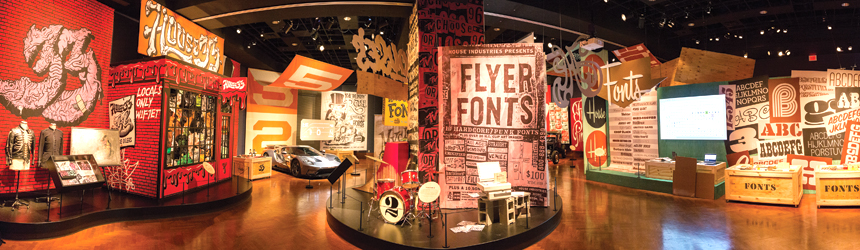
Above: Norton Shores, MI-based Source One Digital utilized all of its digital print and finishing resources to create graphics for House Industries’ 10,000 square foot exhibit.

The Road to Digital
The family-owned company is rooted in the advertising business. In 1981, Randy Crow operated an advertising agency known as RC Productions, as it grew, the demand for quality signage grew with it. At this time, Crow realized many companies struggled to find a resource to produce the level of quality it needed, and from there, hooked up with print provider, Signs by Jim. Source One Digital founders Crow and Freed decided to open Source One Digital.

Signs by Jim was a traditional sign shop, but after the acquisition from RC Productions, digital print capabilities were added to expand the business. “We have a large array of the latest digital printing equipment. Our goal is to service our clients with complete digital grand format needs,” explain Crow, Freed, and Jasmin.

To do this, it operates multiple UV roll-to-roll printers up to 16 feet wide, which include latex and white ink capabilities. It also utilizes UV flatbed printers with white ink, and these include both high-speed and fine art quality machines to allow every job to meet a diverse set of needs. It also employs short-run solvent photographic printers. “We try to have the right tool for every type of job,” they comment.

“It’s exciting to know that we never have to compromise quality,” says Crow. “We have the right equipment to provide the best solution for each job.”

In addition to a range of printers, finishing is essential. Source One Digital’s finishing lineup includes multiple routers and Zünd machines with beds up to ten feet. It also operates a 50-foot Miller Weldmaster Corp. welder and its own in-house sewing capabilities, including the ability to produce silicone edge graphics frames.

For workflow, the PSP looks to both Caldera and Onyx Graphics, Inc. production software. A custom software program, Job Tracker, enables the company to follow an order from end to end and communicate product details.

Museum Work
Source One Digital recently completed a job for repeat customer, House Industries. According to the company, this client is known worldwide for its eclectic font collections and far reaching creative exploits. House Industries has worked with a diverse list of collaborators including the estate of Charles and Ray Eames, Heath Ceramics, Hermes, Jimmy Kimmel, John Mayer, Muji, and The New Yorker.

Additionally, House Industries’ work is found in the permanent collection of the Cooper Hewitt, Smithsonian Design Museum in New York, NY. It was the subject of a major exhibition for The Henry Ford museum in Dearborn, MI this past Summer.
For House Industries’ The Henry Ford museum exhibit, Source One Digital showcased its diverse portfolio of capabilities in large format print production of fabrics, plastics, wood, and metal. House Industries’ 10,000 square foot exhibit, A Type of Learning, was in residence from May to September 2017.

David Dodde, one of the lead curators at House Industries has been working with Source One Digital for nearly a decade. “Dodde is first and foremost an artist and continually pushed the envelope to ask us to bring his quirky and eye-catching designs to life,” share Crow, Freed, and Jasmin.

“Dodde was one of the first clients to challenge us to print UV direct onto wood veneer to make custom printed furniture,” says Jasmin. “He had us print 20×20-foot ceiling murals that were album cover art from the 70s direct to the prefabricated ceiling tiles he provided for a bar restaurant chain he designs for. He has had us print onto table tops that were then laminated and used commercially as well,” she adds.

When Dodde and Source One Digital first discussed The Henry Ford exhibit, they quickly realized it was a great opportunity to work on a creative project that would showcase and use nearly every piece of equipment the PSP had for one job. “It was really a complete showcase piece for us to partner as their vendor and a testimony to the creative geniuses at House Industries for their design talent,” comments Jasmin.

The exhibit primarily features a combination of digital and dye-sub fabric was used to create hanging scrims that drape the walls. A poplin blend material was directly printed on a Fujifilm North American Corporation Uvistar printer. Dye-sub work was completed on a polyester blend using PrinterEvolution’s Eos126 printer. The shop also wrapped a mock house structure with 3M Commercial Solutions’ 3M Controltac Series 180C.

The client is fond of the direct print to wood look, so the entrance piece used 3D life-sized 5×5-foot old school alphabet blocks. Grayscale and white ink were used to print on optically clear films to create mylar-looking sketch paper. Dimensional objects were routed and painted with PVC foamboards and aluminum composite panels. A lot of styrene and other vinyl adhesives were also used on some of the collage work in the exhibit vignettes.

Solutions Provider
Source One Digital offers a range of printing services for the industry as well as directly to customers. Its goal as a company is to provide more than just traditional print. It is a solutions-based, experienced team of digital print and creative providers.

In addition to providing creative, output, and installation services, the PSP offers extensive knowledge gathered throughout years of practical industry experience. Its work for House Industries showcased these skills while meeting the demands of a longtime client.

Sep2017, Digital Output

Wrap Artist

By Olivia Cahoon

While vehicle wraps are generally used as marketing tools to promote businesses and their brands, it’s also a popular application for personal décor. Clients that demand customized vehicle wraps for personal use request unique designs with exceptional quality. Digital print technology allows print providers to meet client expectations for one-of-a-kind wraps that impress.

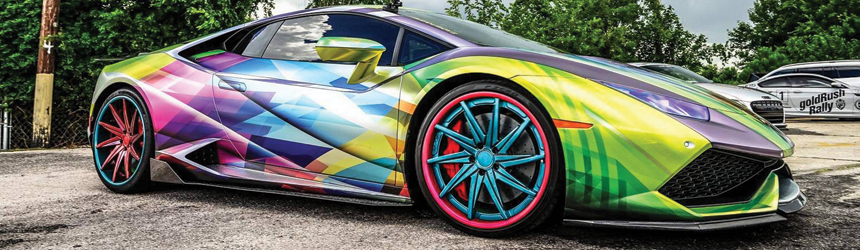
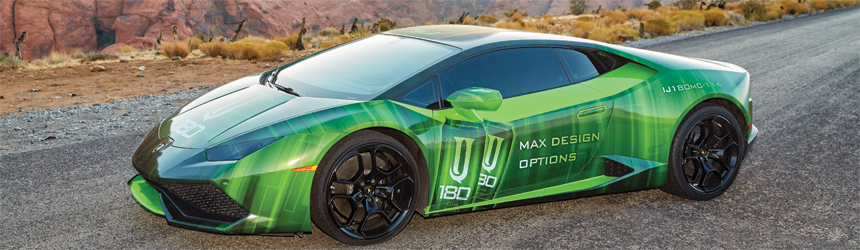
Above: PG NOLA of Gretna, LA wrapped a Lamborghini Huracan for David Mahler to use during goldRush Rally 7.

Custom-Made Practices
Founded in April 2004 under the original name Professa Grafix LLC, PG NOLA specializes in color change graphics for vehicle wrapping in Gretna, LA. With one employee, the shop began by utilizing free space in a residential home and custom audio shop with its primary focus on paper-printed items like brochures, business cards, and club flyers.

Today, PG NOLA serves customers worldwide from a 5,000 square foot facility. It has one employee and is currently hiring.

Core applications include banners, coroplast, mesh, and vinyl graphics. The shop’s specialty, color change wraps, are produced with custom colors and designs. PG NOLA’s wrapping capabilities go beyond the vehicle market into counter tops, drums, guns, helmets, laptops, pirogue boats, prosthetic limbs, shoes, and wakeboards. “We do a steady amount of commercial vehicles and wraps, like wall murals, too,” shares Kevin Kempf, master installer/lead designer, PG NOLA.

It’s common for the shop to receive wrap orders from clients who ship vehicles to PG NOLA from out of state. “I’ve flown around the world and out of state to do wraps,” says Kempf. The company holds several certifications for graphics, tape, and wrap installations from 3M Commercial Solutions, Arlon Graphics, LLC, Avery Dennison Graphics Solutions, Fellers, and Hexis.

Wrapping Master
90 percent of PG NOLA’s work is wraps with 70 percent of that being color change projects and 30 percent commercial or digitally printed applications. For color change and premium substrates, the shop exclusively uses Avery Dennison. “It is my go-to for color change wrap media, then KPMF USA, and then 3M upon request,” explains Kempf. For digital print material and intermediate films, he works with 3M and Orafol Americas depending on the job requirements.

The shop prints on an HP Latex 360 printer from HP, Inc. and recently purchased an HP Latex 365. The HP Latex 365 prints up to 64 inches with high-efficiency curing, six colors, and 1,200 dpi. It includes simplified color management with a pre-installed generic and HP substrate profile library.

PG NOLA became involved with wraps after the demand rose for personal vehicle wraps in the New Orleans area. But that’s not the only reason why the shop provides vehicle wraps. Kempf says he enjoys vehicle wrapping because it offers customers an appealing and effective marketing tool. “It’s nice to see a design that I may have spent hours on driving down the road,” he shares.

It’s integral for PG NOLA to be conscious about timing for wrap projects. Customers are eager to receive their custom vehicle orders and while some are willing to wait, others are not. “With a majority of wraps being color change, it takes time. We do wild designs that we make happen with color change material—mixing gloss films with satin, matte, metallic, or chrome,” explains Kempf. The shop generally books three to four weeks for wrap designs and installations.

While timing can be challenging, Kempf believes the hardest thing to overcome is pushing the limits on each custom designed wrap. “It’s a personal challenge to make custom color combinations to give my clients a one-of-a-kind look.”

King of the Wrap World
In 2015, first-time customer David Mahler approached PG NOLA for a wild and unique vehicle wrap for goldRush Rally 7, an international automotive lifestyle rally where drivers travel through the U.S. Participation in the rally costs $20,000 and includes scenic routes, five star accommodations, and VIP entertainment while showcasing luxury vehicles.

Mahler approached Kempf with a car render of bright colors, but no designs, for his Lamborghini Huracán. The client wanted an original piece that would stand out among the other luxury vehicles at the event. Kempf took Mahler’s render and designed a custom color change wrap.

PG NOLA used Avery Dennison’s Conform Chrome Specialty Film in silver and KPMF Starlight gloss overlaminate in pacific blue. Avery Dennison Conform Chrome is a long-term wrapping film that’s durable for up to three years. It’s recommended for full vehicle and truck wraps.

KPMF Starlight is a permanent adhesive with double-sided PE liner. It produces a sparkle and glitter effect suitable for all exterior and interior applications. Conformable, it is ideal for use on smooth and contoured surfaces and protects printed media.

The graphics were printed on the HP Latex 360 using Onyx Graphics, Inc. RIP software. The HP Latex 360 prints up to 64 inches with outdoor prints lasting up to five years laminated and three years unlaminated. The rated print speed is up to 334 square feet per hour for high-speed outdoor quality.

Rather than working solely based off templates, Kempf designed the vehicle wrap with the actual vehicle in the shop. “Most templates are one dimensional and flat, so you can’t accommodate for bodylines, bend, or twist. Having the car there allowed me to measure and adjust the design accordingly,” he explains.

Despite making the design process easier by having the vehicle on site, there were challenges. Specific parts of the wrap must seamlessly piece together over the entire car. If the alignment doesn’t match, the wrap won’t look as effortless and cohesive as it should. The shop had to reprint several pieces after the car was wrapped to adjust the design and make several panels blend smoother.

While the overall wrap application was a fast process, Kempf says adding the extra details took several days. From job submittal to installation, the Lamborghini Huracán project took three weeks to complete with three installers.

According to Kempf, Mahler was speechless when presented with the finished vehicle wrap. As it was showcased at goldRush Rally 7, the car went viral on the internet and became a sensation around the world. “It was a very special moment, something none of us expected,” shares Kempf.

PG NOLA won Best Wrap and Hottest Whip of goldRush Rally 7 and the Lamborghini Huracán wrap remains popular on social media. Kempf even recently noticed it in a video game at a local arcade. Since goldRush Rally 7, PG NOLA has created two additional wraps for Mahler.

Watch Me Wrap
The goldRush Rally 7 Lamborghini Huracán wrap is considered PG NOLA’s most prominent wrap and according to Kempf, the world’s most famous Lamborghini Huracán.

Used as mobile marketing devices and representations of personalized style, vehicle wraps are in steady demand. To deliver flawless graphics, print providers must overcome challenges in the design process like overlapping panels and vehicle measurements. PG NOLA continues to push limits and deliver unique wraps on helmets and shoes to other luxury vehicles.

Sep2017, Digital Output

Picture Perfect

By Olivia Cahoon

Design software tools help print providers edit pre-designed graphics. Print files that are too small result in a pixelated print at full output. Design software helps ensure the customer receives a quality product. Features like resizing, sharpness, and color conversion adjust graphic files for suitable printing. Photo enlargement plugins can resize images without losing resolution or sharpness and are offered as standalone applications and plugin filters.

“These solutions are the go-to tools in any graphics workflow when a design needs to be taken from idea to execution,” says Sobia Hameed, product manager, CorelDRAW Graphics Suite, Corel Corporation. By using the software, operators tackle tasks ranging from vector design and creation to layout and publishing.

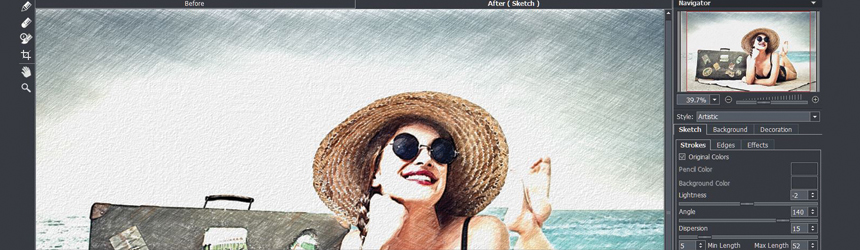
Above: AKVIS Sketch includes features to add a textured surface to imitate canvas drawings or insert an inscription signature, greeting, logo, or watermark.

Design Software
Design tools add unique effects, enhance appearance, restore and retouch damaged photos, resize images, and improve sharpness. Software allows users to handle a range of tasks essential to providing a quality graphic for printing. This includes “preparing a print job for final output to the press, visualizing a design, iterative change cycles, and reviewing or approving,” says Mark Lewiecki, senior product manager, Adobe Systems Incorporated.

It’s not enough for a design tool to resize images, it must also do so efficiently without loss in quality. Software can colorize B&W photos, improve sharpness for out of focus images, and save time on complex selections. Some design software even imitates traditional and contemporary painting techniques without requiring any drawing skills, says Lidiya Azanova, press manager, AKVIS.

Design software is found in several applications where files need assistance to prepare for printing. “It is the backbone of a variety of graphics production industries including wide format printing, sign making, vehicle wrapping, textile design, and packaging,” says Hameed. A popular ability is to convert logos from raster to vector, which allow them to be printed at any size or to enhance and enlarge photos for a variety of projects.

Lewiecki says CAD applications are often used to create diagrams, architectural blueprints, maps, and biotech drawings. In this space, converting a CAD drawing into a PDF file makes it easier for clients to collaborate with colleagues that don’t use the authoring application.

In the three-dimensional (3D) printing space, design software creates 3D objects with surface coloration or surface printed designs. Lewiecki believes that design software with two-dimensional (2D) and 3D features are useful for visualizing and commenting on drawing appearance as well as creating 3D objects that are eventually output to 3D printers.

Essential Tools
Most design software offers print production tools to preview output, edit, convert colors, fix hairlines, and add printer marks. Lewiecki explains tools for managing ink, trapping, and saving files as a PDF are also included. Preflight functions automatically fix common issues in PDF files prior to printing to avoid production bottlenecks.

Color management is an essential feature that converts images to an ideal printing condition while managing black point compensation. It can be used to repair damaged or old images.

If an image is beyond color management, photo retouching functions include border sharpness, image contrast, removing date stamps or distracting details, and image resizing. Some design software improves sharpness on out of focus images and adds artistic blur effects to photos. “It’s possible to refocus the entire image or only certain details,” says Azanova.

According to Azanova, noise reduction software reduces luminance and color noise on digital images without spoiling other aspects of the photo. “They have user-friendly and sophisticated interfaces, enabling even amateurs to edit photos without any hassle or difficulty,” she continues. This is especially important for first time software users that may not have the time to dedicate to learning the software.

Plugin Options
In addition to software suites, plugins are available. They can be used to enlarge and enhance original images. Resizing plugins are typically used for billboards and in-home décor like wall-sized prints and photography. Photo enlargement plugins can be applied to enlarge images taken from the Web or photos taken from low-resolution cameras or a post-crop result.

“Plugins are helpful when working with multi-layered projects,” shares Azanova. “Special-purpose plugins frequently provide more effective results compared with built-in editor’s features.” It allows users to maximize productivity, speed the editing process, and seamlessly apply a range of unique effects.

Alien Skin Software offers Blow Up, a photo enlargement plugin for graphic designers that resizes images up to 300,000 pixels per side. It retains sharpness and avoids blocky artifacts. Finley Lee, CEO, Alien Skin, says Blow Up is designed to be easy to use. The plugin features tools for cropping to the desired output size. Using Adobe Lightroom and CMYK support, Blow Up integrates into professional workflows.

Plugins should be user friendly, especially for print providers that don’t have the time to emerge themselves in a new program. Blow Up includes a library of standard paper sizes for fast resizing. Once a paper size is chosen, Blow Up sharpens the right amount to compensate for ink diffusion.

It’s critical that photo enlargement plugins resize images while keeping edges sharper without computer artifacts. Poor resolutions and blurry images result in a poor-quality graphic. Lee cautions that resizing low-quality JPEG images accentuates blocky artifacts. He admits that photo enlargement plugins perform best with a good-quality source image.

In June 2008, AKVIS released Magnifier to resize images without loss in quality. “Whether creating poster-size images, adding resolution for printing an enlargement, or reducing image size, Magnifier makes prints appear sharper and better defined,” shares Azanova.

The program enlarges images to resolutions up to 300,000×300,000 pixels for a 90 gigapixel poster. Its image processing parameters are grouped into two sections—downsize and upsize. Magnifier supports Batch Processing, which allows users to automatically resize a series of photos.

Magnifier is available in three versions. A lifetime Home license for Magnifier is $89 on Windows and Mac operating systems. Lifetime Deluxe is $99 and Business is $199. It is available as a standalone application and as a plugin filter for Adobe Photoshop and Photoshop Elements. “The algorithm keeps edges smooth, sharp, and clearly defined while improving image appearance by removing unwanted noise and compression artifacts,” adds Azanova.

Software Offerings
Some of the newest design software offerings are included here.

Adobe Creative Cloud includes Photoshop, InDesign, Illustrator, and Acrobat. Adobe’s offerings allow CAD files to be imported into Photoshop and Acrobat, which have 2D and 3D editing features. “These are useful for visualizing and commenting on the appearance of the drawings,” explains Lewiecki. For example, color management features in Photoshop convert images captured by digital cameras to the color space of the device or the target printing condition while managing black point compensation.

The free version of Acrobat Reader displays 3D objects contained with a PDF file. Lewiecki believes converting a CAD drawing, InDesign, Photoshop, or Illustrator file into a PDF file makes it easy to collaborate with customers that don’t use the authoring application.

Acrobat includes print production tools for adding printer marks, converting colors, fixing hairlines, managing inks, minor editing, previewing output, saving as PDF files, and trapping. “The print production suite in Acrobat also includes a powerful preflight function, which can be used to automatically fix common issues in PDF files before they are printed,” shares Lewiecki. In 2016, Acrobat’s user interface was completely reworked to make it less complex and more user friendly. Lewiecki says this is especially helpful for viewing PDF files on tablets and smartphones or for searching specific tools.

Released in August 2006, AKVIS Sketch creates realistic color drawings and B&W sketches, imitates graphic and color pencil techniques, and generates charcoal, pastel, and watercolor effects. It offers two photo-to-sketch conversion styles—classic and artistic.

Timeline features allow users to choose between different sketch options from rough sketches to finished drawings. The Background Effects tab creates a combination of sketches and photos, imitates motion, and adds a time machine effect with background swirls.

AKVIS Sketch includes features to add a textured surface to imitate canvas drawings or insert an inscription, signature, greeting, logo, or watermark. Azanova says AKVIS Sketch Home licensing is $72, Deluxe is $89, and Business is $154 for a lifetime subscription.

Alien Skin offers Eye Candy 7. The set of plugins offers realistic effects like fire chrome, lightning, animal fur, smoke, and reptile skin rendered to individual hair, wisps, and scales. It features a graphic enlarger plugin to resize images.

Eye Candy 7 displays effects as recognizable icons rather than text menus for easy viewing. Its user interface is designed for visual browsing and less clicking. The software includes 32 effect categories and over 1,000 presets. Eye Candy handles images in CMYK mode and 16-bits/channels for professional print work. It requires Adobe Photoshop CS5 and newer or Adobe Photoshop Elements 10 and newer as a host application.

CorelDRAW Graphics Suite 2017 was released in early April and consists of several Corel applications for print providers and graphic creators including CorelDRAW, Photo-Paint, Font Manager, PowerTrace, Connect, Website Creator, and Capture.

The software features a LiveSketch tool to deliver a natural vector drawing experience. “Users can free-form sketch vector curves directly on a pen-enabled device thanks to an intelligent tool that interprets and understands sketching styles, including overlapping strokes, folded lines, and even chicken scratches,” explains Hameed.

Redesigned nodes and handles are assigned a unique shape for identifying cusp, smooth, and symmetrical nodes. This includes better visibility for interactive sliders for object fills and transparencies. A CorelDRAW Graphics Suite 2017 full license is $499, $199 for an upgrade, $29.95 for the monthly subscription, and $198 for a yearly subscription.

Picture Perfect
Software with specific design tools overcome graphic challenges like retouching, sharpness, and sizing. Print providers use the solutions to manipulate graphics into print-ready quality. Features such as PDF converting, photo enlargement plugins, and 3D editing tools are available to help provide high-quality final output.

Sep2017, Digital Output

Cutting Capacity

By Cassandra Balentine

Nearly every printed graphic requires some type of finishing before it is complete. Cutting is an essential capability for a variety of roll-red applications, including stickers, labels, decals, and heat transfer graphics for apparel. In order to produce these items, print service providers (PSPs) often employ a standalone cutter or an integrated printer/cutter.

Standalone devices offer the benefit of productivity, as one machine isn’t tied up performing two different tasks. However, workflow must be controlled to ensure a seamless transition from printer to cutter. Integrated printer/cutters seamlessly complete a job; however graphics that require lamination pose a challenge. In either scenario, proprietary and third-party software helps tie the workflow together.

Above: HP’s print-and-cut solutions offer efficient production for window graphics.

Applications
Adhesive-backed PVC-printed applications like labels, stickers, decals, and window and floor graphics represent the most popular applications for printer/cutters and print-to-cut systems; however, demand is coming from the apparel industry as well.

Whether you are creating stickers, labels, decals, or heat transfer graphics for apparel, both print-to-cut systems and printer/cutter combinations are appropriate, shares Mike Springan, product manager/training manager, Mutoh America, Inc. “Thicker materials like magnetic media or leather are better served on a flatbed CNC cutter/router and not with roll-fed drag knife cutters,” he offers.

Daniel Valade, color products manager, Roland DGA Corporation, points out that for PSPs primarily printing on substrates without a liner or adhesive backer, there may be certain advantages to using a flatbed cutter with a vacuum table, as opposed to a friction-fed cutter or integrated print/cut device. “However, for most PSPs, the applications for the two workflows are very similar.”

Considerations
To produce compatible applications, PSPs decide between standalone cutters and integrated print/cut devices.

Small- to medium-sized shops benefit from either a print-and-cut system or a combination printer/cutter. The decision to invest in either is dependent on a number of factors, but there are benefits and drawbacks to both.

Springan says if budget or space requirements are the deciding factor, the PSP may opt for the printer/cutter first to break into this particular application. However, after a period of time he says they may find that they have outgrown the capabilities of these printer/cutters and upgrade to the print-to-cut systems, “which is more productive and reliable with less wear and tear on mechanical components,” he offers.

According to Xavier Garcia, GM, large format printing division, HP, Inc., print-and-cut systems like the HP Latex 300 Print and Cut Series reduce total cost and improve workflow.

System Benefits
Depending on a print environment’s specific cutting needs, a print-and-cut system that incorporates standalone devices provides several advantages.

Springan suggests systems that incorporate standalone printers and cutters typically outperform integrated printer/cutters from a productivity perspective. “Anytime you can use two pieces of equipment at the same time, you will have a faster, more efficient workflow, saving time and money. While the printer is printing signs, banners, and wraps, a standalone cutter is able to produce other graphics using colored vinyl for window lettering and graphics or non-print vinyl graphics,” he continues.

Commercial print providers, packaging and prototype manufacturers, and larger print environments—including some sign shops—have a tendency to lean towards separate print-and-cut systems due to their existing workflows that can also benefit from a cutting device, says Michael Maxwell, senior manager, sales promotions, Mimaki USA, Inc. “In these cases, having a separate cutter offers the ability to use this workflow with other printers they may already have in their facility,” he offers.

Valade agrees that large production shops benefit from a continuously printing workflow. “If a job requires contour cutting, a separate cutting device can be very beneficial to the PSP. This allows for the next print job to be sent while the previous job is being cut offline from the printer. Such operations generally have more than one production shift per day, a larger staff, and higher output demand than a corner sign shop.”

Tom Wittenberg, large format marketing segment manager, sign and décor, AMS, HP,, points out that PSPs looking to print-and-cut systems want the flexibility of having not only a standalone printer, but the ability to do printing and cutting, with the ability to do one, the other, or both. “Those looking at integrated systems are looking to do straight print-and-cut applications,” he suggests.

HP recently introduced its dual-device printing and cutting solution, the HP Latex 300 Print and Cut Series. “The primary benefit is that you can print and cut at the same time. It uses essentially the same operating space as an integrated device, but you can print and/or cut allowing for more versatility,” explains Wittenberg.

Integrated printer/cutter solutions are also popular for creating cut graphics. Springan says printer/cutters usually fit well into small shops with limited space and budgets.

Valade says the technology built into today’s advanced integrated printer/cutters is designed to handle most of the applications that two separate devices can handle.

Maxwell adds that an integrated printer/cutter system, combined with certain ink technologies—such as solvent and UV—that do not always require lamination can produce jobs with ease in a single set up, which in turns creates demand for these devices.

“Integrated systems are more attractive to PSPs that produce more decals and stickers with solvent or UV ink technologies due to their durability and ease of workflow,” says Maxwell. He says these types of solutions are often found in sign shops.

The drawbacks include the potential bottleneck an all-in-one device creates in the workflow. For example, jobs that require lamination after print would involve the need to remove the print job, laminate, and then reload back on to the printer/cutter to complete the job.

Maxwell adds that ink types requiring lamination—such as latex—force the PSP to remove the job from one device and in many cases defeats the capabilities an integrated solution provides. “In those instances where an interim setup is required, having the printer and cutter separated improves the workflow.”

“A major advantage of integrated printer/cutters is the ability to print and then automatically cut while the printer is unattended. Such technology enables a one- or two-person shop to design, complete post printing, or tend to other business activities without stopping to move the printed job to an offline cutter,” admits Valade. “Being able to print and cut from roll to roll overnight is a big selling point for smaller PSPs because they can actually be producing while they’re away from the shop.”

Workflow and Software
Printer/cutters and print-to-cut systems rely on behind-the-scenes workflow to ensure seamless production.

Many sophisticated and feature-rich third-party software platforms are available. “Many manufacturers have improved the workflow with proprietary software solutions,” says Maxwell. “This is most beneficial to customers who use an integrated solution and for those that use matched elements,” he explains.

Maxwell believes a matched system—machine, ink, and software—is often the best workflow. “Manufacturers also recognize that their products may not be the only products in a print facility and have added software functionality to enable it to act as another seamless step, or pass through to avoid color management concerns, etc., all while leaving the print-and-cut functionality intact and feature rich,” he adds.

The HP Signage Suite is compatible with the HP Latex 300 Print and Cut Series. “With Signage Suite you can design your output in three steps and with HP FlexiPrint and Cut RIP, users can print and cut in five steps,” explains Wittenberg.

He says the HP FlexiPrint and Cut RIP along with HP’s Signage Suite combine all the necessary software in one workflow management system for ease of use. The one point workflow allows users to edit and print jobs without interruption.

Mutoh currently uses Mutoh Edition FlexiSign & Print from SA International. “This software provides a complete design, print, and cut solution to our customers. It is efficient and easy to use with Mutoh ValueJet printers and ValueCut vinyl cutters,” explains Springan.

Valade says depending on the mix of equipment, a separate RIP may be needed. “When using both a Roland printer, such as the VersaEXPRESS RF-640 and a standalone cutter, like the Roland CAMM-1 GR-640, the integration is quite simple using Roland’s VersaWorks Dual RIP software,” he admits. “It is as easy as dragging and dropping a print file from the printer queue to the cutter queue, and then clicking the print button.”

Product Highlights
A handful of wide format printer manufacturers focus on roll-fed cutting, either as standalone devices or an integrated solution. Here are specifics from HP, Mimaki, Mutoh, and Roland.

At the 2017 ISA Sign Expo, HP announced the HP Latex 300 Print and Cut Series. The dual-device solution is designed to provide simultaneous printing and cutting in a single workflow. Ideal for sign shops, quick printers, and PSPs, the 54-inch HP Latex 315 Print and Cut and 64-inch HP Latex 335 Print and Cut offer efficient production for a range of applications such as floor and window graphics, as well as stickers and customizable clothing.

Additionally, the solutions are designed to work with the recently released HP Signage Suite, a cloud-based software solution with web-based applications for easy signage creation. The suite is designed for integration into PSPs’ web to print operations, making it possible to receive orders 24/7.

Mimaki offers both its CJV150 and CJV300 series integrated printer/cutters.

The Mimaki CJV150 offers a single unit for printing and cutting. It features printing speeds of up to 605 square feet per hour (sf/h), a resolution of up to 1,400 dpi, and four model widths including 32, 43, 54, and 64 inches.

The Mimaki CJV300 series of wide format, high-speed printer/cutters enables a variety of applications from fine art reproductions to outdoor signage. The series features printing speeds of up to 1,140 sf/h, integrated printing and cutting, print resolution up to 1,400 dpi, and a two-liter bulk ink system.

Both systems offer users the choice between eco-solvent or dye-sublimation ink sets. An expanded eco-solvent ink set includes ten colors, including sliver.

In addition to its printer lineup, Mutoh offers its ValueCut cutting plotters, including the 24-inch ValueCut 600, 54-inch ValueCut 1300, and 72-inch ValueCut 1800. The multi-purpose cutting/plotting line offers the functionality needed to complete traditional vinyl cutting for lettering jobs, contour cutting of pre-printed stickers, and a cut-through feature for the creation of individual stickers.

Roland’s new TrueVIS printer/cutters are built from the ground up. Available in 54- and 64-inch models, TrueVIS VG series inkjet printer/cutters feature FlexFire printheads and TrueVIS INK that combine to produce vibrant colors.

New TrueVIS INK delivers a wide color gamut and improved output, while meeting stricter environmental standards and user demands for lower costs, without sacrificing quality. 500 milliliter pouches fit neatly into reusable cartridges and slide into a hidden ink bay for clean usage and less waste. TrueVIS INK is also Greenguard Gold certified and does not require any special ventilation equipment.

In addition to a built-in control panel, a new Roland DG Mobile Panel allows users to perform control panel functions of TrueVIS VG printer/cutters with an existing smartphone or tablet using a Bluetooth connection. This new feature provides a rich interface directly on or remotely in range of the TrueVIS printer/cutter. Receive status updates as well as remotely manage production, test printing, and cleaning functions.

The TrueVIS printer/cutters are designed to produce applications like die-cut labels and decals, banners, signs, vehicle wraps, posters and backlit displays, wall graphics and murals, print-and-cut heat transfers, and fine art and photos.

Control Cutting
Wide format printers paired with an in-house cutter or integrated printer/cutter offerings serve a specific set of needs—space, budget, and productivity. A decision to go the route of standalone or integrated capabilities is largely dependent on the PSP.

Sep2017, Digital Output

Travel Guide

By Digital Output Staff

The Specialty Graphic Imaging Association’s (SGIA’s) annual SGIA Expo is set for October 10 to 12, 2017 in New Orleans, LA. Located at the Ernest N. Morial Convention Center, the event is home to over 570 expected exhibitors. These vendors will be showcasing their latest products and solutions in garment decorating, wide format signage, package and prototype print, and industrial printing.

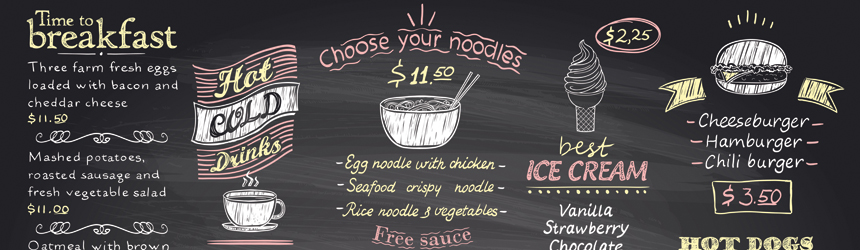
Above: JetView UV Chalkboard Film from Tekra is on display in booth 2711.

On the Floor
Here, we share product information from some of the companies exhibiting at the SGIA Expo. A second preview appears in our October issue with additional vendors and their plans.

4over, booth 663, highlights its web to print solution, PrinterBridge, which provides customers with an expanded library of print products and services through a customizable online storefront. Site features include EDDM Full Service, an online design tool and the ability to create sales representative profiles for easier reporting, tracking, and staff organization. With PrinterBridge, users configure the product options, control the markups, and take the next step in streamlining a company’s growth.

Agfa Graphics, booth 1929, promotes its hybrid Jeti Tauro LED, a six color plus white or primer system, featuring advanced automation and high productivity, up to 2,960 square feet per hour. With an integrated roll-to-roll system, the Jeti Tauro LED offers continuous feeding of rigid and flexible media up to 100 inches wide. With eco-friendly UV LED curing, the Jeti Tauro LED uses Agfa’s specially formulated UV LED inks to print on heat-sensitive substrates for increased application possibilities.

Aleyant and Ultimate TechnoGraphics, booth 2719, jointly feature Automation Hub. Learn how the end-to-end workflow automation solution—consisting of Ultimate TechnoGraphics’ Imposition, and Aleyant’s Pressero Web-to-Print, eDocBuilder online designer and variable data printing, PrintJobManager MIS/ERP, and tFLOW prepress automation—can help save time, cost, and improve overall productivity.

Alliance Technology Corporation, booth 2101, showcases two new UV coating machines. The ATC-80RTR roll-to-roll UV coating system is designed for precision mayer rod UV liquid coating. The ATC-UV80RTR caters to fleet graphics, wallpaper, and other roll applications. The ATC-UV36HA UV coating system provides a sheet-fed UV liquid coating solution that produces a high-quality UV coating finish on a variety of inks and substrates up to one-inch thick.

Aurora, booth 1059, adds Expressions Semi-Gloss Décor Canvas to its comprehensive, state-of-the-art, printable textiles Expressions Canvas Line, which is available in four gloss levels and customizable widths up to 122 inches. Treated with Aurora’s proprietary Expressions coating technology, the full line is optimized for outstanding print performance across a range of today’s latest digital printers, including latex, UV, and solvent, and reduces printing passes without sacrificing color quality.

Caldera, booth 345, offers StreamLive—an easy-to-use software as a service application that allows users to create the ideal production process, track jobs in real time, and automate most time-consuming tasks. The entry-level product includes a range of features. StreamLive is cloud-based and allows users to create customer job sheets, submit files to software workflow, connect with Caldera RIP, and automate email reporting. The functionality of this scalable software suite is extended with a range of bolt-on options—allowing it to be tailored to specific needs while controlling costs. The options include a calendar-based planning module, custom document generation, preflight, and connections to a range of popular software packages.

CET Color, booth 119, showcases its 5×10-inch cutter, the Andes. This cutter produces high-quality results consistently and efficiently. It features a conveyor system for ease of material removal and increased productivity. The vision registration system and camera are included. Custom configuration options are also available. Tools included with this model are the oscillating cutter, creasing wheel, kiss-cut, drag knife, V-cut, and the router tool.

Chemica US, booth 3145, manufactures heat transfer films for both plotters and printers. For plotters, the HotMark Revolution is a thin and stretchy HTV that can be applied to cotton, polyester, or nylon. Additionally, Galaxy glitter is layerable and stretchy. HotMarkPrint is a thin, stretchy, and soft opaque printable film.

Continental Grafix USA, booth 3641, exhibits CourtWrap, a polyester/vinyl film with a proprietary, long-term repositionable/removable adhesive. It is designed for indoor sporting hall floors and other smooth, flat surfaces, such as painted metal, glass, tile, sealed concrete, sealed wood, and polished marble. It is compatible with solvent, eco-solvent, UV-curable, and latex inks. ASTM D-2047 certified when used with CourtWrap Protect laminate.

DGI, booth 2845, launches a new expanded color model for the FT-1608/FT-1908 series. The latest model is available with six and eight color options, with existing CMYK, orange, blue, light cyan, and light magenta for those customers wanting to expand their color gamut. Fluorescent yellow and magenta are available for variety of colors on special textile applications. The 126-inch soft signage printer FT-3204X and 74-inch high-speed dye-sublimation printer HS FT II are also displayed.

Drytac, booth 3325, encourages attendees to meet brand champions SpotOn, ReTac, and ViziPrint. Easy to install, bubble free, and predictable removability are key features of these new lines of self-adhesive print media for window, walls, and floors. Visit during the show to chat with seasoned product experts and to experience hands-on demonstrations.

E.L. Hatton, booth 3504, celebrates sign making history with a Banner Ups banner reaching 108 miles per hour in a wind tunnel test thanks to Banner Ups new improved MegaTape and Clear PowerTape. Other new products include KederTape no sew adhesive keder, TexTape textile hem tape, and PoleTape PRO, no-sew, no-weld seam tape.

Epson, booth 1301, demonstrates its full lineup of digital imaging solutions, including the SureColor S-Series 64-inch roll-to-roll solvent printers. The S-Series redefines image quality expectations in the signage market, producing high-quality, sellable output at impressive production speeds. In addition, the UltraChrome GS3 inks utilized in the printers allow for same-day lamination—only six hours after completing a print job—providing increased revenue opportunities by enabling sign shop owners to complete same-day project delivery.

Esko, booth 1321, focuses on finishing automation, including robotic loading and unloading cutting tables for non-stop finishing production, and board feeder solutions for automated loading of board materials. Esko’s industrial, automated robotic production system is connected to the Esko Kongsberg C24 equipped with a multi-zone capability and delivers up to 80 percent greater output.

Expolinc, booth 2808, features Magnet Frame. It is a double-sided frame for rollable, easily transported graphic panels. The graphic is mounted securely in seconds through magnetic force. No tools or specialize labor needed for installation. The discreet, timeless design aluminum frame comes with a lifetime warranty. Backlit and wall hanging options are also available.

Foster, booth 3527, shows lifters that simplify workflow and make the shop safer for employees. If you handle rolls of print media, fabric, flooring, or any other roll material, Foster has an On-a-Roll Lifter for the job. Also shown is a complete line of Keencut and Rotatrim precision cutters and trimmers for wide format, signmaking, display graphics, and fabric production.

Gans, booth 561, displays XBASE. It is a proprietary new material that makes your wall, window, or board a bubble-free installation area with the ultra-removability of any permanent vinyl. No longer do you have to pay for specialty adhesives or expensive magnetic-receptive media. Print your standard permanent non-bubble-free adhesive vinyl and apply it to your XBASE wall, window, or board.

GBC/SEAL, booth 2619, encourages visitors to check out a leader in quality, versatility, and value. The SEAL 62 Base 61-inch top heat assist laminator with auto grip shafts, two-inch nip, and optional roll to roll is ideal for shops looking to produce everything from outdoor signage to car wraps. The 65-inch SEAL 65 Pro MD thermal laminator is also displayed. Using cutting edge technology, this machine offers bi-directional operation, pneumonic pressure, and a two-inch nip. From GBC, the Spire III 44T thermal laminator is on display with auto grip shafts.

GCC, booth 2419, demonstrates its latest laser and UV inkjet machines. Stop by to learn more about its quality laser engravers, cutting plotters, and UV inkjet printers, as well as upcoming products releasing soon.

GPA, booth 1062, offers its growing collection for wide format presses. New products include Metalized Styrene, substrates that look like thick metal sheets without the added weight, ideal for creating high-end signage and point of purchase displays. GPA also showcases Bantex Banner Media to provide eye-catching banner solutions that make a lasting impact. Other new and value-added substrates are on display to help attendees explore exciting and profitable opportunities.

Graphtec America, Inc., booth 3233, is a leader in cutting and finishing solutions for signage, apparel, label, and prototype packaging. A new automatic sheet feeding system is demonstrated in addition to the FC Series roll-fed cutting plotters, CE series, and versatile FCX2000 flatbed.

GSG, booth 445/545, promotes the new HP Latex 335 Print & Cut Solution. This new solution from HP allows for printing and cutting simultaneously, saving time and money. In addition, GSG also demonstrates the powerful HP L560 and HP FB750 printers.

ImageOne Impact, booth 2739, specializes in sign and graphics tools and hardware. It offers live demonstrations and hands-on training of the P.O.D. Pressure On Demand Steamer system for the application and removal of all vehicle films including vehicle wraps, window tint, PPF films, transit films, and even sign vinyl. Distributorships are available.

INX International Ink Co., booth 1919, advises show attendees to find value with new and advanced Triangle alternative inks. They match nearly every OEM printer and printhead type for UV-curable, solvent, or aqueous inks, bulk delivery systems, and liquid laminates. Prodigy industrial and packaging application inks are a terrific solution for digitally printed plastics, textile, and home decor. INX also offers direct-to-object printing via the INX CP100 UV digital cylindrical printer and custom integration services through Evolve Advanced Digital Solutions.

LexJet, booth 745, features a number of innovative products revolutionizing wide format. Products such as latex-compatible EnduraFab textiles, LexJet Premium WallPro wall murals, LexJet Simple Grip Backlit décor items, and ChromoLuxe metal photo panels are showcased along with printer technologies from Canon, Epson, and HP.

Mactac, booth 3249, offers hands-on demonstrations. It challenges visitors put its anti-graffiti films to the test and be a chalk artist with its life-size Mactac wallCHALKER wall. Also, join them for a first look at the newest products making their debut at this year’s show, including PERMACOLOR Anti-Graffiti and Window Protection Films, IMAGin WindowVIEW Cling, PERMACOLOR FloorGRIP, PERMACOLOR ColorTrans, MACtransfer, and REBEL X-treme.

Massivit 3D, booth 2279, demonstrates how large format print providers can secure greater business opportunities and enhance their competitive edge by seamlessly integrating its flagship Massivit 1800 3D printer within their operations. Via a keynote presentation, visitors discover how early adopters of the technology are elevating sign and display applications to a new dimension with maximum visual impact.

Miller Weldmaster, booth 2909, showcases its 112 Extreme for long signs and aligning images, the T300 Extreme Edge for high-speed banner finishing, the T3 Extreme for any size business, the Digitran for sewing silicone edge graphics, and the new T2 Extreme—a simple and robust table mounted hot air welder specialized for small jobs.

Mimaki USA, booth 1231, exhibits the Mimaki 3D printer, which offers an unprecedented printing experience with the ability to produce objects with high definition, fine detail, and in full color. Because of Mimaki’s extensive experience in inkjet printing and based on a patented process, the printer uses a full-color UV LE cure method with more than ten million possible color combinations for photorealistic output. Clear ink creates translucent objects. The water-soluble support material is easy to remove, maintaining fine details.

Mohawk, booth 1026, shares its expanded Mohawk Wide Format portfolio. It features over 80 different products engineered for vibrant color and durable print quality across a range of applications and ink types, and now includes products for dye-sublimation inks. Visit to see samples and get more information on Mohawk’s new metallic-faced adhesives, floor display media, and Strathmore Pure Cotton papers for fine art reproduction.

Mutoh, booth 2545, unveils a new 4×8-foot UV LED flatbed printer. Along with the newest printer, it showcases the most popular wide format ValueJets in the company’s lineup including the new ultra-fast VJ 1948WX, a four printhead dye-sublimation printer and the new 626UF tabletop UV printer that prints up to 5.9 inches thick and features an optional rotary attachment.

Newlife Magnetics LLC and SCITOP-USA LLC, booth 3049, introduce new products. Newlife debuts the next generation of car sign magnet materials, Miracle-Mag. This new material uses two technologies to create a super-strong holding force. SCITOP-USA LLC introduces its new Wall Lizard post-up materials. This printable media uses a new technology to enable the material to adhere to most walls, windows, and other surfaces.

Novus Imaging, booth 1011, a new division of The M&R Companies, demonstrates ULTRA UV LED flatbed digital printers that are designed and made in the U.S. The ULTRA models are compatible with a range of substrates and deliver uncompromising print speed, exceptional image quality, flawless adhesion, and low cure temperatures for ultra-thin substrates. Dynamic variable drop technology to print greyscale saves on ink consumption while delivering flawless skin tones, smoother tonal transitions, and crisp, clear text.

OCP, booth 4316, conveys stability, composition, and consistency. These values are the three major components of the company’s success. The fundamental features underline the goals of its entire team. OCP’s inkjet inks provide high-quality ink solutions for piezoelectric drop-on-demand textile printing.

Onyx Graphics, booth 2435, focuses on ONYX Hub, a business intelligence tool with a browser-based dashboard that provides easy-to-understand data across an entire site for better business decisions. It collects data by job, station, and printer, presented in real-time, for immediate visibility into a production environment. With up-to-the-minute and historic ink usage and media waste reporting, better understand costs, improve profitability, and diagnose areas to increase efficiency.

Orbus, booth 3451, teaches attendees about the largest range of exhibit and display products. Learn more about how Orbus doubled its display graphic print capability and how this positively impacts you.

Pacific Coast Fabrics (PCF), booth 2445, now part of Top Value Fabrics, offers a complete line of premium digital textiles for soft signage, performance and contemporary apparel, and home furnishings. In addition to showcasing fabrics from Europe’s largest digital warp knit manufacturer, Georg+Otto Friedrich, PCF premieres innovative technical contemporary fashion fabrics and unveils a line of luxurious upholstery weight textiles for home furnishings.

Packsize International, booth 2809, enables specialty printers to produce smarter packaging for a healthy planet that increases the bottom line and reduces cost, improves production and shipping capabilities, and reduces damage all while improving the environmental footprint. It does this through its robust EM Series machines, EM7 and EM9.

PrintFactory powered by GMG, booth 263, highlights how to save 20 percent ink and even more preparation time by seamlessly integrating GMG color management in the workflow. PrintFactory unveils three new products; a cloud-based RIP and wide format print automation platform, PrintFactory for Ceramics, and PrintFactory for Textile.

Quality Media & Laminating Solutions, booth 3345, showcases the Kala Mistral 1650 65-inch waste-free laminator. Kala provides a high level of excellence in finishing operations, reduces wasted materials during set up, and only requires a small workspace footprint. Top heat-assisted roller, unique patented auto-calibration function for ideal tracking, five shafts, LED light kit, and roll to roll are among the many features that sets this laminator in a class of its own.

Ricoh, booth 1351, features its market-leading position as a top manufacturer of inkjet printheads, its growing team of wide format specialists, and expansive portfolio of offerings including those from EFI, Mimaki, and Ricoh. Additionally, attendees will see a behind the curtain showcase of future technologies that will help printers broaden revenue streams.

Royal Sovereign International, booth 3437/3537, continues to be consistent leader in the manufacturing and distribution of narrow and wide format laminators, pressure-sensitive film, wide format trimmers, banner welders, and dye-sublimation calenders. It launches the 65-inch Paramount 65X pneumatic laminator with heat assist. Designed to optimize the lamination process through controlled pneumatic pressure of the rollers, the Paramount 65X is the next evolution in lamination.

SA International (SAi), booth 2749, promotes how large format print providers and signmakers can streamline production workflow and enhance throughput with its added-value platforms. These include the completely relaunched sign.com network, enabling North American members of the International Sign and Printmakers Guild to win new business. Customers can easily design and order custom signs or banners. All orders are then routed to local Guild members for fulfillment. Another added-value platform includes the revamped SAi store that offers print businesses access to an extensive gallery of corporate logos and graphics.

swissQprint, booth 1253, presents the new Nyala LED model along with Rob, the loading/unloading robot. On a 126×79.9-inch flatbed, Nyala LED delivers a maximum output of 2,217 square feet per hour. Additionally, it consumes 50 percent less energy than conventional systems. Rob is the solution for unattended printing. The robot handles extra shifts and takes over repetitive work. They work together to produce impressive samples.

Tekra, booth 2711, offers new featured products. JetView UV Chalkboard Film is UV printable and writeable with removable adhesive. JetView Latex Low Tack Window Film brightens storefront signage and increases offerings with material that can be frontlit, backlit, or sunlit and still offer the same vibrancy. JetView Solvent Block-out Film is 99 percent opaque and printable with solvent, latex, or UV inks. It is versatile, durable, and ideal for trade show graphics.

Top Value Fabrics, booth 2155, premieres a new line of Latex Performance Textiles, which is focused on supporting customers in maximizing the beauty of graphics when printed with latex ink technology. The five new fabrics are built on similar constructions of fabrics in the Direct Print Textile line. Request a sample today and see the quality for yourself.

Vescom America, booth 3953, shows its various textures to help create colorful, high-definition wall décor. This premium suite of Type II-certified vinyl media meets multiple environmental standards and brings digital printing capabilities alive by providing custom textures for wallcoverings, and murals. Discover the consistency of a top-coated wallcovering that installers prefer.

On the Bayou
Get ready to experience a historical city full of culture all while educating yourself on the latest and greatest technology at the SGIA Expo. Digital Output is in booth 3615. Pick up copies of our September and October issues to help you plan your visit.

Sep2017, Digital Output

Finishing with a High ROI

By Olivia Cahoon

Print service providers (PSPs) must ensure finishing equipment keeps production running smoothly. One solution, digital flatbed routers, streamlines the finishing process by eliminating the need for manual cutting and outsourcing. Before implementing a flatbed router, print providers should consider current and future requirements and calculate the return on investment (ROI). With proper planning, an automated finishing device presents unlimited opportunity into under-explored markets.

Above: SpeedPro Imaging, based in Westwood, NJ, purchased a 5×10-foot Colex Sharpcut SX-1631 digital flatbed cutter in August 2016.

High-Margin Verticals
Digital flatbed routers are ideal for applications including three dimensional, acrylic, braille signs, foamcore, packaging, point of purchase (POP), rigid material, and trade show signage. John Cote, North American sales manager, Zünd, shares that “a router or router option included with a multifunctional digital cutting system considerably broadens the range of products a print business can offer.”

As wide format companies offer a larger range of substrates, they also reach new customers with more creative solutions. George Folickman, director, business development, wide format, Esko, says that flatbed routers and cutters allow print providers to enter new, high-margin markets like POP and displays. He believes high-volume shops benefit from these tools because they can do enough work to validate the investment.

The addition of new substrates brings the capability to offer new products. Dana Goodale, director of product management, Gerber Technology, says that print shops that implement flatbed routers can offer thick plastic for channel letter sign faces and cut industrial materials to sell into manufacturing markets.

Eliminating Bottlenecks
Print providers without an automated router or knifing system must manually finish or outsource a project. Both options can lead to bottlenecks and may even deter a print provider from certain substrates.

Implementing a digital flatbed router avoids the extra costs of outsourcing and saves time lost in manual labor. Maureen Damato, sales account manager, Colex, believes there is a market shift for machines that feature both a router and a knife cutter to cover a larger array of media and free up bottlenecks.

Steve Aranoff, VP business development and marketing, MCT Digital, agrees and states that handcutting quickly becomes a bottleneck, especially when cutting custom shapes. “Routers and digital finishing tables allow a printer to have tools necessary to virtually cut and finish every job,” he adds. By automating and economically cutting multiple materials, routers give printers more opportunities to increase profit.

Flatbed routers introduce automation to finishing departments, which decreases human error. Javier Mahmoud, VP, sales and marketing, CET Color, explains that if an employee cuts 100 signs by hand, it’s expected that human error will be factored in. Flatbed cutters with a conveyor belt cut and advance by itself, reducing waste.

Not only is the finishing process faster, but it’s also more efficient. “For high-volume jobs, a CNC router can repeatedly cut out the same shape accurately,” says Cliff Cabral, applications manager, Vision Engraving & Routing Systems. For example, some routers have an auto braille inserter to quickly insert braille beads and eliminate the process of inserting beads by hand.

Cote believes that without automation, routing accuracy and consistency are difficult to achieve. He suggests print shops integrate a productive automated workflow that automates processing steps from prepress functions like file preparation and automated nesting to automatic setup and tool changes.

Analyzing Costs and ROI
Before purchasing a digital flatbed router, it’s important to consider ROI. Average ROI can be based on cost reductions for existing jobs, savings compared to outsourcing, and the possibility of large and more profitable jobs.

According to Cote, a PSP in the signage, POP, and display business with yearly sales approaching $1M pays for its flatbed cutting system in 18 to 24 months. “Once a print provider reaches that $1M or so threshold, it is time to consider investing in a multifunctional cutting system that can be tailored to the business’ needs and adapted to changes and growth in demand,” he adds.

Folickman says that Esko has seen payback investments in as little as eight to nine months and rarely more than two years. He advises print providers consider the material waste and lost capacity when calculating ROI.

In addition, Mahmoud believes employee numbers should also be analyzed. Implementing a flatbed router may affect the number of employees required for finishing. Print providers should consider if employees that are no longer needed in the finishing process have the potential to move to another department.

Shop Considerations
Finishing solutions should grow with the PSP. Damato advises print providers to be aware that a high-performance cutter lasts 12 to 15 years or more and therefore, the right router allows businesses to grow into the next decade.

The finishing equipment should also play to the strengths of the business’ most commonly used materials. “If they work on a lot of steel, a traditional CNC router is the best choice. If they work mostly on wood, dibond, and PVC, they should select equipment that optimizes those materials,” says Folickman.

Cote says the simplicity of both the user interface and digital production workflow should be considered. Routing equipment that is easily integrated into existing workflow allows the print shop to adapt easier to the new equipment for faster benefits.

According to Goodale, routing generates a lot of dust. Router work areas should be clean, well ventilated, and not too close to the printer’s location or other equipment that requires a clean environment.

Cabral believes the most important part of implementing a digital flatbed router is proper training. Some flatbed router manufacturers offer training specific to the needs of each customer.

Cutting Game Changer
Established in 2006 in Westwood, NJ, SpeedPro Imaging of Westwood started with three employees in a 2,200 square foot workspace. Today, it employs five and offers event graphics, trade show displays, vehicle wraps, wall murals, and window graphics. The shop has completed projects from NJ to Beijing, China.

Purchased in August 2016, the PSP uses a 5×10-foot Colex Sharpcut SX-1631 digital flatbed cutter. It features a triple interchangeable tool head, complete substrate cutting compatibility, and vision registration software and camera. The cutter finishes a variety of material including acrylic, canvas, coroplast, honeycomb, fabric, foamboard, vinyl, and wood.

“We can produce just about any type of digitally printed or direct to substrate print order anyone may need,” says Ralph Trujillo, president, SpeedPro Imaging.

Since purchasing the Sharpcut SX-1631, graphics are rarely finished by hand. “All of our cuts—from metal to paper posters—are always perfect,” comments Trujillo. The PSP’s total investment in the automated finisher was about $80,000. A ROI is predicated within the first year.

He recommends print providers with a plateaued business or that outsource a decent amount of cut jobs to consider the benefits of purchasing a router. He believes the cost savings and turnaround times make flatbed routers invaluable.

Sign Businesses Expand
To successfully sell wide format printing services and generate profit, print providers should consider the finishing end of the workflow. Digital flatbed routers allow PSPs to accurately and quickly finish a range of substrates.

Sep2017, Digital Output

Vehicle Graphics Again

By Melissa Donovan

Media manufacturers continue to keep pace with demand from consumers and commercial buyers for vehicle wrap materials. Many vinyl and film products are designed for vehicle wrap applications, some are strictly printable while others are used for color change purposes. This article focuses on printable wrap media.

When it comes to printable wrap media, print service providers (PSPs) and installers require printability across multiple platforms, enhanced material composition, and longevity. In response, new products are introduced. While these address the many features on a printer or installer’s wish list, specific attention is placed on advanced adhesive technology that ensures a tight bond around rivets, curves, and channels while simultaneously remaining easy to reposition during the install process.

Above: 3M Print Wrap Film IJ180mC-10UR can be removed without heat.

Meeting Demand
Not just for traditional marketers and brand owners, vehicle wraps are found on personal cars as well as a full variety of other machines from trucks, busses, and boats to planes and trains. With more variability between customer needs, demand from printers and installers for the best product is high.

“Demand for advancements in wrap media come directly from PSPs and the installer community. Both are printing and handling the materials on a daily basis and are on the forefront of what makes a media easier to handle, more efficient to install, and more consistent to print on,” says Craig Campbell, market manager – graphic innovations, Orafol Americas.

What is requested and how it is printed depends on the type of PSP or installer. “They may demand to improve the consistency in printing, versatility, appearance, ease of install, reducing scrap, durability, or weathering. Some customers are more proactive by anticipating a shift or breakthrough in the graphics industry while some are reactive as a response to a product failure,” explains Louie Calma, technical specialist, Arlon Graphics, LLC.

Let’s not forget about the end user—whether consumer or commercial—they have demands too. “From a consumer standpoint, there’s always the desire to create a unique, one-of-a-kind wrap for personal vehicles. This desire continues to push the visual appeal and creativity of printable wrap vinyl. As it pertains to commercial markets, businesses still want to standout, but it’s also important to be efficient with installation when working on a large volume of wraps,” shares Tim Boxeth, business manager, 3M Commercial Solutions.

Factoring in Specifics
The sheer magnitude of opportunity vehicle graphics present is not lost on media manufacturers, especially when considering how to enhance printable material. Printability, material content, and longevity are all factors when creating the newest products and improving on legacy media portfolios.

Technology is constantly changing, with new printers and inks introduced on regularly. In response, media manufacturers must create printable media that is reliable across all platforms—latex, solvent, eco-solvent, and UV-curable, shares Molly Waters, senior technical specialist, Avery Dennison Graphics Solutions. “Print providers and their customers demand vibrant printed graphics with colors that pop and we are constantly testing and working to bring films to market with these characteristics,” she continues.

Appearance isn’t the only consideration when it comes to printability across multiple platforms. Calma points out that manageability after printing is essential. Traditionally, legacy products struggled with solvent prints as the material softened, even after outgassing. However, media like Arlon’s SLX Cast Wrap premium gloss white repositionable cast film remedies this by improving the face stock to minimize the softening of the material, which in turn nearly eliminates overstretching during install.

The base content of the substrate is a topic of interest. A majority of vehicle wrap media is PVC based, but vendors do offer alternatives. Orafol provides a urethane-based film. According to Campbell, this provides a higher gloss, is more conformable, lasts longer, and tends not to become brittle over time. “We truly see a film like this becoming more prominent in the wrap market as clients are looking for ways to make their wraps look like new for the life of the wrap,” he adds.

“Longevity is always being increased,” according to Jason Yard, marketing director, Mactac Distributor Products. However, he concedes that with the exception of different adhesive patterns, advancements have really not been seen in overall performance or features. “Most cast vinyl wrap films are of good quality and performance. It mainly comes down to preference.”

It is important to note that one characteristic can’t be forced over the other. Print providers and installers aren’t looking to compromise in one area to make gains in another. Media must be “quick and easy to install on complex curves and deep recesses, but also long-term removable,” advises Waters.

In addition, installers and PSPs may have different priorities when it comes to feature sets. “While print providers’ main concerns are consistency in print quality across all platforms and cost, wrap installers on the other hand are more concerned with how efficiently they can install the graphic,” shares Calma.

Sticky Priorities
Adhesive technology is one of, if not the biggest factor in vehicle wrap material. Printable wrap media must adhere well to the vehicle in question and for the right amount of time, all while offering the installer some level of repositionability and conversely, when uninstalling—removability without damaging the paint job underneath.

“When vinyl graphics were first introduced, they were designed for long-term application on flat surfaces, providing little flexibility and customization. As the industry continues to evolve, projects become more complex and intricate. Since the introduction of pressure-activated adhesive systems, installers can find the perfect placement of a film, without having it prematurely adhere to a substrate,” says Boxeth.

In today’s landscape, a manufacturer must consider the installer’s needs before revamping the adhesive used with a vehicle wrap media. “Installers dictate the increased performance in adhesives. They demand easy repositionability and easy air egress,” explains Yard.

And in response, companies comply. For those looking for an easy removal process, 3M Print Wrap Film IJ180mC-10UR can be removed without heat. Non-visible air release offers a smooth appearance and finished look. Comply adhesive enables bubble-free installations with micro technology. “This advancement is great for promotional wraps and graphics that still require the features that make wraps and installation perform at their best,” explains Boxeth.

Arlon announced its new SLX Cast Wrap with FLITE Technology in Spring 2017. This lite initial contact system allows the graphic to float over the substrate until firm pressure is applied. Calma shares the adhesive also offers low initial tack and repositionability, while still ensuring a long-term bond even around rivets, complex curves, and deep channels.

Avery Dennison Easy Apply RS technology paired with long-term removable adhesive offers ease of application and removal. The adhesive’s low initial tack and repositionability characteristics allow new installers to apply graphics confidently and experienced installers to apply graphics faster, according to Waters. This is found on the company’s MPI 1105 Easy Apply RS product, which offers repositionability and slideability for exact positioning.

Campbell admits adhesive technologies seem to always be changing, especially wrapping films and vinyl, where the right balance between initial tack and long-term durability is hoping to be achieved. “The biggest change we’ve seen over the last five to eight years is the difference in initial tack of the adhesive to the vehicle and the advancements in air egress liners,” he explains. Orafol’s RapidAir technology found on many of its vehicle wrap products—such as ORAJET 3981RA Premium Eco Digital Print—features a multi-directional, micro-channel release liner that allows air to escape easily and completely during installation all while leaving a smooth surface.

Other changes include, “the adhesive patterns have gotten smaller and less noticeable on the face stock. Many wrap adhesives are also easier to remove, leaving little or no residue,” explains Yard. In Fall 2016, Mactac launched IMAGin B-free GRUV Cast. An enhancement of its legacy product IMAGIN B-free GRUV, it features a proprietary omni-directional air egress invisible adhesive pattern, which eliminates visible texture in the face stock for easier installation.

Print On
With the recent hype focused on color change media used for vehicle wrapping, printable materials don’t receive a lot of attention. However, they are still a prominent piece of the vehicle wrap puzzle. Manufacturers continue to fill demand from PSPs and installers alike for material that offers repositionability, conformability, printability, and longevity. Announcements regarding new products with enhanced capabilities—especially in regards to adhesion—further this point.

Sep2017, Digital Output

Return to the Windy City

By Digital Output staff

Print 17 takes place September 10 to 14, 2017 at McCormick Place in Chicago, IL. With its return to the Windy City—Graph Expo was held in Orlando, FL last year—the event is promoted as the largest gathering of print and graphic communications buyers, decision makers, and suppliers in North America.

New this year is the Learning Experience, consisting of over 50 educational sessions that inform attendees on everything from design to packaging and emerging technologies. Seminars, hands-on labs, panel discussions, and theater presentations on the show floor are all part of this experience.

Above: GPA features its growing collection of substrate for wide format in booth 3840.

At the Exhibition
Here, we share information on some of the exhibiting vendors.

Amazing Print Tech, booth 667, releases a new version of its web to print design engine eCardBuilder 5.2. It features over 100 new products and thousands more templates as a free upgrade to current users. Upgrades include new template creation functionality and enhanced image editing capabilities. The improved optimized interface allows ordering on any mobile device with faster speeds. A new version of APIs allows for even deeper connectivity.

Avanti, booth 635, asks is there really any ROI in a print MIS? For many shops, the answer is yes. But what about yours? Avanti helps hundreds of printers significantly improve profitability with its JDF-certified print MIS. Avanti Slingshot helps deliver more jobs, in less time, with the confidence in knowing that every aspect of a shop is integrated into one powerful print MIS platform.

Canon U.S.A., booth 1213, showcases the advancements that it is making to push the boundaries in graphic arts with its broad portfolio of innovative solutions. It highlights game-changing developments to the company’s product lineup, including the Océ Colorado 1640 64-inch wide format device offering breakthrough productivity on a range of applications. Also on display is the latest imagePRESS, imagePROGRAF, varioPRINT iSeries, and Arizona devices.

Colordyne, booth 3349, displays the affordable, compact, and easy-to-use 2600 Series Mini Press, ideal for customers looking to increase productivity and obtain greater flexibility, faster turnaround times, and reduced run lengths. This solution is capable of printing up to 1,600×1,600 dpi with speeds of up to 60 feet per minute, and can use both inline and offline finishing options.

Color-Logic, booth 4813, highlights its color communication system for metallic inks and metallic substrates. Suitable for both conventional and digital devices, the system produces 250 metallic colors. Physical samples demonstrate dynamic metallic colors and decorative effects on marketing collateral, point of purchase materials, signage, cartons, labels, tags, and direct mail.

D&K, booth 4231, demonstrates the AutoKote Pro, which offers a fully automated laminating solution with a small footprint. The AutoKote Pro includes a sheet feeder, one-sided laminator, and a diagonal cutter all on a compact frame. This operator-friendly system makes lamination fast and simple with a large digital control panel for easy job setup and operation. The diagonal cutter is also capable of separating thick laminating films.

EFI, booth 2302, partners Ricoh and Konica Minolta feature the new, 65-inch EFI Pro 16h LED UV hybrid inkjet printer. This hybrid roll/flatbed cool cure LED offers superior image quality and the ability to print on just about any substrate. The printer includes white ink and offers true four-level, variable drop grayscale printing. An embedded EFI Fiery proServer features FAST RIP acceleration technology for higher productivity.

Epson, booth 831, promotes the Epson SureColor P5000 Commercial Edition with SpectroProofer. The 17-inch production printer provides enhanced performance and reliability to the commercial and graphic design, flexographic, and proofing markets. The printer uses violet ink for an expanded color gamut, delivering a 99 percent Pantone Plus Formula Guide solid-coated color matching. The SpectroProofer high-performance in-line spectrophotometer, developed jointly with X-Rite, quickly and easily automates profile creation, optimization, and verification tasks for simplified contract proofing.

Fujifilm, booth 2013, features the North American debut of two presses—the Acuity LED 3200R, a superwide format roll press for high-quality displays; and the Inca Onset B1 format press, specifically developed to offer a high-quality, short-run B1 solution for the offset, screen, and industrial printing markets; along with the J Press 720S, the world’s first sheetfed inkjet press; and the Samba printhead, some of the most advanced technology available.

GBC/SEAL, booth 3613, celebrates 70 years of innovating finishing. GBC showcases the newly redesigned high-volume Magnapunch Pro with half-second punch cycle and 13-interchangeable die sets. Backed by a three year warranty, the all-metal housing and cast aluminum base promise unmatched durability. Also experience the entry-level wide format 27-inch GBC Catena 65 laminator. Featuring an improved ¼-inch mounting gap, pivoting table, and AutoGrip shafts—all aimed to improve versatility and ease of use.

GPA, booth 3840, features its growing collection for wide format presses, including Metalized Styrene, substrates that look like thick metal sheets without the added weight. Created with a thin metal layer and thick styrene base, these lightweight and durable sheets are ideal for high-end signage and point of purchase displays. Available in five colors and finishes, this material is printable with UV-curable wide format presses, and can be easily cut and transformed into limitless custom designs.

HP, booth 613, demonstrates the HP Indigo 12000 Digital Press, HP Indigo 7900 Digital Press, HP Indigo WS6800 Digital Press, HP Indigo 5900 Digital Press, HP Latex 3600 Printer, HP PageWide XL 8000 Printer, HP Latex 570 Printer, HP DesignJet Z6800 Photo Production Printer, HP PageWide Web Press, in addition to HP Specialty Printing Systems solutions for direct mail.

Magnum Magnetics, booth 448, showcases it extensive line of printable magnetic solutions, including MessageMag thin magnetic sheeting for offset, digital, and flexographic presses, plus several post-print magnetization options. Magnum’s booth also includes its sister companies, Magnum Inks & Coatings and Magnum Tapes & Films. These new divisions of Magnum feature complementary coating and printable film products that many customers use in their printing processes, whether on magnetic media or elsewhere.

Mimaki, booth 4019, displays the JFX200-2513 UV LED flatbed printer. It is a 4×8-foot, landscape-oriented model that can print onto substrates up to two inches thick, offering the ability to produce a diverse range of prints for both indoor and outdoor use. It is ideal for applications in the printing industry such as package prototyping; and in the signage industry for backlit displays, signs and posters, interior décor, and glass/metal decorative panels. White and clear inks plus jettable primer are available.

The Mosaica Group, booth 4207, is a Midwest-based supplier supporting wide format, digital, flexographic, and other processes. It showcases the Mimaki UJV55-320 superwide format UV inkjet printer, the Mimaki TS300P dye-sublimation printer, and the DYSS V-PRO X7-1630 digital table cutter by DGS, as well as new substrates.

Mutoh, booth 4241, demonstrates its new ValueJet 626UF tabletop UV printer that prints up to 5.9 inches thick and features an optional rotary attachment. Along with the newest printer, it showcases the most popular wide format ValueJet printers in the portfolio including the 1624X eco-solvent and the 1638UH dual head UV LED hybrid.

Oki Data Americas, booth 3218, redefines what is printed and what can be printed on with the C942 CMYK + White digital color printer. It uses best-in-class white toner to deliver breathtaking graphics for highly specialized—and affordable—short runs. This as well as the company’s wide format ColorPainter printers are on display.

PressWise by SmartSoft, booth 538, shows the latest enhancements to its all-in-one web to print, MIS, and workflow automation platform. These include an Imposition feature, Signature Capture for Delivery option, Advanced Full Service Mailing development tools, the creation and sending of Purchase Orders, entering Shipping Carriers/Methods, a Single Sign On add-on service, and several other new features revealed at the booth.

PrintReleaf, booth 567, introduces software enabling printers to track the paper used in customer projects and plant sufficient trees to compensate for paper consumption. The service includes independent certification and verification that the appropriate number of trees was planted. PrintReleaf operates within the printer’s estimating software.

Racad Tech, booth 148, highlights Web to Print (W2P) Cloud, an advanced, adaptable, and affordable solution to satisfy print needs for any type of printer. The W2P Cloud open architecture circumvents design, functionality, workflow, and template limitations due to the fact that the system integrates with multiple platforms, displays multiple templates, and communicates with any MIS/ERP system. W2P Shop is a modular W2P solution offering every type of feature for online ordering.

Ricoh, booth 2022, demonstrates its industrial printer portfolio, including EFI, Mimaki, and Ricoh offerings, helping print service providers broaden revenue streams with brilliant signs, banners, wallcoverings, and wraps for indoor and outdoor displays. Ricoh showcases its Ricoh Pro L4160 wide format printer, which boasts eco-friendly, aqueous latex ink and seven color printing, including orange, green, and white.

Trotec, booth 3152, showcases its new SP2000 high-speed laser cutter for large format materials. Built for efficient production, the laser safety class two system offers functionality that translates into competitive advantages for signmakers—including processing speeds up to 6.5 feet per second, laser power up to 400 watts, a working area of 66×98 inches, and access from all four sides.

Xerox, booth 1302, promotes its next generation of digital printing technologies—including continuous feed and cutsheet inkjet along with xerographic presses, revenue generating applications, and workflow and personalization solutions. See how to take advantage of the best opportunities in today’s competitive graphics communications marketplace. XMPie, A Xerox Company, highlights solutions that deliver highly effective, personalized cross-media communications and web to print portals.

Zünd, booth 4404, exhibits a fully configured G3 M-2500, a highly versatile, multi-functional cutting/routing/finishing system with a cutting area of 52×98 inches. Also on display is the latest version of Zünd Design Center (ZDC), an easy-to-use Adobe Illustrator plugin for creating packaging and three-dimensional displays from folding carton, corrugated cardboard, honeycomb/corrugated display board, ACM, PP, and PVC. All ZDC designs are ready to be imported directly into Zünd Cut Center, Zünd’s efficient and easy-to-use production workflow.

See You There
We’ll see you at Print 17. Digital Output, as well as sister publications DPS and Industrial Print, are in booth 4616. Stop by and grab copies of our most recent issues.

Sep2017, Digital Output