Textile Stories

By Melissa Donovan

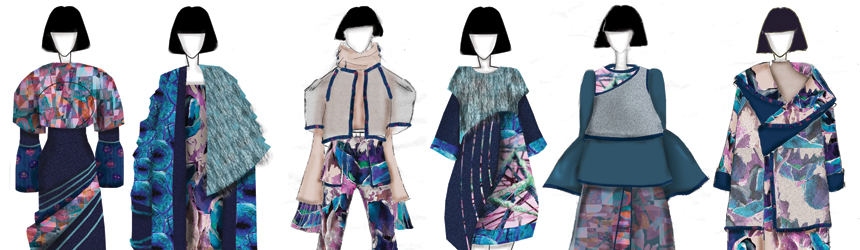
Epson held its third annual Epson Digital Couture Project fashion show on February 7, 2017. As in previous years, the event occurred prior to Fashion Week in New York City, NY. 13 design teams from North and Latin America showcased fashions created with Epson digital textile printing solutions in response to the theme “textile stories.”

While Epson SureColor F-Series dye-sublimation (dye-sub) printers were primarily used, the Monna Lisa series of inkjet textile printers were demonstrated and integrated as well.

In June 2016, Epson acquired Italian textile printer manufacturer, Robustelli. The event served as the official introduction of the Robustelli-Epson brand to the international fashion community. High-quality textile samples from the two companies’ Monna Lisa print devices were on display.

University Spotlight
Two students from Philadelphia University’s Kanbar College of Design, Engineering and Commerce showcased a collection of four looks. Textile engineer Mark Sunderland and textile designer Hiroshi Ujiie, professors at the university, have worked with Epson for several years, digitally printing advanced textiles and testing printing equipment. With this foundation in place, seniors Maria Balestino and Huyen Doan were chosen to craft designs for the Epson Digital Couture Project.

The students were selected by faculty to participate in October 2016. From there, a team met once a week for one to two hours until mid-December. Balestino and Doan, pursuing degrees in fashion design, collaborated with graduate surface imaging students to design the one-of-a-kind prints used to create the collection. Conversations during meetings focused on utilizing the strengths of digital technology.

“We originally were looking to create a Winter collection, which makes you think of muted, dull colors. But, we wanted to show the capabilities of the digital printer, so we changed the colors to vibrant blues and teals,” explains Balestino.

Once the designs were decided, sewing began during the students’ Winter break. Model fittings occurred at the end of January, leading up to the Epson Digital Couture Project event the first week of February.

Fabric for the four looks was printed on an Epson SureColor F9200 dye-sub transfer printer. The 64-inch device features Epson PrecisionCore TFP printheads with Epson UltraChrome DS ink. A high-density black creates rich, smooth colors, which translate seamlessly to the fabric.

According to Balestino, seeing the graphics come to life—from a design in Adobe Photoshop to the real textile—was exciting. The final product, more specifically the vibrancy of the colors, was awe inspiring. The student-led team used a variety of fabrics to create their looks, from chiffons to a heavy weight neoprene.

The experience opened up a new world of design for Balestino. Her second semester senior project involves crafting her own prints, choosing fabrics, and then printing with an Epson SureColor F6200. Besides her own work, she’s also encouraged fellow fashion design students to use digital print to enhance their collections. Several plan on working with the Epson SureColor F6200 to create designs.

Additional Designers
In addition to the Philadelphia University students, other designers that participated in the Epson Digital Couture Project include Vanesa Krongold of Argentina; Daniel Barreira of Brazil; Sarah Stevenson of Canada; Daniela Hoehmann of Chile; Ricardo Pava of Colombia; Daniel Del Barco and Sonia Change of Costa Rica; Carlos de Moya of the Dominican Republic; Miguel Moyano, Alex Polo, and Maria Susana Rivadeneira Simball of Ecuador; Leonardo Mena of Mexico; and Susan Wagner of Peru. Additional U.S. designers were Lindsay Degen and Sarah Richards.

Fashion Forward
The goal of the Epson Digital Couture Project event is to showcase the capabilities of digital print. Specifically, it hopes to convey how the technology allows designers in the fashion industry to create unique patterns and be unlimited in their design aesthetic.

Apr2017, Digital Output

Driving Development

By Melissa Donovan

Annually, Digital Output focuses on the ink segment of the graphic arts. Topics of note include which ink type is commonly requested by print service providers (PSPs), trends effecting these demands, new chemical formulations, and what drives research and development (R&D).

A Number of Options
Based largely on what they offer, speaking to a cross section of vendors reveals that each ink type is still represented in some capacity. PSPs’ interest in the newest technology, remaining conscious of the environment, demand for fast drying ink sets—to help increase productivity, and desire for affordable, durable consumables means product categories like solvent remain popular and newer formulations such as latex expand their presence.

“Solvent continues to dominate the printing space largely due to its durability, ease of use, and availability. Its compatibility with a variety of uncoated media also drives this demand,” explains Michael Maxwell, senior manager, sign graphics business development and marketing, Mimaki USA, Inc.

According to Craig Reid, VP – digital division, INX International Ink Co., solvent still holds strong in much of Africa, Eastern Europe, the Middle East, and South America—and Asia varies country by country. “Even though grand format solvent was thought to be nearly extinct in the U.S., several high-speed three- and five-meter wide systems were launched by original equipment manufacturers last year and experienced very good sales.”

Aqueous inks remain popular thanks to increasingly stringent air quality and environmental, health, and workplace safety regulations in developed countries, says Dr. Ross R. Allen, senior technology specialist, HP Inkjet Technology Platforms. He adds that the increased use of aqueous pigment inkjet inks in food packaging—a segment benefiting from digital thanks to serialization, watermarking, and customization—also leads to this ink type’s permanence.

Analyst firm I.T. Strategies reports on a compound annual growth rate (CAGR) of 2.26 percent from 2014 to 2020 for liters of aqueous ink used per month on average.

Latex’s popularity grows thanks to environmentally concerned PSPs. “This is because of greatly reduced volatile organic compounds (VOCs), which means they don’t require special ventilation equipment, and have less of an environmental impact. Also, experience has shown to the market that the outdoor durability of latex is equal to solvent. Latex prints completely dry within minutes, so you don’t have to wait hours or a day to do post processing. In today’s world of instant gratification, fast drying times are key,” admits Ray Bauer, production marketing manager, Ricoh USA, Inc.

To further prove the point, Michael L. Pender, president, Supply55, Inc., says he has seen a slight decline in eco-solvent usage as customers move to latex platforms.

“Latex was the huge growth segment in 2016, accounting for over 30 percent of market growth over both aqueous and solvent,” agrees John D. Peterman, EVP, sales and marketing, Big Systems.

Dye-sublimation (dye-sub) inks increase in usage thanks to the demand for digitally printed textiles. “In 2015, SGIA reported a growing number of large format print providers that invested and/or plan to invest in digital dye-sub. They also mention an increase in businesses that classify themselves as ‘entirely digital’ and have witnessed this growth for several years. With both the process and the cost of sublimation inks coming down in price many companies are expanding this into their current printing operations,” says Matt Gusse, VP sales and marketing, Advanced Color Solutions Inc.

UV ink’s appeal is in its eco-friendliness as well as its influence on digital print expanding into new markets. “There is significant regional demand for UV LED and many bigger players in the market are looking at UV LED because of its environmental and application benefits,” shares Peter Saunders, business director – digital, Sun Chemical Corporation.

“New advances in UV-curable technologies increased their demand recently, and new applications where UV has become more popular are driving interest,” agrees Maxwell. Thermoforming and corrugated board printing are two examples, as UV ink’s flexibility characteristics and cooler curing techniques allow for untraditional substrates to be printed on.

I.T. Strategies reports on a CAGR of 8.93 percent from 2014 to 2020 for liters of UV ink used per month on average.

Trends in Ink
Ink sets are effected by trends and demand from users. Buyers look for efficiency without compromising on quality. The newest formulations of ink in the digital space meet both of these requirements and more.

Quick turnarounds are common place in print shops around the world and ink manufacturers must take this into consideration. “The tight deadlines that customers expect from print providers have moved the needle toward higher usage of latex and UV inks,” says Adam Larson, global portfolio manager – premium films, 3M Commercial Solutions.

Complementing efficiency is quality. This desire not only comes from PSPs, but newcomers entering the market with high standards. “Many graphic artists come from either photography, offset, or elsewhere outside of the wide format printing segment. This group has an increased demand for gamut and clarity. This has led to a further focus from many manufacturers to increase offerings in available colors, and has also driven improvements in technology,” shares Maxwell.

The biggest trend Saunders has seen is inks that adhere to a range of substrates for both rigid and flexible materials on much faster presses. “The equipment is running faster and inks need to cure on the wide range of substrates used at production speeds. Price is always a factor for our customers, but it is balanced by the application of the ink on many substrates,” explains Saunders.

“Cost and value continue to be strong trends across the graphics space,” agrees Mark Goodearl, senior ink product manager, EFI. “And it’s not necessarily about having the absolute lowest cost per liter of ink, but additional factors such as yield and coverage to get the best possible results with lower ink volumes, lower ink waste, and faster speeds for the lower costs per print—anything that contributes to a lower total cost of ownership.”

“There is also a long-term trend towards more sustainable, eco-friendly products that has seen printers and printer/ink manufacturers move from solvent to eco-solvent and more recently latex ink,” adds Sal Sheikh, senior director, Océ LFS marketing and support, Canon U.S.A., Inc. and VP, marketing, large format solutions, Canon Solutions America, Inc.

In terms of applications, digital textile printing greatly effects the use of ink. “Whether it is dye-sub transfer or direct to textile, the application and opportunities are growing fast. Print providers tend to have multiple printers running many hours at a time to meet demand. New inks are created all the time along with special media that is receptive to the ink,” shares Brian Phipps, president, Mutoh America, Inc.

Users attracted to textile printing—specifically dye-sub—are vast, spanning a number of industry segments including home décor, furnishings, soft signage, and exhibit and display, according to Pender.

Driving the trend is ease of transportation, ease of use, and ease of installation, lists Bauer. He provides the example that it would typically take four to five palettes to ship traditional trade show signage, but the same amount of signage printed on fabric only takes one palette.

Other factors influencing demand include, “textiles can be cleaned and reused again, they are very durable, vibrant, and fade resistant. Another big factor is the aesthetics. Fabric is familiar, sophisticated, bright, and can be exhibited rigid in a frame using silicone edge graphics or in its free flowing form with dowels, as flags or banners,” explains Tara Lamb, president, Global Imaging, Inc.

Specialty inks like gloss, primer, and white are also trending. They are influential in creating unique dimensional effects. “Previous to the introduction of these inks, the trend was producing mock ups or short-run graphics with spot varnish or gloss. However, the more the graphic arts industry saw how easy and effective it is to incorporate gloss/matte and embossing techniques with wide format printers, the more demand for these inks increased for point of purchase, signage, and high-end marketing applications,” shares Jay Roberts, product manager, UV products, Roland DGA Corporation.

“Specialty inks like white, primer, and varnish—included or as options—are opening the doors to new markets by providing PSPs with ways of embellishing the print to produce a ‘wow’ factor like dimensional and 3D prints that increase the overall value,” agrees Deborah Hutcheson, director of marketing, Agfa Graphics.

Adapted Formulations
The chemical composition of solvent, latex, aqueous, dye-sub, and UV ink continually develops. This is in response to the aforementioned trends and demands, namely the need for durability, quality, and efficiency across a range of applications.

“To meet demand, inks are designed to perform at high speeds, high resolution, and to provide an enhanced color gamut,” explains Jack Papaiacovou, VP/GM, Hilord Chemical Corporation.

Allen says that in general, to improve ink durability, new components like polymers are added. Pigments are introduced to provide improved colorfulness and fade resistance, this limits exposure to certain metals and other hazardous materials that can cause health issues.

Larson adds that the chemistries of many inks are undergoing reformulation, such as the removal of nickel, as a way to create more sustainable products and meet the growing demand for eco-friendly inks.

“Many manufacturers have adjusted the chemistry of inks to reduce odor and improve dry times, and in some cases they have figured out how to control the shape of the drops for more accurate placement. These chemical and technological advancements improve the image quality and overall perceptions of the final product of inkjet versus more traditional printing methods,” shares Maxwell.

Color gamut is of interest beyond traditional CMYK. “Ink sets have evolved based on color needs in the industry and the changing of printhead technology. Manufacturers starting with basic CMYK now may have up to eight color options including fluorescents. 2016 has seen a big spike with fluorescents and 2017 will be even greater,” foresees Gusse.

When it comes to changes in specific ink sets, newer formulations focus on traditional issues. “Solvent ink technology continues to improve upon the issues that aren’t ideal—we saw the immergence of eco-solvent inks with low odor and faster dry times due to the improvement of the ink itself. Changes in the ink composition also make printheads more difficult to fire ink droplets consistently. Striking the right balance between ink property and printhead stability is the key technology of printer manufacturers,” advises Jun Kurokawa, technical marketing engineer, Oki Data Americas, Inc., Wide Format Division.

Latex advancements include “meeting the print speed demand to get ink down quicker; drying with lower temperatures, at the right density and quality; and moving on to the next step in post processing as quickly as possible—because time is money,” according to Bauer.

UV improvements offer users the capability of producing a wider range of applications as well as addressing environmental friendliness. “We’ve seen reductions or elimination of dangerous UV ink components and improvements in related curing systems,” explains Sheikh.

Hutcheson says, “UV ink continually evolves through reducing the pigments, while increasing the intensity. This enables a smaller drop size, increasing image quality. UV ink has expanded formulas to provide increased flexibility and adhesion, while maintaining color gamut. The curing advance, through both ink chemistry and the light sources evolving, increase speed and reduce operational costs.”

It is important to note that changes in formulations are also application based. Take for example ink sets designed with industrial printing in mind, specifically thermoforming applications. “These are typically more technical and specific for a given application, substrate, and delivery method. What happens to the inks after they are jetted, such as being formed, stretched, or shaped, often requires new formulations. And, if they are jetted on a high-speed production line in a single pass, they have to be formulated with higher pigment loads, faster curing/drying speeds, all while being even more stable for jetting,” explains Reid.

Driving R&D
Ink R&D is driven by many factors. For some manufacturers it is application based, both applications that are entirely new or just new to the industry. For others, it is based on the hardware that works so closely with the inks. Often it is a combination of the two.

“New applications definitely drive ink R&D. As demands increase for markets that have transitioned to digital, inkjet manufacturers are trying to make sure that the process used prior to inkjet can be reproduced closely—and reliably—to the original method. This requires chemical, mechanical, and electrical engineering teams to look at the whole solution rather than the individual pieces,” explains Maxwell.

For Mutoh specifically, applications are a primary factor in R&D. “We have over 20 printers and many different inks now specifically designed for the media and application it will be used for. As new applications increase over time so does the opportunity to grow business. With growth comes a bit of R&D investment and time. A tremendous amount of time and resources goes into developing any new printer, ink, or media and accessories to create a specific application or solution. The good news is there doesn’t seem to be an end in sight as each year there are more new ideas,” says Phipps.

“New applications definitely drive ink R&D efforts. Our goal is to create new inks that serve as many different requirements and applications as possible. When we develop these inks, we look at the substrates, the environment the output will be displayed in, and the durability of the inks. We also consider any new laws and regulations in place relating to ink formulation,” shares Lily Hunter, product manager, textiles and consumables, Roland.

An example of applications driving R&D is the development of ink for the EFI Nozomi C18000 press. “We could see on the ink side that LED was a great fit as an imaging platform. But it also required R&D to meet some of the specific demands of corrugated production at very high speeds,” says Goodearl. In response, the LED imaging system on this press is not a standard LED platform. Instead it is a technology that uses the benefit of LED, like cool curing, which is important in eliminating warping, but also addresses some of the dot gain and ink absorption challenges that occur with corrugated board top sheet liners.

Machine improvements also drive ink R&D. “Health and safety, labeling, and raw material legislation can have an impact on new formulations. This is an ever-changing environment. Another key driver is the need to be competitive. Every component of the finished print is reviewed for best performance at the most competitive price—ink is no exception,” adds Larry Hettinger, product manager – graphic and industrial screen inks, wide format digital inks, Fujifilm North America Corporation, Graphic Systems Division.

State of Ink
Ink types from solvent to latex are still used fairly regularly, it depends on the geographical location of a shop as well as the type of applications they are processing. Trends such as efficiency continue to drive ink development, as do emerging segments such as digital textile printing and industrial print. In response, ink chemists adapt consumables to serve a broader range of materials from textiles to more untraditional substrates.

Apr2017, Digital Output

Sold Out Show

By Digital Output Staff

The International Sign Association’s (ISA’s) annual Sign Expo takes place April 19 to 22, 2017 at the Mandalay Bay Convention Center in Las Vegas, NV. Attracting custom sign companies, corporate sign buyers, national sign companies, installers, printers, and designers, the ISA Sign Expo is one of the largest gatherings of sign and graphics professionals.

In January, the show organizers announced that floor space was sold out. 210,000 square feet of booth space and close to 600 exhibitors are expected to draw over 20,000 attendees. Here, we include information on what some of those exhibitors are bringing to this year’s event.

3A Composites USA, booth 1339, introduces the all new PRO Series. Gatorfoam PRO and Banova Print are the first two graphic display boards announced in the PRO Series line. With enhanced PRO facers designed to offer superior ink adhesion and printability resulting in vibrant images, Gatorfoam PRO is a high-performance graphic display board that offers dimensional stability. Banova Print combines the lightweight, rigid, and renewable properties of Banova—a balsa wood sheet made of adhesively bonded balsa veneers—with laminated PRO facers designed for enhanced printing properties.

4over’s, booth 315, EDDM Full Service is designed to effectively saturate the market, targeting specific postal routes chosen by the user. This USPS program ensures promotions and advertisements are reaching the mailboxes of desired demographics, in the areas of the user’s choosing. The company’s diverse size and finishing options fit into the USPS’ EDDM restrictions, complementing any marketing campaign.

Agfa Graphics, booth 1350, exhibits the Jeti Mira HS LED. With roll to roll and varnish it is an 8.82-feet wide, moving gantry flatbed printer designed for optimal flexibility. Featuring print and prepare functionality; speeds up to 2,486 square feet per hour; six-color, white standard, highly-pigmented Agfa-made UV inks ideal for indoor/outdoor applications; and two rows of Ricoh inkjet printheads, the Jeti Mira’s UV LED curing technology prints on heat-sensitive substrates.

Arlon Graphics, LLC, booth 1374, launches two new innovative producs and a new technology for full and partial vehicle and fleet wraps. This new film allows for a fast installation and superior repositionability, and was designed with the single installer in mind. The combination of these products allows for graphics to float over the substrate until firm pressure is applied and conforms around rivets, complex curves, and deep channels.

Avery Dennison Graphics Solutions, booth 4380, invites attendees to see new finishes and films in the Supreme Wrapping Film portfolio—ideal for car wraps, and a new short-term, digital cast film for point of purchase and promotional campaigns. Installer Justin Pate holds window, wall, and floor installation demonstrations. Also on display MPI 2600 Textured Wall Films and MPI 1105, a next generation digital cast film for car, vehicle, and outdoor graphics.

Caldera, booth 1142, showcases StreamLive, an easy-to-use SaaS application that creates the ideal production process, track jobs in real time, and automates time-consuming tasks. The entry-level product includes a range of features. StreamLive is cloud based and allows users to create customer job sheets, submit files to software workflow, connect with Caldera RIP, and automate email reporting. The functionality of this scalable software suite can be extended with a range of bolt-on options including a calendar-based planning module, custom document generation, preflight, and connections to many popular software packages.

Canon Solutions America, booth 2068, reveals the Océ Colorado 1640 64-inch UV roll-to-roll printer powered by UVgel technology. This product is designed to easily handle peak periods with fully automated media loading, including a drawer to manage multiple media rolls. Produce instant dry prints on a variety of coated and uncoated media. With up to 40 percent reduction in running costs, print providers can cut their costs with this new production printer.

CASper Sign Business Software, booth 1746, highlights its CASper on the Cloud. From estimating to invoicing, from job and production tracking to a built-in CRM and inventory control, it has everything a sign shop needs to streamline business and save valuable time. It is now available with improved Attachment Management.

Colex, booth 759, an industry leader in wide format finishing solutions, shows the Sharpcut Conveyor Flatbed Cutter System. The Sharpcut is Colex’s most productive solution for automated finishing of wide format media. It can be used for a variety of applications. The Sharpcut is designed to speed up the process of cutting soft to rigid boards, vinyl, fabric, and textiles, allowing for versatility and faster production runs. This provides users with one of the best affordable digital cutting automation systems.

DAF Graphic Media, booth 3592, provides economical wide format print materials certified for HP Latex, as well as eco and mild solvent and UV platforms. These include printable white vinyl offered in clear or gray adhesive and bubble-free options; perforated window film—featuring the Gecko Grip inside window mount, plus adhesive backed 50/50, 60/40, and 70/30; polypropylene films for display; 100 percent polyester for rollup and backlit; PSA vinyl laminating film and mounting tape; and floor graphic 11-mil speed vinyl for retail applications.

Denco Sales, booths 2152 and 2150, offers supplies and equipment in visual communications. Stop by the booth and take advantage of equipment promotions. Denco Sales offers great show specials on various pieces of equipment, including CWT flatbed laminating and application tables, HP latex printers, Roland eco-solvent printers, plotters, laminators, and a variety of other equipment options.

E.L. Hatton Sales Co., booth 3880, makes history with Banner Ups banner reaching 108 miles per hour in wind tunnel test. The strongest banners were made in minutes with Banner Ups new improved MegaTape and Clear PowerTape. Other new products include KederTape no sew adhesive keder, TexTape textile hem tape, and PoleTape PRO, no-sew, no-weld seam tape for pole pocket banners.

EFI, booth 1332, features end-to-end capabilities in superwide format inkjet, including EFI VUTEk LED hybrid roll/flatbed and aqueous dye-sublimation soft signage production offerings, EFI Fiery digital front ends, and integrated web to print and multi-channel communications software. EFI’s exhibit premieres the new, three-meter EFI VUTEk 3r LED printer, which is designed to offer the highest quality at the highest rated throughput speeds with a range of options to drive efficiencies in the production process.

EnCore Products, a division of Elmer’s Products, Inc., booth 1110, is a manufacturer of foamboard substrates used for a variety of applications—digital printing, screenprinting, point of purchase displays, exhibits, cut graphics, and indoor signage. The EnCore Foam Board line includes White, Colors, Black on Black, Pressure Sensitive, SingleStep Heat-Activated, PilloCore, MightyCore Rigid, DuraPrime, and EnCore Design Boards. They are made in the U.S.

Esko, booth 3180, demonstrates the 126-inch Kongsberg C64 finishing system, which keeps up with faster sign and display printers, without losing quality. Its unique, rigid traverse assures excellent precision with high speed, fast acceleration, high-quality cutting, and creasing—with a 3kW continuous duty high-performance milling unit. It fits all needs—rolls, sheets, corrugated, and milling. It is featured with a new, fully automated feeder/stacker system. The modular design lets customers install the feeder first, and stacker later.

Fisher Textiles, booth 4774, a leading supplier of fabrics for digital printing, introduces a new fabric for frontlit silicone edge graphics (SEG) applications, DD 4444 Revolution, for UV-curable, direct, and transfer sublimation printing. DD 4444 Revolution is a specially treated fabric, which is very stable with a gorgeous sheen. In addition to frontlit SEG, this fabric is ideal for banners, exhibit graphics, photographic back drops, and retail advertising. It weighs 5.4 oz/yd2 and is stocked at 125 inches wide. It is flame retardant and meets NFPA 701.

Gans, booth 300, has been in business since 1950 and brings its renowned customer service and superlative product value to wide format. It is a solution provider whether it’s inks, media, or equipment. At the show, the company features its newest product, and 2017 Innovation Award Nominee, X:Base. X:Base is a revolutionary product that transforms a wall, window, or board to a bubble-free area that allows for ultra-removability of any permanent vinyl of your choice.

Georgia Printco, booth 4196, is a full-service wholesale print provider that produces high-quality, indoor/outdoor, digital and dye-sublimated printed graphics. It specializes in the needs of both small and large resellers with more than 250 stocked materials for quick turnaround times—but always has access to specialty products, as well. The company is a premiere provider of blackback and block-out double-sided mesh vinyl.

GMG, booth 603, displays PrintFactory, powered by GMG, a complete production workflow software suite for banner, sign, and wide format printing. Its job preparation and file correction tools are easy to access and operate. GMG’s centralized color management system delivers color control of digital presses. Ink optimization technology reduces ink consumption by as much as 20 percent while improving color quality. With PrintFactory, powered by GMG, companies provide customers consistent color throughout their entire campaigns.

Graphic Finishing Partners, booth 1305, introduces the new 563TH MAXPRO top heat laminator. It includes operator-friendly quick-grip shafts for easy loading and unloading, roll-to-roll operation, and utilizes a metal alloy heater. It features front and rear swing-out film shafts that save operators time and energy. Easy to set up and operate, the 563TH-2 includes one-inch variable roller gap, and operates at up to 20 feet per minute.

Gravotech, booth 6192, shows the Gravograph LS1000XP. It is ideal for cutting one-inch thick acrylic and producing a beautiful flame-polished edge along with many other applications. With speeds up 157 inches per second, double pass through, multi-job workspace, and 48×24-inch engraving area, the LS1000XP is the ideal addition to any shop.

Herculite Products Inc., booth 2034, announces Bantex 10 oz Blackback Curl Free, a new one-sided printable product with a glare deadening blackback for point of purchase and trade show graphic applications where no edge curl is mandatory. The product prints with all solvent, UV-curable, and latex inks and is guaranteed not to edge curl for five years. It is manufactured in the U.S. by Herculite and distributed by authorized Bantex distributors across North America.

HP, booths 2132 and 2532, demonstrates the HP Signage Suite, a free, cloud-based web application designed for easy website integration boosting ecommerce capabilities. The level of integration ranges from a basic hyperlink to a fully tailored experience. It helps PSPs, small sign, and copy shops drive new growth for rollups, banners, and posters. It supports the full line of HP latex printers, as well as the HP DesignJet Z2600 and Z5600 PostScript printers.

Inkjet Technology, Inc., booth 5489, runs its ITI2000-TXR high-speed dye-sublimation printer. It offers advanced variable dot Gen5 printhead performance, print speeds up to 3,336 square feet per hour, and an advanced roller system that keeps paper at a constant tension for high-speed printing. It is suitable for production run polyester fabrics, soft signage, sportswear and apparel, and flags and banners.

IQ Australia, booth 5384, exhibits printIQ, a 100 percent web-based management workflow system with built in web to print. Production staff manage the factory while customers quote, order, and track, all from within the same application. There’s no software to install, or online ordering system to add on. So if you’re looking to solve an estimating turnaround problem, take business online, or take the leap into being an efficient and modern print company, printIQ has the key.

Leister Technologies, booth 2787, introduces the new HEMTEK ST banner welder. The HEMTEK ST stationary welder is one of the most efficient and affordable banner finishers of all time. Capabilities include hem welds, pole pockets, and hems with rope. From now on, quickly weld promotional banners or tarpaulins from corner to corner with ease. Whether sitting or standing, the HEMTEK ST can be used at almost any work table.

Lintec of America, booth 4586, is a premier manufacturer of optically clear and VisionControlFilms for window and glass decoration. Digital print companies have used its products to decorate stores, conference rooms, as well as galleries for more than seven years. Lintec’s VisionControlFilms consist of a family of specialty privacy films. When adhered to glass the layers of film provide a frosted effect that can appear and disappear as the viewing angle changes. These are available in varying levels of degree from either the horizontal or vertical positions.

Magnum Magnetics, booth 762, offers direct printable magnetic media that is now stronger than ever. The magnet is made in the U.S., meaning excellent lead times, outstanding product quality, and unparalleled customer service. The company offers quick delivery on stock items, and custom material made to specifications available in days, not months.

Marabu North America, booth 1762, showcases its newest UltraJet UV LED digital inks, the ever-popular ClearShield liquid laminates, the versatile StarLam roll-to-roll laminator, and the cost-effective Marashield UV-curable coatings. UltraJet inks are the newest in Marabu’s line of digital inks specifically tailored for high-resolution printheads in both traditional UV and UV LED printing. Marashield coatings are UV-curable and offer excellent durability and versatility compared to film laminates.

Master Magnetics, booth 3780, highlights PrintMagnetVinyl and FlexIRON—a magnetic graphic system. Ideal for retail environments, it provides the cost efficiency of printing direct to magnet and magnetic receptive sheeting with solvent, eco-solvent, UV, and latex ink systems, coupled with the simplicity of being easy to change and install. Utilizing both wide format substrates provides a multitude of magnetic solutions for graphic displays of all sizes, ranging from menu boards to full-wall mural graphics—all with easy installation and changeability.

MCT Digital, booth 913, promotes the VersaTech2, U.S. manufactured with its new motion system. By incorporating dual conveyors the VersaTech2 allows for fast change between blade/router cutting and laser cutting as printing/finishing projects change, decimating the finishing bottleneck. See VersaTech2’s third generation, patent-pending, easy-to-use convertible conveying solution with its new laced/zippered, paneled, and aluminized conveyor belt.

Mimaki USA, booth 3569, showcases the UJF-7151 plus benchtop printer with LUS-350 thermoforming inks to produce three-dimensional signage. LUS-350 ink does not crack after molding, making it ideal for printing onto substrates such as PETG, acrylic, polycarbonate, polystyrene, and PVC before the thermoforming process. Intricate textures of decorative fine prints are retained even after molding. Raised areas of thickly applied ink and double/triple layer printing also stay intact without cracking.

MultiCam Inc., booth 1362, returns to the 2017 ISA Sign Expo. It showcases a range of CNC machines including the Digital Express and Graph-X-Cutter Digital Finishing Systems, Magnus CO2 Laser, and APEX3R Router. The company’s innovative and easy-to-use CNC solutions cover nearly every aspect of the signmaking process from start to finish.

Novus Imaging, booth 1968, demonstrates ULTRA, the affordable, innovative, field upgradeable UV LED true flatbed printer. ULTRA features advanced UV LED technology for low-temperature curing at best-in-class speeds up to 1,300 square feet per hour. Dynamic variable dot technology produces photorealistic greyscale images and auto masking saves hours of set-up time.

OKI Data, booth 1368, has industry experts take attendees through the wide format digital printing workflow, from design concept to printed application. The workflow features OKI’s ColorPainter E-64s, which offers premium print quality at an entry-level price point.

Photo Tex Group, booth 2686, just received its fourth U.S. patent on its self-adhesive peel-and-stick media. Stop by the booth to learn about the different characteristics as to why Photo Tex is a number one selling self-adhesive fabric for offices, arenas, retail, point of purchase, and homes.

Roland DGA, booth 1280, shows its latest digital technologies, including the new high-performance TrueVIS VG and SG series wide format printer/cutters, upgraded VersaUV LEF series printers, and industrial-grade CAMM-1 GR Pro vinyl cutters. Roland’s innovative VersaUV LEJ-640FT flatbed and Texart dye-sublimation printers are on display as well, along with the new MDX-50 milling machine and MPX-95 photo impact printer. Booth visitors can also attend the company’s daily live vehicle wrap and heat transfer demonstrations.

Rolinx, booth 4563, exhibits Kala Finishing Systems’ new flatbed, the AppliKator. Functionality, safety, and efficiency, together with various levels of scalability and ergonomics are the main features that set the AppliKator apart from the competition. Roller elevation is achieved with two super-fast electric motors. Say goodbye to flatbed applicators operating with an air compressor. Roller pressure is electronically adjustable from the control panel with three pre-set pressure positions. It is designed to optimize work areas, organize inventory, and keep workflow contained with ample storage room directly beneath the work surface.

SA International (SAi), booth 4375, celebrates the silver anniversary of SAi Flexi as the industry-standard for sign-specific design tools, RIP software, print-and-cut software, and direct vinyl cutting. SAi Flexi continues to evolve with efficiency-enhancing tools to streamline large format/sign and display projects. The new MyFlexi mobile application with FlexiQuote makes managing a sign business even easier. Low-cost monthly subscription plans make SAi Flexi an affordable solution.

Saw Trax Mfg, Inc., booth 1841, offers the Saw Trax Sign Maker Series Panel Saw for sign shops as a one-stop cutting tool for all cutting needs—no longer need to buy a panel saw and a mat cutter. It includes three cutting heads—a circular saw, a pivoting knife, and an ACM cutter. Includes dust collection hook ups, folding stand, and measuring guides. Also check out Saw Trax’s line of substrate carts.

STS Inks, booth 4975, features Prismat-Ink, a new ink product for permanent printing on non-absorbent surfaces. Prismat-Ink contains a special resin that gives the user a longer lasting product, guaranteed to last up to ten years. Developed for commercial and household applications, Prismat-Ink is formulated for direct printing on glass, aluminum, and stainless steel products.

Trotec, booth 746, unveils its high-speed laser cutter for large format materials. Built for efficient production, the SP2000 features processing speeds up to 6.5 feet per second, laser power up to 400 watts, a working area of 66×98 inches, access from all four sides, and a 71-inch wide loading area at the front and the rear of the machine.

Ultraflex Systems Inc., booth 2346, highlights several new products including UltraMesh Blockout, UltraMesh Eclipse, and VorTex Bolero. Each product is displayed and samples available. Ultraflex continues to add products in response to global market demand. Join the company in its commitment to progress, quality, and product development.

V Sign software, booth 1303, is an ERP system for the sign manufacturer. With the ability to estimate, track sales, and account for labor, materials, and costing, it is the full software system to use. Mobile applications available, your company will be at your fingertips wherever you go. Stop by for a demonstration on how it can make life easier.

Verseidag US, booth 2634, showcases its new line of seemee Select dye-sublimation (dye-sub) fabrics, including Poly Light, Poly Heavy, Tri-White, and new backlit for transfer dye-sub—Sheen TR. See how these fabrics, as well the rest of the company’s range of textiles and flexface products, can help grow business.

Zünd, booth 3189, introduces the 3.6kW RM-L module, a powerful new routing solution for Zünd G3/D3 cutting systems. The RM-L delivers 0.7 Nm torque, comes with minimum quantity lubrication, and can be equipped with an optional, eight-position automatic tool changer. The power of the system, combined with efficient cooling and vacuum extraction, permits much greater processing speeds and cutting depths.

In Vegas
Digital Output is in booth 5368 at the ISA Sign Expo. Stop by and pick up copies of the March and April issues.

Apr2017, Digital Output

Write On, Wipe Off

By Olivia Cahoon

Clients seeking a creative twist for display and point of purchase (POP) applications turn to dry erase and chalkboard media. Boutique shops, retailers, and educational environments request this media to present visually appealing displays that offer helpful services to an establishment.

The popularity of these specialty substrates has risen due to ease of installation and customizable features. However, print service providers (PSPs) considering material should be aware of its printability due to its versatile components.

Dry Erase and Chalkboard
Dry erase and chalkboard media is used in a variety of settings including homes and learning environments, corporate board rooms, offices, hospitals, restaurants, and retail. Applications include décor, message boards, creative centers, wall art, and calendars.

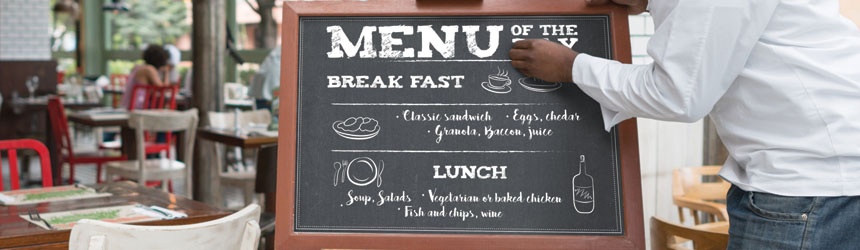
Nate Goodman, product manager, Drytac Corporation, says dry erase and chalkboard media is found wherever ideas, concepts, or brainstorming sessions need to be recorded. This includes hospitals where patient information is displayed and restaurants for menu boards, drink lists, or pricing boards.

Elizabeth Ziegler, technical service specialist, 3M Commercial Solutions, explains that whiteboard products are applied to many types of smooth, flat applications including wood, gypsum with skim coat and sealer, metals, glass, and plastics. “The actual surface to which the whiteboard product is applied may be a bare application surface or a finish of an application surface such as paint, varnish, or laminate.”

The top layer of whiteboard products is different from traditional vinyl and films because of its formulation. Whiteboard has a top surface finish that is writable and erasable. Most dry erase films are polypropylene and used for shorter term applications unless paired with a hard coat.

Drytac features WipeOut dry erase PET overlaminate that includes a hard coat. It is chemical and scratch resistant and includes a gloss finish. Because of its durability, WipeOut is best used in schools, hospitals, offices, and board rooms.

On the other hand, chalkboard media is a black textured vinyl that differs from traditional printable vinyl in color and texture to create a chalkboard finish, explains Goodman. Traditional vinyl also tends to be used for outdoor applications and isn’t capable of being written on with chalk or dry erase markers.

Drytac’s ReTac ChalkMate chalkboard film is intended for retail, daycare facilities, restaurants, and delis. The media is die cut for custom shapes.

Joann Dupre, technical service representative, FLEXcon, sees this type of specialty media used in environments from trade show graphics to do-it-yourself (DIY) applications. She explains, “because the media is fun and provides an interactive and functional element, it’s ideal for educational settings, business environments, and DIY, and can also be used as a portable communications tool.” Both dry erase and chalkboard media is designed for indoor use and short-term outdoor use.

DIY Trends
Recently, dry erase and chalkboard media is popular amongst end users seeking customization. Goodman explains, “the ability to custom print on the media adds to its desirability. Additionally, greater capabilities of the media and the versatility of adhesives allow for many applications that were not possible before.”

Whiteboard products are fast and flexible to apply, suitable for office spaces, open spaces, schools, healthcare, and other interior environments. Ziegler believes, “businesses and educational organizations are moving toward more holistic and collaborative environments.” The media adds personalization but also efficiency.

“It is adaptable to the changing trends and collaborative environments happening around us. Whiteboard solutions enable easy interaction and sharing of information,” adds Ziegler.

Because the media is fun, interactive, and conveys a personal message, Dupre says that it fits the trends of local, social, and mobile communication. “Think about the places that we frequent as customers and how we are drawn in by a daily special, a motivational quote, or some other product or service that businesses from small to large may highlight,” she says.

Stepping aside from traditional dry erase and chalkboard media, modern modifications implemented into the media keep it popular and trending. Griff Paper and Film Inc. offers colors and holographic materials in standard and custom sizes. Its dry erase media, Griff-Erase, and chalkboard media, Griff-Chalk, is made with a flexible vinyl-based material available as permanent, removable, and magnetic. “We find the Griff-Erase and Griff-Chalk has become popular by giving our customers the freedom to be creative with an easy peel-and-stick product line that goes beyond the standard black and white,” says Alex Phinn, director, Griff Paper and Film. He adds that the Griff-Chalk is popular in green in contrast to standard black.

Chalkboard and dry erase media is currently trending for its DIY usage. Pinterest, a social media website dedicated to visual bookmarking for discovery and creative ideas, includes many postings optimizing the media. Dupre sees the media’s usage trending amongst Pinterest audiences for applications like party favors, home décor, dorm décor, and other applications including organizational and lean management.

Phinn agrees and says that as a colorful application, the media is commonly applied to a child’s bedroom to use as a reminder for responsibilities at home and school.

Most whiteboard products meet U.S. building regulations for flammability resistance and are compatible with standard dry erase markers and erasers—making it a fun but safe option.

Adding New Media
Prior to offering this media, PSPs should be aware that most dry erase products are not directly printable, but are overlaminates paired with printable media. “In combining an overlaminate and media, PSPs can print an image on their preferred media and then laminate it, transforming it into a complete dry erase solution,” explains Goodman.

3M DI-NOC Whiteboard Finish WH-111 is a polyester film with architectural finish. The media is not printable but may be applied on steel to become a magnetic surface. The material comes on the roll in the final state. Ziegler says, “it is easy to apply due to the 3M Comply Adhesive Technology and can be applied to a variety of surfaces.” DI-NOC Whiteboard Finish WH-111 is best applied to a flat, nonporous, smooth surface and is intended for interior use only.

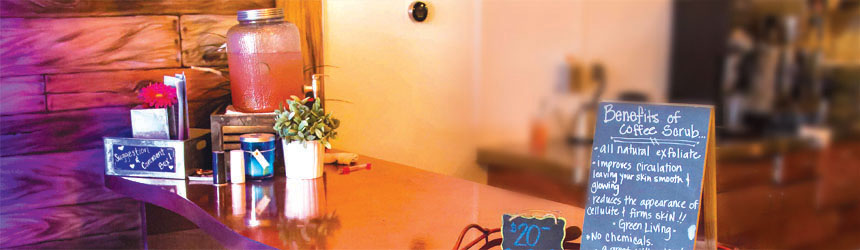
To print on chalkboard products, printers require white ink capabilities. This is to ensure ink is not lost against the black finish. Dupre adds that printing white before colors gives the graphic an improved visual presentation.

Installation of the media often requires squeegees on a clean, smooth surface. Media may also be adhered with a felt pad by hand. Installation is generally simple and should be based on the intended final location. Dupre suggests thicker dry erase overlaminate to provide easier installation.

She adds that chalkboard products should be as close as possible to room temperature 24 hours before printing. She advises PSPs consider the color of the media, as it can vary from black to grey, and to investigate its adhesive system—removable or permanent.

FLEXcon features WALLdeco Chalkboard 6787BK black vinyl that includes a removable adhesive. It is the same color as traditional chalkboards and wipes clean with a dry eraser or soft, lint-free cloth. The media is refreshed with damp water periodically as needed. It is printable on UV inkjet and conventional print methods. Its colors and adhesives are customizable.

FLEXcon also offers overlaminate polypropylene vinyl MARKwrite OPV 500 F white and white opaque. It is a dry erase media recommended with cold lamination. The media is a permanent adhesive available with roll or sheet form liner.

Goodman warns that end users should understand the proper usage of these products, such as proper writing utensils and cleaning supplies to avoid, to get the maximum lifespan and best results.

Melissa Freed, corporate brand director, Nekoosa, cautions that media used with metallized PVC must be used with a PVC profile. Nekoosa’s division, RTape Corp., offers EZ Erase, a 3-mil metallized PVC film coated with removable PSA adhesive. It is recommended for restaurant menu boards, to-do lists, promotional displays, and short-term whiteboards. ChalkTalk is a 6-mil non-vinyl substrate coated with removable PSA adhesive.

Durability, versatility, and ease of cleaning should be considered. “End users look for solutions that last longer with heavy use while maintaining their ability to erase cleanly. Products that are easy to wipe off and that do not leave a mess are ideal,” explains Goodman.

Interior Design
Founded in 1905, St. Catherine University is home to nearly 5,000 students in St. Paul, MN. It is an accredited institution through the Higher Learning Commission of the North Central Association of Colleges and Schools. The mission of the university is to provide a clear framework for institutional planning and decision making, and to serve as a guiding compass during times of opportunity, challenge, or uncertainty.

St. Catherine University offers an interior design program that suits smart, creative, and critical thinkers. The program offers a BS/BA degree in interior design to students interested in making environments healthier, more serene, productive, and aesthetically pleasing.

Located in the school’s design center, St. Catherine University implemented 3M DI-NOC Whiteboard Finish WH-111 in 2012 on walls and glass surfaces. The school chose a whiteboard solution to optimize space during classes and lectures.

DI-NOC’s whiteboard surface allows notes to be taken directly on glass and walls. Classroom brainstorming is instantly recorded on the surface by the instructor or student using a dry erase marker. For creative environments like interior design, whiteboard solutions allow students to break free of modern notetaking.

DI-NOC is a writable and erasable polyester film. Intended for interior use only, it’s best applied to flat, smooth surfaces like walls or glass. The whiteboard film meets U.S. building regulations for flammability resistance and is compatible with standard dry erase markers and erasers.

Justin Wilwerding, program director, interior design, St. Catherine University, says the school hoped to provide as much whiteboard surface as possible for students to collaborate. “We wanted to have a whiteboard surface from the baseboard up to six feet above the finished floor,” he explains.

The interior design studios are 25×40 feet. Two of the 25-foot long surfaces and one of the 40-foot surfaces are completely covered in DI-NOC. “What’s unique about our space is that we have three sizable areas of rotating wall surfaces,” says Wilwerding.

The rotating walls’ surfaces are 8×12 feet with a pivot in the center for mobility. Each side of the wall is coated with DI-NOC for double-sided writing. Wilwerding adds, “we literally turn the walls around and have more whiteboard space.”

With an architectural finish, DI-NOC resembles natural materials. Combined with 3M Comply Adhesive Technology, DI-NOC eliminates bubbles for a simplified application. Its pressure-sensitive bonds apply to several surfaces.

Wilwerding says the school is satisfied with 3M’s whiteboard solutions. He credits the media’s durability as its strongest feature. “The first year we had it, the academic year ended. I decided to leave all the writing and drawing on the board during summer break. When I came back in the fall and erased it, the markings were completely gone—no ghosting or anything.”

DI-NOC architectural finishes are available in over 500 designs. It is a lightweight product developed with the intention to create an entirely new look. It’s commonly used for walls, fixtures, elevators, doors, table tops, and partitions.

Write On
Dry erase and chalkboard media’s usefulness and easy installation keeps it popular in the display and POP space. A variety of applications are possible including menu lists, art, and message boards in educational, healthcare, and retail settings. As manufacturers advance dry erase and chalkboard media to provide customization and new colors, its popularity continues to trend.

Apr2017, Digital Output

Certified Floor Graphic

By Elizabeth Quirk

Digitally printed floor graphics are found in a number of places and utilized fairly frequently. They are used for marketing or to communicate information to consumers in a unique manner. Because they are displayed across large surface areas, these graphics easily catch the eyes of people walking by and convey a message or generate a call to action.

Print service providers (PSPs) need to conduct their due diligence when this type of application is requested. Anti-slip properties are necessary to ensure no harm comes to those walking over the graphic. ASTM D2047 and R9-R13 testing and certifications require graphics used in commercial or retail settings to be anti-slip/skid.

Anti-Slip Properties
When selecting floor graphic media, shops should consider both durability and safety features. According to Holly Coleman, market development manager, 3M Commercial Solutions, anti-slip properties are provided by an overlaminate that covers the base film of the floor media. Together, the base film and overlaminate create a complete construction that securely adheres to the floor and provides slip resistance.

“At 3M, we conduct thorough testing to evaluate whether the anti-slip properties of an overlaminate provide enough friction suitable for pedestrian floor applications,” points out Coleman.

The primary property of floor graphics media, according to Dennis Brunnett, technical service specialist, product branding business team, FLEXcon, is its coefficient of friction (COF). COF is the ratio between the force necessary to move one surface, horizontally, over another and the pressure between the two surfaces; basically, how slippery it is. This is how anti-slip and slip-resistance are referred to in the floor graphic market.

When looking to offer floor graphics to a customer, a PSP should always have safety in mind. Having anti-slip properties is the best way to avoid harm. Floor graphic media must generate a sufficient amount of friction to be considered slip resistant. Various precautions ensure that base media and laminates meet this requirement.

“Avery Dennison recommends certified floor graphic overlaminates, which provide a better walking surface on top of a printed film,” suggests David Timmerman, regional technical specialist, Avery Dennison Graphics Solutions.

Mactac Distributor Products’ floor graphics have always been designed to be made in two parts; the print media and the laminating film. Jeff Stadelman, marketing manager, Mactac, explains that the laminating films feature surface treatments to render the finished floor graphic slip resistant according to the latest specifications acceptable to current building codes and floor safety experts.

Craig Campbell, graphic products market manager, Orafol Americas Inc., says having a raised texture in a film or laminate is the most typical way to provide protection against slips and falls—heavier traffic loads require more texture in the film.

“When deciding on a particular manufacturer’s film, you first need to understand the requirements of the location where the graphics will be applied. Certain building or municipal codes may require the film used to meet specific qualifications/certifications such as ASTM D2047 that determines criteria for how much friction the material must possess,” explains Campbell.

Preventing Falling
Proper installation is the key to keeping a floor graphic from becoming a tripping hazard. According to Brunnett, edge lift is the primary cause of tripping hazards from floor graphics, so avoiding it makes for safer conditions. Some aspects that minimize edge lift include a clean floor to install on, rounded corners, and proper lamination tension. If tension is not balanced between the base film and overlaminate when laminated together, curl can be introduced into the product and cause the film to lift.

Heather McCusker, wide format specialist, Agfa Graphics, mentions that typically the laminate used for floor graphics is 5- to 6-mil thick to help with the rigidity of the floor graphic and the film will feature a slight texture for slip resistance. A base material with appropriate adhesive is essential as well.

“At Canon Solutions America (CSA), we recommend a few different media for floor graphics applications. Use a 4- or 6-mil adhesive vinyl and then a textured laminate that gives an anti-slip rating,” states Angel Georgiou, senior marketing specialist, CSA.

Stadelman argues that the design of the floor graphic with print media, and the laminate, need to maintain a minimal edge profile in order to prevent falls or trips by pedestrian traffic. “Mactac stays in the 5- to 12-mil range for the completed graphic; anything higher than that can create an edge that can become a tripping hazard,” he cautions.

Overall Life Expectancies
Life expectancy for floor graphics is dependent on a lot of variables including, but not limited to, the quality of the print and laminating media, the amount of traffic the floor graphic will experience, interior versus exterior floor graphics, and how well the floor graphic is maintained over time.

“When designing the floor graphic, PSPs should be prepared to ask the client a few questions to make sure to get the proper product and therefore value for the job,” explains Stadelman.

PSPs need to determine how long the graphic will be in place, whether it is temporary or long term. Other considerations include if the graphics will be near an entry door area that may collect dirt, moisture, or debris. These are all factors that contribute to the life expectancy of the floor graphic.

According to Timmerman, floor graphics experience shorter life expectancy than many other applications. Floor graphics are typically durable up to six months with the recommended overlaminate, whether cast or calendered vinyl are used. For flat floor graphics, calendered films are less expensive than cast films and can hold up to the wear and tear of foot traffic up to six months.

Coleman argues that many floor graphic media are engineered to expire after varying spans, depending on the intended messaging scope.

Victoria Doucet, marketing manager, Drytac Corporation, suggests the media be extremely durable to withstand various human factors, such as different shoe types or weights that walk over the graphic. The possibility of standing water on or near the graphic should also be considered. The materials used and how the graphic is made can contribute to greater longevity.

“Many floor graphics are made of smooth, printable vinyl with a textured slip-resistant overlaminate, which ensures the printed graphic is more heavily protected against surface damage from moisture or scuffs,” explains Doucet.

Installation Process
Properly installing floor graphics is important because if done incorrectly, it can hinder the overall appearance of the graphics as well as impede the walking plane. 3M recommends that before any application, the surface should be stripped of wax, cleaned, and degreased to promote adhesion.

“If installing a multi-panel graphic, each panel should be printed to allow a half-inch of overlap with the previous panel. The last step of every installation should be to re-squeegee all the edges to prevent them from curling up,” suggests Coleman.

McCusker provides other recommendations that lead to a successful install. For example, the floor temperature should range from 40 to 90 degrees Fahrenheit. She also suggests that the floor finish—concrete sealer, coating, or paint—be firmly attached to the subfloor. Lastly, the completed graphic should not be polished or scrubbed for at least 12 hours after install.

Certification: Hard or Easy?
Trying to keep up with industry standards and building codes when it comes to slip resistance is challenging but necessary to minimize safety concerns. Testing should be completed to verify the slip resistance of floor graphics media.

According to Al Carlson, director, product management, Jessup Manufacturing Company, the established norm in the U.S. is ASTM D2047, a static COF test method. It establishes values on dry surfaces of not less than .5 as the minimum value. R9-R13 is a rating system based on Pendulum Testing. The ratings vary from R9 being very poor where slip injuries are certain to occur, to R13 being the best, especially on slopes.

“Similar to this, there are tests to certify laminates for slip resistance. These tests are performed by the UL, a global independent safety science company that will test and certify with a UL stamp of approval for safety,” adds Timmerman.

Manufacturers choose which tests they want their products to undergo. For example, at Qué Media Inc. UL is the primary test facility for the company’s anti-slip laminates. “From our experience we have found that most end users know and understand UL as a leader in product classification and validation. Our factory goes through audits with UL to make sure that we use the same process, same formulation, and same chemicals every time. These audits take place every four to six months, which means that the customers can rest assured that we did not receive some sort of anti-slip classification and then instantly change the formula to cut production times or cost,” explains Tyler Reich, director of product development, Qué Media.

“When we send the product to UL, we must send the complete product for the testing. It is usually done within two weeks after the product is submitted. Many people think, that the more textured the overlaminate is, the more slip resistant the material is. This is not the case at all. Sometimes, textured surfaces do not pass the test, where as a smooth polished surface easily passes,” advises Alan Dworman, president, Catalina Graphic Films.

Doucet expresses two major issues related to the current testing standards—consistency and the ability to provide data that indicates the danger associated with the floor surfaces on which people walk.

“For instance, some standards only test a dry surface, but at some point during the life of the graphic, it will become wet and a person will walk across it. Manufacturers of floor graphic media are responsible for sending their materials to a reputable test facility, which can recommend the most appropriate test standard to use,” she says.

It is relatively easy to get a product qualified as long as one understands the test procedure and employs the technology required to make a product safe. Marcel Medved, business development director, Continental Grafix USA, Inc., explains it is a pass/fail system, meaning a minimum standard for safety is set. The R9-R13 rating system adds an extra dimension to non-slip certifications.

Stadelman explains that once a product at Mactac is developed and produced in a production setting, it is then submitted for phase one testing to get the initial reading for the dynamic COF. Phase two, the certification step, is required where it’s tested according to ANSI/NFSI B101.1, which tests the static COF over time. “In other words, how long in normal use with proper care will the product maintain its traction properties,” he adds.

Other Benefits
Besides preventing people from falling and harming themselves, anti-slip properties also protect the graphic. McCusker argues that the rigidity of the laminate helps keep the floor graphic down, stops it from curling, and minimizes damage from scuffs or marks.

Coleman mentions that another benefit of slip-resistant media is that it provides assurance for businesses that floor graphics will not interfere with their pedestrian traffic, and allows them to expand their wayfinding and messaging opportunities with new applications.

On the Ground
Floor graphic applications are unique and come with their own set of challenges. Proper substrates need to be used to prevent slipping. This includes the correct base media as well as laminate when applicable. Material thickness and texture are two features that affect anti-slip/anti-skid properties. When the right media is used, a floor graphic is sure to do its job.

Apr2017, Digital Output

Digital Print at an Industrial Level

By Digital Output Staff

The inaugural InPrint USA takes place April 25 to 27, 2017 in Orlando, FL at the Orange County Convention Center. Focused on industrial print technology, InPrint has beginnings in Europe. With success in both Germany and Italy, the show organizers—Mack Brooks Exhibitions Group—were encouraged to bring the expo across the pond.

Designed for print technology for manufacturing, InPrint USA focuses on the packaging, decorative, automotive, additive manufacturing, and three-dimensional (3D) industries. It encourages manufacturers; industrial print companies; OEMs, integrators, component manufacturers, and developers; and traditional print companies to attend the show.

The Specialty Graphic Imaging Association (SGIA) announced in February 2017 that it would be an association partner. SGIA believes InPrint USA complements its current work.

On the Floor
Vendors plan to exhibit services and products in specialty, screen, digital, inkjet, and 3D. Here we include a spotlight on some of these companies and what they plan to bring to the show.

Agfa Graphics, booth 1625, has a 150 year history of chemistry, color management, and dispersion technology and is a global leader in inkjet technology. At InPrint, Agfa showcases dedicated industrial inkjet solutions and applications including decoration, serialization, marking, and coding. In partnership with system integrators, Agfa has the expertise to design, develop, and manufacture high-performance inkjet inks and fluids fine-tuned to various industrial inkjet printing applications.

Colex Finishing and Fotoba International, S.L.R., booth 1721, announce the new Fotoba High Performance XL320 X/Y Cutter. It is ideal for media up to 130 inches wide and 40-mil thick. The XL320 offers faster cutting speeds and can cut flexible media and a range of textile fabric up to 40-mil. Colex is the exclusive dealer for Fotoba in North America. The Colex/Fotoba partnership offers an extensive line of precision cutting equipment together with premiere service.

ColorGATE, booth 1635, is a successful developer of software solutions, RIP software, and printer driver technology for commercial and industrial printing. With Productionserver solutions for specific application areas of the industrial production of décor, ceramic, textile, and packaging, ColorGATE supplies modular software solutions. At InPrint, ColorGATE presents the Rapid Spectro Cube, an all-in-one color management solution for the creation of ICC profiles especially in industrial digital printing applications.

Excelitas Technologies, booth 1820, features OmniCure AC2, AC5, and AC9 Series UV LED curing systems. Designed for a range of applications using narrow to wide width substrates, AC Series systems deliver a unique air-cooled solution with high-power UV output and low-temperature curing for outstanding throughput performance and increased production yields. Available in 365- and 395-nanometer wavelengths, the AC Series utilizes high output LEDs with customizable optics to achieve peak irradiance at longer working distances.

Fujifilm, booth 1311, showcases a range of inkjet technology solutions for industrial and package printing. The company demonstrates how its core Fujifilm Inkjet Technology has been developed and combined to produce solutions that meet the complex demands of many new applications. The company introduces a number of new products at the show, including two Fujifilm print engines and a range of new inks.

Global Inkjet Systems (GIS), booth 1725, highlights its latest innovations and ability to enable quicker routes to market for industrial print technologies. A key partner for industrial inkjet OEMs and system builders, GIS is a leader in software development, user interfaces, machine control, and ink system components, delivering continuous product innovation and support in demanding production applications.

Innovative Digital Systems (IDS), booth 1325, is a digital print integration company. IDS is not only a distributor for Mimaki printers, but offers a full line of specialized printers from high-speed single pass to cylindrical printers. These printers will be operational and on display to exhibit what they are able to accomplish. Come and discuss unique applications with the company’s in-house technicians that will be on site.

INX Digital, booth 1431, teams with AnaJet to demonstrate one of the fastest direct-to-garment printers in the industry. The durable mPower i-series digital apparel printer prints a 12×10-inch graphic on black and dark garments in 40 seconds. Designed for high-volume production, it benefits from Ricoh printheads and an innovative, patented ink delivery system using INX International ink sets. It’s ideal for sign and large format vendors.

Kao Collins, formerly Collins Inkjet, booth 1714, demonstrates the latest advances in inkjet chemistry for high-speed, single-pass printing, including water-, oil-, solvent-based; and UV-, LED-, and EB-curable inks. The chemistries and curing technologies used for inkjet applications are developing rapidly, which is creating new, exciting opportunities, like EB. With these innovative developments, Kao Collins focuses on helping customers and OEMs create new market opportunities and expand the reach of high-speed inkjet printing.

Kothari Info-Tech Pvt Ltd, booth 1834, displays fabric prints illustrating the brightness and color gamut of its reactive and disperse inks including sublimation. The sharpness of the prints show the benefits of using the company’s Kothari Print Pro software, both for roll to roll as well as t-shirt printing. Kothari also offers information on its variable data printing software as well as other software used in printing.

LogoJET’s, booth 1639, newest UV printer, the UVx90, offers an imprint area of 24x36x6 inches to accommodate products from promotional items to signage and customized home décor. The UVx90 offers full-color decorating capabilities on virtually any substrate—natural or synthetic, rigid or flexible, flat or curved. Special effects like textured imprints and gloss varnishes can be added to any design. Built-in white ink capabilities enable printing on dark and clear substrates.

Marabu, booth 1304, showcases its newest line of UltraJet digital inks providing excellent adhesion, high-grade pigments, and superior printability on a range of challenging substrates. UltraJet is specifically tailored for high-resolution printheads and is fully compatible with most UV flatbed printers.

Meteor Inkjet Ltd., booth 1634, is a leading independent supplier of production-ready printhead driving solutions for printer OEMs and print system builders worldwide. At InPrint USA, it showcases a comprehensive line of scalable and powerful electronics and software.

Mimaki USA, booth 1411, exhibits the new Mimaki UJF MkII Series with Kebab MkII option, which offers 360 degree direct printing on a range of material sizes for printing onto cylindrical objects such as stainless steel tumblers, bottles, cans, vases, packaging, and candle holders. Kebab options are easily mounted to the printer’s flatbed table, and function intuitively via Mimaki’s RasterLink6 software. At InPrint, the UJF MkII Series printer uses Mimaki LH-100 inks, offering high durability with fine color repeatability.

Nazdar Ink Technologies, booth 1314, manufactures a comprehensive range of ink solutions in UV, UV LED, water-based, and solvent-based technologies for printing. Whether it is for graphics or industrial, inkjet, screen, or flexographic, Nazdar has an ink to meet every application need. Manufacturing in the U.K. and the U.S., complemented with an experienced global network of partners, enables Nazdar to serve your local market.

Phoseon Technology, booth 1324, increases the peak intensity of the FireJet FJ100 LED curing solution by 50 percent, up to 12W/cm2. The FireJet FJ100 provides an ideal combination of size and power for space constrained environments requiring high-intensity curing performance. With WhisperCool and TargetCure technology, the FJ100 provides reliable, consistent performance at a quiet operating level.

Roland DGA Corp., booth 1524, showcases its advanced UV LED and sublimation printing technologies. Visitors can get a firsthand look at newly updated UV benchtop printers from Roland’s VersaUV LEF series as well as innovative inkjets from the company’s Texart dye-sublimation printer family. Roland VersaUV LEF flatbeds print directly on any object up to 3.94 inches thick, while Texart printers create sublimated soft signage, apparel, and hard goods.

Sun Chemical and DIC (SunJet), booth 1701, demonstrate the latest developments in inkjet chemistry and its ability to collaborate on development projects with OEM partners, system integrators, and printhead manufacturers for all current and future applications in a range of market sectors including graphics, décor, textile, industrial, and packaging.

Thieme, booth 1520, is an international leader in high-quality screen and digital printing systems. The company’s products distinguish themselves by delivering high print quality and efficiency.

TTP plc, booth 1638, is one of Europe’s leading independent technology development companies, and has a 30 year track record in inkjet technology and systems engineering. At InPrint, TTP showcases FlexJet, a new low-cost UV inkjet platform that can be configured for many applications from labels to garment printing, and its Vista inkjet technology. Vista is unique in its ability to jet highly viscous fluids and heavy particulates.

Zünd’s, booth 1322, highly modular digital cutting/routing systems are ideal for all industrial printing. While Zünd’s software/digital workflow solutions are the focus of the exhibit at InPrint USA, it also brings a relevant selection of sample and video materials to illustrate the range and diversity of the company’s options for cutting/creasing, routing, and finishing. Experts are available to discuss any and all cutting requirements attendees may have—from prototyping to fully automated non-stop production.

See You There
Visit Digital Output in booth 1822 and let us know how the show is! Pick up a copy of the April issue in the booth.

Apr2017, Digital Output

Print Outside the Box

By Olivia Cahoon

Digital finishing solutions save time, cut costs, and are equipped to manage a range of media. Corrugated board is a thick, dense material that requires durable knives to properly finish. Print providers working with corrugated board benefit from digital finishing solutions’ robust handling capabilities.

The BoxMaker
Founded in 1981 by Dave Hill and business partner, Dave Taylor, The BoxMaker offers custom package printing and shipping services. The print service provider (PSP) focuses on creating meaningful client experiences through innovation, entrepreneurship, and integrated products and services. The company divides its services into five divisions—custom boxes, supplies, labels and tags, foam, and fulfillment.

The BoxMaker started as a brown box plant in a 12,000 square foot facility in Renton, WA. With a handful of employees, the shop soon expanded to supplies in 1984, labels in 1990, foam in 1992, and fulfillment and co-packing services in 2008.

In 1987 the headquarters moved to Kent, WA, and soon branches popped up throughout OR and WA. The BoxMaker now employs over 160 coworkers in over six locations throughout the Pacific Northwest. Its main WA office includes 170,000 square feet in two buildings and an additional 85,000 square feet of warehousing and sales support.

The company expands into national brands to serve all regions of Canada and the U.S. “In 2015, we launched Fantastapack.com, a website brand offering a web to print (W2P) automated digital workflow for graphic packaging that takes full advantage of our digital print and cutting capabilities,” says Daniel Dixon, operational excellence director, The BoxMaker.

With the adoption of its first wide format digital press in 2011, the PSP began offering digital print for packaging. Currently, the shop uses an HP, Inc. Scitex 17000 Corrugated Press and the HP Indigo WS6800 Digital Press, both were installed in 2016.

The HP Indigo WS6800 produces a maximum of 40 meters per minute with seven color support and handles a maximum of 13.39 inches. Its inline spectrophotometer uses closed loop control to simplify color matching and color consistency requirements. HP Indigo presses use HP PrintOS operating systems to access the open and secure cloud-based platform from any location for managing jobs from submission to shipment.

The HP Scitex 17000 targets short- and medium-run production and prints on warped corrugated boards to keep media flat for productivity. It handles corrugated boards of all flute types, up to 63×126 inches, and prints up to four sheets simultaneously. With four colors and eight channels, the HP Scitex 17000 uses HP Scitex High Dynamic Range (HDR) printing technology.

HDR controls precision of color and tone for image detail clarity. It includes 16 gray levels for image shading and precision dot placement for sharp and clear text, barcodes, and graphics.

Cutting Biodegradable Boxes
Producing custom boxes is The BoxMaker’s first and longest running specialty. The company digitally prints in various flutes, colors, and weights—specified for a multitude of industries from specialty foods to medical devices.

The PSP’s corrugated boxes and packages are made from curbside recyclable and biodegradable products. Paper is primarily produced on the West Coast and corrugated material is produced in the region of Puget Sound, WA.

Each order matches the exact client specifications and is delivered within five to ten business days of purchase order.

As digital wide format print technology continues to advance in the corrugated field, there is a constant demand for cutting and finishing equipment to maintain high production speeds.

The shop uses the Zünd D3, installed in mid-2016, as its primary digital finishing solution. The Zünd D3 features a double beam system capable of holding up to three different modules. The cutter controller allocates the jobs between the two beams for high productivity.

According to Dixon, “the enhanced productivity made possible by the dual beam system helps solve the production bottleneck that we previously experienced.”

A universal cutting tool through cuts materials up to five millimeters thick with drag knives. The electric oscillating tool is suited for softer, medium density materials like rubber, leather, and carton. Several tools handle graphics, packaging, textiles, composite, and specialty materials like sponge rubber and medical products. The Zünd D3’s maximum work area is 126×126 inches.

“We chose it for its dual head cutting capability, speed, and efficiency,” explains Dixon. He credits the Zünd D3’s speed, flexibility, and no tooling costs or die storage to its ability to meet market demands. However, for high-volume orders, he says that the shop may choose traditional die cutting rather than CAD cutting.

Fantastapack.com
The BoxMaker’s online e-commerce brand, Fantastapack.com, was recently approached by Toyota for a marketing project. Toyota requested its brand and slogan be displayed on 50 boxes. The boxes were printed on 32 edge crush test (ECT) e-flute corrugated with white outside liner. E-flute is commonly used for graphic reproduction because of its cushioning and slimness. E-flute applications include glass, ceramic, medical, cosmetic, point of purchase boxes, and high-end graphic displays.

The BoxMaker used the HP Scitex 17000 to print the artwork, Caldera RIP software to create the structure file, and the Zünd D3 for finishing. “All three allow for streamlined efficiencies in manufacturing to complement the automated W2P e-commerce engine of our Fantastapack.com brand, with the ability to process many orders daily,” says Dixon.

The job was completed within ten days with 50 pieces totaling 406.6 square feet. The boxes include a matte finish.

Dixon describes the finished application as a beautifully printed client-facing carton box designed for marketing purposes. He found no challenges associated with the job and said the process from die-line creation to packaging and shipping was flawless.

“This job for Toyota is representative of the many W2P corrugated jobs we manufacture daily. The beauty of the finished product is a function of the client’s artwork and our digital print process. Our digital print production equipment allows our clients to achieve short-run projects and longer runs with speed and cost efficiency,” continues Dixon.

Finishing for the Outdoors
B4 Adventure offers a variety of outdoor products that encourage recreational activities for family members of all ages. The company recently approached The BoxMaker with a structural design from overseas to be produced domestically in small quantities for test market sales. The designs were created for high graphic printing to be displayed as ready cartons on retail shelving.

The BoxMaker printed the designs on 32 ECT b-flute corrugated. B-flute is commonly used for die-cut boxes and is made with additional paper to provide strong protection. The boxes were finished with gloss on white corrugated liner.

The shop used the HP Scitex 17000 to print and the Zünd D3 table for cutting. Dixon says, “our equipment was ideal for this project because it had high-end graphics and specific needs for accurate cutting registration.”

The greatest challenge was that the original structure file was designed for a different paper thickness and for manufacturing equipment overseas. “We had a baseline to start with, but the file required significant modifications to perform up to the client’s expectations and run effectively on our machinery,” he shares.

The B4 Adventure job took two weeks to complete and totaled 425.3 square feet and 50 pieces. Overall, the company was pleased with the boxes and the quality.

According to Dixon, “the high-end graphics and gloss finish demonstrate the refined capabilities of digitally printed corrugated cartons. The print rivals high end—and more expensive—litho-laminate cartons.”

Cutting Edge
Digital finishing equipment is expected to meet and exceed print providers’ precision and efficiency demands. As it evolves to handle complex substrates at faster speeds, print providers like The BoxMaker take notice. “we continue to plan for additions to our cutting systems as we increase our output generated by digital print, our fastest growing market segment,” concludes Dixon

Apr2017, Digital Output

The Wide Side of Packaging

By Cassandra Balentine

Packaging represents a unique segment of the printing industry in that it is an application that can’t be replaced with an electronic alternative. As trends towards shorter runs and custom applications continue, digital print technologies provide the solution.

For print providers, packaging represents a new revenue stream. For traditional converters, the addition of digital equipment enables new opportunities for prototyping in house, as well as hitting low volumes that were previously unattainable.

There are many types of packaging, from prototypes and labels to corrugated applications. Therefore, many technologies serve a variety of digital requirements. Wide format inkjet technologies handle a range of packaging needs, with productivity depending on the quality and quantity required for each job.

Versatility Wins
CSW, Inc. is a third generation, family owned packaging premedia company established in 1937. Its 250 employees work out of three locations, including its headquarters in Ludlow, MA, and additional facilities in Rochester, NY and Sylvania, OH. The company primarily serves North America.

CSW provides marketers and printers with the means to optimize brand delivery and make packaging more efficient and impactful. “We translate design intent to printers and retailers and communicate production opportunities to designers and brands,” suggests Marek Skrzynski, technical director, CSW.

The print provider offers a variety of virtualization and prepress services from product management, production art, three-dimensional (3D) rendering, shrink counter-distortion, and digitally printed prototypes to color managed premedia services, flexographic printing plates, and corrugated dies.

Dedicated to packaging, Skrzynski says 100 percent of its work is folding cartons, shrink wraps, labels, and shrink sleeves to flexible bag, pouches, and multipacks. The machines are utilized everyday.

“We outsourced all of our digital printing, but now we produce about 90 percent of our work in house. We still occasionally outsource large corrugated projects or high-volume label work,” he adds.

When CSW decided to bring flatbed printing into its business, it learned about the versatility, efficiency, and output quality of Roland DGA Corporation’s VersaUV devices at print shows and seminars organized by vendors. “We made the initial investment in Roland technology in 2012, and purchased a second device a year later,” explains Skrzynski.

Since CSW services a range of clients, it deals with all types of packaging, so media versatility was its primary goal when searching for a printer.

Skrzynski acknowledges that when it comes to any type of new technology, some kind of learning curve is expected. “Fortunately, the day after install we started printing, which was great. Our challenges lay in learning about different media and related output settings, as well as converting methods needed for each new project. We don’t print the same thing every day—it could be 500 embossed labels one day, five folding cartons with spot varnish the next, and 50 clear shrink overwraps the day after that.”

In addition to media versatility, the company was attracted to Roland’s machines for color gamut, small footprint, and “the fact that we can print actual production media used by our converter clients,” says Skrzynski. “This aspect, along with the 1,400 dpi print quality and wide color gamut allows us to produce accurate, realistic mockups,” he continues.

Digitally printed prototypes make up a relatively small portion of the company’s business, but it is a rapidly growing segment. Sales in this division of CSW doubled in 2016, and with most projects produced on the two Roland devices.

CSW’s customers appreciate that special effects like emboss, varnish, and metallic are simulated, as well as the availability of white ink. “All of this on just about any media, and with color dialed in pretty accurately. They are also happy when they realize there is no minimum run—we can make as few or as many as they need,” he explains. “We try not to produce comps that give them an unrealistic expectation about how their final package will look. I think most of the time we’re right on the nose, and our clients appreciate that,” shares Skrzynski.

The company recently produced three varieties of shrink sleeve labels—white plus CMYK on high-shrink media—for Hummus Plus. The brand launched a package that consisted of a cup of hummus paired with a cup of chicken bites or pita chips, bundled with a shrink sleeve label. CSW provided counter-distortion services for the shrink label, 3D renderings for label placement approval, and produced shrink sleeve comps. The interior of the cups were painted to look like they were filled with product.

Along the way, CSW consulted with Hummus Plus’ co-packer and production label printer about changing the dieline to make the cup wrap better. “We did several rounds of comps, as our client decided they needed more, from about 15 to start up to a few thousand for the co-packer,” explains Skrzynski. The comps were used for sales samples, a photo shoot, and a test run at the co-packer. This product first rolled out in one grocery chain in the Southeast and is now picked up by national retailers.

Corrugated Focused
Established in 1990 by industry veteran Jim Watts, and partner, Nick Lindesay, VP of sales, The Warren Group Incorporation is a packaging design and production provider based out of Santa Fe Springs, CA. The company serves clients nationwide. It has 25 employees and works out of a 15,000 square foot facility.

With an appreciation for high-quality graphics, Watts took his background in industrial packaging and utilized it in a new venture creating packaging prototypes. From there, he planned to help clients find a manufacturer. “I had a unique situation. I understood how it all works, I could get more into design than a typical salesperson. Once I started doing it, people started asking me to do the same thing and before long I was concentrating 100 percent on prototyping.”

Veering from its design and brokerage focus, the company decided to bring in its own equipment for short-run packaging work in 2008. This was a risky time for businesses but an opportune chance to leverage the latest in digital wide format printing and gain a competitive advantage. In addition to Watts’ packaging background, his partner came out of digital signage, making the company experts in both industries.

Up until 2008, The Warren Group used roll-to-roll printers, printing to vinyl and paper, then mounting and CAD cutting for prototype work. “When the flatbed technology was in development, most of my customers were corrugated and it was a natural progression,” explains Watts.

The company’s first serious investment in digital was an HP, Inc. Scitex FB950 printer, followed by two Canon Solutions America Océ Arizona 550 XTs, the second replacing the HP. The Océ lineup served it well, until advances in flatbed printing equipment came to a point where it made sense to invest in new technology. The latest purchase was the EFI VUTEk LX3 Pro, which was installed Summer 2016. With this mix of equipment, the company effectively produces packaging, displays, and signage.

It also has two 60×120-foot MultiCam Inc. 3000 Series CNC Routers and a Gerber Technology M Series digital cutting system for finishing.

The Océ Arizona 500 XTs are used for 4×8-foot, non-corrugated materials only. The VUTEk LX3 Pro prints all of the corrugated work, whether it is one or 500 sheets.

The shop generally runs the VUTEk LX3 Pro in eight-color mode, but it also offers a four-color mode. Watts says that its output as many as 92 boards an hour using four-color mode.

Another benefit of the VUTEk LX3 Pro is that it features UV LED curing technology. “It uses LED light for curing the inks, which runs at 80 degrees versus 130 with traditional UV lights,” explains Watts. This enables immediate CAD cutting.

Currently, Watts estimates that corrugated makes up about 50 to 60 percent of its product lines. This is mainly store floor displays, pallet skirts, and pallet displays for wholesale retailers and point of purchase (POP) standee-type work. “We also do a considerable amount of wide format chipboard displays. The key for us—for anyone to make sense in digital—it has to be large format and it has to be a high-end graphic for us to compete,” he adds.

The Warren Group continues to shift its breakeven point, enabling it to offer longer runs. “My breakeven point is a question I’m asked about every day, and the answer changes weekly since we’ve had the VUTEk LX3 Pro. Before, I would say packaging and displays would be 150 max. After, it is up to 1,100 displays, 700 pallet skirts, and we continually try to define what it is,” according to Watts.

Watts says the print industry is interesting. He learns and grows through it and sees corrugated packaging exploding in the next few years. “It’s exciting to be part of it, watching it grow. It’s easy to see a clear path of where it’s going, but it happened so fast that it blows us away.”

Flatbed Potential
PAP emballage & display provides specialty services for cardboard, packaging, and display. Established in 2005, the company employs a total staff of 28, 16 of which are predominately administrative roles, while the other 12 run production. Its headquarters is in Vejle, Denmark with a satellite department in Copenhagen, encompassing a total area of 3,000 square feet. The company mainly services Denmark, but also has clients in Germany, Norway, and Sweden.

It primarily provides POP items and packaging—including prototypes.

In 2011, the company began selling products produced on flatbed printers. These jobs were initially outsourced. “We bought our printer in 2013, when our digital volume had reached an amount that made it profitable to buy our own flatbed,” says Frank Rosenquist, CEO, PAP. He explains that the information from its initial research and through meetings with prospective vendors led them to the best product for its needs at Nize Equipment in Skanderbog.

The search for a flatbed came from a goal of offering customers a quick solution to solve daily challenges. “We decided to buy the swissQprint AG Oryx flatbed printer because it was the best product at the right price,” says Rosenquist. Additionally, the staff at Nize Equipment is professional and service minded.

The Oryx flatbed printer offers six color channels and is configured to handle PAP’s daily requirements.

Today, the shop’s digital department accounts for approximately ten percent of its overall business. This is all revenue produced using the flatbed.

Rosenquist estimates that about 25 percent of the work is considered packaging. “In our design department we develop packaging every day,” he adds.

The company recently hired a sales representative to focus on growing its digital production. “I can’t tell you where our breakeven point is, but we’re making good money on our digital production, with record breaking revenue each year,” says Rosenquist.

The customers are satisfied with the digital products. “The quality is high and the production time is ideal for the jobs at hand,” he offers.

Rosenquist says it recently delivered 50 sales suitcases for a coffee brand. “The coffee brand is high end and the customer needed a package that would substantiate this. Because it needed 50 items, we decided on digital production,” he shares.

Wide Format Packaging
Digital packaging is picking up steam. A variety of equipment is well suited for the production of labels, shrink sleeves, folding cartons, and corrugated. The latest print advancements introduce high-quality output, expanded color gamut, and media handling capabilities that serve this segment.

Apr2017, Digital Output