Big Beauty

by Olivia Cahoon

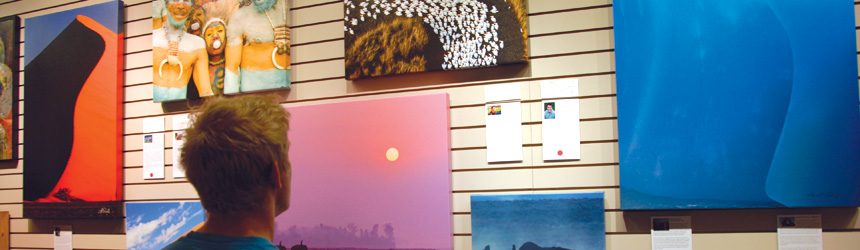
Photography is a vast market of landscapes, people, and historical events. Some clients request that their favorite images be printed large, generating increased revenue for print shops. The following photographers utilize large format digital printers to print their own photography and create business opportunities from art.

Jim Nickelson, Natural Wonder
Along the mid-coast of ME, Jim Nickelson incorporates photography and large format printing to cater to clients all over the U.S. and Canada, with his core business primarily in New England. Since 2005, Nickelson has photographed and printed picturesque images first at his desk and small printer, and now in a work area of 900 square feet. Nickelson is driven by the natural world and underlying science. Much of his artwork includes the concept of time passing, natural rhythms, cycles, patterns, and the mysteries of nature. His print shop, Nickelson Editions, handles fine art printing in Camden, ME, using archival inks and papers.

Nickelson began his business by providing printing, scanning, commercial work, photographing artwork, and website design. But as it grew he narrowed his focus to fine art photography, custom fine art printing, and teaching. “I have always envisioned my photography work as being embodied in large, immersive prints, so wide format printing was a natural extension of my photography practice,” says Nickelson.

In 2007 he purchased his first wide format Epson printer and now uses an Epson Stylus Pro 9900 and Epson SureColor P800. “I love the quality I can achieve with these printers and have seen no reason to pursue other brands,” he shares.

Nickelson says he’s particular to using Canson Infinity Rag Photographique 310 gsm for a smooth matte paper, Hahnemühle Museum Etching for a textured matte, and Canson Infinity Platine Fibre Rag for luster paper.

As a professional photographer and custom fine art printer, Nickelson says that wide format printing reveals flaws in the equipment and technique. The process of combining photography and large format printing has helped Nickelson to find a deeper understanding of how to make each print look exactly as he wishes.

Photographers who produce their own large format printing benefit from a separate revenue stream that eliminates the need for commercial or editorial work. But while this revenue is beneficial, it is also challenging. Large format printing is a steady business with a constant flow of client demands. “With a large and growing roster of clients, there is always work to do for others, so carving out the time for my own work is a continuing struggle,” says Nickelson.

Over a period of years, Nickelson photographed the full moon from different locations in ME. The project series is called Adventures in Celestial Mechanics and is intended to be a cohesive and unique body of work to celebrate the moon and nature in an embodied series of wide format prints.

Canson Infinity Rag Photographique 310 gsm was used for the project because it had the capability in terms of color fidelity and saturation. “My print statement for this body of work as it developed was for it to be reminiscent of Japanese woodblock prints, and a luster paper or a heavily textured paper took away from that feeling,” he shares.

The project took several years as Nickelson worked diligently to capture each full moon of the year, at moonrise or moonset. “In a few lucky instances, I was able to finalize a print just a few days after the full moon. In other cases, I spent years living with the prints trying to find something that worked,” explains Nickelson.

The photographs were printed on the Epson Stylus Pro 9900 using Adobe Systems Incorporated Photoshop and framed with a white shadowbox frame. The finished pieces varied in size but the largest includes ten 24×24-inch image area pieces, all individually framed. “I’m extremely happy with the end result and this project remains my most popular,” says Nickelson. Adventures in Celestial Mechanics is now in MA and ME.

Al Satterwhite, B&W Master
Al Satterwhite began his love for imagery and photography in high school when he landed a job as a photography intern at the St. Petersburg Times and then became a photojournalist for 15 years.

Since he went on to create Satterwhite Products, a production company that focused on national and international advertising campaigns from 1980 to 1992 in New York City, NY, and worked with clients like American Express, Coca Cola, Eastman Kodak, Nikon, Porsche, Polaroid, Saab, Sony, and Universal Studios. Satterwhite now spends his time shooting personal projects, particularly in Los Angeles, CA and New York, NY, London, Moscow, Paris, Rome, Tokyo, and Venice.

Satterwhite says he has always worked where he lives, including his current home by the ocean in Redondo Beach, CA. He began printing his own B&W images in a wet lab in the 1970s and outsourced his printing when he moved into shooting Kodachrome in the 1980s. Digital print became a reality soon after and Satterwhite jumped at the opportunity.

He purchased a Canon U.S.A., Inc. imagePROGRAF iPF6200 wide format 24-inch printer. “I used it for five years until upgrading to a Canon imagePROGRAF iPF6450. Most of my clientele opt for my early B&W work, which this printer does a fabulous job with, printing my 16-bit files and showing all of the tonality in the image,” he explains.

Using the Canon imagePROGRAF iPF6450, Satterwhite prints 8.5×11, 11×14-, and 16×20-inch prints for small-run portfolios for museums and galleries. For custom wide format, he uses roll papers from Ilford Imaging and almost exclusively from Hahnemühle. Satterwhite settled on Hahnemühle after testing numerous papers and finding the surfaces too glossy, thin, or dull. He also noticed problems with surface emulsion flaking off in tiny bits that required spotting or reprinting.

Business opportunities in this market are difficult to come by. Photographers must stand out from the competition while battling clients who want to pay as little as possible for products. While Satterwhite says that the main challenges of being a professional photographer who specializes in printing relates to costs and clients, he also finds great satisfaction in his field.

“It wasn’t until digital printing came of age that I could do my own darkroom work, in a fully lit room, have much more control over the image through the use of Adobe Photoshop, and then output it using profiled monitor, ink, and paper, and getting results that are stunning. It’s all about control,” says Satterwhite.

In 1974, Satterwhite photographed Hunter S. Thompson, American journalist and author, in Mexico during a Playboy interview. Those images would be remembered decades later and displayed for a museum show at the Fort Wayne Museum of Art in Fort Wayne, IN.

In 2014, it took Satterwhite three weeks to scan and print 15 images of 16×20, 24×36, and 36×54 inches using Hahnemühle FineArt Pearl paper with the Canon imagePROGRAF iPF6450.

Satterwhite says he chose the Canon imagePROGRAF iPF6450 because he knows how to get the highest quality out of the printer. After the artwork was printed, he shipped it to the museum where it was matted and framed.

“It’s a great honor to have a show of your work in a museum for many people to view,” says Satterwhite. After the exhibit was completed, the prints were returned to him and shipped to the Briscoe Center at the University of Texas in Austin to be added to Satterwhite’s archive.

Taili Song Roth, Shooting Stars
Surrounded by actors, models, and talent, Taili Song Roth began photographing people in Los Angeles, CA, nearly 13 years ago, and continues the same business today in the Los Angeles and Palm Springs area. She started photographing actors and models she knew and was immediately referred to others until her clientele skyrocketed. Today, she is primarily a solo operator with the exception of commercial, editorial, and personal photoshoots when she relies on crew members. Roth’s husband, David Roth, also a product designer, assists her with technical knowledge and his experience with production. “We have an ongoing dialogue about all things visual and technical, but he lends a hand on key projects when and if he is available,” she says.

For the past seven years, Roth has offered her clients large format printing and operates in a combined space of 30×30 square feet. “I wanted my work to make a dramatic impression, and I knew that there was no substitute for printing large for exhibition purposes.,” she explains. Roth also found that larger prints commanded higher prices and a greater revenue for her work.

A year and a half ago, Roth purchased a Canon imagePROGRAF iPF8400 that prints up to 44 inches with a 12-color Lucia EX pigment ink set and a resolution of 2,400×1,200 dpi. “My Canon printer makes excellent prints, is easier and faster to use, and comes with outstanding user support and service,” she shares.

For gallery printers, Roth uses Hahnemühle papers and for commercial and work purposes she looks to Canon paper. As a professional photographer who specializes in printing, Roth finds that she has maximum control over the look and craft of the final output, and in doing so, she has maximum control over her appearance as a photographer. “My printer is also another source of revenue. It has already paid for itself many times over,” she adds.

Roth’s first exhibition with Canon took place at the Canon Experience Center in Costa Mesa, CA, as a joint exhibition of her work and prints made on the 24-inch Canon imagePROGRAF PRO-2000. It uses the Lucia Pro ink set with 11-color pigment inks and a Chroma Optimizer for smooth gradients, expanded color gamut, and deeper color expression. Its PF-10 printhead is 1.2 inches wide with 18,432 nozzles and features anticlogging Fine technology.

During the event, a live print demonstration was available for photographers to bring their own files to be printed on a large format printer. “It was exciting to watch many photographers seeing their work printed large for the very first time. The Canon Experience Center is a unique hands-on center of learning where Canon’s entire line of photographic products are available for people to pick up and try—for free,” says Roth.

The images were printed on Canon 280gsm Premium Paper 2, Semi-Glossy. Canon’s paper is intended to make the media less susceptible to light illuminant changes and is created with graphic artists, photo labs, print service providers, and signmakers in mind. Roth shares that the Canon Experience Center has a unique method of displaying printed images using lighting so the prints appear as images projected on a backlit display. “They are luminous and striking, and this particular paper is part of this display system,” adds Roth.

She shot the images on several Canon cameras and used Adobe Lightroom and Photoshop to process and prepare the images for printing. The finished product was 13 24×36-inch prints. “It was a great honor to be asked to help demonstrate this new printer and to be a part of the launch,” shares Roth.

Big and Beautiful
Photography captures great moments, whether subtle or vivid, for us to view for a lifetime. Clients who take a particular liking to photographs may look for images in large format to display in their homes or art galleries. To receive the most benefit from their artwork, professional photographers invest in large format digital printers to make their images even more accessible.

Feb2017, Digital Output

Options a Plenty

By Cassandra Balentine

Banners are big business in most print shops. Vinyl is often used, but more environmentally friendly alternatives are also available. Th ere are pros and cons to both options.

Vinyl banners provide durability and weather resistance, while eco-friendly alternatives provide a “green” option for those that request or require them. Depending on the specifi c application and what drives the print buyer, both types of materials are useful.

The Popular Vinyl
Vinyl is a popular banner material for a range of settings, including both indoor and outdoor environments. This traditional banner material provides durability and longevity at an affordable price point.

“I would say at least 90 percent of the current market share—if not more—consists of traditional vinyl banner material,” states Lily Hunter, product manager, textiles and consumables, Roland DGA Corporation. “I do see this changing over the next five years.

However, how quickly changes take placeis determined by a few things, including new environmental laws and regulations, the printability of non-PVC based banners, and the cost of non-PVC banners.”

Bryan Rose, VP/GM, new business development, Cooley Group, agrees that traditional vinyl makes up “well over 90 percent,” of the overall market share for banner volume. However, the use of PVC-free materials—including textiles— is growing and the trend is increasing.

Jack Smith, SVP, Hop Industries Corporation, says the popularity of vinyl is declining, but adds that it can hold up to harsh conditions that many other products cannot yet achieve, which is why it is still in use today.

Eric Tischer, president, Verseidag US, explains that traditional vinyl banner continues to hold a sizeable share of the total print market due to various segments requesting these substrates. “While these percentages may slightly diminish in the coming years, these materials should continue to be the mainstay unless new technologies replace them.”

“The U.S. market almost exclusively uses vinyl for banners,” states Gautier Peers, territory manager, Dickson Coatings. He adds that the European market uses a lot of fabrics.

Although non-vinyl alternatives encroach on the vinyl banner territory, the traditional material offers benefits such as cost, ease of use, performance, durability, and fabrication—including the ability to easily weld with a variety of techniques, comments Rose.

Vinyl Usage
Banners are used for a range of display options, from standard hanging banners to pole banners, banner stands, and billboards. Vinyl serves all these needs, for both indoor and outdoor environments.

“There are major benefits to using traditional vinyl for banner applications,” states Hunter.

Josh Propp, senior technical and development manager, Value Vinyls, Inc., says the traditional banner market is driven by vinyl substrates due to durability, cost, and ease of use on multiple printing platforms.

Mark Friedman, director of marketing, Magic, Dietzgen Corporation, shares that the application possibilities are extensive and diverse. “That is one of the reasons for vinyl banner’s success and why it is so difficult to develop alternatives,” he offers.

Common applications include pole, fence, hanging pocket, and ceiling banners, as well as roll-up displays and banners that require grommets and rope.

Propp suggests that most vinyl is appropriate for indoor and outdoor signage, is easily mounted, and economical enough to use for a short period of time, yet durable enough for long-term applications.

Gary York, wide format specialist, Agfa Graphics, points to uses such as large outdoor advertising, in retail stores, and both indoor and outdoor home improvement/ garden centers.

“Vinyl banners—from pole banners to billboards to barrier banners—are primarily used in outdoor environments,” agrees Hunter. She says a small percentage are used for indoor applications, such as retail, trade shows, and pop-up banners.

While both indoor and outdoor needs are met with vinyl banner materials, outdoor applications are particularly more reliant on this type of media. Smith says this is due to its ability to withstand extreme weather conditions.

“PVC vinyl is ideal for long-term outdoor applications or tough climates because it’s the most weatherproof material,” adds Peers.

Tischer believes vinyl banner material is predominately utilized in outdoor applications due to the durability and longevity the product possesses. “This can be with outdoor banners, billboards, building wraps, stadium graphics, and fence mesh applications. The durable nature of these materials continues to cause them to be a mainstay. For interior we typically see vinyl utilized in hanging double-sided layflat blockout advertising pieces as well as a single-sided vinyl in roll up displays.”

Hunter explains there are different grades of banners available for short- or longterm applications. “In addition to cost and durability advantages, PVC vinyl tends to be easier to print on and color profile than polyethylene (PE) banners.”

Propp suggests looking beyond first-use opportunities when it comes to vinyl banner materials. He points out that PVC vinyl is “extremely durable, cost effective, and lasts for a very long time,” noting that many secondary companies have repurposed material by utilizing out-of-service banners to build a range of products, such as shoes, backpacks, bags, surfboard carrying cases, tarps, and temporary shelters for emergency use.

The Non-Vinyl Threat
For those looking to distance themselves from PVC-vinyl banner materials, plenty of options are available. However, many argue whether or not they pose an immediate threat to the traditional PVC-based vinyl business.

Rose says eco-friendly and PVC-free banner materials do threaten the traditional vinyl market. “They offer similar properties as vinyl—and typically in a much lighter, more environmentally friendly construction—and many are cost competitive with vinyl, making them viable alternatives.”

“Traditional banner vinyl holds about 80 percent market share, and in the next five years it will go down 60 percent,” predicts Smith. “All indicators are showing this decrease because banner vinyl cannot be recycled and is not environmentally friendly.”

Propp suggests that eco-friendly and PVC-free materials are a growing trend in Europe with the use of polypropylene and PE substrates, but it is still new. “PE has been available in the U.S. for some time, but with heavy limitation in that it is only compatible with UV ink delivery systems and the shelf life is so brief that it works well only with large volume print providers,” he states.

Hunter doesn’t see eco-friendly/PVC-free materials posing a threat to the traditional vinyl market. “Producing a printed banner is typically a low-cost job,” she says. “The more environmentally friendly materials have higher price tags, so customers are more likely to opt for the less expensive vinyl.”

Friedman agrees, “eco-friendly, PVC-free materials will never overtake the traditional vinyl market. Vinyl is just too easy, too inexpensive, and it just works.”

“I have no doubt that eco-friendly/PVCfree materials will become a larger share of the market in the future. However, I don’t believe it will overtake vinyl banners due to cost and overall outdoor durability,” states York.

Tischer also believes that while alternative options cut into the vinyl banner market, they will not replace it completely. “Many markets and clients are definitely looking for more earth-friendly print solutions, but matching the durability that comes from PVC-based vinyl is difficult.”

Alternative Media Options and Benefits
As PVC-free media options emerge, they are best used in specific situations and provide certain benefits.

Smith suggest non-vinyl options be used in less extreme environmental situations, “where its environmental and cost benefits would make it a popular alternative.”

Traditional vinyl becomes concerning when it comes to short-term applications because of its poor environmental record. “More people are aware of the health risks caused by PVC, and are requesting PVC-free materials for indoor applications. This trend is already happening for wallcoverings, and I believe it will happen for banners,” says Peers.

Non-vinyl options present benefits such as environmental friendliness, recyclability, and typically lighter weights—allowing for more material per roll.

Vinyl alternatives may also be 100 percent recyclable and contain few to no chemicals. Smith recommends recycled materials be used to produce new products for a variety of applications such as flower pots, park benches, and landscaping trim for decorating gardens, which are made out of polypropylene.

Hunter suggests non-vinyl banner materials are most commonly used for pop-up banners and hanging signs. She says the primary benefit of non-vinyl banner material is the green aspect. “Most of these materials are recyclable and environmentally friendly. The downside is the cost.”

“Typically, non-vinyl banner materials are used when a higher quality or smoother finish is needed,” shares York.

Non-vinyl banners offer eco-friendliness, due to the lack of PVC, heavy metals, and volatile organic compounds. Tischer adds that many also offer an improved hand, a more natural look, and stretch and opacity characteristics that vinyl counterparts don’t have.

Cost Comparison Media selection often comes down to cost. While PVC banner is known to be a cost-effective solution, it does not always mean it is the only affordable option.

Depending on the source, quality, and type of material, costs vary for the average roll of vinyl banner materials versus non-vinyl alternatives. “Products made in the U.S. are higher quality and typically more expensive than products produced in Asia—both PVC and PVC-free. The difference can be as much as 30 percent higher.

PE-based, PVC-free material is usually close to PVC pricing with up to a 15 percent premium on a square foot basis, depending on whether or not it is UV or latex printable,” comments Rose.

Hunter says that generally, scrim banner is about $0.20 per square foot or less. She estimates non-PVC banners to be around $0.55 per square foot or more.

A typical street price for 13 oz. scrim banner, according to York, could range from $0.12 to $0.16 per square foot, depending on the width of the material. “150- to 196-inch wide costs more than narrower widths,” he points out, adding that in comparison, a similar non-vinyl banner for outdoor use would be $0.35 up to $1.00 per square foot.

Round Up
Many vendors offer media options for banner products, both vinyl and nonvinyl. Below is a selection of new and/ or popular products as offered by those quoted in this article.

Agfa recently launched two new banner products, including the Duratex Black Back Mesh and Backlight Banner. Duratex Black Mesh allows for a one-way vision effect similar to window perforation. It retails for $0.26 per square foot and comes in 98-, 126-, and 196-inch by 164-foot rolls. Blacklight Banner is a 15 oz. product available in matte and gloss. It is sold in 63-, 98-, 126-, and 196-inch by 164 foot rolls. Retail price is between $0.33 and $0.37 per square foot. The media is typically used for large outdoor backlight scenes for production stage, stadium graphics, or oversized indoor backlights. It is available in matte and gloss.

Cooley Group offers Enviroflex PVC Frontlit 7 oz. It is lightweight and durable. The product is available in widths of up to five meters, seamless. It prints well with solvent, UV, and latex ink and offers ten years for proven performance, according to the company. It is made in the U.S. and is HP Latex Certified. The company also provides its Coolflex PVC Frontlit 13 oz. double-sided blockout frontlit product, which is smooth on both sides and features 100 percent blockout properties for two-sided banners. It prints well on solvent, UV, and latex inks and is also HP Latex Certified.

Dietzgen offers Magic RENEW, which is a lightweight, durable, non-woven PET banner replacement for traditional vinyl banner. It is compatible with latex, solvent, and UV-curable printers, can be grommeted, welded, and hung or installed in the same fashion as a traditional vinyl banner.

Dickson Coatings provides its Jet 550, a 17 oz. frontlit product that is knife coated. The polyester fabric is encapsulated in the PVC. A liquid vinyl consisting of two PVC films is glued onto a polyester base cloth with the use of heat and pressure.

Hop Industries’ most popular banner vinyl alternative is Hop-Syn XT. The synthetic paper is easily die cut and can also be grommeted and printed on both sides. It’s a single-layered mineral-filled polypropylene, which is produced using a calender manufacturing process. This finishing process creates a smooth white matte surface. The XT grade is UV resistant up to one year outdoor, and resistant to scuffs, weather, and tearing.

Roland offers two types of vinyl banner material, Light-Weight Banner Vinyl, its ESM-LBV2 product; and RolyPoly Banner Film, ESM-RPBF. Roland Light-Weight Banner vinyl is a coated, premium-quality banner product that’s ideal for both short- and long-term signage. It’s anti-curling and features a luster finish for an elevated graphic result. Ideal for hanging and fitting with pole pockets and grommets, it can be cut to edge, welded, or hemmed and sewn. Roland RolyPoly Banner Film is a premium quality, 10-mil polyester film with a white back that is well suited for a variety of applications, including both indoor and outdoor. It will not curl or tear, making it ideal for roll-up banners.

Value Vinyls offers its Rio Extra 13 oz. and Rio Opaque 18 oz. material. According to the company, the product’s popularity is due to price points and versatility.

Verseidag provides a variety of vinyl products including seemee IV, 16 and 19 oz. PVC-coated vinyl for backlit signage. It is available in up to 196-inch widths and is a seven-year warranted product. Its seemee Frontlit Ultra Matte is a 13 oz., PVC-coated vinyl available in up to 196-inch widths. seemee Mesh Supreme is a 10 oz. PVC-coated mesh with “cat’s eye” hole, available in up to 196-inch widths. seemee Mesh Solution, a 9 oz., PVC-coated mesh, is available in up to 196-inch widths. seemee Backlit Supreme is a 21 oz., PVC-coated vinyl blockout, double-sided printable product, available in up to 196-inch widths. V Flex 13 oz. Banner is available in white/white or white/black and is available in widths up to 196 inches. T Flex 14 oz. Blockout is a double-sided smooth blockout, available in 126-inch widths

Banner Trends
Banners are a tried-and-true application. In many cases traditional PVC-based vinyl is still utilized to serve this market. However, as alternative options continue to emerge; print buyers and providers have a more comprehensive media selection to serve the job at hand.

Feb2017, Digital Output

Printing Masterpieces

By Olivia Cahoon

Giclée describes fine art digital prints created on inkjet printers. Graphics are produced from high-resolution images and printed with fade-resistant archival inks onto substrates like canvas, photo paper, and vinyl.

Digital gives artists the advantage of reproduction on demand without the effort of physically recreating artwork. These prints are reproduced at any size, made to last, and customizable for each client.

Catering to artists may seem like an appealing decision for some print shops, however, not all digital printers can produce the high-quality images that artists demand. Fine art digital prints are held to high standards for private buyers and those with the intention of selling artwork to galleries.

Teaching to Printing
In 1975, Fine Print Imaging was established in Fort Collins, CO with three employees in a residential basement. Th e print shop serviced the CO area with film and photo paper processing and printing for photographers who sold their work for art shows and galleries. As quality and efficiency improved, the owners quickly expanded staff and space. Today, Fine Print Imaging has ten employees and works in a 12,500 square foot building. Th e business also runs a frame shop—Colorado Frames—that offers custom assembled art frames.

Mark J. Lukes, president/founder, Fine Print Imaging, credits his clientele in all 50 states, Canada, and Mexico, to the contact information he found in a photography book by Ann Guilfoyle, Wildlife Photography: Th e Art and Technique of Ten Masters. It was there that Lukes read about the careers of professional nature photographers and their equipment.

Fine Print Imaging offers scanning, mounting, and printing for fine art, photos, canvas, metal, and slate. Th e shop’s metal printing includes aluminum prints through a dyesublimation process for vibrant color in high gloss or matte. For museum quality, the shop features canvas printing with the look of an original painting and is designed for artists and photographers. Its digital photographic prints are available in four paper surfaces—gloss, luster, matte, and pearl gloss.

Th e print service provider’s (PSP’s) fine art paper for giclée prints are chosen with artists in mind. It uses products from Breathing Color, Epson, Fujifi lm USA, Hahnemühle, and Premier Imaging Products. Th e shop is consciousness about introducing new products and thoroughly tests media. Lukes stresses the importance of premium quality and image stability due to its work with edition printing.

Before Lukes began producing fine art, he was a teacher alongside his future business partner, until discovering they both shared a passion for nature and photography. “We turned his garage into a darkroom and printed as a hobby. Word got out that these two guys are pretty good at printing nature photos,” says Lukes. In the mid 1980s, the duo began working with paint artists and set up an art copy system.

The shop started with traditional equipment like Omega Chromega enlargers and a Pako paper processor, and then slowly updated its hardware as print technology advanced. By 2000, 93 percent of the printing was completed in darkrooms and now over 80 percent of their prints are done on Epson large format printers with the remainder on a Chromira printer and a 52-inch Kreonite processor. “Epson is our first choice for ink printing mostly because it was a leader when the inkjet world really took off,” explains Lukes.

Listen to Your Art
Fine art digital printing combines a passion for the arts and the growing technology of digital printing. “We get to see, learn from, and live through the creativity of thousands of artists across the world,” says Lukes. Through his contacts with the arts, Lukes is the first board president of the Center for Fine Art Photography, the North American Nature Photography Association, and the first board chair for the International League of Conservation Photographers.

Despite its benefits, fine art digital printing still has its challenges. Lukes explains that working with professional artists means that the print shop is catering to the needs of individuals with high expectations of quality. “While artists and photographers understand their craft very well, many do not understand the craft of printing,” he adds. Sometimes it takes the print shop months to create a smooth and effective working relationship with the artist.

Business opportunities in the art world are fragile due to the huge proliferation of art on the web, which is sometimes underpriced, creating a difficult market for artists. “We still see success stories coming from artists who do the ordinary extraordinarily well, from artists who were willing to take chances to create new and exciting art, and mostly from artists who understand the importance of the web and social networking,” says Lukes.

Printing Masterpieces
Repeat customers, the International League of Conservation Photographers (iLCP), contacted Fine Print Imaging to promote the projects and photographers of the organization by printing their artwork. The iLCP requested 28 pieces of art from 24 iLCP photographers to be prepared, printed, sprayed, and stretched onto one-and-a-half-inch stretcher bars to be hung at the gallery.

The print shop printed on Breathing Color Lyve canvas and the gallery wrapped the prints in 18×28- and 28x30inch sizes. Lyve canvas is a 19-mil bright white, polycotton blend matte canvas using an acid-free neutral pH coating. A Glamour 2 gloss coating from Breathing Color was applied to the prints and they were backed with an archival mat, nylon coated wire. Lukes says that the art pieces were lightweight and travel better than frames with glass.

For this job, the fine art was printed on an Epson Stylus Pro 11880 with Epson UltraChrome K3 inks. The printer features a maximum resolution of 2,880×1,440 dpi and a width of 63.75 inches. It prints at speeds of up to 16×20 inches per 50 seconds and utilizes nine UltraChrome K3 inks with Vivid Magenta. The K3 inks have three levels of black for a stable and accurate grey balance. They are designed to last without fading for up to 75 years in color and 100 years in B&W.

Fine Print Imaging optimizes the ErgoSoft StudioPrint RIP for image clarity and tonal range. StudioPrint is capable of scaling, nestling, duplicating, and tiling.

After the prints were completed, they hung at the Collective Gallery in Fort Collins, CO for one month and then moved onto locations in other states. Lukes says the gallery visitors were in awe of the canvas images and that some of the iLCP photographers were in attendance. “In the last nine years, we have created, crated, and shipped approximately 20 exhibitions like this for several iLCP projects and photographers,” he adds.

Artwork Reborn
Artists use wide format digital printers to duplicate their work without having to physically recreate it. Print shops that cater to fine art benefit from this precise work because they build relationships with artists who feed the demands of their clientele.

Digital printers must use archival inks and handle a large gamut for the prints to be considered fine art. Artists have high demands, they expect printed artwork to stand the test of time and hope to satisfy customers by offering prints in a variety of sizes.

Print shops like Fine Print Imaging cater to these needs by providing a safe and professional environment for handling fine art. Its staff has years of experience to ensure a professional print is always created.

Feb2017, Digital Output

Rigid and Trending

By Olivia Cahoon

Rigid substrate manufacturers expand choices for print service providers (PSPs) by offering specialty materials. Materials that can be directly printed include cork, canvas, chalk, glass, wood, and metallic surfaces. In this article, we explore why specialty rigid substrates capable of being directly printed are trending and where they are being used.

Specialty Trends
Some vendors take traditional materials and give them a twist to make them a rigid specialty substrate. Rigid paperboard is a paper-based specialty substrate used as structural signage in the wide format space. More importantly for some, it is an environmentally friendly product.

“When a paper sign is no longer needed, it can go right into the blue box with no special sorting, also eliminating the need to commission specialty waste removal. Paper is recyclable and a viable alternative for plastic-based structural signage in wide format,” says Greg Maze, marketing manager, Neenah Paper.

Rigid paperboard is primarily used indoors and has limited outdoor usage. It’s most commonly found in retail environments such as hanging signage, indoor point of purchase (POP), menu boards, window signs, and displays. Other notable rigid substrates include polypropylene, synthetic paper, rigid vinyl PVC, and polyester.

Wood pulp board, similar to coaster material, is an environmentally friendly rigid substrate that is also moisture resistant. Tony Lampariello, national rigid media manager, Agfa Graphics, says that wood pulp board is used to replace polystyrene PVC material because PSPs are finding it hard to meet the minimums required to get PVC recycled. “Unfortunately, 80 percent of PVC goes to landfills because people don’t want to deal with it if they can’t meet the minimum recycling requirements,” he adds.

Wood pulp board is used in retail settings for POP displays and graphic applications. Lampariello says that the applications tend to last two to three weeks before they are recycled for replacement and are given a fresh graphic.

Marina Batzke, GM, American PERMALIGHT Inc., says other specialty rigid substrate products include photoluminescent identification signs and emergency exit symbol signs. Identification signs are required under nationwide building codes and are enforced for new offices, administrative centers, hotels and motels, and hospital high rise buildings. Identification signs follow under the jurisdiction of UL 1994 listed signs, which are required to obtain an occupancy permit. Specialty rigid substrates are in high demand in this environment because building owners and landlords must abide by the building codes.

For customers that don’t want paper-, wood-, or plastic-based rigid substrates, there are still other options. Solid core aluminum composite material (ACM) is a ready-to-use substrate that features double- or single-sided painted aluminum, bonded to a solid polyethylene core for rigidity and a lightweight feel. “Many ACM panels feature a smooth surface that can be coated or painted to any color or pattern, including metallic or nonmetallic finishes,” says Garrett Thompson, national sales manager, Laminators Inc.

Thompson explains that ACM is a preferred choice in metal panels for the sign and architectural industries and are used for interior and exterior applications for architectural signage, billboards, canopies, cut outs, electrical products, government speculation work, highway signage, real estate signs, scoreboards, and wall and fenced mounted signs.

Overcoming Challenges and Understanding Benefits
While specialty rigid substrates are an innovative and fun approach to digital flatbed printing, print shops sometimes run into complications. Mellissa Campbell, marketing manager, Masterpiece Graphix, explains that post-print static on plastic may create challenges for finishing processes.

Batzke says that challenges appear in the production of staircase identification signs because each sign carries a different legend. “Some signs are even a combination with ADA requirements, where the floor level, like B for basement and PH for penthouse, are raised and in braille underneath,” she says. Therefore, the signs are made in different production processes.

One of the most beneficial aspects of rigid paperboard is that it is a fully recyclable alternative for structural signage and doesn’t sacrifice print quality. Maze explains that low-quality boards made of old bleached corrugated cardboard warp and compromise signage appearance. Rigid paperboard is moisture resistant and maintains stability during temperature and humidity shifts.

Lampariello says that wood pulp board offers superior ink adhesion, superior finishing results, and clean and crisp edges. “The media gives PSPs the ability to run full speed. No need to slow down a finishing table because you’re not cutting through a thick, dense material,” he adds. It also doesn’t require tuning for ink density or profiles.

“You run fewer passes on paper board than on a plastic substrate. That saves PSPs time and money on ink, and makes them much more efficient,” he continues.

While ACM has a flat and smooth surface ready for inks, vinyl letters, and paints, it also presents challenges for direct printing. Thompson says that brushed ACM is not completed with a paint finish, but instead a chemically altered and etched process, which is a difficult finish to print on. Despite this challenge, the substrate features a solid core that prevents bowing, warping, swelling, and delamination.

Future Trends
Specialty rigid substrates continue to evolve. “We see color and texture trending in rigid substrates as a way for marketers to allow their message to stand out without having to use too much ink in the process,” says Maze. He adds that black is an especially popular color because PSPs use white ink to create dramatic effects on shelves in retail settings.

Other trending colors are silver, gold, and bronze metallic. Natural finishes like marble, wood, and stone will also begin trending, admits Thompson. These colors aren’t as common as other finishes— which is a key selling point for any client hoping to draw attention.
Lampariello believes corrugated cardboard is the next big thing to hit rigid substrates. “Now we are seeing a lot of printing on corrugated cardboard with a craft fluted core primarily because it is low cost and recyclable in the standard recycling stream,” he explains.

What’s Hot in the Market
Here we review different types of available specialty rigid substrates.

3A Composites USA offers Dibond, an ACM that is comprised of two prepainted sheets of aluminum with a solid polyethylene core. The company says it’s the flattest panel on the market and its superior surface protects digital graphics while providing durability. It is approximately one half the weight of aluminum and will not bow. It’s recommended for POP displays, exhibits, kiosks, framing, and interior, exterior, and structural signage. 3A Composites also markets Sintra, a PVC board with a low-gloss matte finish. It is a rigid, lightweight, and durable sheet that is easily formed.

Agfa features the Duratex EcoDisplay Board and Duratex Alumaboard. EcoDisplay Board is a “green” substitute for plastic materials with equal thickness. Alumaboard is an outdoor aluminum substrate with a rigid polyethylene core. It is half the weight of traditional aluminum, two-sided, permanent, and can be drilled, cut, sheared, routed, or bent. Its maximum size is 60×120 inches and it is available in three different versions—Standard for economic signage, Fast Digital for high-speed applications, and Plus for an easy-off release liner.

American PERMALIGHT offers photoluminescent rigid PVC sheets at 39×47 inches and 12.5 times brighter than a standard glow. The substrate is ideal for emergency staircase signs for high-rise buildings, offices, hospitals, hotels, and motels. The photoluminescent rigid PVC sheets abide by building code policies and are available for $99.50 per sheet. The sheets are also UL 1994 certifiede.

EnCore Products’ mixed metal portfolio is found in its Design Boards product line. It offers Brushed Aluminum and Brushed Gold foamboards with fully printable metallic paper surfaces. The material is available in sheet sizes of 40×60 and 48×96 inches and 3/16-inch thicknesses.

Katz Americas’ Katz Display Board has a print surface liner made from all natural paper with no bleach, harmful whitening agents, or chemicals. The base material consists of 48 to 59 percent recycled content and is 40 percent lighter than greyboard. It is recyclable and biodegradable. Its solid core resists warping and curling and handles changes in humidity and temperature.

Laminators offers Omega-Bond, a solid core aluminum composite panel, in metallic silver, gold, and bronze. It’s available in 4×8-foot sheets with a three-millimeter thickness. Omega-Bond features double- or single-sided painted aluminum bonded to a polyethylene core for a rigid but lightweight effect. The substrate is moisture resistant and its solid core prevents it from bowing, warping, swelling, or delaminating. Omega-Bond comes in 12 color options and has a five year warranty on lamination.

Masterpiece Graphix’s synthetic papers are recyclable and flexible. Rigid vinyl PVS features low flammability and is resistant to UV degradation. It is commonly used for business cards, door hangers, identification cards, luggage tags, menus, outdoor displays, and store signage. The company also offers the Masterpiece Graphix Solid Core Polyester that is stain, tear, and weather resistant. The polyester features a bright white matte finish, anti-static properties, and high heat resistance.

Neenah Paper features conVerd Board, a rigid paper-based material that is ecofriendly, recyclable, and fiber-based. This substrate is a green alternative to PVC, styrene, and foam-based boards. It features a smooth finish in bright white and is printable on both sides with a moisture and crush resistant surface. conVerd Board is commonly used for wide format print media, displays, indoor POP, and structural signage.

Palram Americas, Inc.’s PALIGHT flat foamed PVC sheets are lightweight, versatile, flexible, and durable. They are used for signs, displays, and construction applications. PALIGHT is available in standard and special designer colors with a standard matte or gloss finish. The sheets have low water absorption and high chemical resistance. They can be printed, painted, or laminated.

Directly Printed Substrates
Digital flatbed printing allows rigid substrates to be directly printed. As the market grows, an increasing amount of new specialty rigid substrates emerge. Specialty rigid substrates include ACM, chalk, glass, plastics, and wood. These substrates are used in various environments.

Feb2017, Digital Output

Cutting Edge Technology

By Olivia Cahoon

Digital print advancements in wide format output drive the development of a full range of substrates. As the need for fast and durable equipment rises, industrial grade flatbed routers and cutters have become more prevalent. The ability to handle larger volumes, finish at higher qualities, and remain durable help define these devices against more lighter duty models.

What is Industrial Print?
The term industrial print is still relatively new to the industry. To better understand what it means, we asked finising vendors how they would define industrial print in regards to router and cutters.

“The nature of industrial printing is generally printing that is done during a manufacturing process, but this can range from product prototyping to short-run benchtop UV production via superwide format UV flatbed work, up to fully automated production lines,” explains Josh Hope, senior manager, industrial printing market, Mimaki USA, Inc.

Greg Stewart, product marketing and strategy manager, Esko, believes that industrial print relates particularly to wide format and corrugated printing. As inkjet printers become faster, the need to quickly finish products becomes more urgent. “Because of variable printing, perspective has changed from how fast many thousands of one job is completed to how to deliver five to 10,000 units of different jobs,” shares Stewart.

Others believe that industrial grade finishing equipment isn’t so different from traditional equipment. “Industrial print may deal with a few additional substrates, such as domed logos, but both industrial and traditional finishing still revolves around materials that are up to two inches thick,” says Steve Aranoff, VP sales and marketing, MCT Digital.

It appears that no matter what the definition is, industrial print includes two key qualities—the applications and the volume. “Structural display applications including store fixtures, trade show, and outdoor displays where heavy MDO, MDF, thicker acrylic, alumicore products, and heavy duty corrugated board are used, would be considered industrial or heavy duty applications. On the other hand, industrial print may also refer to the volume—in other words, medium to long runs as opposed to short runs of prototyping,” adds John Cote, North American sales manager, Zünd.

Volume, Quality, Durability
Industrial grade routers and cutters are designed with volume and value in mind. To achieve this, vendors incorporate new features to ensure that end users receive the best quality. “There are three keys to industrial cutting—volume, quality, and durability,” suggests Gary Greis, national sales manager, Inpro grand format cutters, Graphco. These features qualify industrial grade routers and cutters for industrial usage.

Industrial finishing equipment handles oversized substrates, the tables are expected to be large. Aranoff points to growing requirements for ten-foot wide cutters.

Some vendors, like ARISTO, offer machines with a work area up to 5,200×7,200 millimeters.

But width isn’t the only concern for industrial markets. Dana Goodale, product management director, Gerber Technology, explains that a pull-through capability allows long substrates to be cut into sections. This works well for long substrates that otherwise need to be cut down separately and then applied to the router or cutter for proper finishing.

Industrial routers and cutters are also made with thick material in mind for keeping up with demands to finish heavy duty substrates. Most industrial finishing equipment can handle material up to four inches thick. A handful of vendors offer high-torque systems. “Spindle horse power and torque at high RPMs allows routing standard thicknesses of high density plastics, wood panels, and aluminum in one pass with excellent quality finish,” advises Dan Bussey, marketing manager, MultiCam Inc.

To ensure accuracy, some industrial finishers have camera systems like ARISTO’s AutomaticEye. Andreas Kretschmer, market manager, ARISTO, shares that cameras detect and correct distortions and imbalanced printed materials. This process eliminates wasted time from finishing errors.

Joe Hillman, strategic development manager, Universal Laser Systems, says “optical registration uses a camera to locate registration marks or other printed features, and then adjusts the cut path to compensate for misalignment or stretching of the material. This ensures accurate cutting for every piece, even if they are not identical.” The camera automatically adjusts for small material placement differences to improve efficiency and quality.

Cooling and Finishing
Cutting metal tends to generate high amounts of heat. To combat it, Goodale says that most industrial grade routers and cutters feature cooling methods like mist coolant or cold-air guns. Other features for advanced cooling include tables equipped with super-strong, water-cooled milling spindles. “The spindle revolves fast enough that it requires advanced cooling, particularly for working extensively with heavy duty materials such as thick sheets of acrylic, wood, or MDF, and aluminum composite material,” explains Stewart.

Because industrial environments serve high volumes, routers and cutters are made to work fast. “Depending on machine type, size, and tool heads it is possible to reach a maximum cutting speed of 2,300 millimeters per second with a maximum acceleration of 2G,” says Kretschmer.

Roberto Rodriguez, president, Digital Graphic Systems Inc., believes that speed and automation increases productivity for finishing processes to keep up with high-scale printing runs. Industrial routers and cutters need to match a printer’s pace as closely as possible to keep production moving.

Because industrial cutters are usually busy with production runs, some end users look for prototype cutters to test new designs. “A dedicated prototyping cutter can be placed into a design office environment giving a designer the ability to interface the cutter directly from the design software,” says Hope. While the main machines are in full production, the time between design concept and working prototype is minimal.

“The best industrial grade routers and cutters offer print service providers (PSPs) the ability to precisely match tool configurations, material handling, and workflow automation to their particular needs,” says Cote. End-to-end workflow software provides the setup and cutting parameters needed for industrial production. With the right workflow, the entire production moves quickly and efficiently.

Other industrial considerations include creasing qualities and waste removal. Steward says that downforce is crucial for corrugated materials, especially to crease, which can only be made with a specialized wheel. Goodale shares that a grounded chip-removal system is an ideal feature because it safely and effectively removes potentially high volumes of statically charged chips and cutting debris.

In addition to handling heavy duty substrates, industrial grade routers and cutters are also built to last. Maureen Damato, sales dealer and account manager, Colex Finishing, Inc., suggests typical lifespan is at least 15 years. Features such as racks and pinion drives should offer reliability, long life, and cost-effective maintenance.

With the ability to cut materials like leather and wood, it’s vital industrial equipment is durable and features the correct tool sets. “Since cutters typically last from ten to 15 years, having one that can advance with the needs of an ‘industrial’ printer is immensely important for growth and continued competitiveness,” says Aranoff.

Crossing Industries
With such a range of features, industrial finishing equipment is used across industries for many different applications. Robert Boyes, senior product line manager, Coherent Inc., says that its products are utilized for clothing labels and signage. Applications like athletic lettering and signage are satisfied by industrial routers and cutters. “These systems are commonly used in research and development labs, military development labs, and universities in addition to industrial applications,” adds Boyes.

Bussey points out that custom packaging, point of purchase (POP) displays, retail displays, furniture, and indoor and outdoor signage benefit from industrial equipment. He says users tend to look for machines that are versatile for future productions. “One application may require routing of dense materials where a more powerful spindle is required to achieve the smooth finishing cuts, and another application may require using a knife system to cut through materials such as vinyl and fabrics,” he continues.

Hillman believes industrial users are looking for equipment with high reliability that doesn’t depend on continuous repairs, adjustments, or part replacements. He shares that industrial grade routers and cutters are especially useful for cutting materials like acrylic, card stock, fabric, foamcore, and mat board.

In addition, Rodriguez says that cardboard packaging companies, large sign shops with high levels of material processing, and large dye-sublimation print providers that require cutting textiles up to 126 inches require routers and cutters. “Industrial grade machines have to be prepared to run 24/7 with minimum interruptions and at above average productivity levels,” he adds. Applications like aluminum, backdrops, channel letters, custom cut out magnetic signs, cut out signs, engraved signs, labels, metal plates, stickers, theater sceneries, trade show booths, TV sets, and wood are all suitable.

“The user needs to be ready for a variety of applications, requiring versatility in the router/cutter because they never know what job will come through the door. Industrial users want to match that versatility with production speed,” explains Damato.

Industrial users are also looking for quality automation and proper training. Cote shares that automation in every phase of production should be efficient and include tools like automatic file retrieval via barcode or quick response code, automatic tool setup, calibration, and tool changing. Assistance in accessibility, after-sale support, proper training, and workflow integration also helps a business run smoothly.

Considerations
Now that we know what industrial users want out of industrial grade routers and cutters, it’s time to look at what equipment features PSPs should consider before making a purchase.

“PSPs need to take a close look at their entire production process to find the industrial cutter or router that will most easily integrate with what they already have, while providing the level of capacity and automation that best meets their current needs but is also adaptable down the line to keep up with changing demands,” recommends Cote.

Goodale suggests PSPs consider the equipment’s cutting depth to see if it is deep enough for thicker materials and if it can 3D rout for industrial applications.

“Heavy-duty knife solutions are necessary for thicker material that can cut significantly faster than the material can be routed with the proper strength,” shares Aranoff.

Pricing depends on the types of routers or cutters and the equipment’s capabilities, features, and size. For example, with laser-based systems, Boyes says that there are three tiers. Low volume and power applications are generally offered below $40K and most aren’t intended for factory floors. “Ours are in the mid-range, between $100K and $300K, where the differentiation is driven by power up to 1kW. Higher power lasers start in the $250K range and with high end or very specific handling can be priced at or above $1M,” he adds.

Hillman shares that “laser systems that support print and cut, range for around $10K for a system to $50K for a fully featured system with a large bed size.”

PSPs should also consider how they will operate the finishing equipment—with experienced operators or beginners that need a simple process. “The best piece of equipment in the world will go unused or drastically underutilized if the workflow is too difficult for the users to grasp,” admits Goodale.

Characteristics like rigidity, performance, and versatile options that include automatic tool changing, laser pointing, and vision should be considered as well.

Industrial Finishing
Industrial grade routers and cutters are made to be fast, durable, and efficient. They cut through heavy-duty substrates like aluminum, metals, and wood and are also fast enough to run in factory settings. These routers and cutters handle a range of applications like furniture, labels, POP displays, outdoor signage, and stickers across multiple industries using a number of different features.

Jan2017, Digital Output

Molding to Form

By Melissa Donovan

UV ink formulations continue to evolve. Many vendors offer products that not only work with traditional wide format flatbed devices for graphics printing, but also thermoforming applications. The process of thermoforming involves a plastic sheet placed in a thermoforming device—a vacuum forming heat machine—that stretches and molds to a desired shape when heated.

Thermoforming is used to create signage, but it is gaining popularity in industrial markets like building and construction, automotive/transportation, and medical. Part of this evolution involves some of the newest UV ink sets, which can be used for both traditional and specialty applications. Essentially, these inks are now flexible or stretchy enough to be placed in a thermoforming device after being digitally printed to the plastic sheet. Cracking or distortion is minimized, if not eliminated, ensuring a quality finished product.

New Opportunities
The signage industry is no stranger to thermoforming techniques. According to research conducted by analyst firm I.T. Strategies and published in its 2013 report Research on Emerging Print Markets: Thermoform Signage Markets, a sign is sometimes screenprinted before thermoforming, but usually painted or vinyl graphics applied after the process is completed.

While screenprinting inks used in this capacity have been available for quite some time, the ability to eliminate distortion and the high costs associated with this trial-and-error process prohibit many from decorating prior to thermoforming. Decorating after thermoforming also presents its challenges, for example exact replicas of a product are difficult to achieve.

Digital changes this. “If thermoform manufacturers digitally print a sheet with the distortion precisely measured, then vacuum form the sheet, they eliminate the time consuming second step of painting or the application of vinyl graphics. Digital printing also allows for more customization and photographic images, which is not possible with painting,” says the I.T. Strategies report.

Ken Hanulec, VP, inkjet, EFI, provides an example of how inkjet-printed thermoforming saves time. “Using a conventional thermoforming process, it might take seven and a half hours of labor to produce two 13.5×4-foot vacuum formed signs. Using digitally printed thermoforming technology, 34 of the same signs can be produced in the same seven and a half hours,” he explains. This is a reduction of 93 percent in labor costs and a productivity increase of 95 percent. With conventional processes, the same 34 signs would take three and a half weeks to produce, according to Hanulec.

Approximately four years ago, sign makers began testing the ability of UV printers with thermoforming plastics, states Jay Roberts, product manager, UV printers, Roland DGA Corporation. “That’s when it was discovered that these inkjets were capable of printing full-color, high-fidelity images onto plastic to create beautifully formed objects used in signage, advertising, and directional signage,” he continues.

UV ink for digital inkjet technologies offer “improved adhesion, better abrasion and chemical resistance, and superior consistency and reliability. UV curing also conveniently eliminates the need for solvent evaporation or any special layers upon printing substrates and it does not involve volatile organic compound emission,” explains Mario Villanueva, applications project manager, Agfa Graphics.

“The availability of inkjet inks suitable for thermoforming allows for the development of short runs with high quality at affordable prices. These days, it is becoming popular, especially in the Americas, for point of purchase (POP) applications and vending machines, where new effects are achieved,” says Pedro Martinez, CEO, Afford Inks.

According to Josh Hope, senior manager, industrial printing, Mimaki USA, Inc., digital UV ink influences thermoforming by giving users the flexibility to produce short-run and one-off custom designs while maintaining profitability. “This opens up a new niche for advertising that can be versioned and personalized to any market or region. It also enables low-cost prototyping that shows both design and form.”

These characteristics help other industries realize the opportunity. The potential to create digitally printed thermoform pieces in industrial markets is large and could be even bigger than signs and displays, according to I.T. Strategies, especially in regards to parts related to decorative functions—vehicle dashboards or overhead automobile storage.

“The concept of beginning with a sheet of plastic and ending with a thermoformed, three-dimensional printed product is remarkable. As a result, this dynamic partnership between thermoforming and UV inkjet has begun to thrive, and will likely continue trending in a positive direction moving forward. It is also important to acknowledge that thermoforming is not limited to automotive, construction, and decorative retail applications, but it also serves a functional purpose within the food and medical industries as well,” shares Stephen Buchanan, research and development chemist – energy curable inkjet, Kao Collins Inc.

Multi-Purpose Ink Demand
Digital UV ink created for acceptable use in thermoforming applications more often than not can also be utilized for more conventional signage. Many print service providers (PSPs) look for consumables with multi-application usage.

“The demand for a multi-purpose UV ink comes from the emergence of diversified applications that customers are discovering are achievable with UV inkjet printing. Print shops need to be able to exploit different characteristics of their UV inks to produce traditional and non-traditional applications alike,” suggests Villanueva.

Buchanan agrees, citing efficiency as the driving force. “It makes a lot of sense for print providers to prefer multi-purpose UV inks to satisfy their unique customer printing demands when possible.”

Packaging and sign manufacturers are one of the largest groups demanding a multi-purpose ink, based on Roberts’ experience with Roland customers. “However, we are also seeing significant demand from advertising and marketing agencies exploring new avenues for POP and unique signage. Marketing agencies love to employ different methods and unique advertising looks, so having thermoforming capabilities can be useful for these firms.”

For PSPs hesitant to invest in a dual-action ink set, “a multi-purpose UV ink offers print providers the undisputed convenience of confidently taking on both conventional and specialty jobs without changing out the ink. In terms of actual production, the switch over between the two kinds of jobs is seamless and can be done on one printer,” says Villanueva.

“Frequent ink changeovers can be a time consuming process, and within printing, extended periods of downtime cut into profits. Providing multi-purpose ink solutions effectively minimizes downtime through negating the time needed to complete unnecessary ink changeovers,” shares Buchanan.

According to Martinez, “the major benefit comes from the versatility of offering a unique process that renders higher profits. The ink is also ideal for those applications necessitating folding, such as POP and rigid board-based furniture.”

Price shouldn’t be a deterrent. The cost of a UV ink designed for both thermoforming and traditional applications versus one just recommended for conventional graphics projects doesn’t differ greatly, if at all. For example, Mimaki’s thermoforming ink is the same price as its traditional UV ink.

Heather Roden, product marketing manager, Fujifilm North America Corporation, Graphic Systems Division, says that Fujifilm’s thermoforming ink’s price point is also the same as its general purpose ink. The one difference is the additional cost associated to white ink in the thermoforming offering.

Roland’s thermoforming ink is priced closely to the company’s traditional UV ink, according to Roberts. Per cartridge, it costs less than ten percent more than traditional UV ink.

“In general, the cost of UV inks designed for thermoforming applications should be relatively similar to traditional UV inks used only for standard graphics applications. Ultimately, the resulting cost of the final ink product always fluctuates in accordance with the printing application requirements and the respective raw materials used within the ink formulation,” says Buchanan.

Stretch and Release
UV ink contains certain features making it ideal for thermoforming. These include resistance to scratching/cracking, elongation, and substrate adhesion.

During the thermoforming process, according to Villanueva, the ink and plastic are “married” to each other. “Both the ink and plastic endures aggressive forces such as stress, compression, bending, shear, and torsion. The UV ink must withstand all of these forces with no instances of cracking.”

A high elongation factor is necessary. “During the forming process the UV ink becomes thermoplastic, elongates, and finally cools to its original properties. It needs to tolerate the necessary amount of heat for the media to form without any cracking, flaking, or whitening,” shares Roden.

“With any UV ink, adhesion is the key. The substrates range from PETG and acrylics, to CPVC and polycarbonates. Thermoforming inks tend to be somewhat softer before forming, but are very durable after forming due to the heat working as a final curing process,” explains Hope.

At EFI, the company focuses on color pigmentation by “augmenting inks to develop process colors that don’t change under heat and don’t fade or thin when stretched,” shares Hanulec.

Buchanan points out that in traditional graphic arts applications, the final printed product is not exposed to elevated pressures and temperatures, therefore the chemistry of traditional UV ink does not need to withstand these conditions.

“For thermoforming producers, printing to thicker plastics and creating signs with heavy curves, bends, and bulges without cracking the ink is imperative. Without this stretchability, cracking or elongating can greatly distort graphics and text,” advises Roberts.

New Moves
Thanks to advancements in the chemical composition of UV ink, the characteristics of certain ink sets enable high levels of flexibility and adhesion, making them suitable for thermoforming a digitally printed piece of plastic. This not only opens the door for new ways to create thermoformed signage, but also introduces digital print to industrial markets. Digital technologies continue to be used for new applications, with thermoforming being one of many.

Jan2017, Digital Output

Beyond Common

By Olivia Cahoon

Print service providers (PSPs) increase profits by printing on unique substrates. Specialized materials go beyond what is used every day in print shops and tap into undiscovered elements like yoga mats, tree round slices, window shades, and bulletproof vests. The ability to print on these materials offer clients an edge over the competition.

Top of the Line
PVS In-Store Graphics is a retail graphics manufacturer based in Portland, OR, providing consulting, design, engineering, and project management for 2D and 3D printing including large format, vinyl graphics, die cutting, finishing, and fulfillment.

The shop began in 1991. 25 years later the company specializes in packaging production for world-renowned athletes and creates theatrical experiences for retail. With 38 employees, and a work space of 35,000 square feet, PVS serves large brands worldwide.

Wes Shinn, co-owner, PVS, shares that the PSP prints 40 percent of its work on unique substrates like plywood and plank wood. He says these are popular in retail environments. 60 percent of its work is considered superwide or over 96 inches in width.

The PSP uses media products from an array of vendors. “Our media comes predominantly from 3M Commercial Graphics, rigid substrates from 3A Composites USA Inc., and for roll stock, a lot comes from Sonoma Graphic Products or Aberdeen Fabrics, Inc.,” explains Shinn. Specifically, the shop uses 3A Dibond, Gator, and Sintra; 3M Wrap Film Series 1080; and Aberdeen 1515 Aberdeen Heavy Knit 8064.

Since 2005, PVS has housed EFI VUTEk products. Its had the EFI VUTEk GS3250LX Pro for three years, the EFI VUTEk HS100 Pro for two years, and recently it purchased the EFI VUTEk FabriVU 340. Using EFI VUTEk printers, PVS has printed on garage doors, gold plates, shoe parts, and pretty much anything it can get into the machine.

ACX Plywood
Recent trends in printing to unique substrates influence PVS. Customers develop creative ideas for printable products. “This causes us to push our limits, or stay ahead with new ideas for treatments, applications, and more,” says Shinn.

There are challenges associated with printing on specialized materials. Shinn shares that custom projects don’t leave much room for error. When the shop is printing a unique piece, it generally only has one shot to print on it. Custom built parts can be as expensive as $10,000, further impacting the pressure to get it right the first time.

“Not all objects are meant to be printed on, so we have to figure out where the settings need to be to achieve the right effects,” he explains.
PVS serves repeat customer of seven years, Chrome Industries, a global manufacturer of messenger bags, backpacks, footwear, and cycling apparel for city living. “Chrome is all about durability for the hardest-core bike riders—professional messengers, fixed freestyle riders, and urban commuters—people who live and ride in the city,” says Shinn.

Recently, Chrome requested a display to showcase its products in multiple retail environments including its Tokyo location. “When we started, we wanted a look that was rough, but cool and innovative,” shares Shinn. The shop used unique substrates—specifically ACX plywood—as one of the elements to achieve this goal. Printed and fabricated fixtures, aluminum tubing, reincorporated LED lighting, milled and beveled wood, and several traditional print processes like magnetic and stretch fabric light boxes were all incorporated into the final piece.

The company had a week from job submittal to put the finished products into a container for shipment to Tokyo. PVS used an EFI VUTEk GS3250LX Pro printer. A combination of finishing equipment from Esko, Kern Laser Systems, ShopBot Tools, Inc., and Zünd were used to complete the project.

“Finishing was challenging due to the various substrates and processes required to complete the complex assembly,” explains Shinn. However, the company pulled through to deliver an appeasing display. “Chrome is particularly excited about the Tokyo project because it is its first venture into Asia,” he adds.

Printing to a specialized material like ACX plywood added a fun element to the overall design and provided the message Chrome hoped to convey to Asian bicyclists.

Unique Substrates
The definition of what constitutes a printable substrate continues to change. Demand for printing on different materials is increasing. Shops like PVS print on a range of media including plywood and plank wood to achieve’ specific requests.

Jan2017, Digital Output

Save a Bundle

By Olivia Cahoon

Print service providers (PSPs) use Web-based storefronts to grow expand businesses by catering to customers online. This process is designed to provide a simple gateway for orders and purchases while completing jobs quickly and efficiently. In response to the increasing need of a Web presence for many PSPs, hardware vendors offer Web to print (W2P) storefronts bundled with their wide format printers. These solutions include features to kick start a PSP into W2P without overcomplicating the process.

Printing at the Storefront Level
W2P storefront solutions are sometimes bundled with wide format printers to give PSPs all the essentials to operate Web-based storefronts without having to develop it themselves. Software is bundled with hardware to create a flowing system that drives business online and operates efficiently. These combined offerings include all of the features found in traditional W2P solutions, allowing for customers to order premade and customizable templates that are uploaded online and proofed.

For example, Mutoh America, Inc.’s Virtual Storefront (VSF) is powered by PrintSites to deliver an interactive large format online design studio and W2P process for Mutoh’s large format printers. This includes storefront graphics, banners, and images; integrated RIP engines; and a native file upload utility.

Novus Imaging, Inc. bundles its own PrintFlow software with its printers. It is specifically designed to help PSPs enter into W2P without developing a complete online solution. A free customizable W2P user interface allows a print provider to brand their individual business.

Ellen Faith Hurwitch, VP, RedTie Group, says that RedTie has both unofficial and official partnerships with many print hardware manufacturers. “Being press agnostic is something our customers value as they often have various equipment in house that they want to drive volume to via their W2P solution,” says Hurwitch.

Amazing Print Corp. modifies its software to offer a W2P storefront bundle solution for Canon wide format printers. The relationship is simple so that customers can purchase bundles of software and hardware that complement each other.

The partnership involves Amazing Print providing high-resolution images for Canon’s Poster Designer Plus+ software. “A typical PSP starts immediately with millions of available stock photos, clipart, and premade poster templates that customers can customize online,” says Slava Apel, CEO, Amazing Print.

Customers can also enter specifications for their orders and choose from stock offered by the PSP as well. With the ease of purchasing at their fingertips, Web-based storefronts attract customers without them ever having to step foot in the shop.

Caldera offers W2P software through dealer channels that sell hardware and RIP solutions. While the RIP and the printers are bundled together, the W2P solution is not. However, Joseph Mergui, CEO, Caldera, says the company hopes to sign a deal for W2P at the manufacturer level to democratize the concept and accelerate the adoption rate of W2P technology.

“W2P is key to print shop growth and the logical step that goes well with production and business automation. W2P is the way to make the shop open 24/7 and sell beyond the state of the physical shop,” he adds.

Window Shopping
It’s important for PSPs to identify the features that are most important to their current and future operation before choosing a W2P solution. Characteristics like ease of use may be the deciding factor between one bundled solution over another.

Charlotte Tueckmantel, W2P and value added products GM, EFI, shares that some storefront bundles—like EFI’s core eCommerce W2P product—allows print companies to easily create custom sites for their clients’ internal use for branding.

Ease in accessibility is an important factor. Customers purchasing W2P storefront bundles from Novus Imaging are generally for each client free of charge. “All the client needs to do is add a link from their website to the PrintFlow app,” says Mike Mills, president, Novus Imaging.

The end customer should be considered as well. Customer orders are handled correctly from the moment they begin browsing through delivery. “It is critical that the customer experience is straight forward. Less is more when it comes to the steps required to conduct a search and complete a transaction,” says David Conrad, sales and marketing director, Mutoh.

W2P storefront solutions part of a hardware package must handle large images for wide format printing. “Speed of dealing with large files and ease of image manipulation adds comfort for the buyer to continue with the purchasing process,” shares Apel.

Mark Gallucci, technology marketing manager, Agfa Graphics, says that ease of use for customer and print provider is integral. Asanti from Agfa is a cloud-based system that requires no hardware or HTML code knowledge so that the print provider can immediately begin taking orders. “Online help, integrated chat widgets, and FAQ pages offer the buyer a variety of customer service choices. Immediate feedback by email, simple order history search and re-ordering, and a variety of payment and shipping options keep the buyer engaged and in control,” says Gallucci.

Some W2P solutions handle outsourcing for products that aren’t produced in house, like Rocketprint Software. By using its Job Sourcing feature, orders are outsourced to a vendor of choice. This helps PSPs build a vendor list to submit the order, featuring all the details and files, says Larry Presnell, product development, Rocketprint Software, LLC.

Conrad says that PSPs should consider W2P storefronts that offer complete product lists, e-commerce, and logistical support that includes freight and delivery. To prepare, PSPs need to establish a solid foundation of controlling and managing traffic to allow for the simplest possible customer interactions and transactions. Mutoh’s VSF offers customizable storefronts and leads with three steps—design, download, and deliver.

Some storefronts are available on the cloud or as non-hosted versions. “For many customers, especially those that are new to W2P, the ability to have a cloud-hosted system is key because it reduces the IT burden on the customer,” shares Tueckmantel.

Finishing details are also challenging without the proper W2P solution. “The ability to have customers accurately specify grommets and seaming, for example, before a job is submitted works better than having to interact with a customer after the fact to add in finishing details because they were not available as options in the original W2P ordering menu,” says Tueckmantel.

Presnell adds that features like accurate price quoting, mobile friendliness, customer support, and integration with other software such as accounting and shipping are all characteristics PSPs should consider for their W2P storefronts to avoid complications.

While there are many different features for all types of W2P storefront bundles, one thing remains—efficiency for the customer. “W2P, when done well, drives customer loyalty and repeat business for sign shops. Ease of use from a print buyer perspective is the key to that,” adds Tueckmantel.

Cost it Out
Cost is a concern with any new purchase, and W2P software is no exception. However, investing in a W2P storefront solution that is part of a hardware bundle is one on the more inexpensive approaches.

For example, VSF from Mutoh is offered for as little as $99 a month, as long as the PSP is running one of a range of Mutoh printers. For this monthly fee, a PSP receives full accounting and logistics capability and the ability to print custom designed signage from the Web.

Novus Imaging’s PrintFlow W2P solution has no initial upfront costs for print providers with Novus Imaging printers. The storefront and all associated background applications are set up and hosted at no charge. As each order is processed customers are charged according to the pricing provided by the PrintFlow print provider. A nominal processing fee is deducted from each order to cover payment and processing costs.

Solution Upgrades
W2P storefronts sold with a wide format printer include all the necessities PSPs need for beginning W2P, but eventually more advanced features are warranted. While bundles may be ideal for some shops, there are other options for PSPs looking to advance.

By upgrading W2P storefronts, PSPs can tackle more in-depth processes. Presnell shares that PSPs should choose a W2P solution with an expectation to grow business and not outgrow the software. For some, it may be better to begin with a more advanced software if they expect to surpass the basics.

Agfa’s Asanti integrates with other services like tawk.to, Olark, and PrintSphere for more robust solutions. “For a business to consumer store, there are SEO tools built in to increase search ranking and visibility. Order and financial data can be exported by several methods for import into accounting or management information systems,” explains Gallucci.

Other software options are available for PSPs looking for a more robust solution. “It is easily expandable to go well beyond job submission and it comes standard with key tools like email tracking, job history records, and re-ordering features. Commonly added features, such as credit card processing and Single Sign-On capabilities, make the software that much more effective and efficient for both PSPs and the businesses they serve,” says Tueckmantel.

W2P Storefront
W2P storefront solutions bundled with wide format printers are designed with easy to use features that include customizable and premade templates for customers. Cost is minimal as many options are rolled into the fee of the hardware. If a W2P storefront solution that is part of a hardware package isn’t robust enough, there is always the option of upgrading to a standalone product with more advanced features. Bundled with wide format printers, PSPs less familiar with W2P storefront solutions can handle Web-based purchases simply and efficiently.

Jan2017, Digital Output

Protecting Your Walls

By Elizabeth Quirk

Digitally printed wallcoverings are used in both residential and commercial environments. Designed for spaces with heavy traffic, public access, or in the presence of direct sunlight means added protection may be necessary. Applied in a number of ways—liquid lamination, roller, brush, or spray—coatings help prevent fading, minimize damage, and enhance the visual properties of a print. They are designed with flame retardancy in mind, as most wallcoverings require certification against fire hazards. The cost of a coating is minimal and with the number of positive features it offers, from use.

Coating Wallcoverings
According the Wallcoverings Association, there are three categories that contract wallcoverings usually fall into. These include, Type I (Light Duty), Type II (Medium/Heavy Duty), and Type III (Super Duty). Type I is designed to be used in areas of light to moderate traffic; Type II is for high-traffic areas, such as public spaces; and Type III for heavily traffic areas where greater wall protection is needed.

Wallcoverings are currently one of the fastest growing market segments in digital printing. Many times PSPs consider liquid coatings to reinforce the final print and maintain the high level of quality that drives its popularity. Chuck McGettrick, sales manager, Marabu North America, argues “not only will liquid coating add significant life, typically doubling the life of the ink, it will also give the added durability that most wallcovering customers are looking for.”

The primary considerations for coating a wallcovering, according to Jessica Blevins, product specialist, S-One Holdings Corporation, is if the product is installed in a commercial environment where Type II standards need to be met, or if the wallcovering is exposed to a high amount of traffic within that space.

“Adding a top coat to a digitally printed wallcovering protects the ink and provides added resistance to abrasion, crocking, cleaning, stains, and colorfastness,” notes Blevins.

Coatings are applied after the graphic is printed. According to Roy S. Ritchie Jr., president, DreamScape, determining the need for a coating on a wallcovering requires the PSP to understand the durability expectations of the end user. If the client indicates that the wall will be in a public space with heavy foot traffic, then it is best to include a protective coating to increase the abrasion resistance of the print.

“Nobody wants to see scratches or scuffs on their new wallcovering. Most commonly, I see the need in commercial areas,” adds Ritchie Jr.

Alternatively, if the wallcovering is in place for a small amount of time or the addition of a coating may detract from the intended visual appearance, a coating isn’t necessary. This is why it is important to work closely with the customer to achieve their intended vision.

Coatings are also applied for printability. “Durability and surface appearance are also impacted by coating. Typically, a coated surface tends to deliver a more desired look compared to an uncoated surface. In addition, coated media tends to be more durable to abrasion and wash resistance,” states Kelly Lawrence, marketing manager, Lubrizol Digital Print Solutions.

Application Options
There are many application choices when it comes to coating a digitally printed wallcovering—liquid laminator, brush, roller, or spray. Use is decided based on a number of factors, from type of substrate to the volume of the material being processed and time constraints.

A liquid laminator is a cost effective, efficient, and consistent way of coating wallcovering material. The laminator uses a metering rod to lay down a consistent, metered film thickness across the entire surface of the media.

“It is really the only way to coat large rolls of media as the laminator cures the coating using infrared heat, so the material is dry when it is rolled up on the take up side,” says McGettrick.

Blevins agrees, to ensure a smooth, consistent coating, liquid topcoats should be applied using a roll-to-roll laminator.

According to Ritchie Jr., most DreamScape users prefer the roller option because it is inexpensive and easy. They buy a roll of wallcovering, print it in their shop, then send the printed roll along with a gallon of coating to let the installer apply it. “That is the easy way for most PSPs, but not necessarily the safest. Best practice would be to have the wallcovering protected before it leaves a print shop, this way there aren’t any mishaps during installation,” he suggests.

The application method may depend on the substrate. “In general, for smooth surfaces, paper gravure methods are very common. Fabric, depending upon the coarseness of the weave, typically uses a knife over roll method of application for continuous media. Brushing and spray are typically used for pieces of work like framed art canvas,” suggests Lawrence.

The amount of media requiring a coating at one time in addition to the project’s turnaround time should also be considered. “While a brush or roller could be utilized to apply the coating, this method does not offer an efficient workflow or cost-effective solution for high volume orders. The liquid roll-to-roll coater provides a dried, ready to cut and/or ship product, where the roller method requires extra space and dry time for each panel,” says Blevins.

According to McGettrick, when coating by hand, one would have to wait about an hour for the coating to dry. Hand application is best suited for small-sized pieces rather than whole rolls of media.

Avoiding Flame
Depending on location, a wallcovering may need to be fire retardant. Coating usage should take this into consideration.

Lawrence explains that in general, wallcoverings need to be flame retardant due to potential fire hazards. In order to achieve this, certain certifications are required. Also, environmental regulations limit the type of media used as a wallcovering. For example, PVC-based substrates that are inherently flame retardant cannot be used as wallcovering in certain parts of the world because of the potential for toxic gas release in case of a fire.

“Alternatives to PVC are acrylic polymers formulated with flame retardant additives to be able to pass the relevant flame retardant tests—both the base media and the coating needs to be flame retardant so the final wallcovering can pass,” adds Lawrence.

According to Ritchie Jr., certain coatings have minimal impact on the overall flame characteristics of a wallcovering. However, solvent-based coatings tend to be flammable, while many water-based coatings are not. He argues Lawrence’s point and suggests users be cautious of coatings that contain fire retardant additives or inhibitors, as these special additives can sometimes create regulatory problems with ingredients such as heavy metals or arsenic.

DreamScape recommends a water-based coating used in combination with a base wallcovering that has passed flame tests.

McGettrick states that the fire retardancy comes from the media itself rather than the coating. When it comes to Type II it is important to start with a wallcovering that is certified to this standard if one is looking for fire retardancy for a specific application.

Costly Questions
A good coating adds life to a printed wallcovering by protecting the surface from scuffs, scratches, and general ink abrasion. PSPs offer coating as a service knowing the additional cost will pay for itself.

In Ritchie Jr.’s opinion, the outcome of coating a digitally printed wallcovering justifies the cost. “The coating itself adds somewhere between five to ten percent onto the overall cost for large projects, and ten to 15 percent for smaller jobs,” he cites.

Blevins explains that the general price of adding a topcoat to a wallcovering is based on the method used to apply the coat. The speed of the roll-to-roll coater or whether the roller method is used could add significant labor costs.

Depending on the application method used and the container size—quart, five gallon bucket, and 55 gallon drum—purchased, the cost will generally be between ten to 25 cents, according to McGettrick. Utilizing a liquid laminator keeps costs on the lowest end of that spectrum while spraying with a high-volume, low-pressure gun will be on the higher end.

Lawrence adds that the performance benefits such as scrubability, stripability, flame retardancy, print quality, and durability to lightfastness need to be weighed against the costs added to the base fabric. She says, “the relative costs may be two to three times the cost of the untreated base media.” This expense may be reduced however, as demand and volumes increase.

Coatings for Wallcoverings
Here are some coatings available for use with digitally printed wallcoverings.

EFI Armor UVF is a non-yellowing, clear roll coat developed to shield printed graphics on flexible materials from sun and element exposure. According to the company, it is tested to guard printed graphics up to five years without cracking or peeling. Its chemical resistance enables textured wall graphics to be cleaned on contact by everyday cleaning supplies. EFI Armor is a UV-curable liquid.

DreamScape’s DreamGuard Protex 3 is a water-based clear liquid laminate formulated especially for DreamScape wallcovering products but can be applied to any vinyl surface. It can be used with or without a laminator. Users apply directly on the wall with a paint roller. According to the company, coverage per gallon is estimated to be 1,000 square feet but varies depending on method of application and texture of surface.

The PrintRite portfolio from Lubrizol includes a range of coatings for digital print film applications, for use with solvent, eco-solvent, UV-curable, and latex inks, and for use with aqueous pigment or dye-based inks. Designed to cure at low temperatures, the coatings are ideal for film applications, especially on polyethylene. When coated and dried under recommended conditions PrintRite film products can be used on polyolefins without a primer.

Marabu offers its ClearShield Wall Armor. It exceeds Type II certification while protecting a print from scratches. In addition to being compatible with latex, eco-solvent, and UV-curable inks, ClearShield Wall Armor provides added stain and abrasion resistance, as well as fire retardancy. ClearShield Wall Armor can be used on most automatic flood coaters or applied using a nap roller.

Under S-One’s LexJet brand, EnduraCoat UltraMural is a flat matte, fade- and mold-resistant coating for digitally printed wallcoverings. It also offers EnduraCoat Color Capture Wallpaper Matte, which is designed specifically for digitally printed wallpaper. Offering a matte finish, it is a highly flexible, superfast drying acrylic aqueous clear coat.

Working with Coatings
Digitally printed wallcoverings are used in nearly any environment and need to be protected, especially if they are designed for spaces with heavy traffic or in the presence of direct sunlight. By coating a digitally printed wallcovering, one is guaranteed to see less damage and fading to the print, as well as increased abrasion resistance.

Jan2017, Digital Output